Month: July 2017

  • A Two-sided Textile: Pick Your favorite Side

    A Two-sided Textile: Pick Your favorite Side

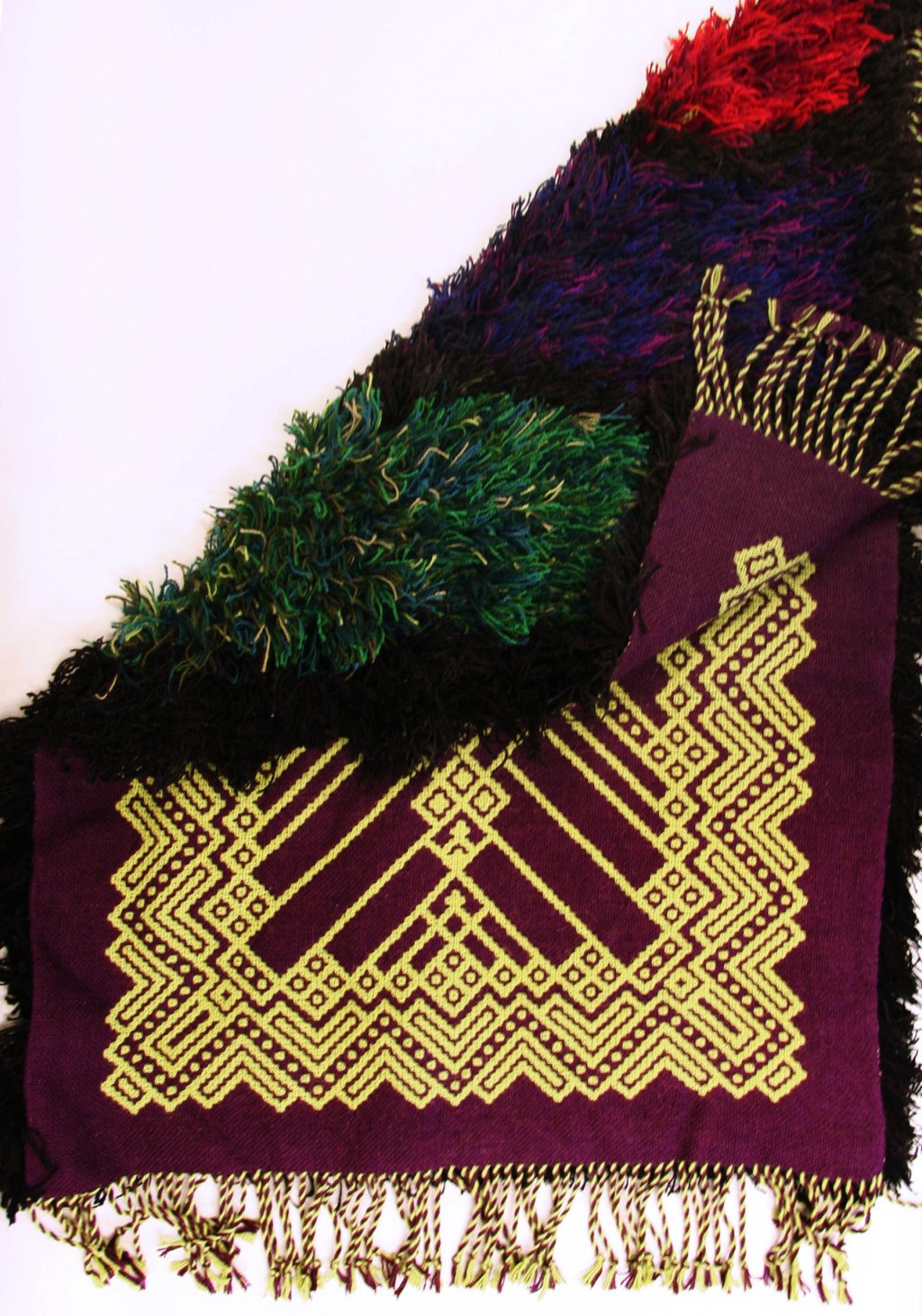
    Iowa artist Laura Demuth sets up amazing weaving challenges for herself.  Often, not content with just buying and weaving with beautiful wool, she spins and dyes yarn from her own sheep.  In a number of weavings she has gone beyond weaving for beauty on one side, and combined techniques to make unique two-sided textiles.  One of those will be included in the upcoming “Traditional Norwegian Weaving: American Reboot” exhibit at Norway House from July 20-September 10, 2017.

    On one side of the hanging, Laura wove an intricate pattern in a complex doubleweave technique.  She hid the knots of the rya pile between the two layers of the doubleweave. Because the doubleweave pick-up surface needs to be the upper side during weaving, she tied the knots upside-down on the lower surface. (Rya weavers would understand: this is tricky.)

    Rya3-1

    On the other side, colorful stripes of beautifully-blended yarns are dense and enticing. This piece perfectly fulfills its purpose as a warm throw.

    Rya2

    Biography:

    Laura Demuth has been weaving for over 30 years and enjoys all aspects of textile production, from raising the sheep to taking a finished piece off the loom. Living on a small acreage just  seven miles northeast of Decorah, Iowa, Laura has a small flock of registered Blue Faced Leicester sheep that keep her hands busy spinning wool all winter. She often dyes the handspun yarn with natural dyes from the garden before putting it to use in a woven or knitted textile.

    Because Laura lives so close to Decorah, Vesterheim Norwegian American Museum has been a continual source of education and inspiration throughout her weaving career. Laura has  focused on traditional weaving structures and techniques, especially bound weave and doubleweave.

    IM000401.JPG

    Don’t miss this piece and so many more in “Traditional Norwegian Weaving: American Reboot.” The opening night at Norway House, July 20, 5-8, would be a smashing time for a first peek.

  • A Tapestry with Soul

    A Tapestry with Soul

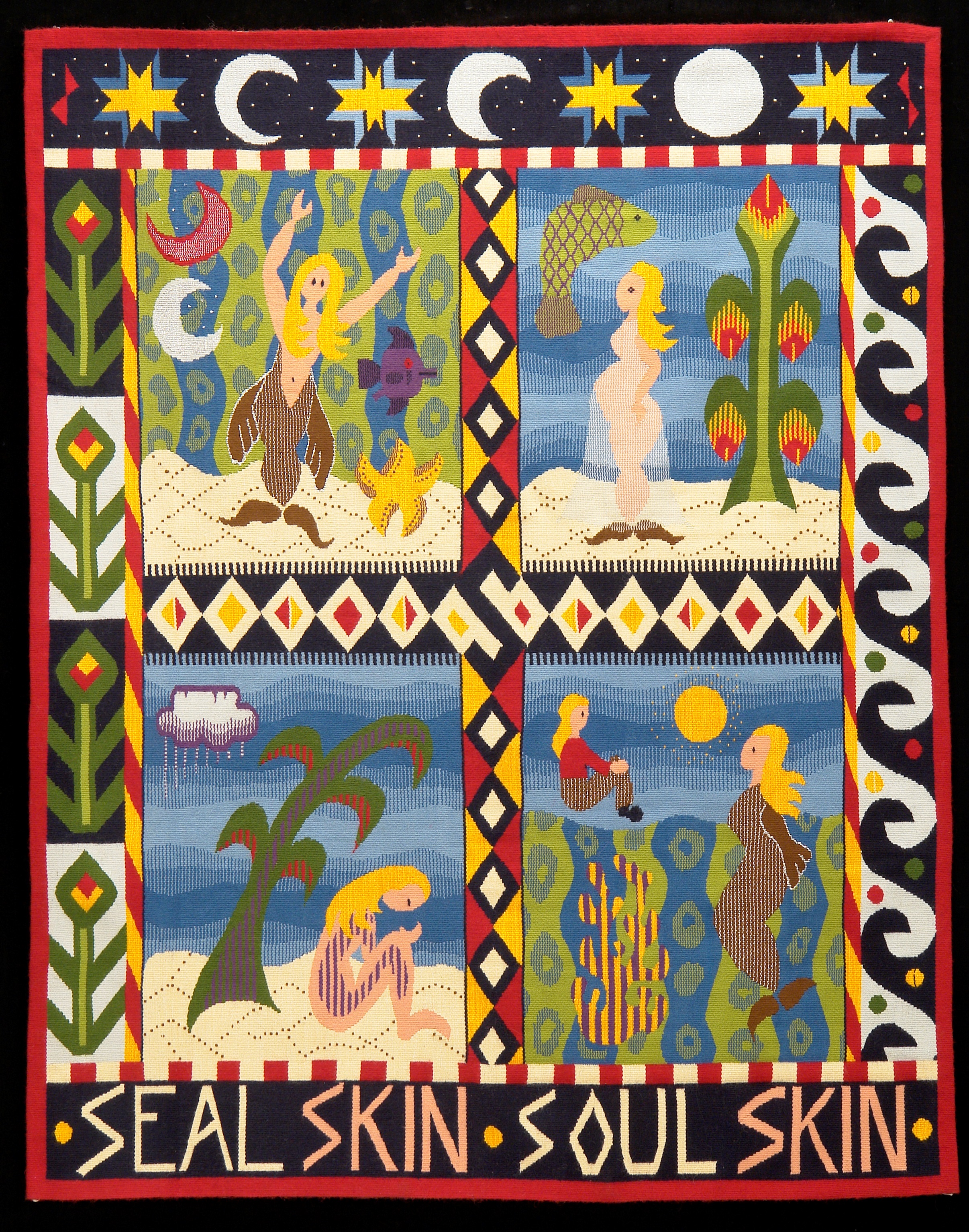
    The “Traditional Norwegian Weaving: American Reboot” exhibit this summer at Norway House includes a beautiful, large (59.5″ H x 47″W) tapestry by Susan Gangsei.

    Seal Skin Soul Skin
    “Seal Skin, Soul Skin” by Susan Gangsei


    Susan recounts the story: “Seal Skin, Soul Skin tells the story of a Selkie, a sea creature that can come up on land, take off her skin and dance in the moon light. One night a Selkie comes up on land and is dancing. A fisherman sees the Selkie and steals her skin so she cannot not go back home. He forces her to marry him and have his children in return for the promise to return her skin in 7 years. After 7 years the fisherman reneges on his promise to return her skin, so she begins to dry out. One of her children finds her skin, gives it back to her and she returns to her home the sea. Today she comes back to land to visit her children. This is a story of the renewal that come from returning home, returning to one’s whole and true self.”

    More about Susan:

    After weaving on a floor loom for many years, I was given an tapestry weaving class for a gift for my 50th birthday. Tapestry weaving become my passion and refuge.

    My tapestries tell stories. They start out telling a story about my life and end up telling a story about human kind. As life has presented me with challenges, my weaving has told my story through universal and biblical stories. My husband had Parkinson’s Disease and I was given the role of caregiver. The Burning Bush tapestry tells of my conversation with God, telling him I did not want that role, just like Moses did not want to lead the Israelites out of Egypt. The tapestry Jacob and the Angel tells the story of both the blessings and the wounds of being a caregiver, just like Jacob was wounded in his hip, yet blessed by God making him the father of Israel. The Seal Skin, Soul Skin tapestry talks about the need to renew oneself.

    The current style of my designs come from my Nordic background. Nordic tapestry has a folk art tradition that is more representational and “flat.” Colors are limited and used carefully. The fabric is structurally sound with use of multiple kinds of joins versus slits. The weaving is complex with use of outlining and patterns.

    Is Susan’s selkie tapestry a “reboot” of a traditional Norwegian style?  A tapestry owned by the Vesterheim Norwegian-American Museum shows medieval similarities to the format of Susan’s tapestry.  The Adoration of the Magi is divided in a similar four-frame style.

    You can see the tapestries that Susan references, along with other work, at her website: susangangsei.com