
Here in Minnesota, we were recently treated to a spectacular display of the Northern Lights, due to a solar storm.
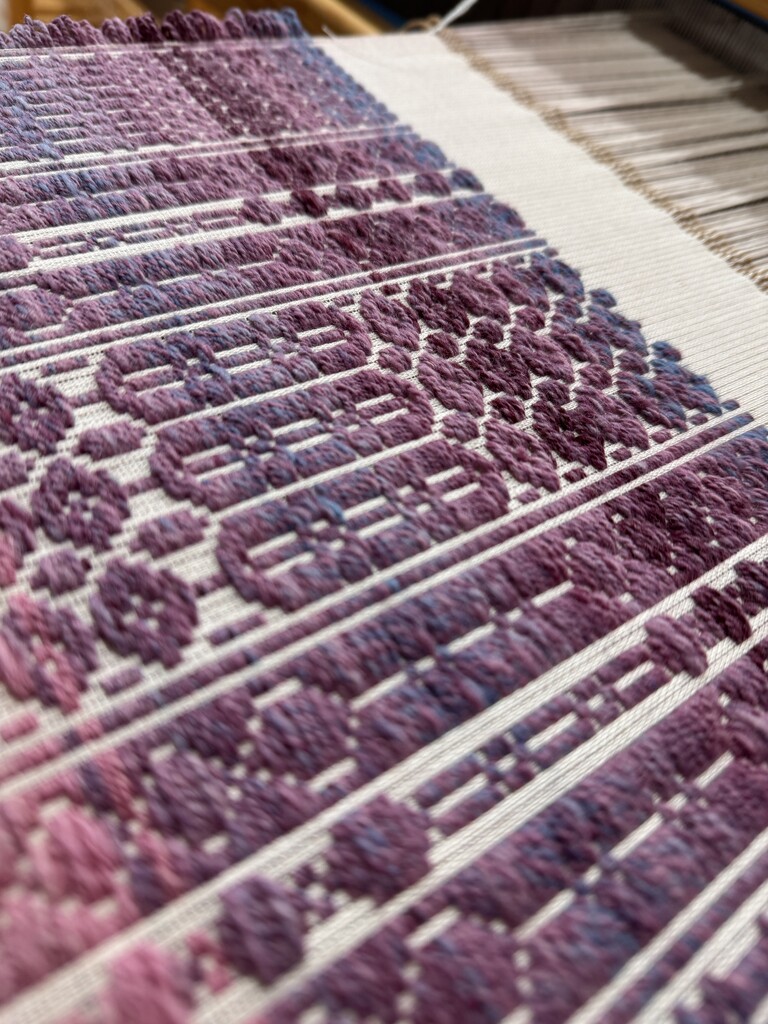
The colors are echoed in Alla Hale’s weaving on the latest group warp by the Scandinavian Weavers. For this warp, we returned to one of our favorite techniques, skillbragd.
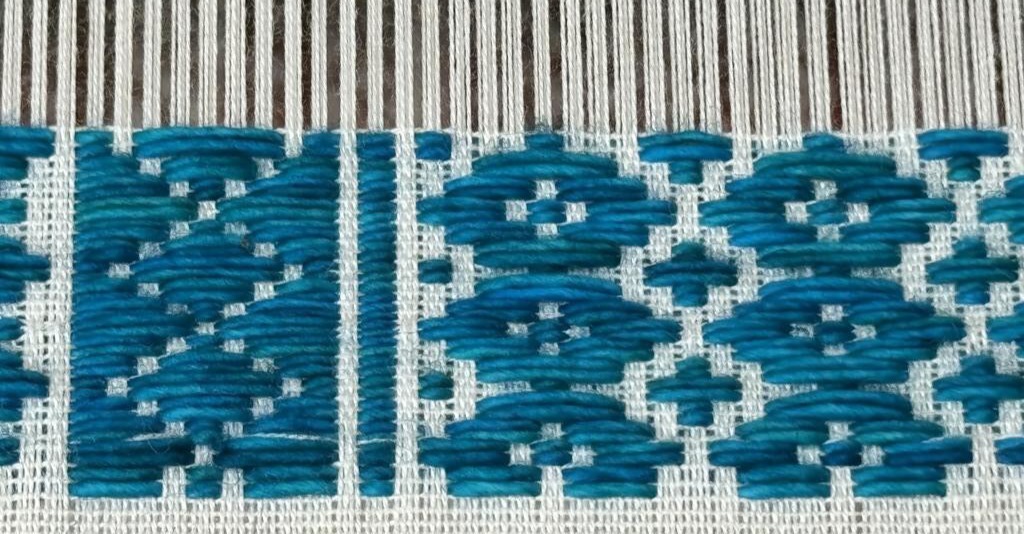
Skillbragd is a traditional overshot technique in which a fine tabby weft is woven alternately with a heavier pattern weft. Katherine Larson, in The Woven Coverlets of Norway, writes that skillbragd was named for the skill, or opening in the threads by which the elaborate patterns were created. In Norway, skillbragd coverlets were often used as christening blankets.
This technique requires two sets of shaft: Pattern shafts with long-eye heddles at the front of the loom and ground shafts with regular heddles at the back. This can require the use of a specially designed loom.
However, it’s also possible to weave skillbragd on an eight-harness countermarche or counterbalance loom, which is what we did, based on a draft by weaver Laura Demuth. Laura’s draft is inspired by a woven piece in the collection of Vesterheim Norwegian-American and will be featured in a forthcoming book.
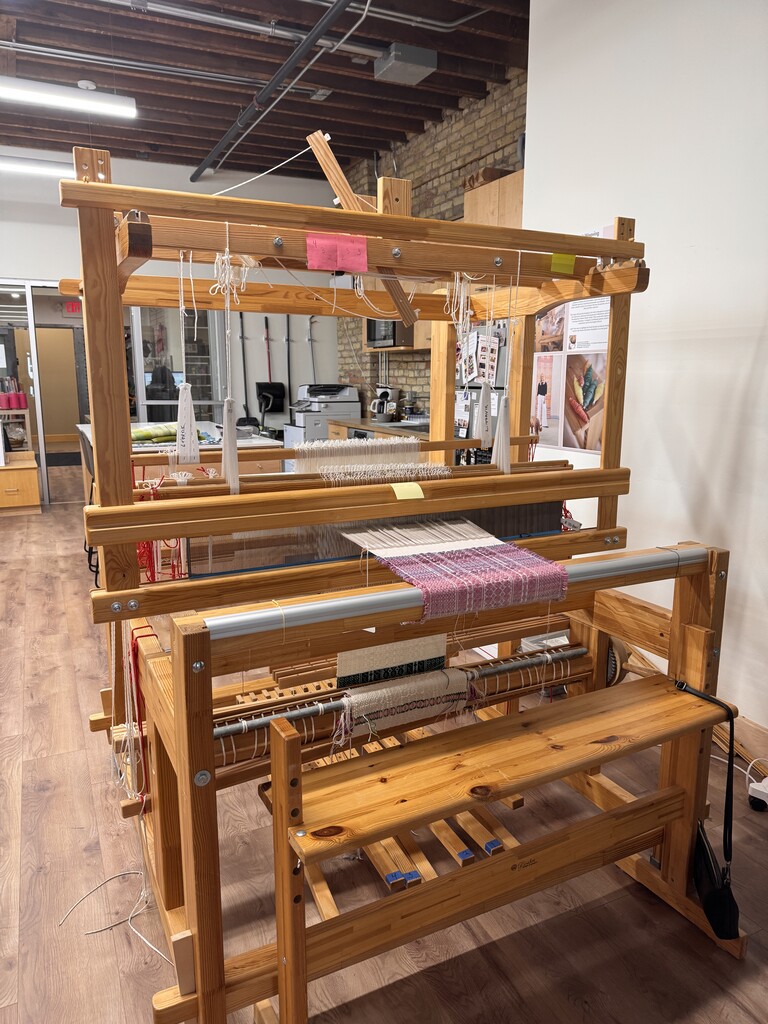
Laura writes, “Because this technique requires a direct tie-up of the treadles, it is necessary to use two pairs of elastic hangers on the harnesses: one pair will be used on harnesses 1-4 and the second pair will be used on harnesses 7-8…It is also necessary to use two sizes of string heddles. Standard heddles are used for the tabby threading on harnesses 7 and 8. Special long-eyed heddles are used on the pattern harnesses, 1-4.”
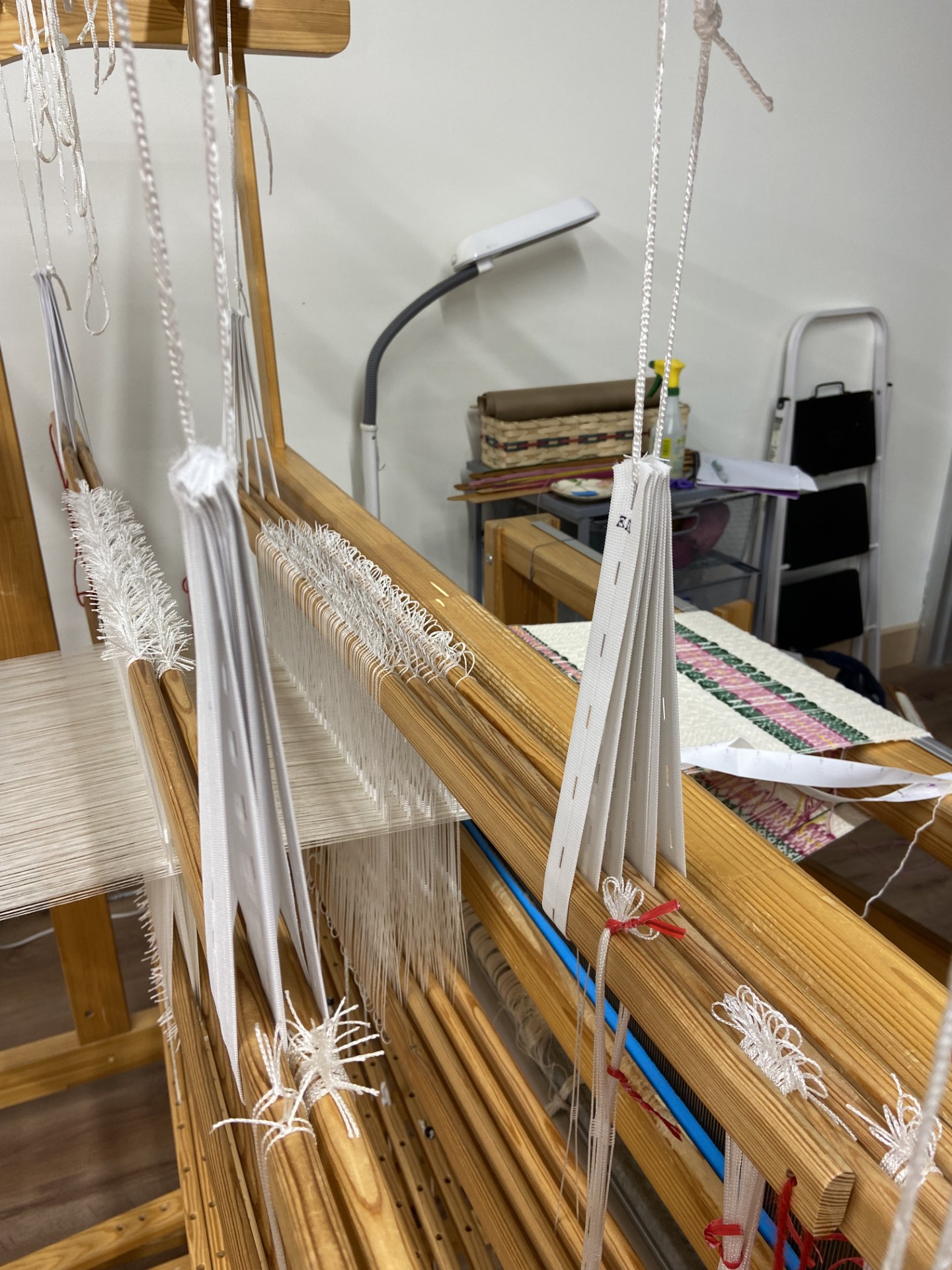
Per Laura’s instructions, we warped the loom with 20/2 cotton at 40 EPI and used the same thread for the tabby weft. Each weaver brought in her own pattern weft yarn in a variety of fibers, which made for wonderful variation in color and texture.
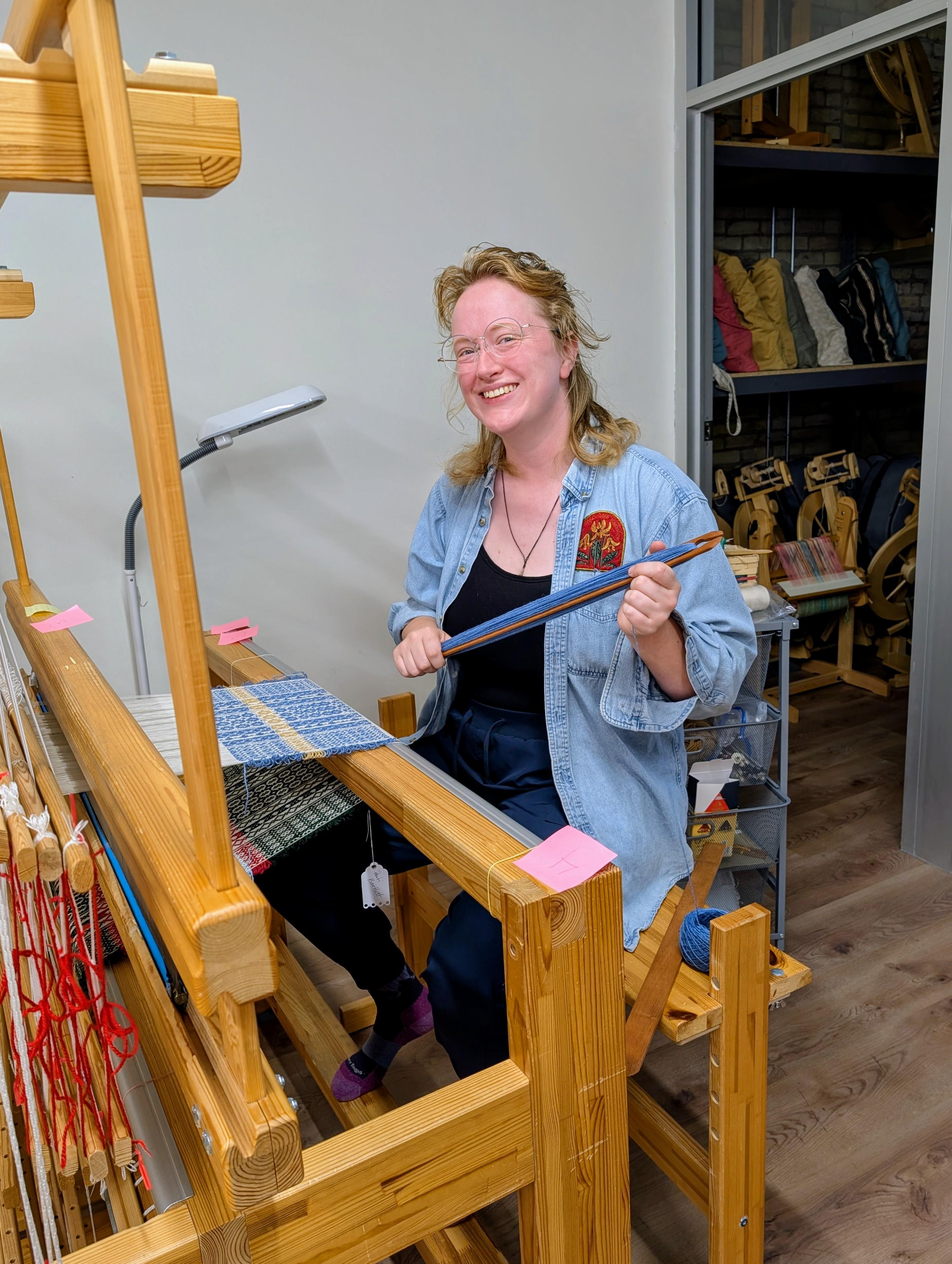
Abbey Nielsen chose soft shades of blue and yellow for her very first skillbragd weaving. A lucky family member will receive it as a Christmas gift!
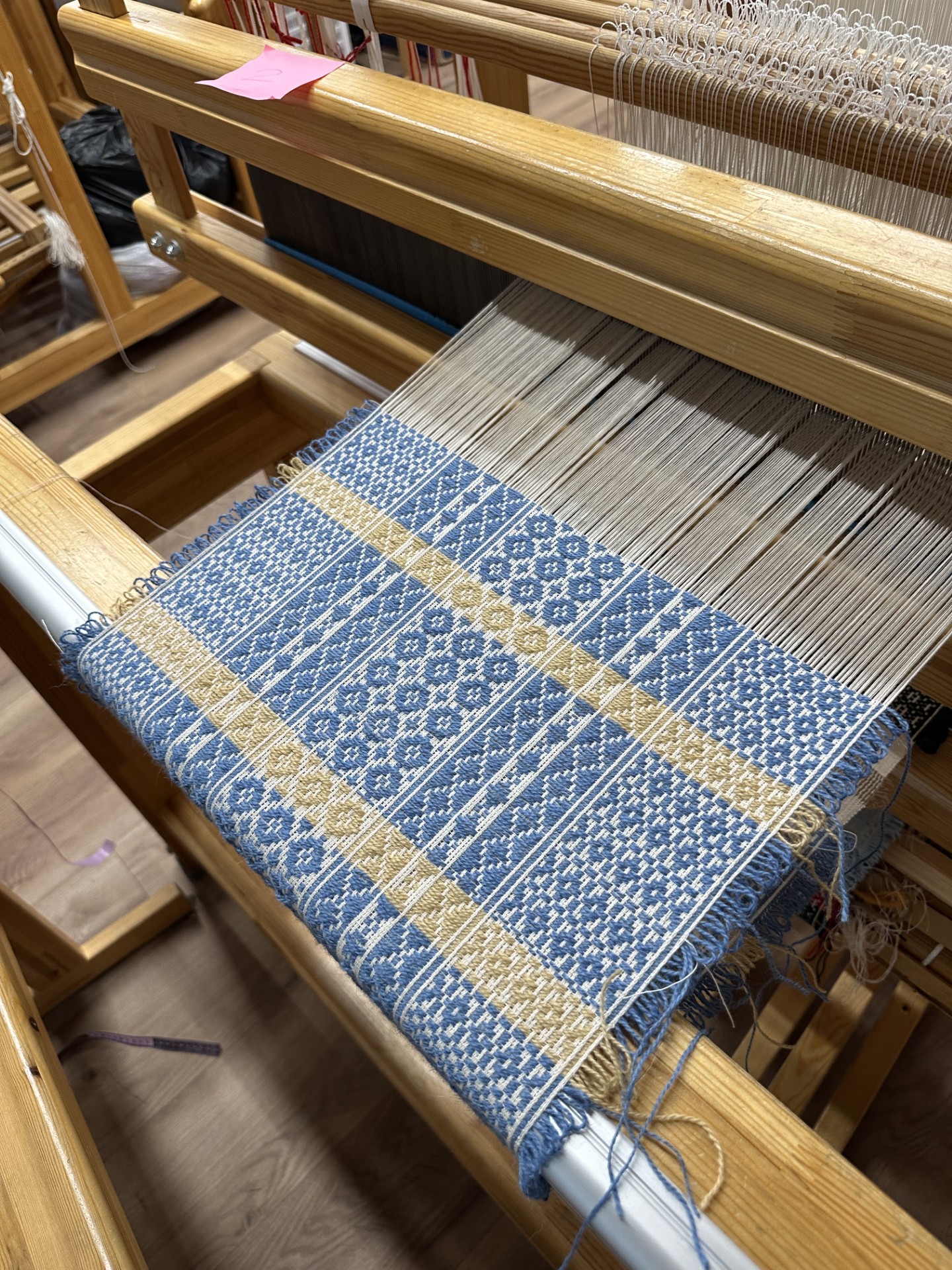
Traditional skillbragd often features decorative loops along the selvedges, made simply by looping the pattern weft yarn around a finger, as in Abbey’s weaving above. The loops also serve the a practical purpose of hiding color changes in the pattern weft, rather than having to cut and work in the ends.
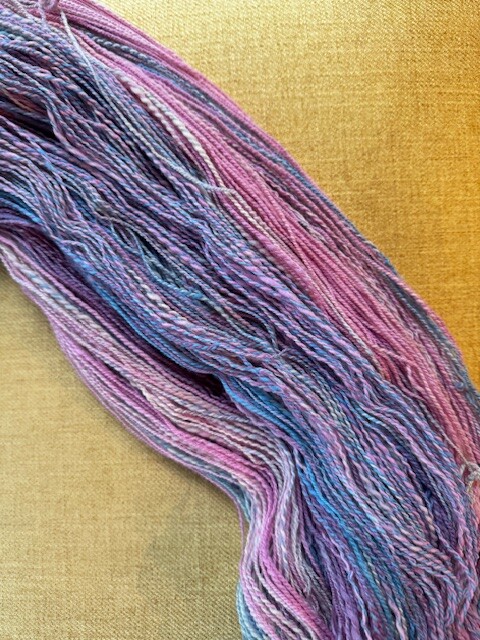
For her piece, Alla Hale used her own handspun yarn. “It’s from a pretty braid dyed by local natural dyer Petal and Hank,” she writes.
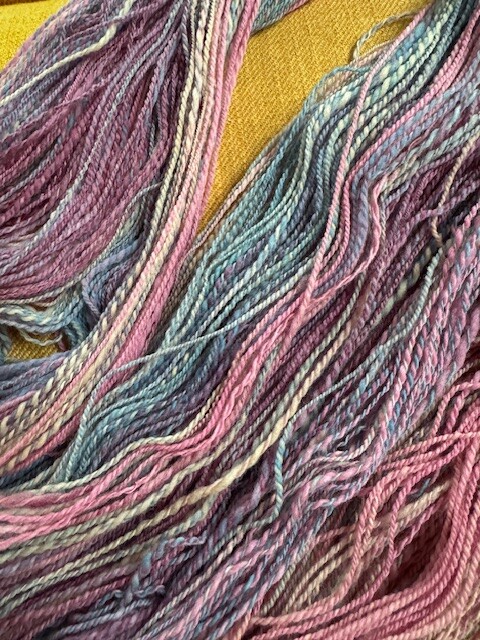
“I’m a new spinner,” Alla continues, “so [the yarn] is not very consistent, but I think that will make for nice character in the weaving.” I think we all agree!
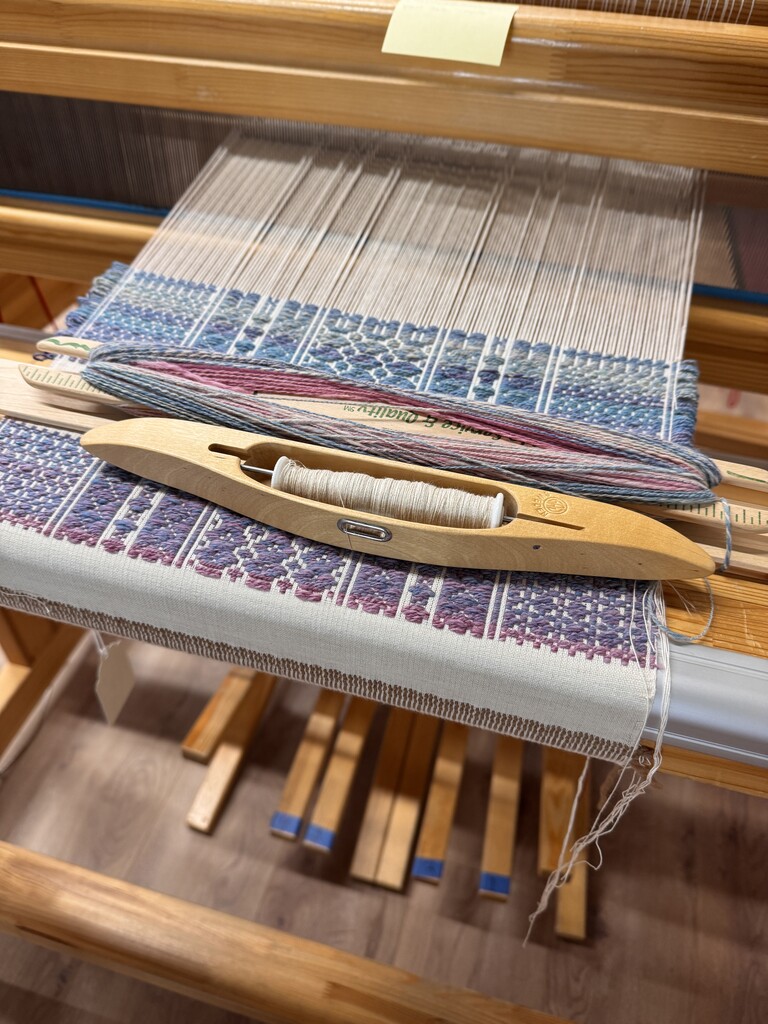
In the photo above, note how the fine tabby weft (20/2 cotton) alternates with the woolen pattern weft.
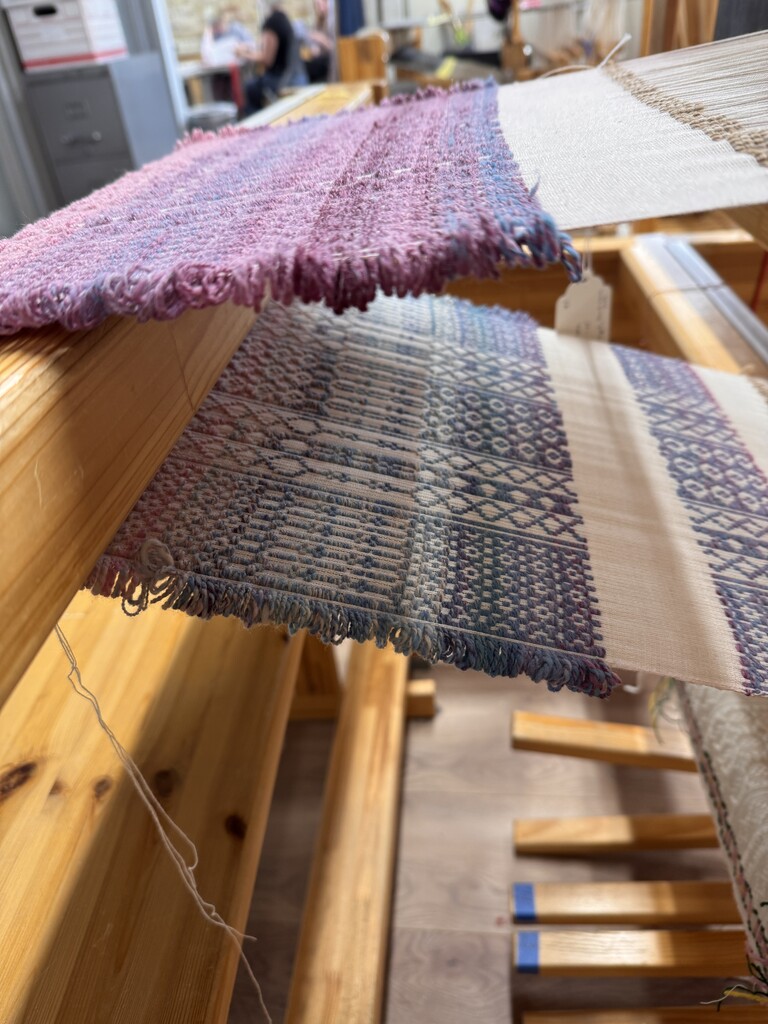
Amy Grimm took a scientific approach to her piece, following Laura Demuth’s original draft as closely as possible.
“I figured, being such a new weaver, I would be a good test of the directions,” she explains. “Some might say I lacked imagination but my focus was on testing her directions. My background is computer science and technical writing, so this type of testing was right up my alley!”
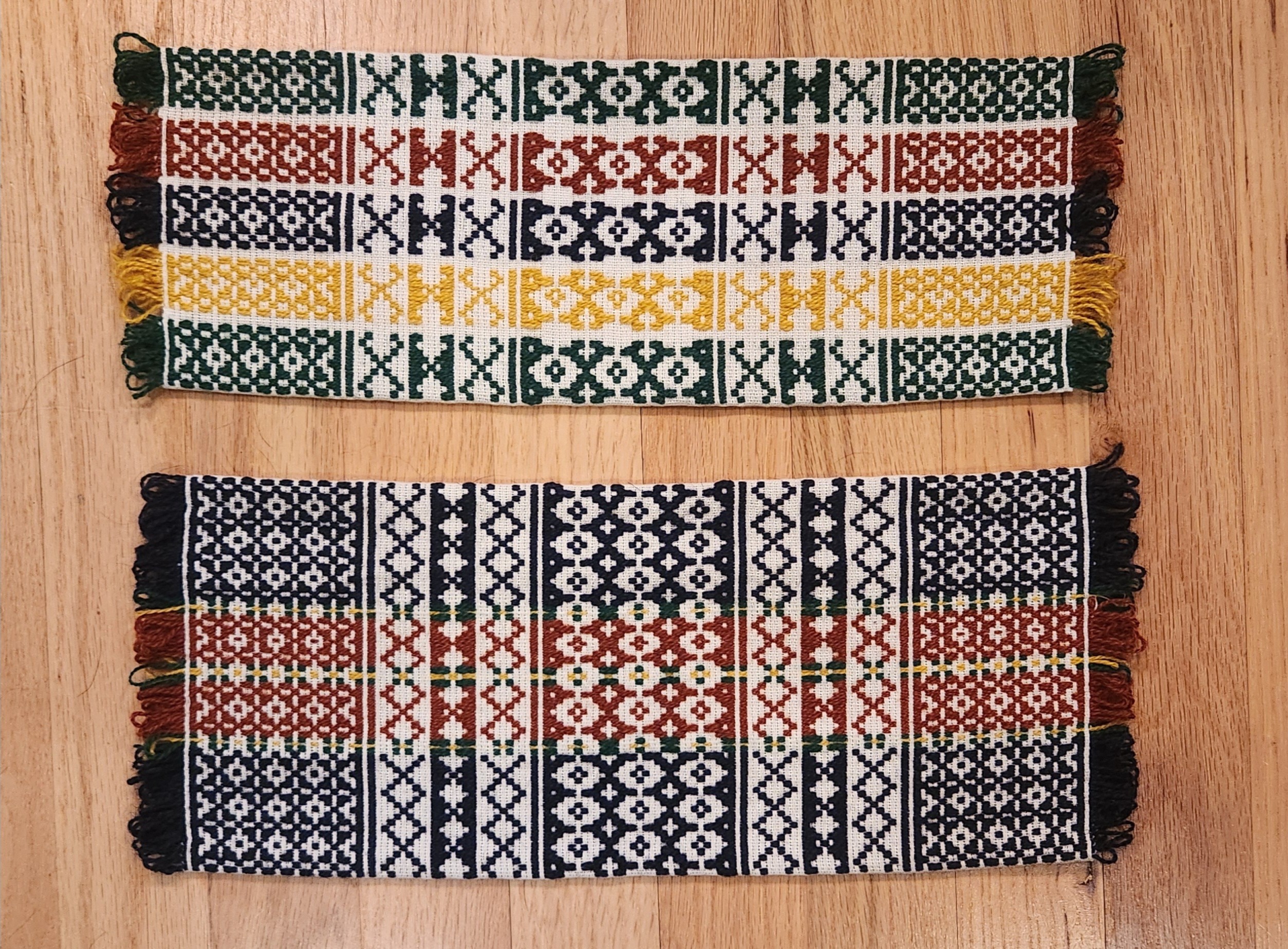
Amy used Laura’s suggested pattern weft of Rauma Prydvevgarn in traditional shades of blue, red, green, and yellow, providing her with samplers for future projects.
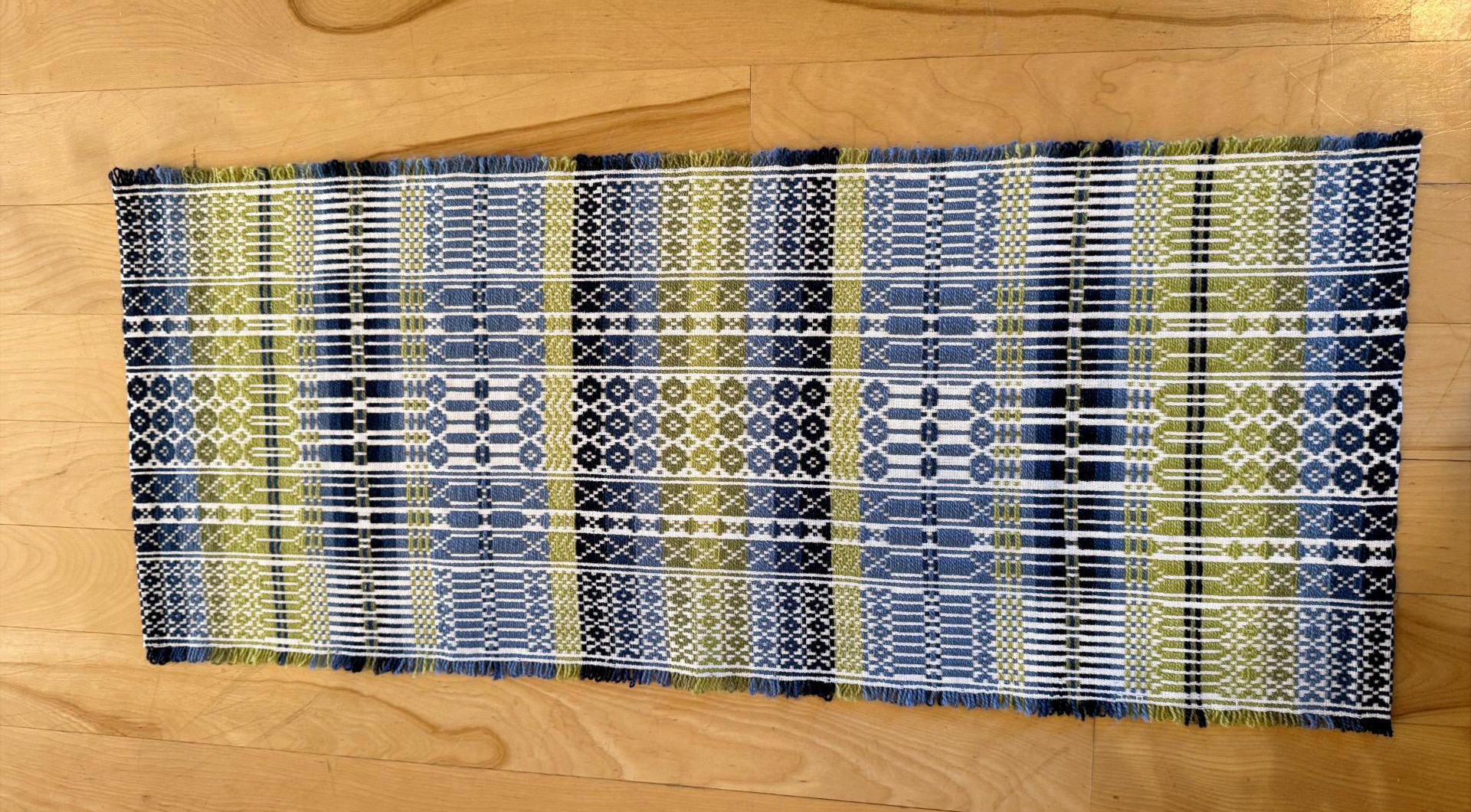
Beth Detlie warped her loom at home using Laura’s draft, but used linen for warp. She wove three runners, allowing her to explore the many pattern variations. “I had fun experimenting!” she says.
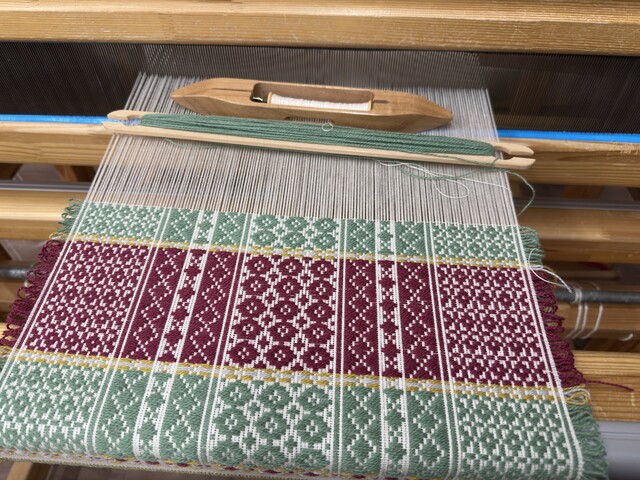
Like Amy, Brenda Gauvin-Chadwick also used Rauma Prydvevgarn for her pattern weft, in cool tones of melon and maroon.
Carol Mashuga experimented with a single color of weft, in a gorgeous shade of turquoise, which allowed the patterns to dominate. “The fiber I used [for pattern weft] is Madelinetosh merino wool in Nassau Blue,” Carol writes. “It is a super wash 100% wool that is very soft and drapes beautifully.”
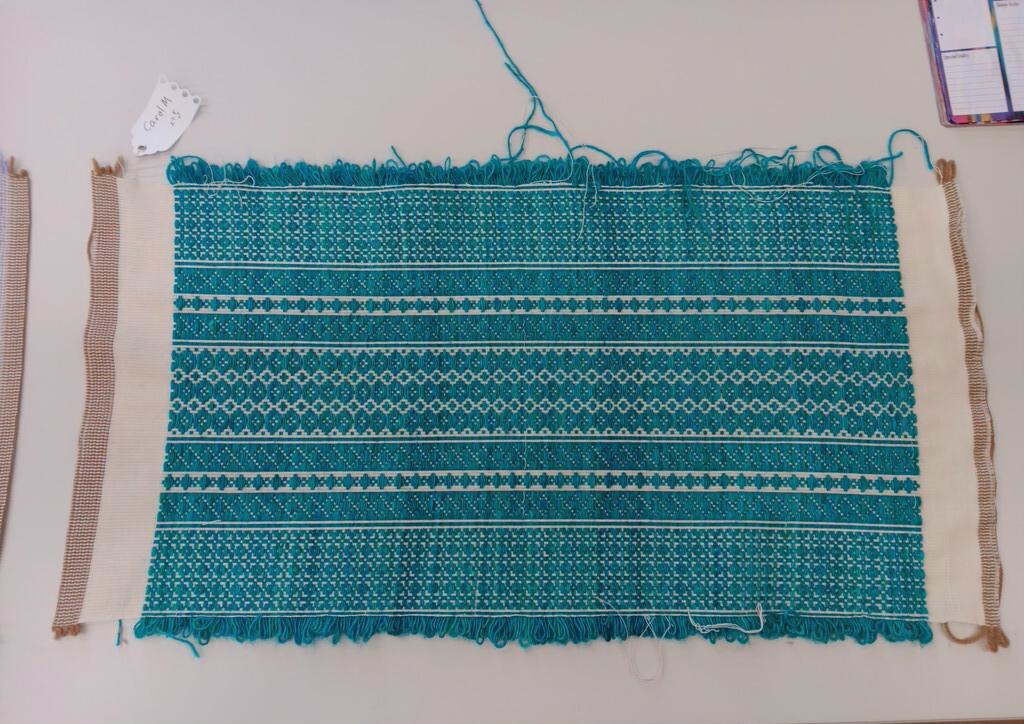
“This has been a fabulous weaving experience for me,” Carol adds. “I have learned so much and could spend years weaving this pattern and trying out different color combinations, etc. It is that interesting!”
Cathie Mayr agrees with Carol’s assessment: “[Skillbragd] is a slow weave, but a beautiful result.” Group members concurred that the process is meticulous but rewarding.
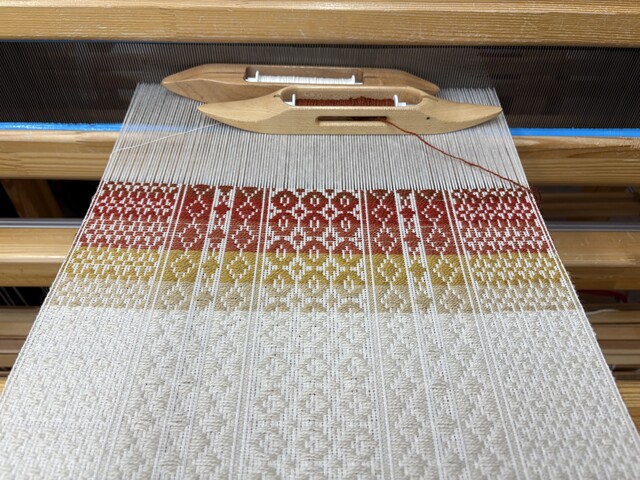
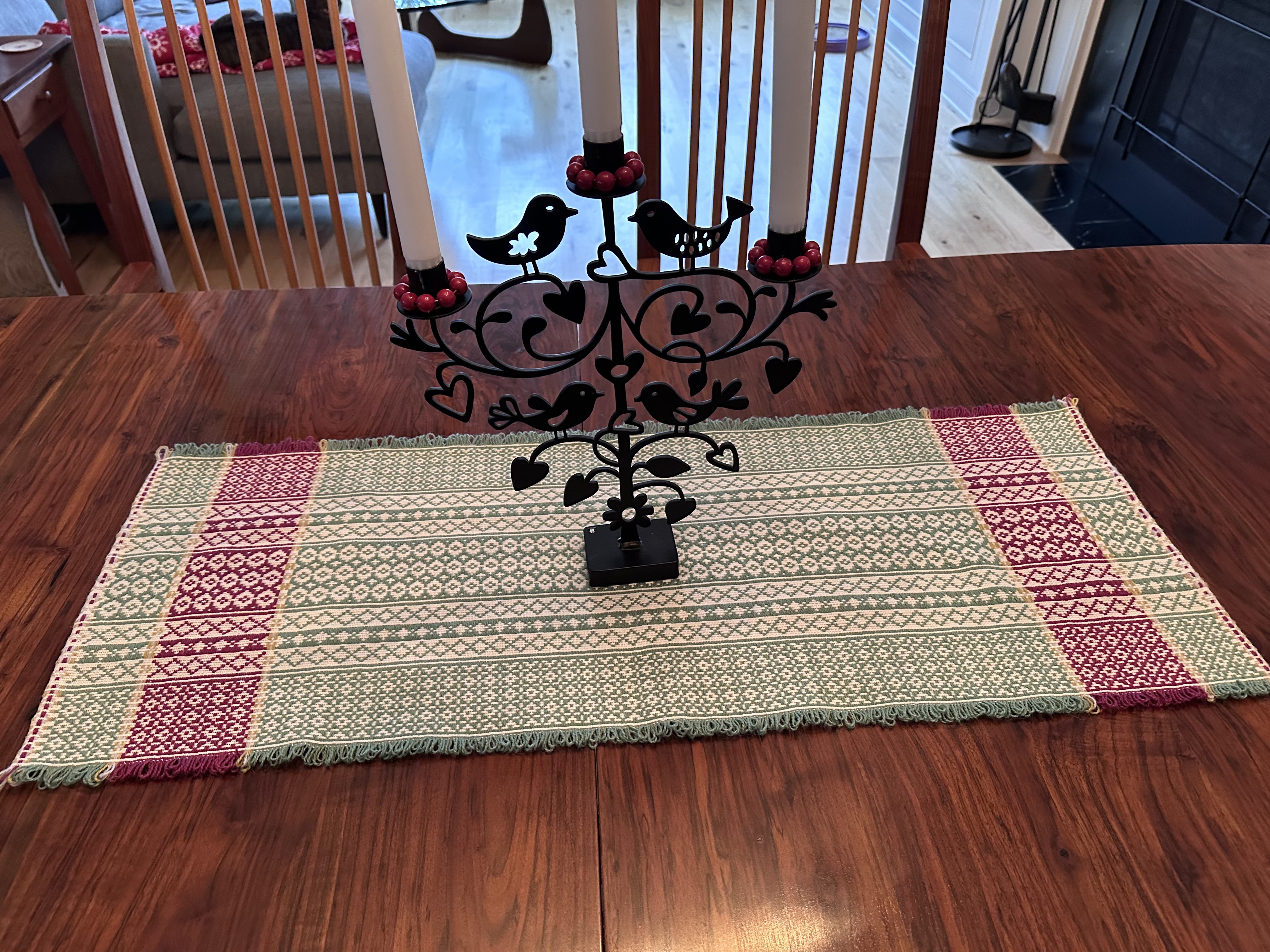
Cathie wove an autumn runner with a cream-colored center to show off a Swedish black iron candleholder. In the photo above, note how beautifully the patterns show, even with a neutral weft color.
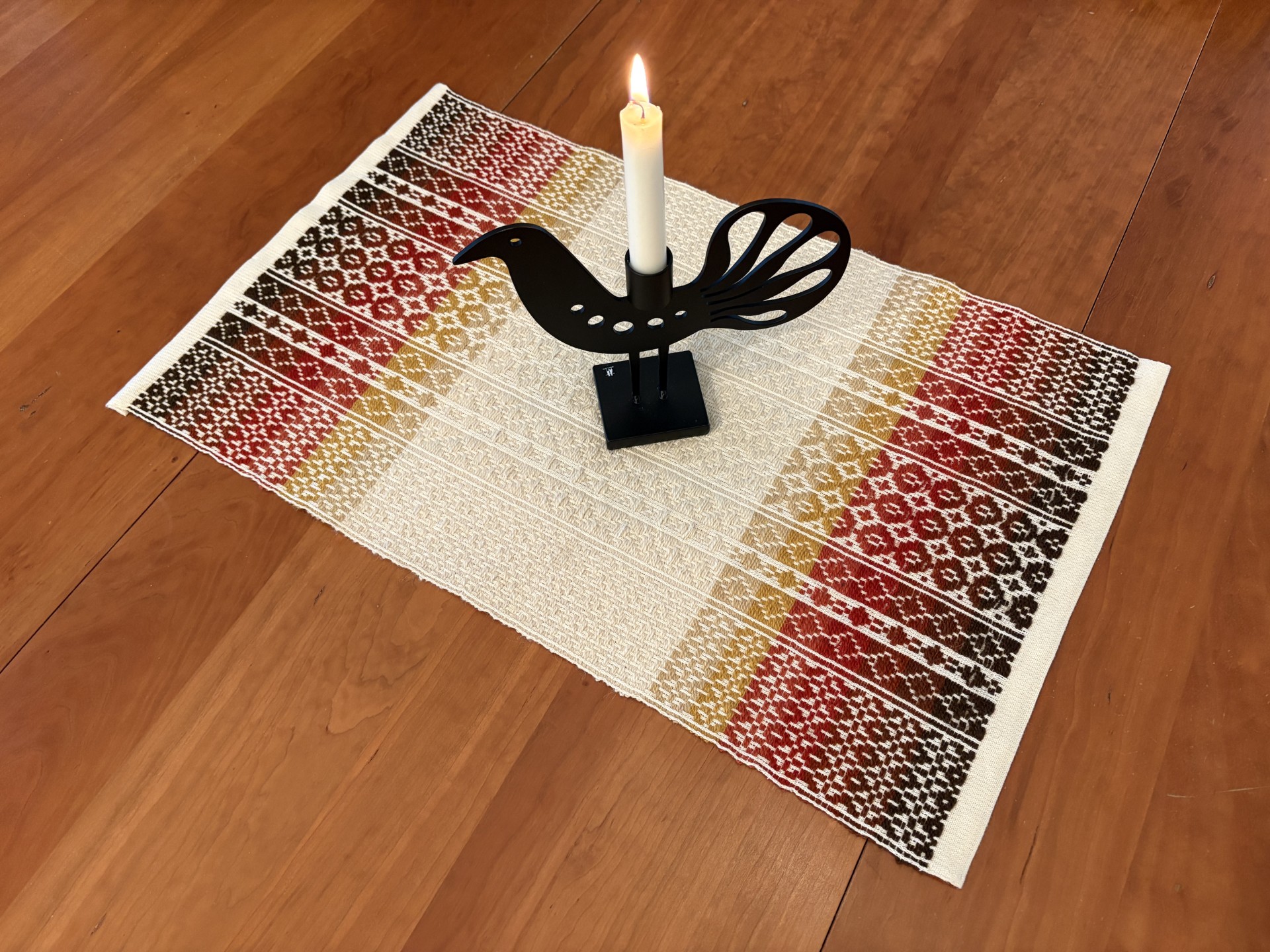
“It was such a challenging and satisfying project!,” Cathie writes. “I’m so grateful to those who planned it, ran the warp, dressed the loom, and provided the pattern draft and explanations on how to weave it. This group is amazing!”
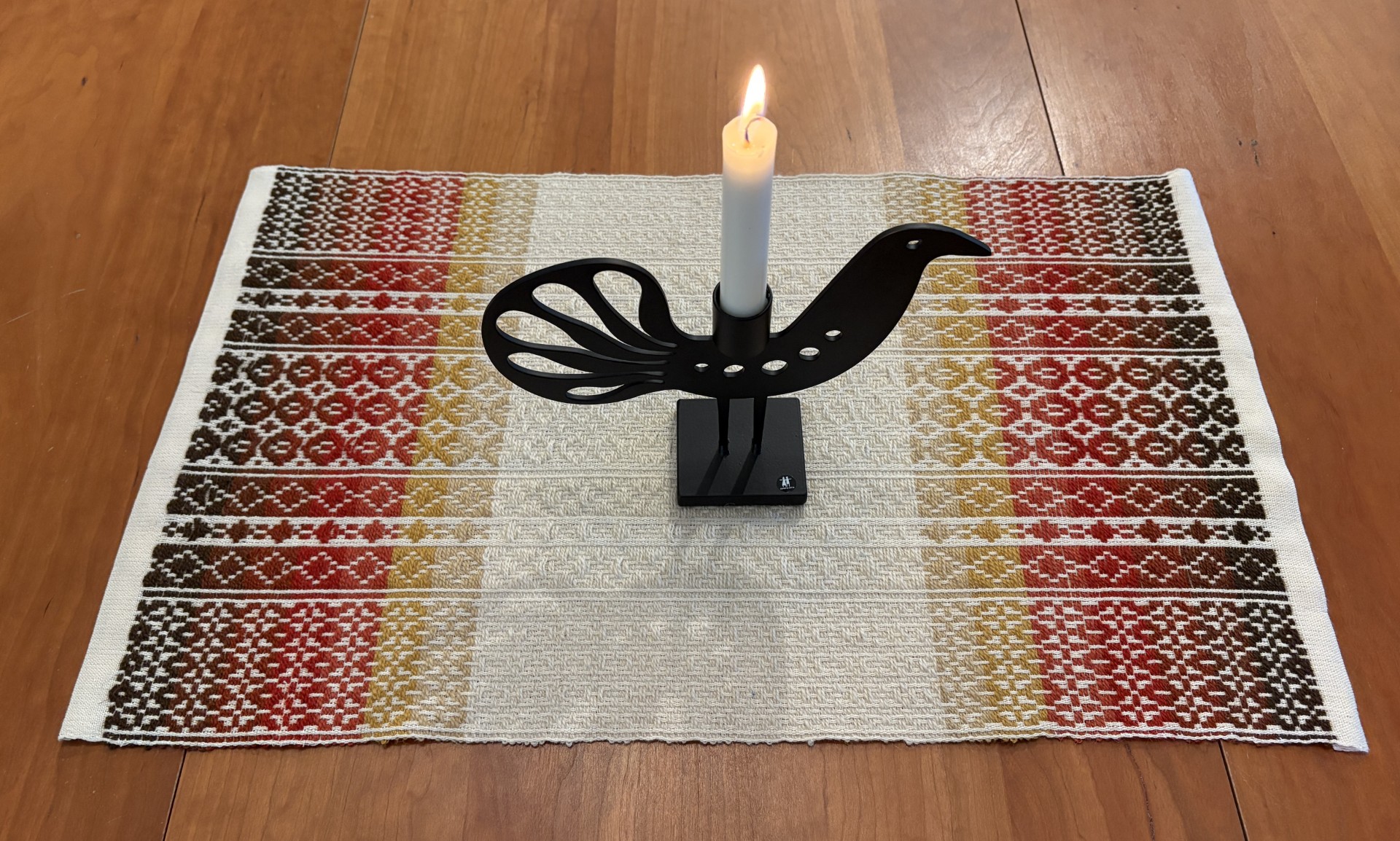
“My piece is purposely short to fit in the center of our dining room table,” Carol adds. “I elected not to include selvedge loops. When my family gathers for Thanksgiving, anything on the table is at risk for gravy and cranberry drippings!”
Holly Hildebrandt chose soothing shades of blue and green for her weaving, perhaps inspired by her recent study trip to Norway.
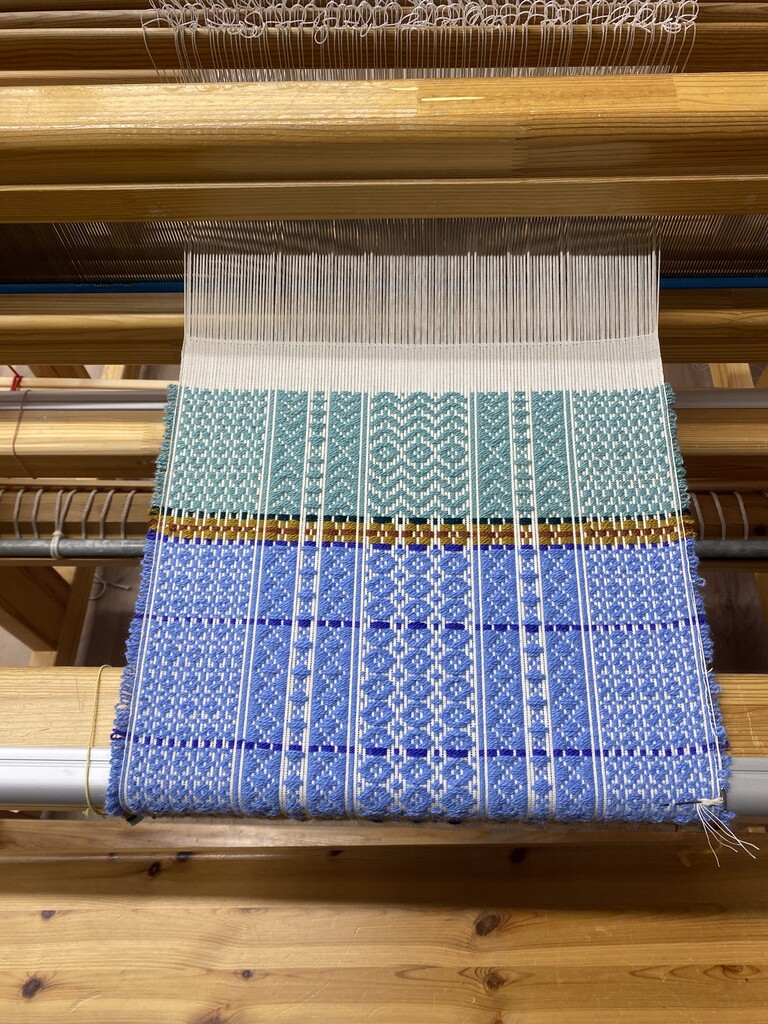
Judy Larson also choose blue and green for her weaving, using variegated string yarn from Sweden. The effect is of the far horizon over water.
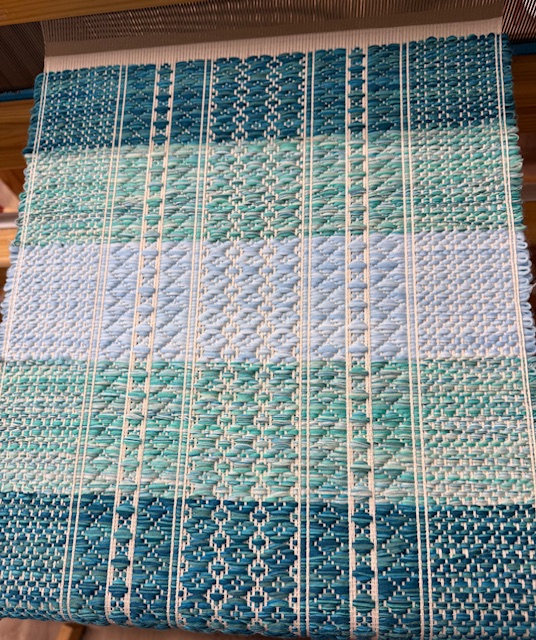
Judy purchased the yarn while attending the Väv2025 conference in Gävle, Sweden. It consists of several strands of cotton wound together.
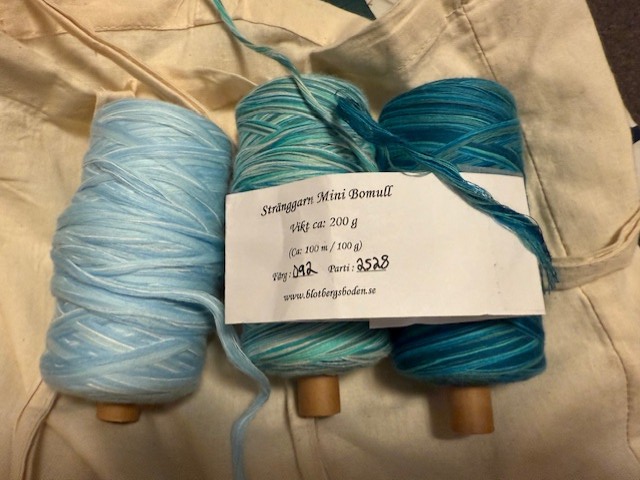
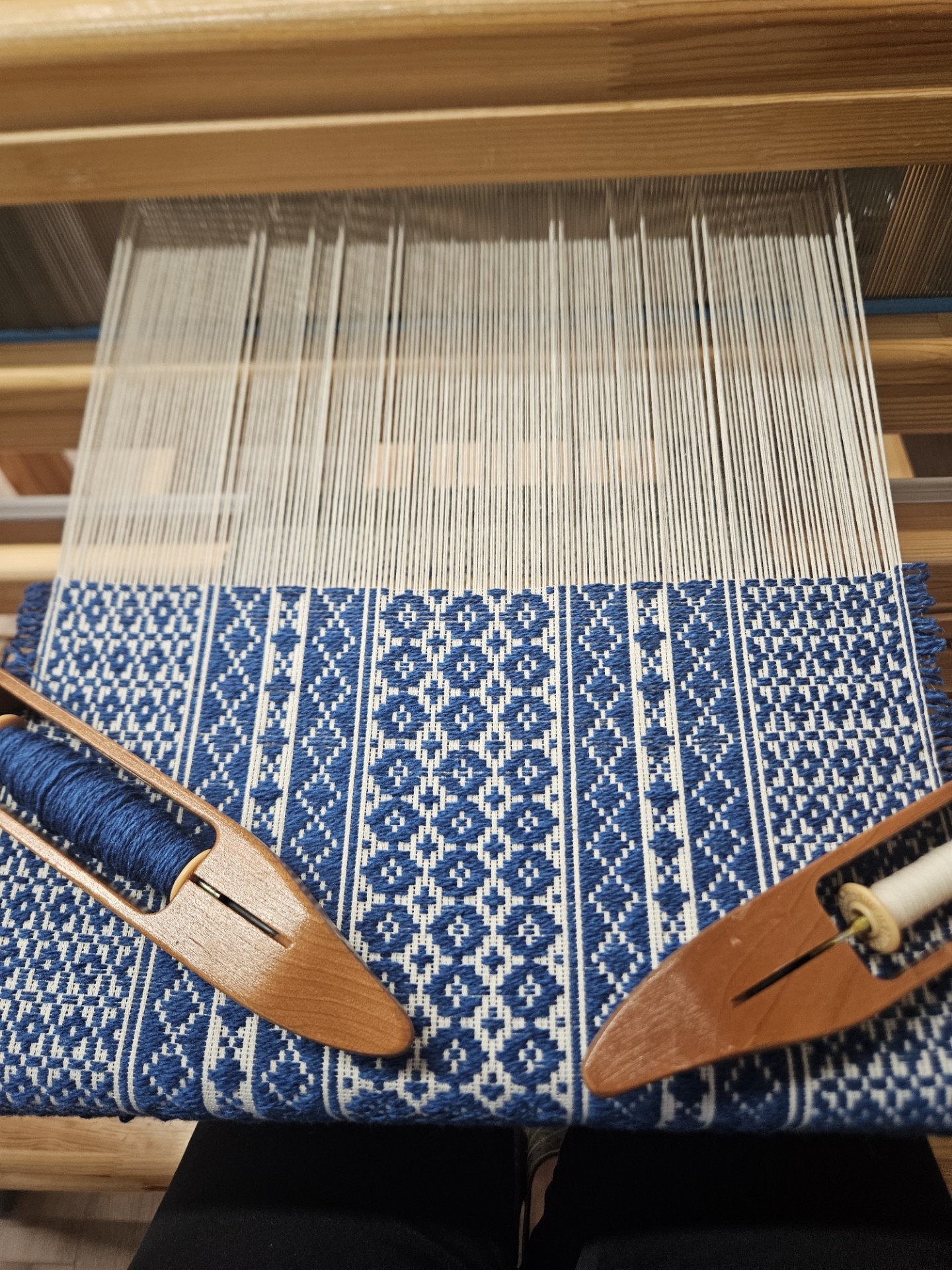
Jan Johnson shared the photos below on her Instagram. “The Scandinavian Weaver’s study group at the Weaver’s Guild of Minnesota is weaving Smålandsvëv or Swedish Opphämpta,” she wrote. “The Norwegian-dominant study group persists in calling it skillbragd, but I feel the need to stand up for my Swedish heritage, so Swedish Opphämpta it is!”
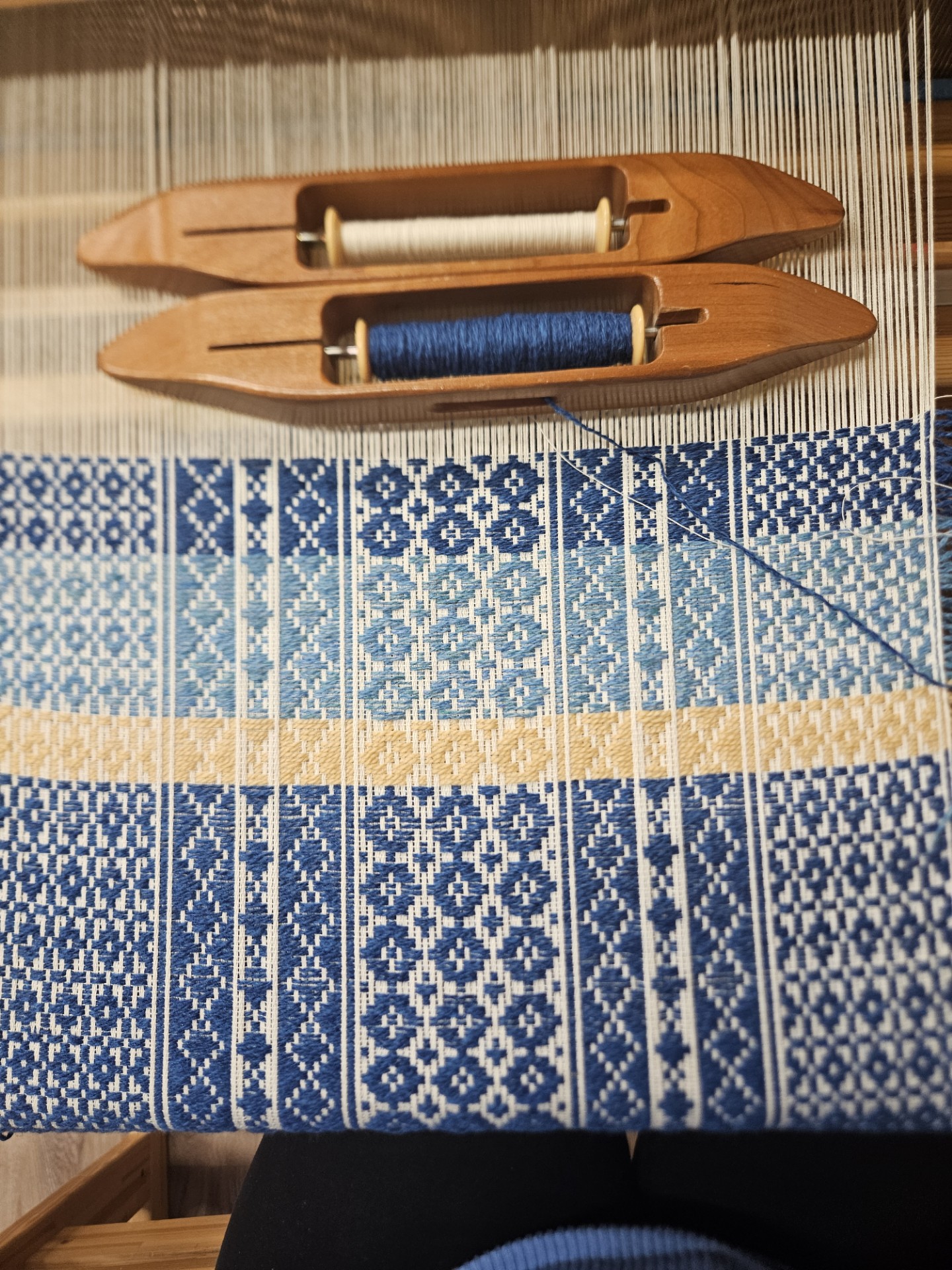
For her weft yarn, Jan appropriately chose lovely shades of blue and yellow from her stash of Harrisville Highland.
Fellow Swede Lisa Bauch chose weft colors reminiscent of a Scandinavian forest, including moss green.
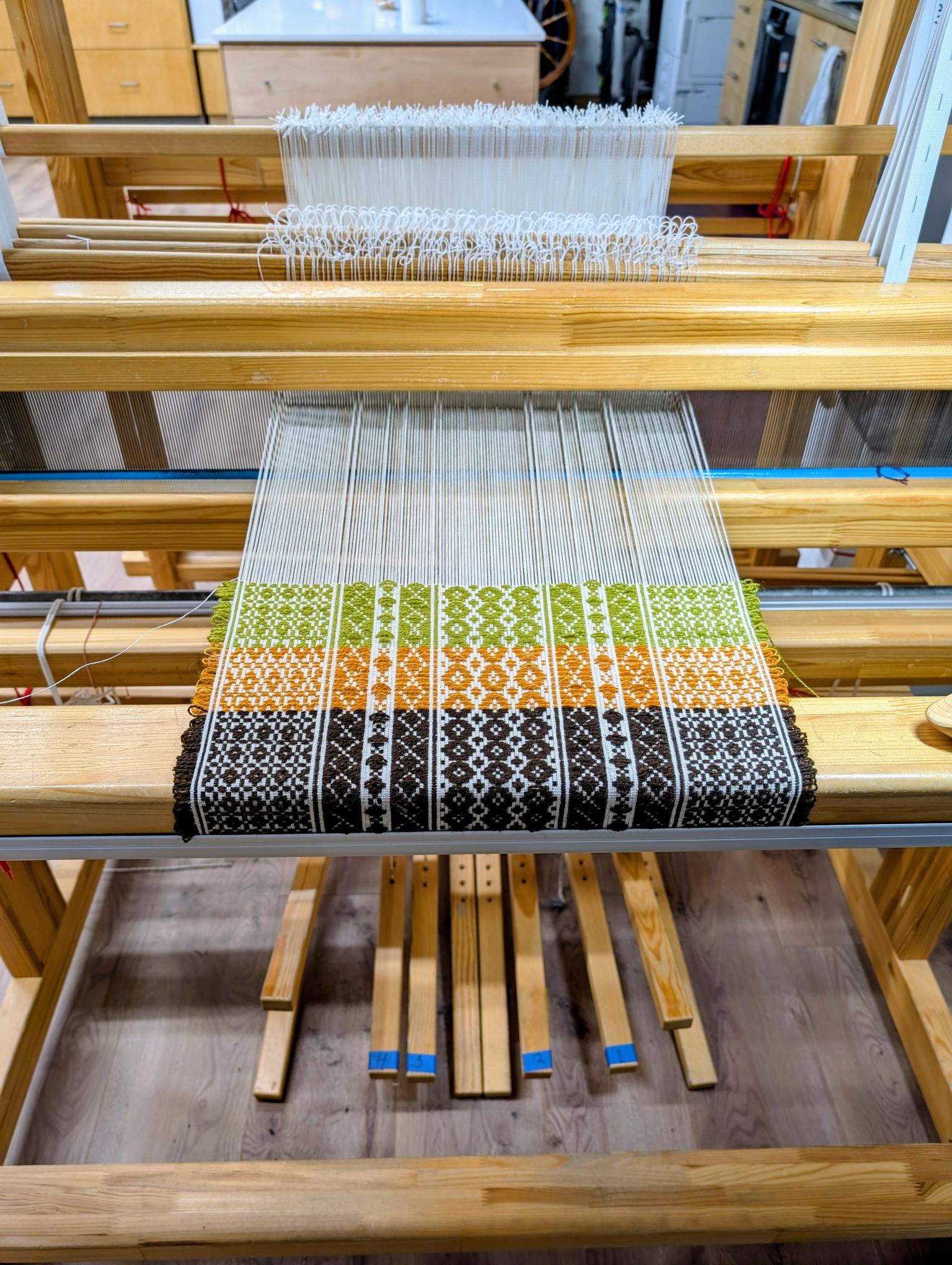
Full disclosure: Lisa purchased the yarn in Norway at the Hillesvåg woolen mill near Bergen.
Read on for Part Two of this post!


 Scandinavian Weavers Study Group
Leave a comment