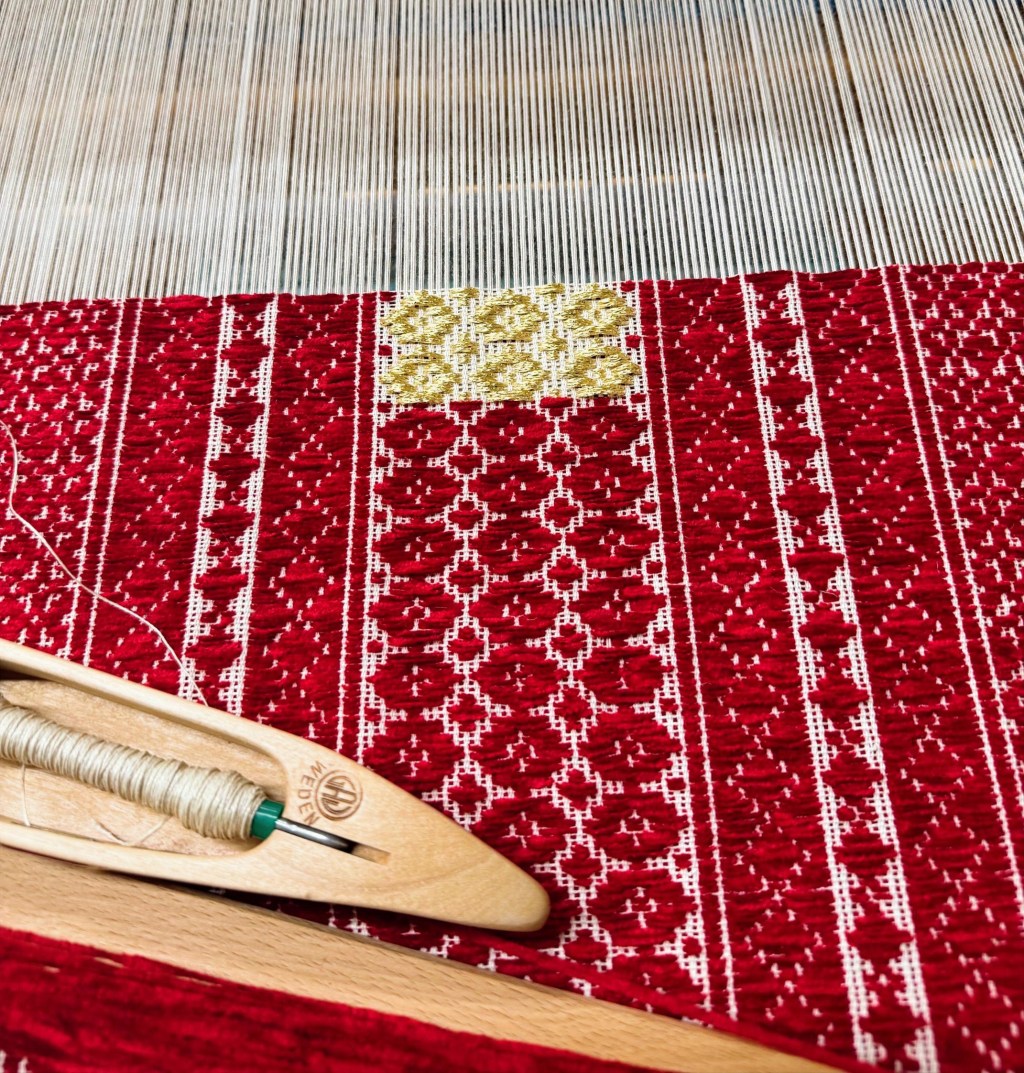
In 2025, the Scandinavian Weavers wove two long group warps in skillbragd technique. Group warps give newer members the opportunity to try techniques with support from more experienced members. It also allows weavers to use a larger floor loom they might not have at home.
We are grateful that the Weavers Guild of Minnesota has dedicated looms for interest groups. We love weaving at the Guild, as it gives us a chance to share our passion for Scandinavian weaving with visitors, shoppers, students, and fellow Guild members.
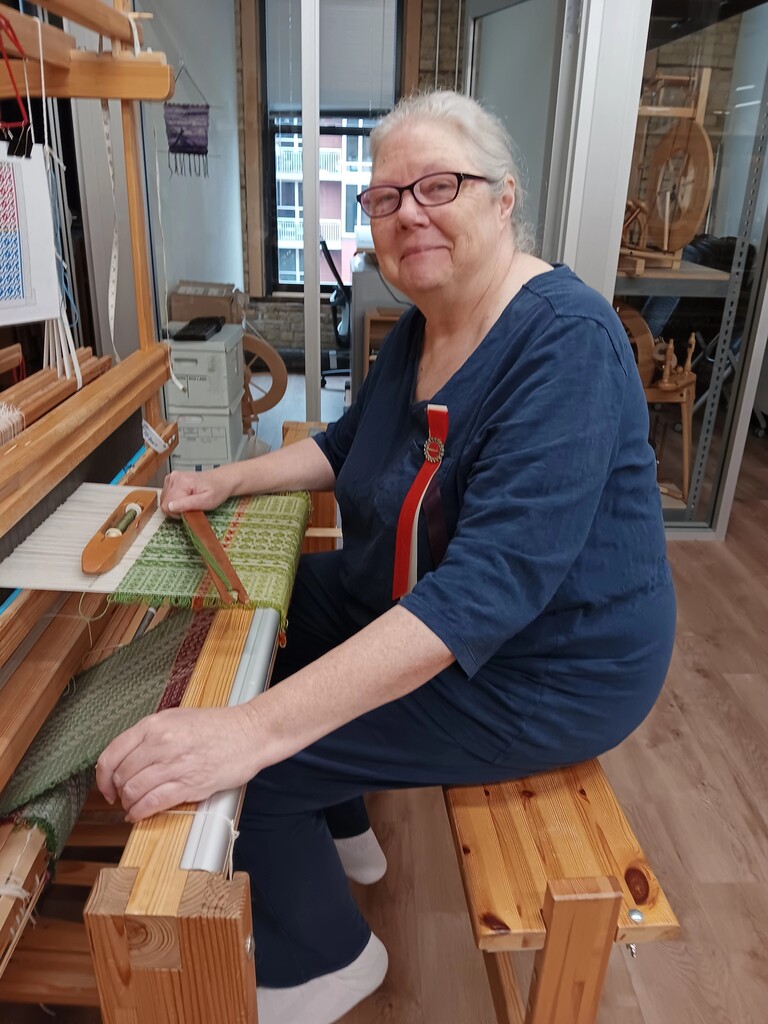
Lisa Torvik was our mentor in skillbragd, providing guidance in dressing the loom as well as math, problem-solving, and the occasional repair of broken warp threads. (She swears by weaver’s knots!)
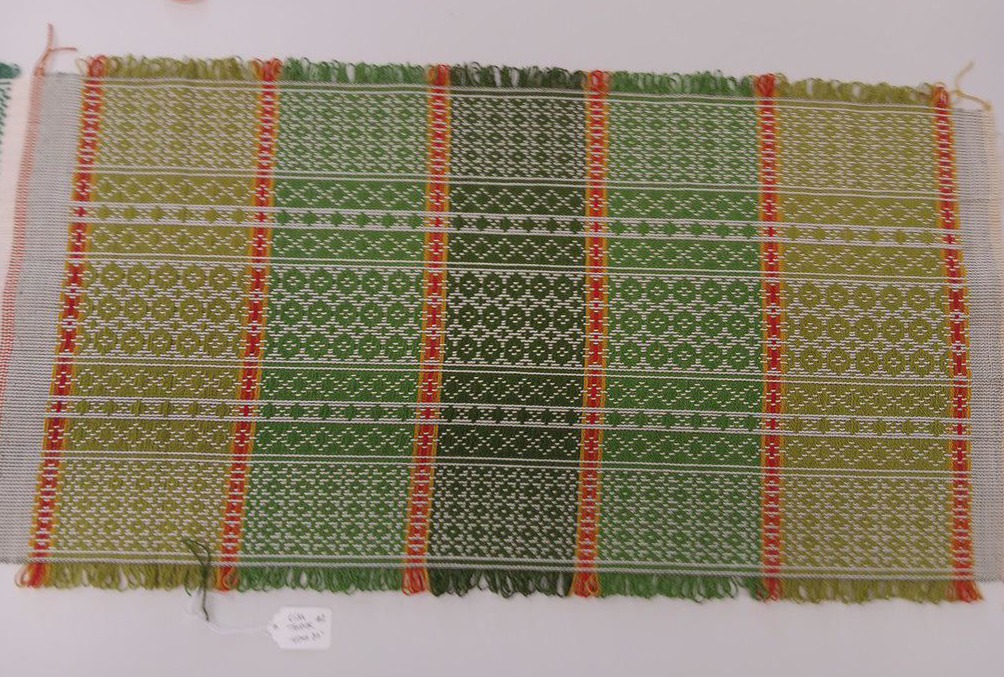
Lisa wove this runner in spring colors, using Rauma Prydvevgarn.
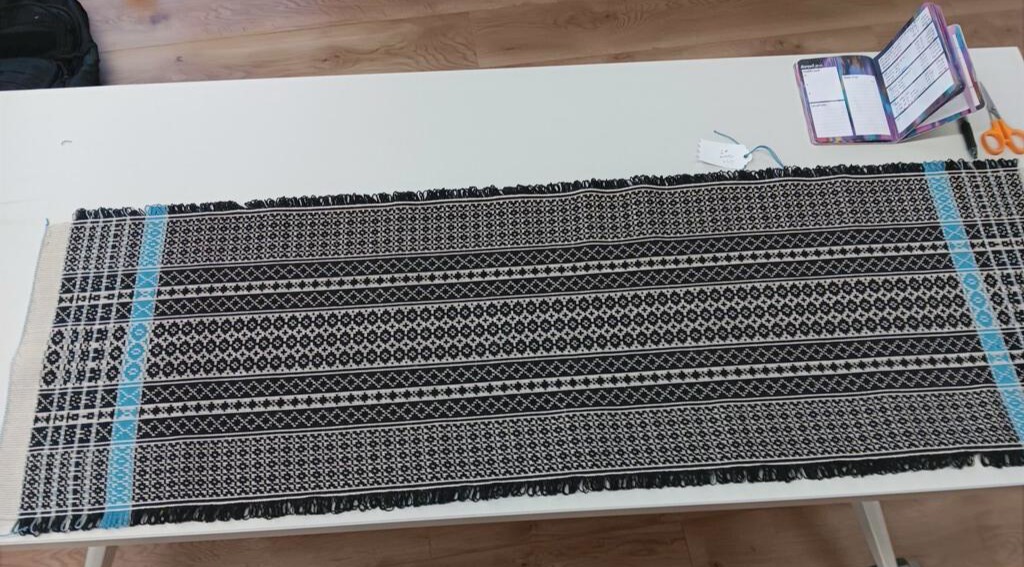
Many of Lisa’s weavings end up as gifts for family and friends in Norway. The black-and-white runner was destined for watercolor artist Gunvor Hegge. (See “Weaving Journeys” blog post for a photo of the runner in its new home.)
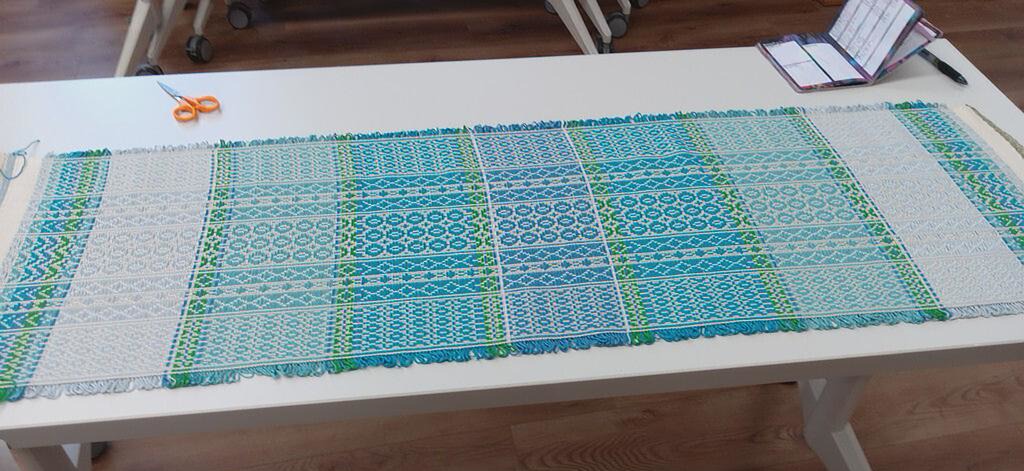
Another runner in delicate spring shades.
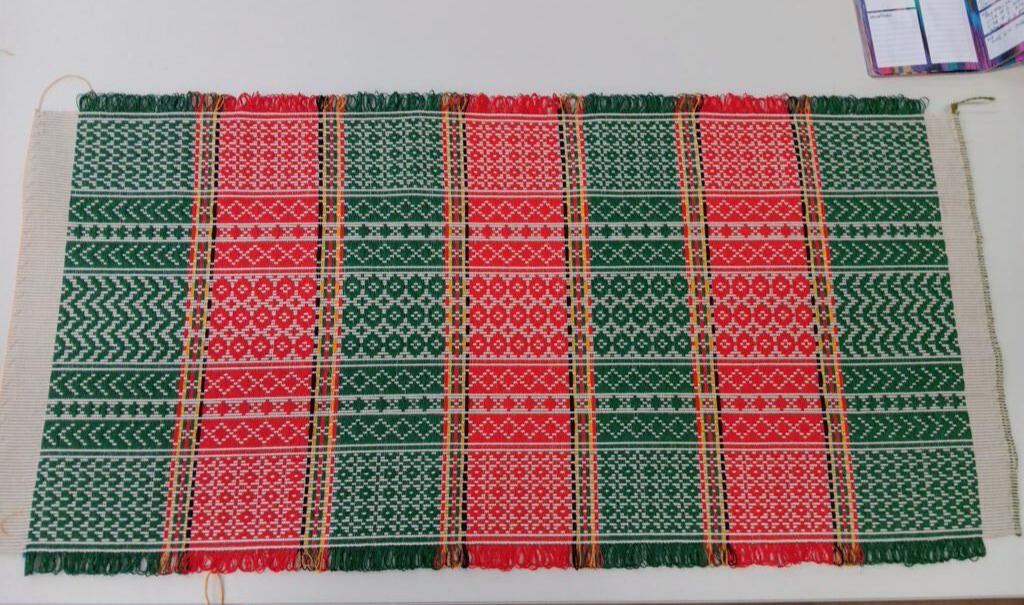
Finally, a weaving for Christmas!
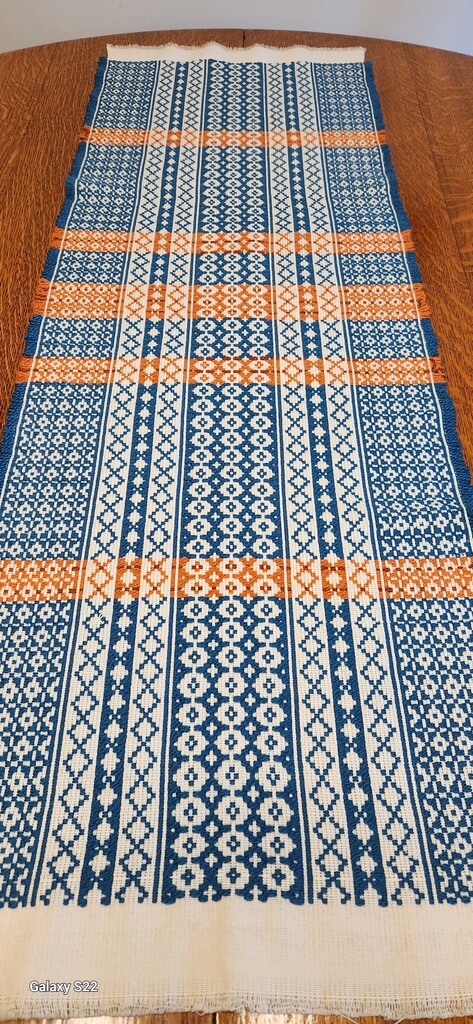
Minnesota enjoyed an unusually mild autumn this year. Lori Labs was inspired by the oak trees at her home in weaving her table runner.

Lori’s weaving in shades of orange and turquoise captured the brilliant glow of golden leaves against the autumn sky.
For her runner, Mary Skoy reached into her yarn stash for some luscious pattern weft.
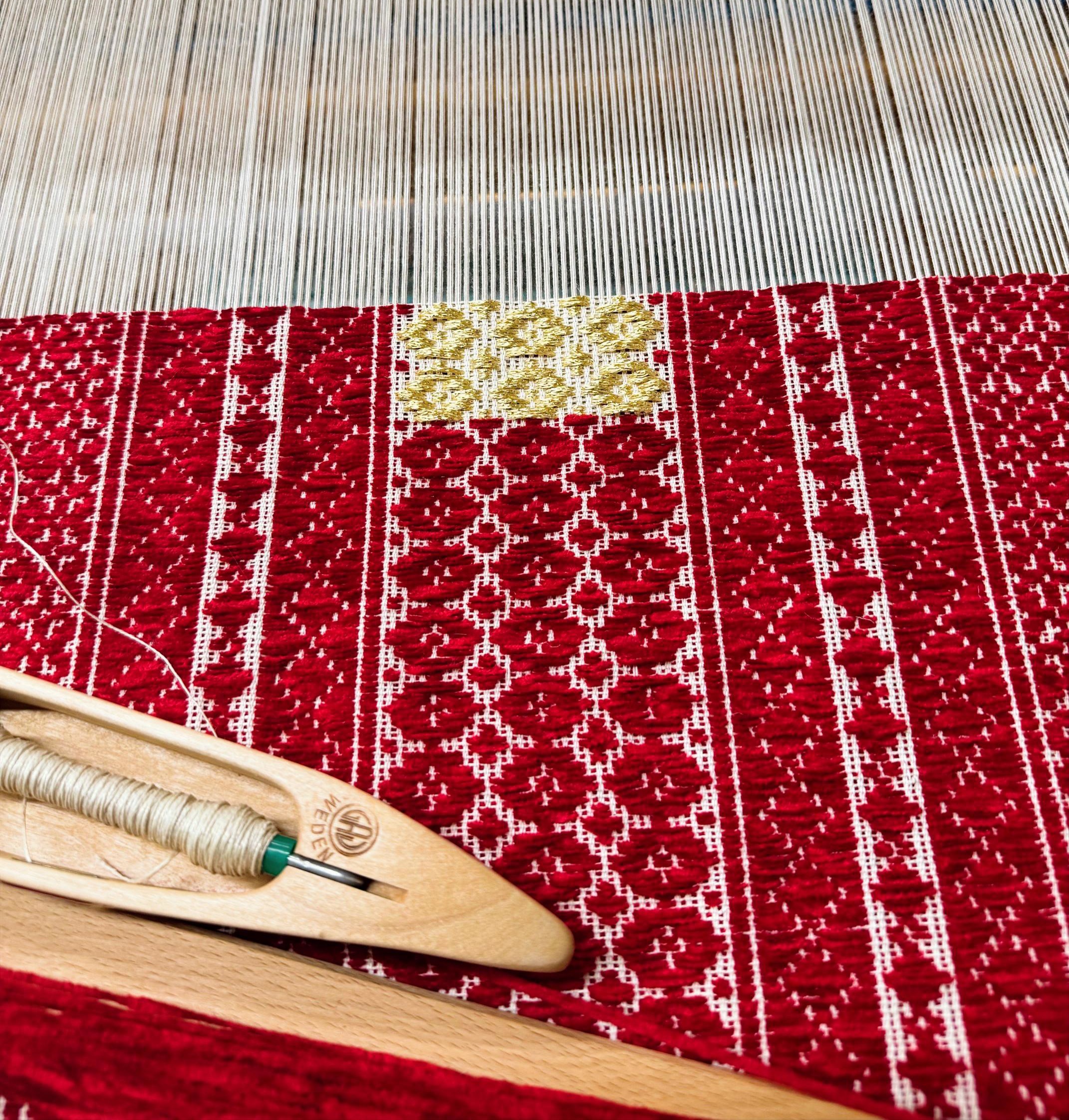
“The red [yarn] is a cotton chenille,” Mary explains. “The yellowing label inside the giant cone says “Phoenix Dye Works Cleveland, Ohio.” Google says the company was liquidated in the 90s. The gold thread was on a much smaller cone with no label, but about the same yardage. I used the McMorran Yarn Balance to estimate the yardage on these two kind of mystery yarns.”
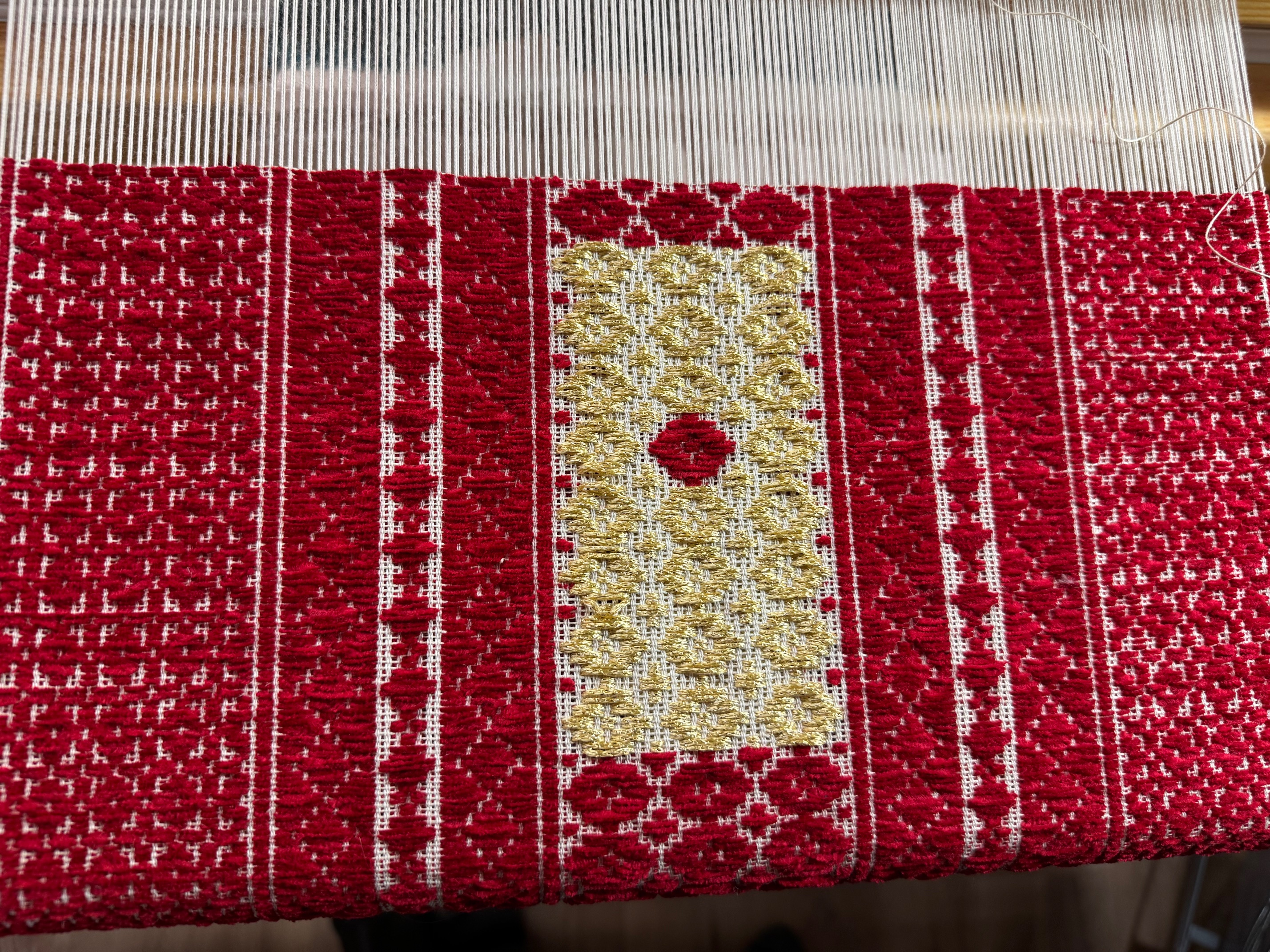
Mary added a special touch to her weaving. The golden pattern square is known in Sweden as a prästruta, or “priest’s square.” Traditionally, this section of a Smålandsväv table covering was reserved for a visiting priest’s catechism or prayerbook.
Like Mary, Marianne Tamminen dug into her stash for her project, including 6/1 wool and unbleached linen.
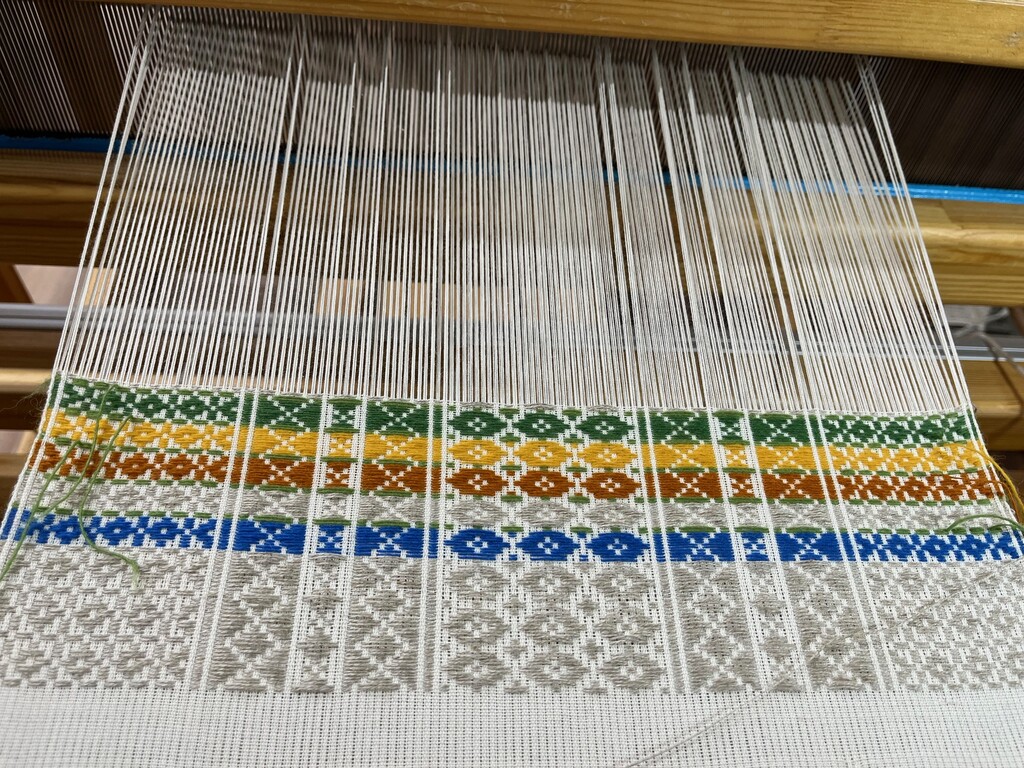
Her first runner was carefully woven to match her dishes, but her second piece is is pure play. “It is so much fun to play with colors and pattern!” she writes.
Nancy Ebner also chose delicate grey pattern weft for runner, with a dash of her signature pink.
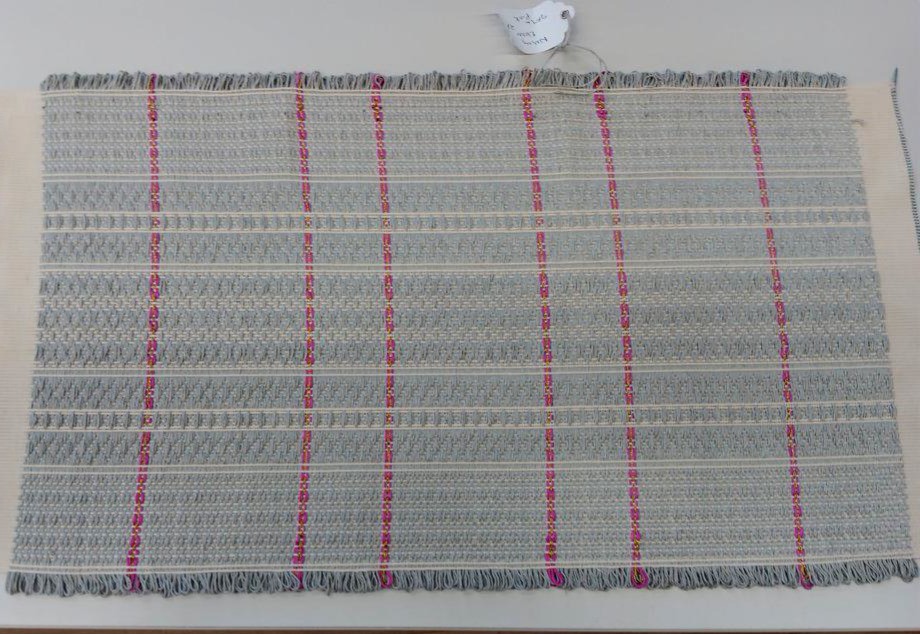
Nancy cleverly used her skillbragd sampler in vibrant green, black, and purple for a pillow. For more of Nancy’s skillbragd weavings, see the blog post “Weaving Journeys (Part One).”
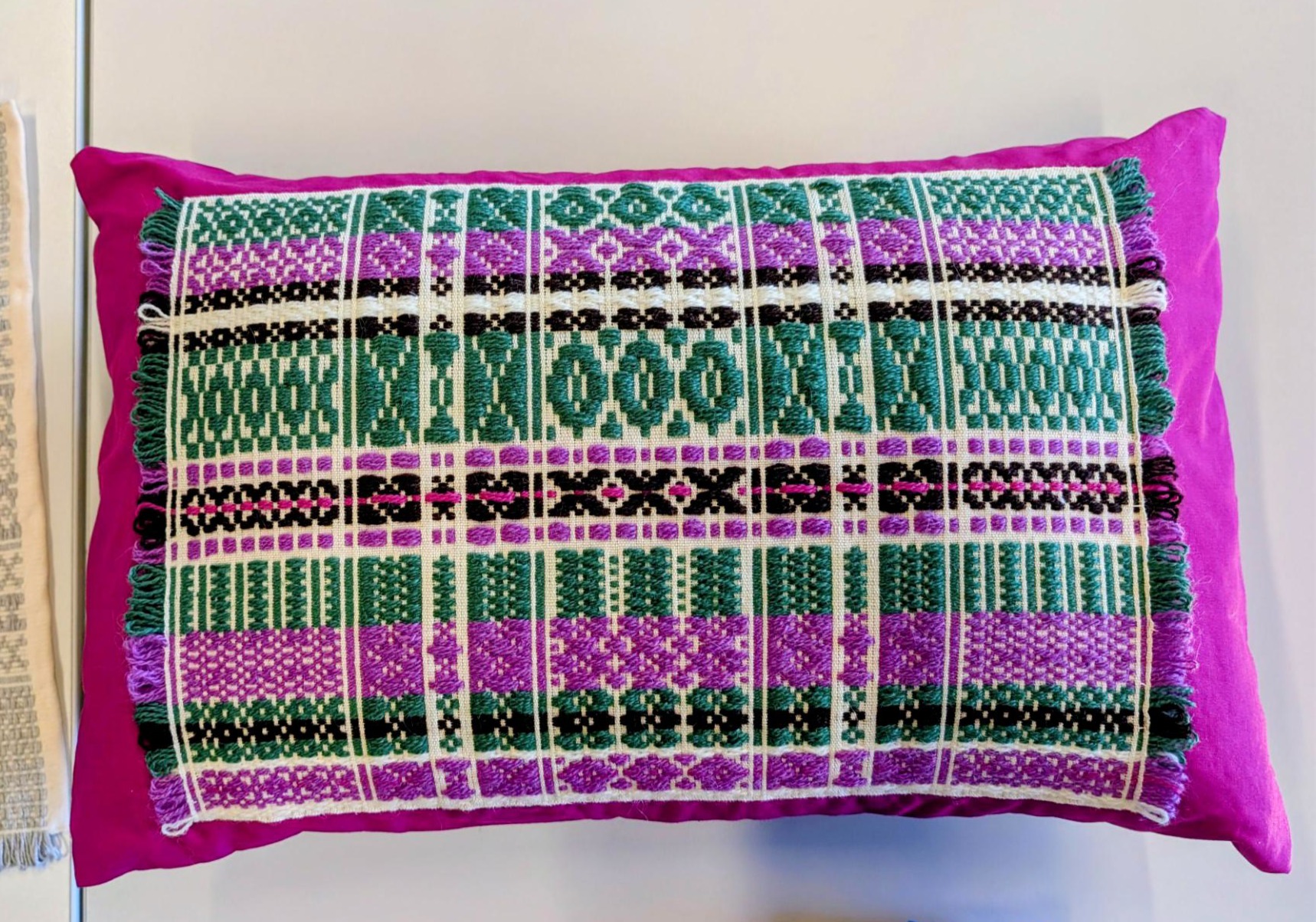
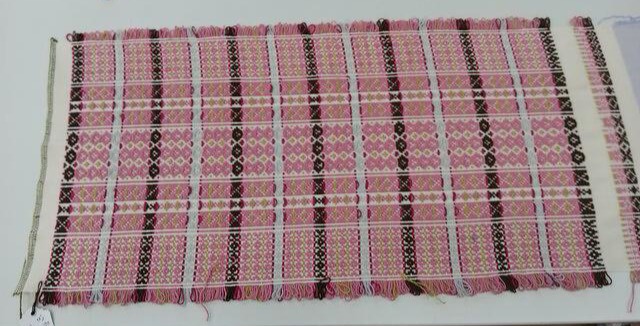
Peg Hansen also loves weaving in pink! Like many others, she used Rauma Prydvevgarn for her pattern weft.
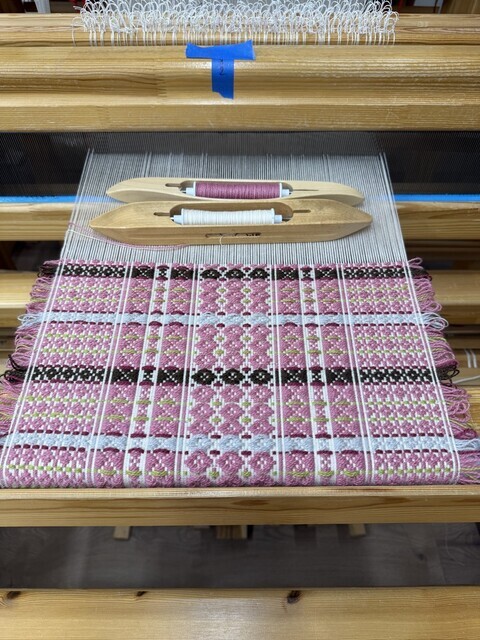
Peg comments: “As many have said before, [skillbragd] is a slow go but gratifying to accomplish. I look forward to finishing it and getting it on my dining room table! Thank you to everyone who has made this opportunity possible. It is so fun demystifying Skillbragd. I hope I can be brave enough to warp it someday on my own loom.”
Shari Nelson wove her runner to complement beloved family tableware.
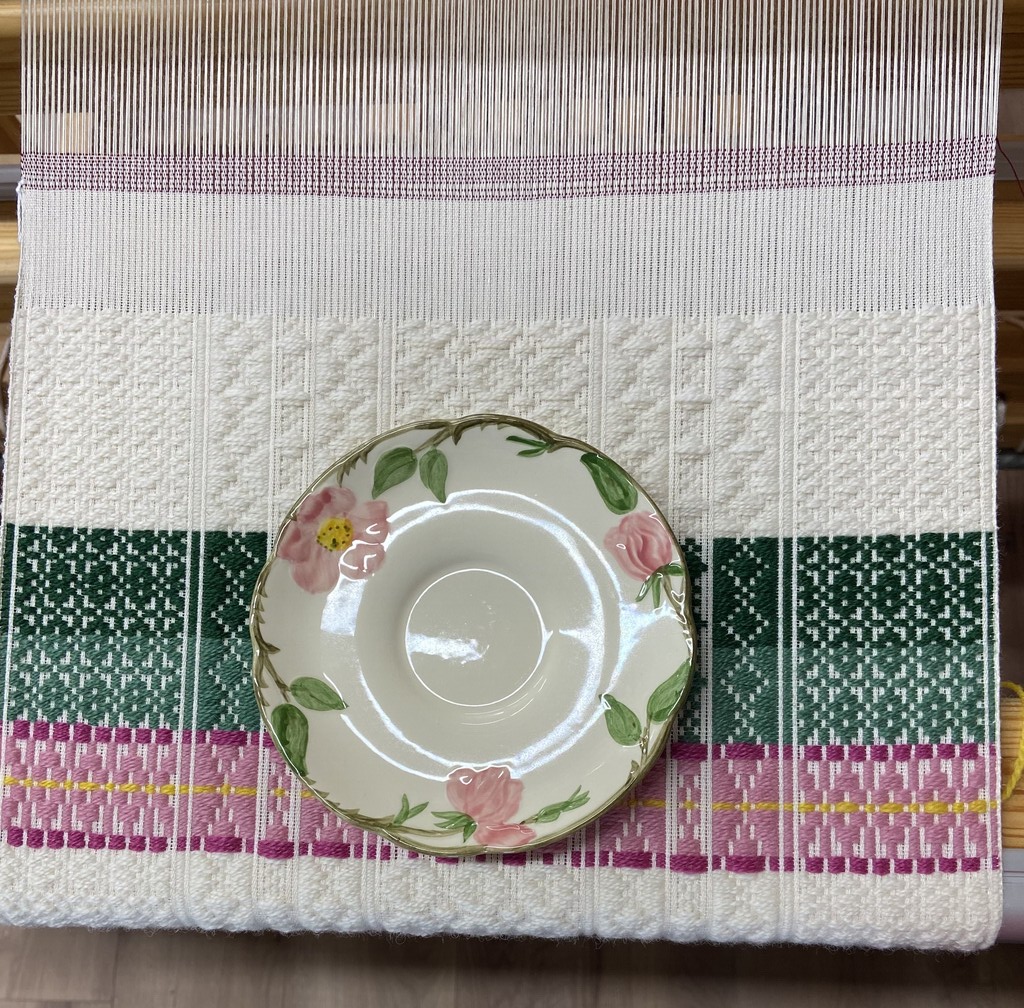
“I planned the colors around my Grandmother’s Fransicanware Desert Rose dishes that I inherited,” she explains. (See link below for more on this popular china pattern.)
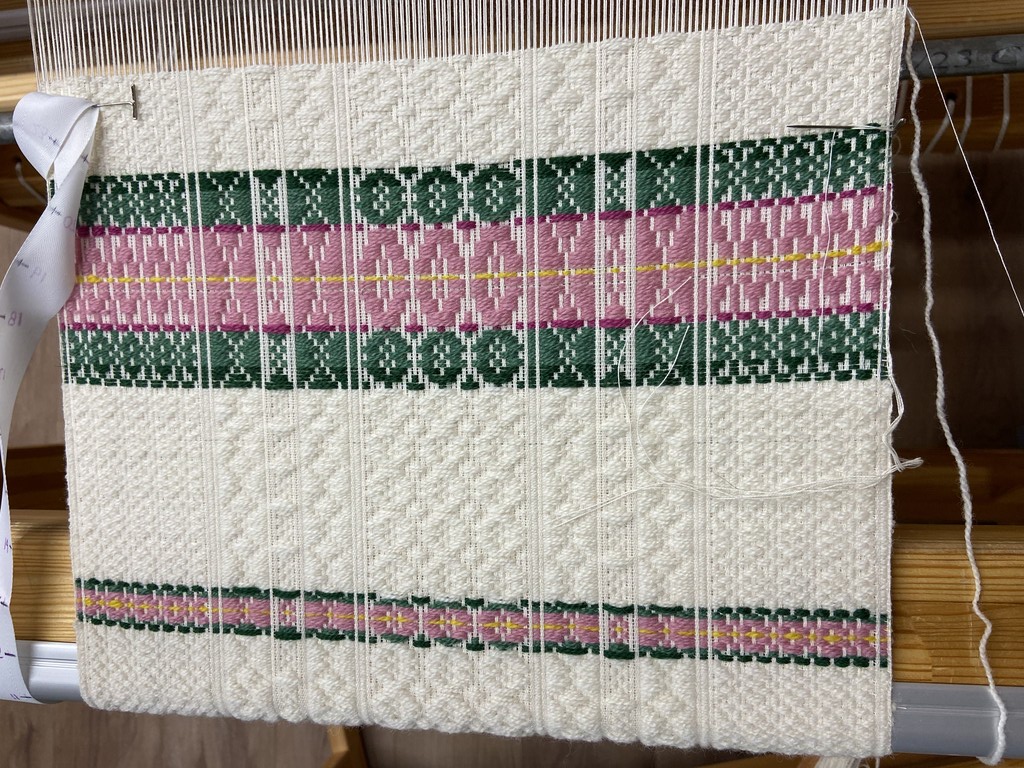
“The cream, yellow and Dusty Rose wefts were Rauma Finull and the burgundy and greens were Prydvevgarn,” Shari writes. “I chose not to do the loop edges as I will be using this as a table runner.”
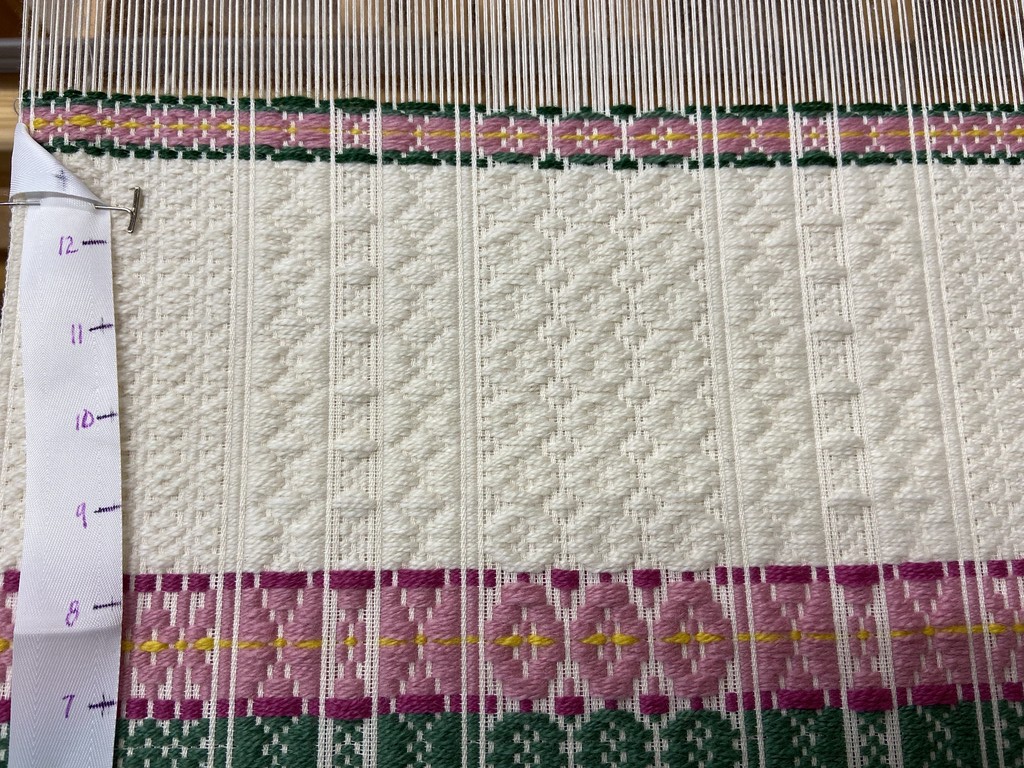
Robbie LaFleur chose to take a sculptural approach to skillbragd.
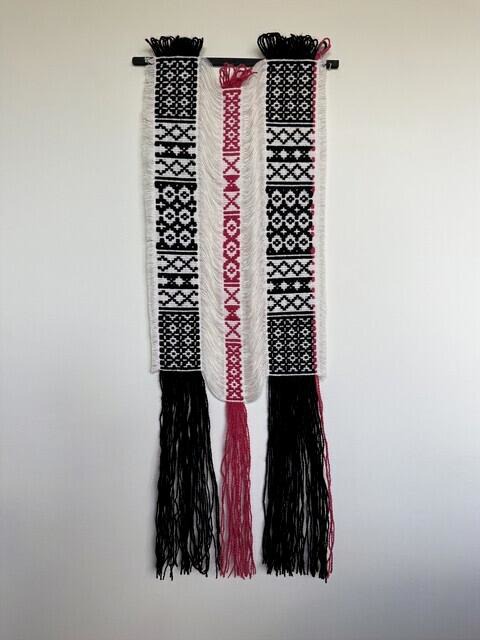
“I have woven runners in skillbragd before,” Robbie writes, “so [this time] I experimented with the technique.”
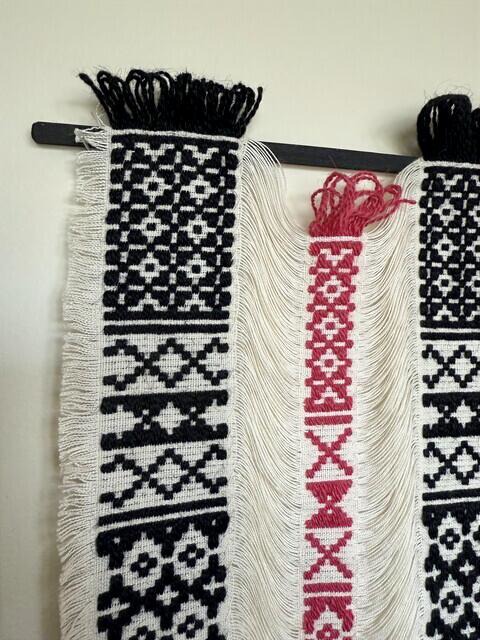
“Å skille means to part or separate,” Robbie explains, “so that’s what I did. It was fun!”
Whatever the style, the possibilities of this technique appear to be endless.
Stay tuned for our next group warp in Norwegian Flesberg technique, also known as treskaft in Swedish.
Bonus content: Enjoy a deep dive into the history of Desert Rose dishes, courtesy of The Brooklyn Teacup!
https://thebrooklynteacup.com/blogs/blog/franciscan-desert-rose-china
 Scandinavian Weavers Study Group
Leave a comment