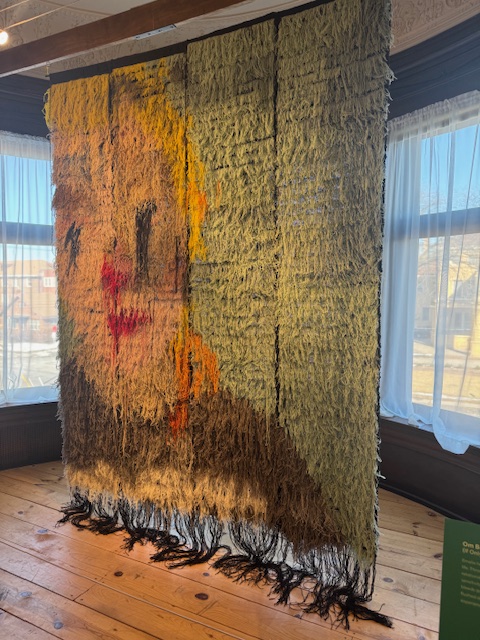
Members of the Scandinavian Weavers were honored to volunteer for a major exhibit by Swedish artist Emelie Röndahl at the American Swedish Institute (ASI) in Minneapolis. “Handwoven: Between Chaos and Order” is on view through June 7 in the historic Turnblad mansion.
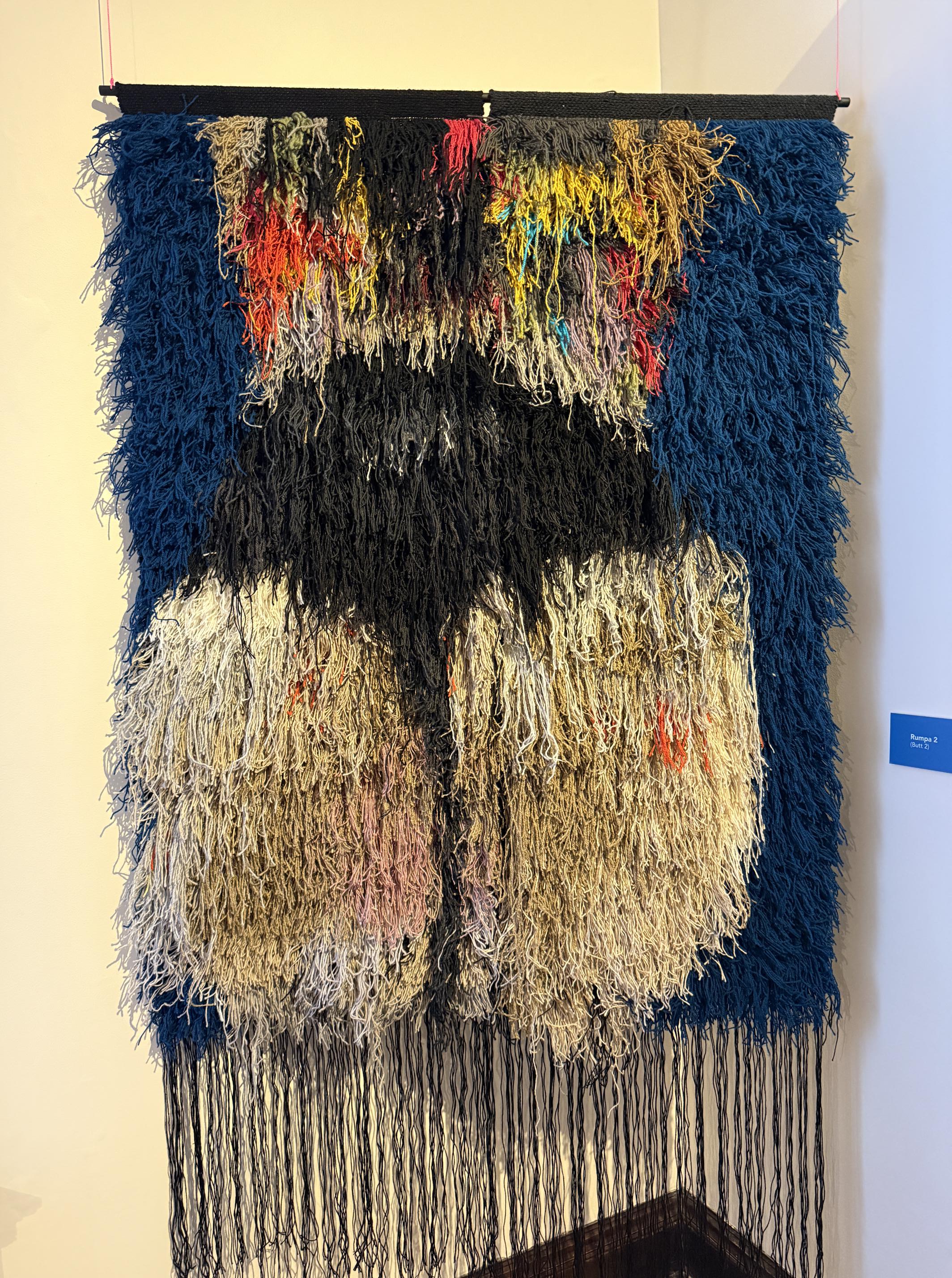
Emelie works in rya, a traditional pile weave once used for warmth. In Emelie’s vision, the humble rya become works of contemporary art, monumental in scale yet intimate in imagery.
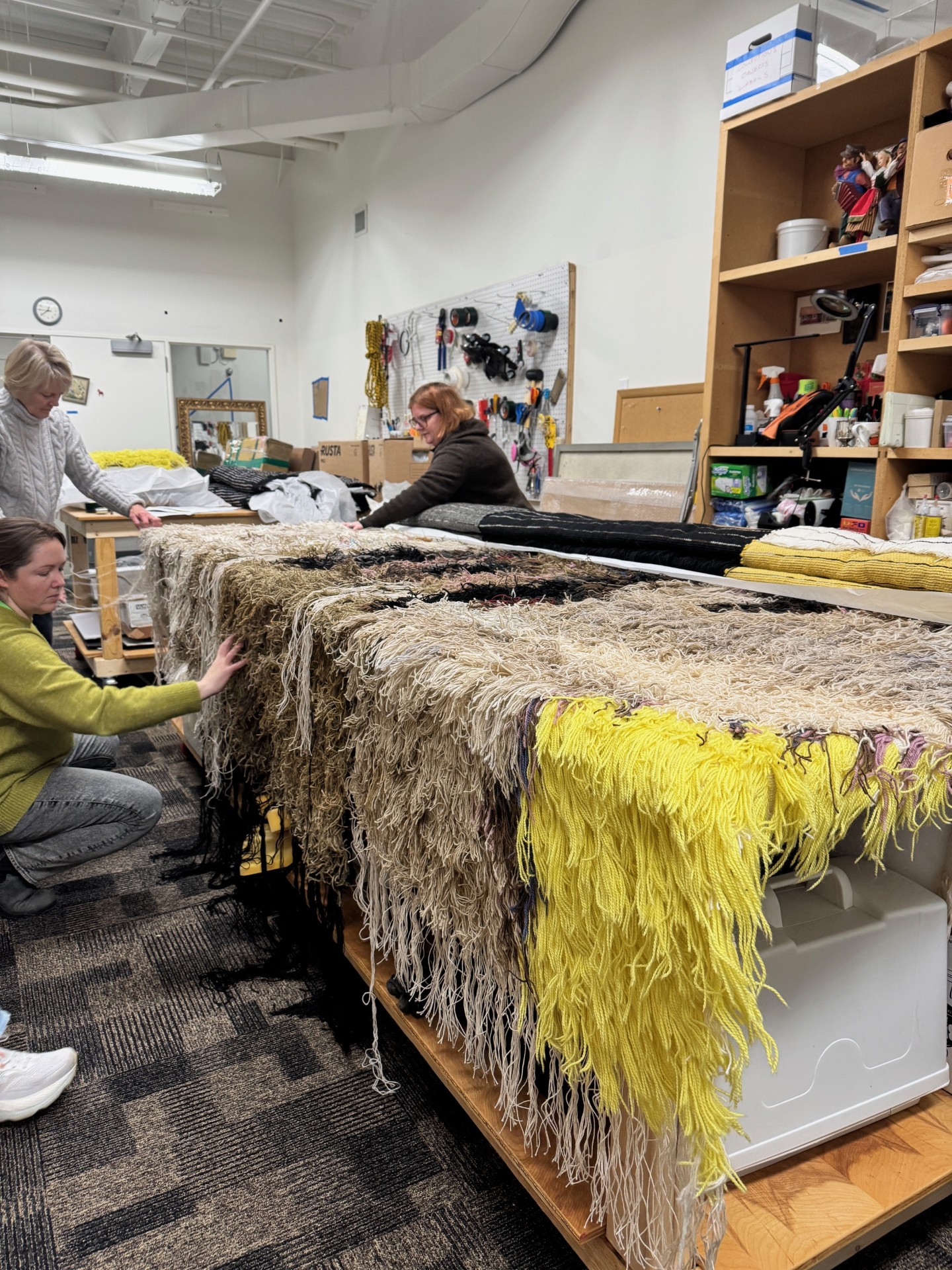
Several Scandinavian weavers were on hand to help un-box the massive textiles, which were shipped from Emelie’s studio in Sweden.
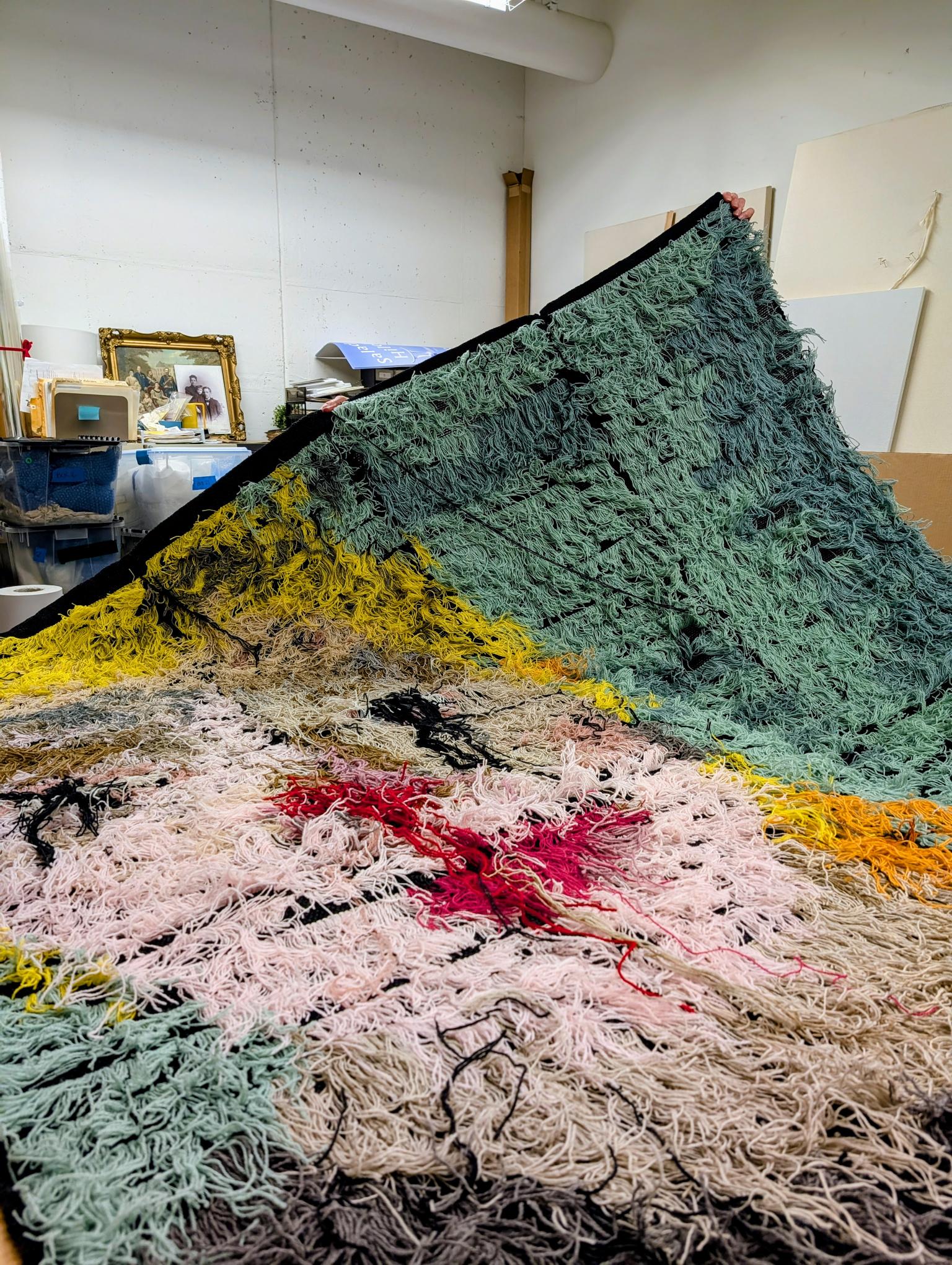
The rya were carefully finger-combed to lift the pile. It was such a treat to sink our fingers into the luscious fibers!
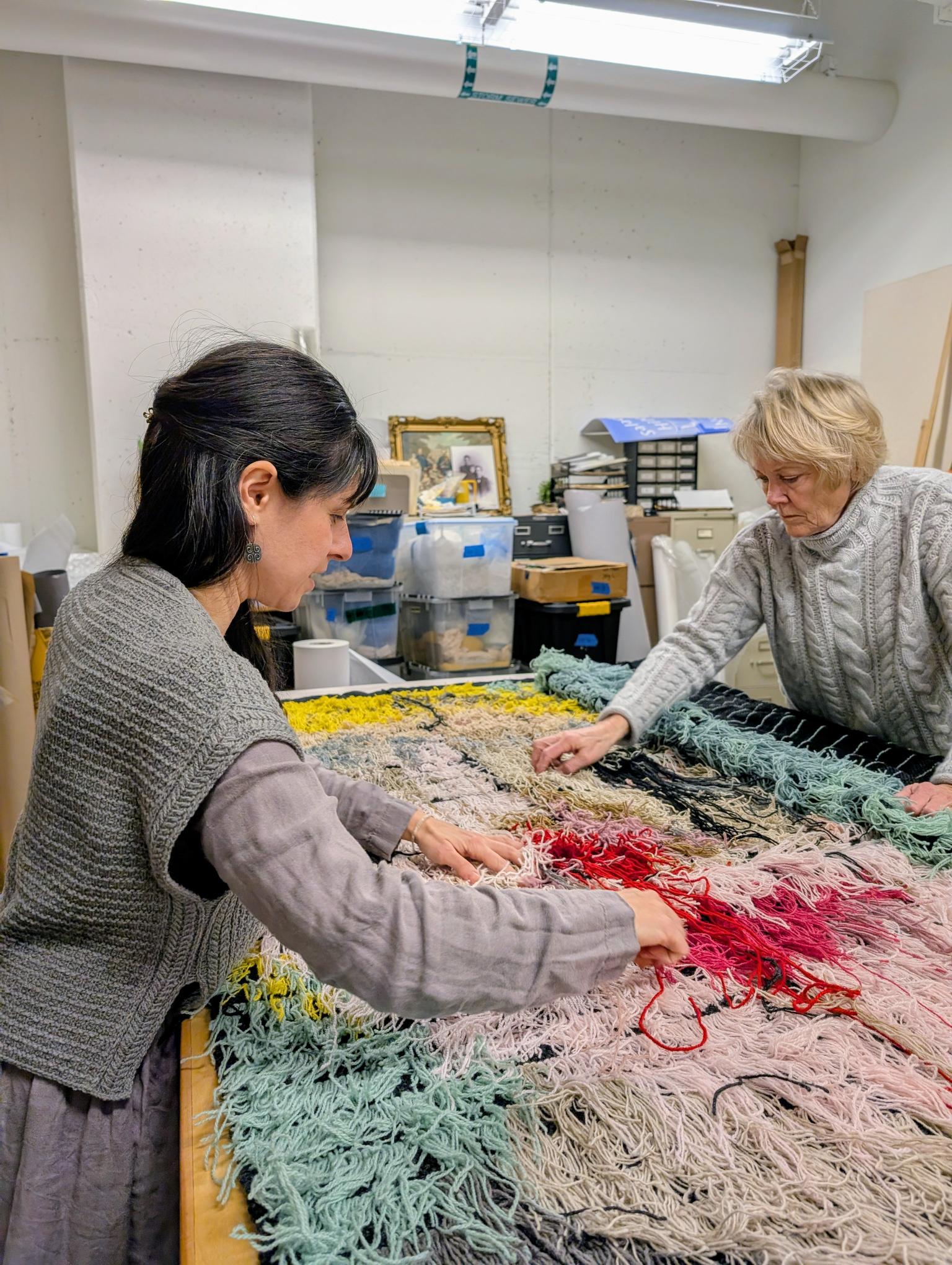
While in lockdown during Covid, Emelie began weaving portraits of family members, including her beloved dog Maxim. Combing the fibers, we felt like we were petting his soft fur. Such a good boy!
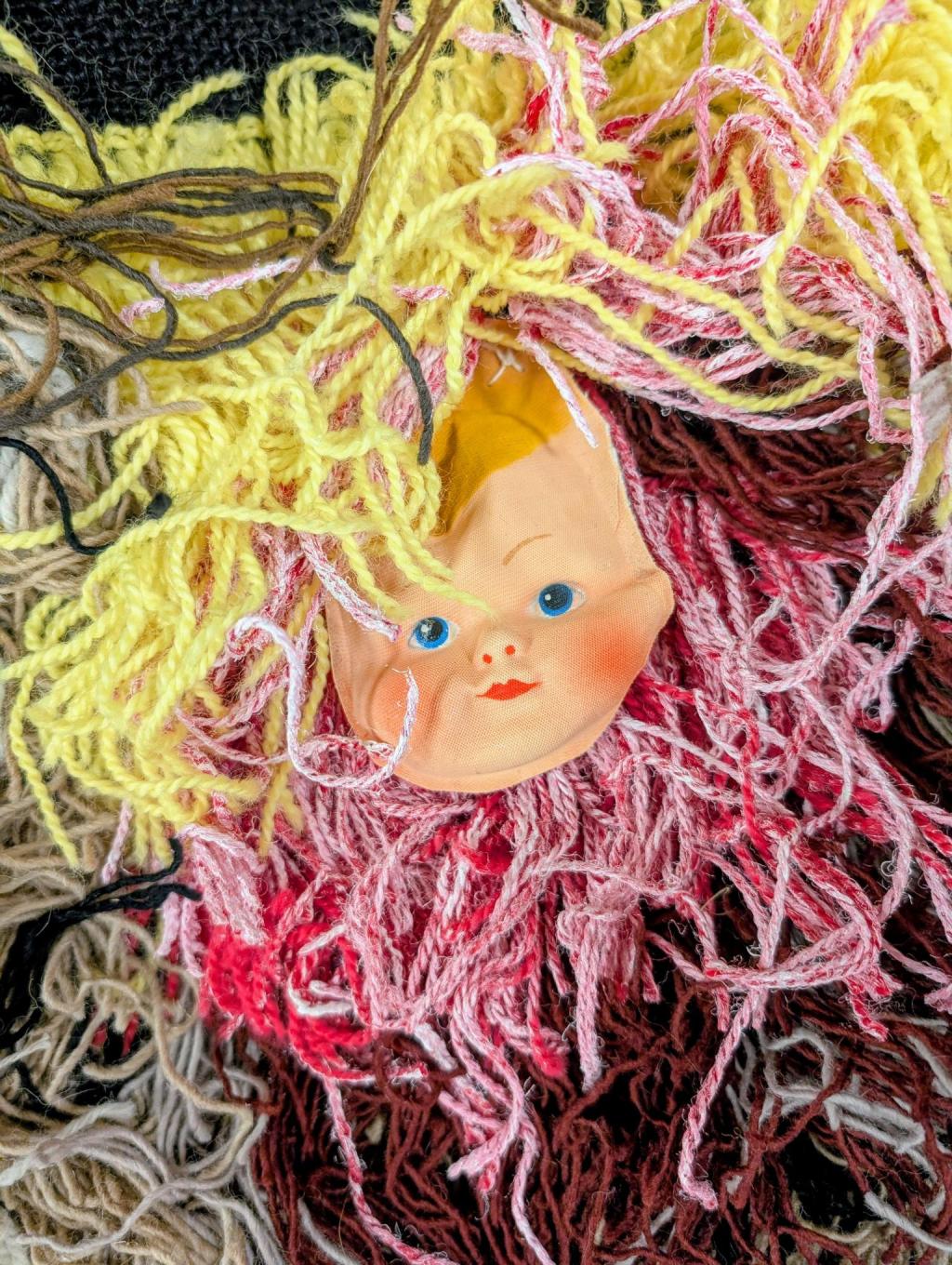
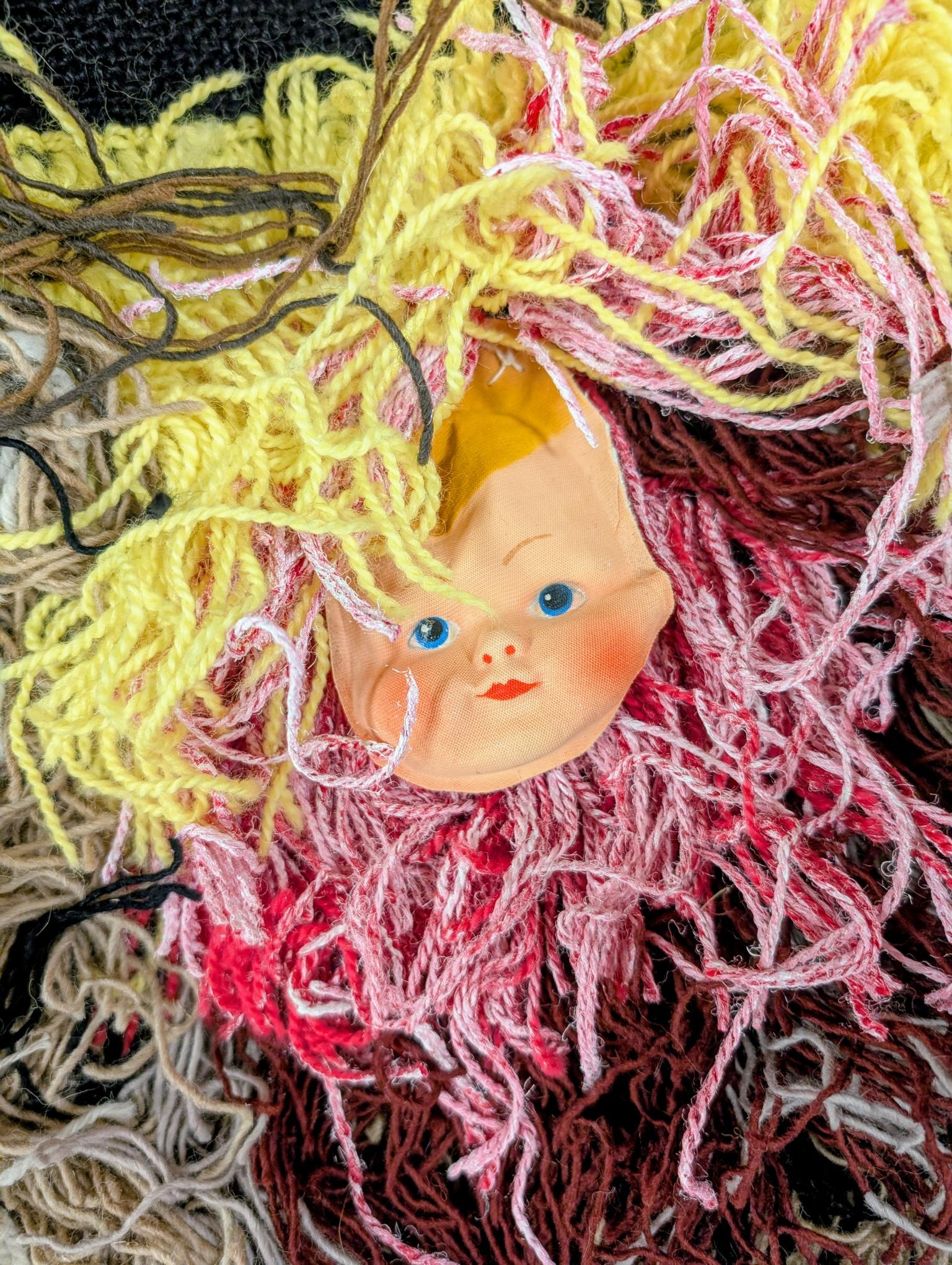
Emelie uses yarn of all fibers and sizes in her work. Up close, the viewer will find delightful details, including hidden braids, strands of tinsel, and other surprises.
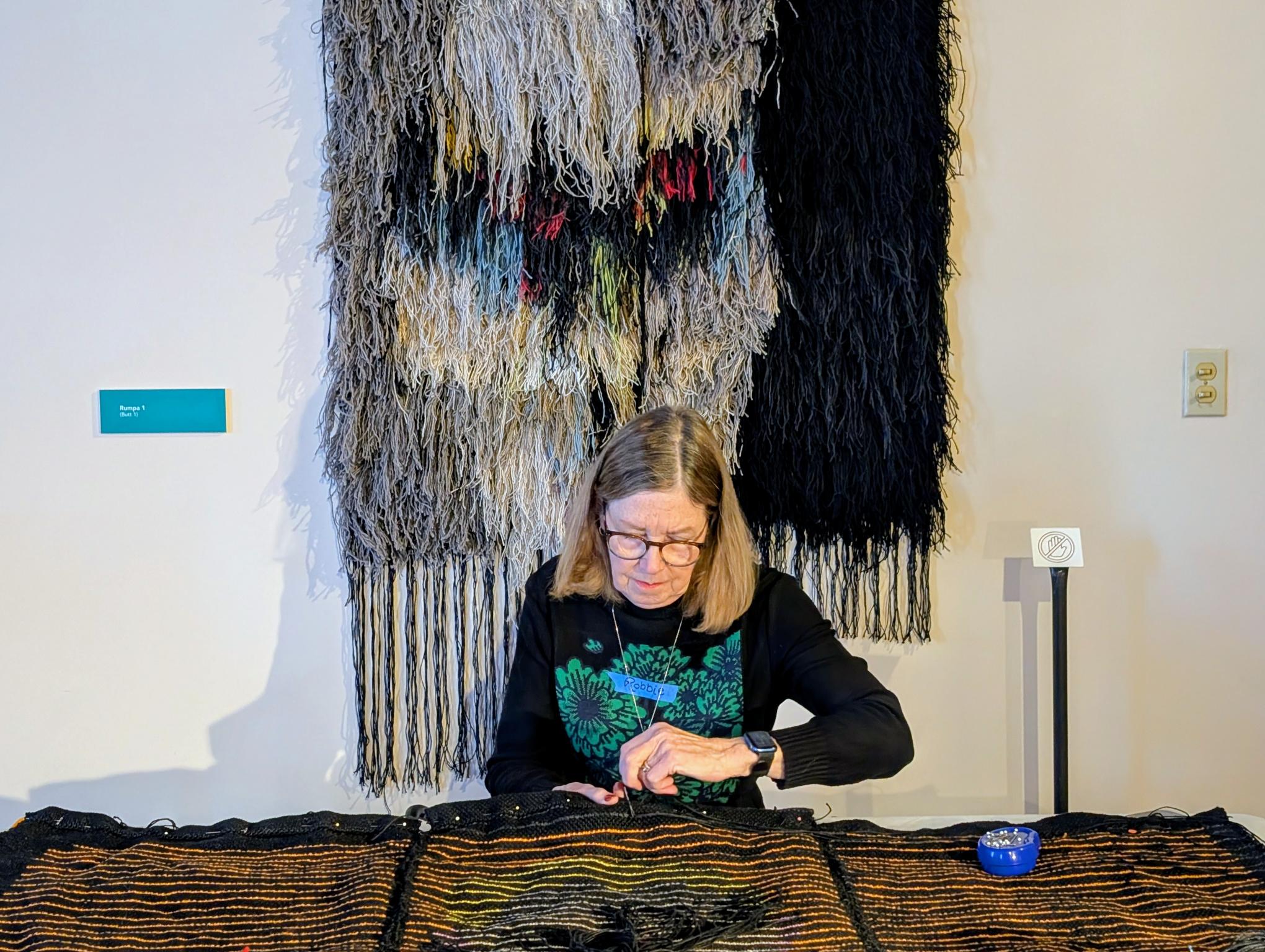
Emelie weaves her largest works in panels, which are then sewn together. Here, Robbie LaFleur lends a hand.
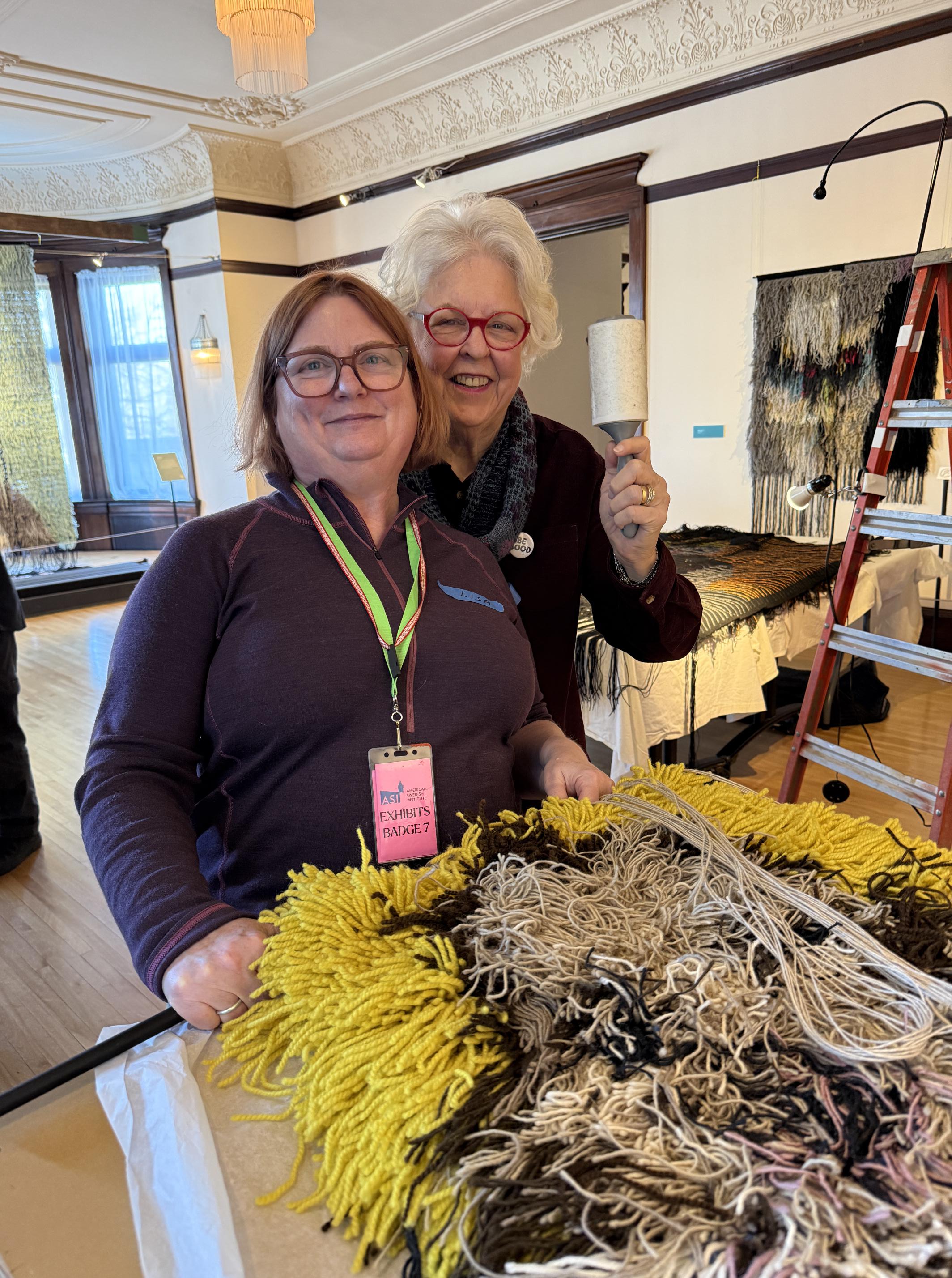
Because Emelie’s home is pet-friendly, a lint roller is used on the reverse side of the weaving to remove any stray hairs. Fortunately, Mary Skoy was on hand to tackle the job!
This weaving, called “Rumpa,” was one of our favorites.
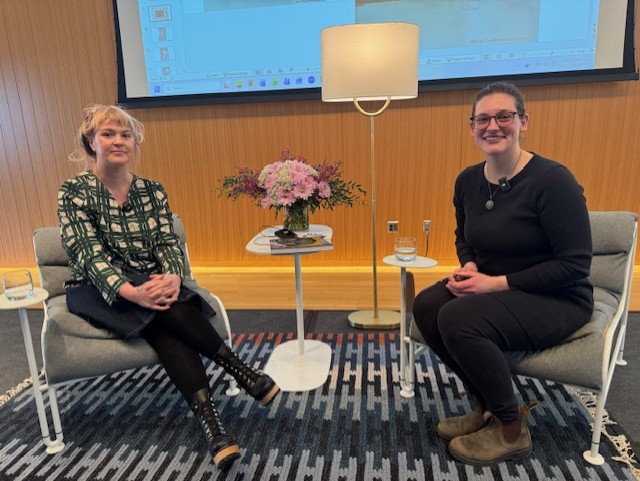
We were also honored to attend an artist’s talk with Emelie, in conversation with Betsy Konop, Executive Director of the Weavers Guild of Minnesota.
While weaving, Emelie works from a printed cartoon, usually a photo. But when it comes to choosing the individual strands of yarn, Emelie’s weaving process is intuitive. Once a piece is removed from the loom, she does not trim the pile or otherwise alter the weaving. She intentionally lets the longer strings hang, so they appear to be “crying,” expressing the emotion of the image.
Rather than relegating rya and other traditional weavings to the past, Emelie feels they still speak to us today. Her exhibit stands as testament to the contemporary possibilities of this ancient technique.
And where would Emelie like to visit while in Minneapolis? The Prince museum at Paisley Park, of course!

 Scandinavian Weavers Study Group
Leave a comment