Category: Norwegian weaving

  • A Virgin and Violence: Lila Nelson’s Weaving at the American Reboot Exhibit

    A Virgin and Violence: Lila Nelson’s Weaving at the American Reboot Exhibit

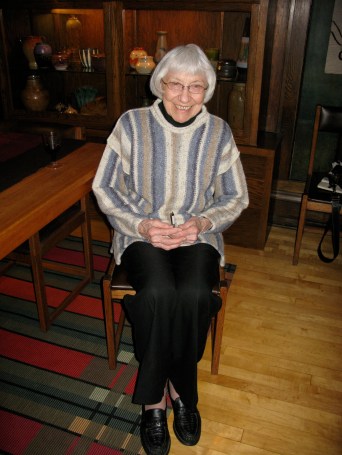
    IMG_1904Lila Nelson, who died in 2015 at age 93, was the Registrar and Curator of Textiles at the Vesterheim Norwegian American Museum for 27 years, and a mentor to many of the weavers whose works are in the “Traditional Norwegian Textiles: American Reboot” show. No retrospective of American weaving in the Norwegian tradition would be complete without her work.

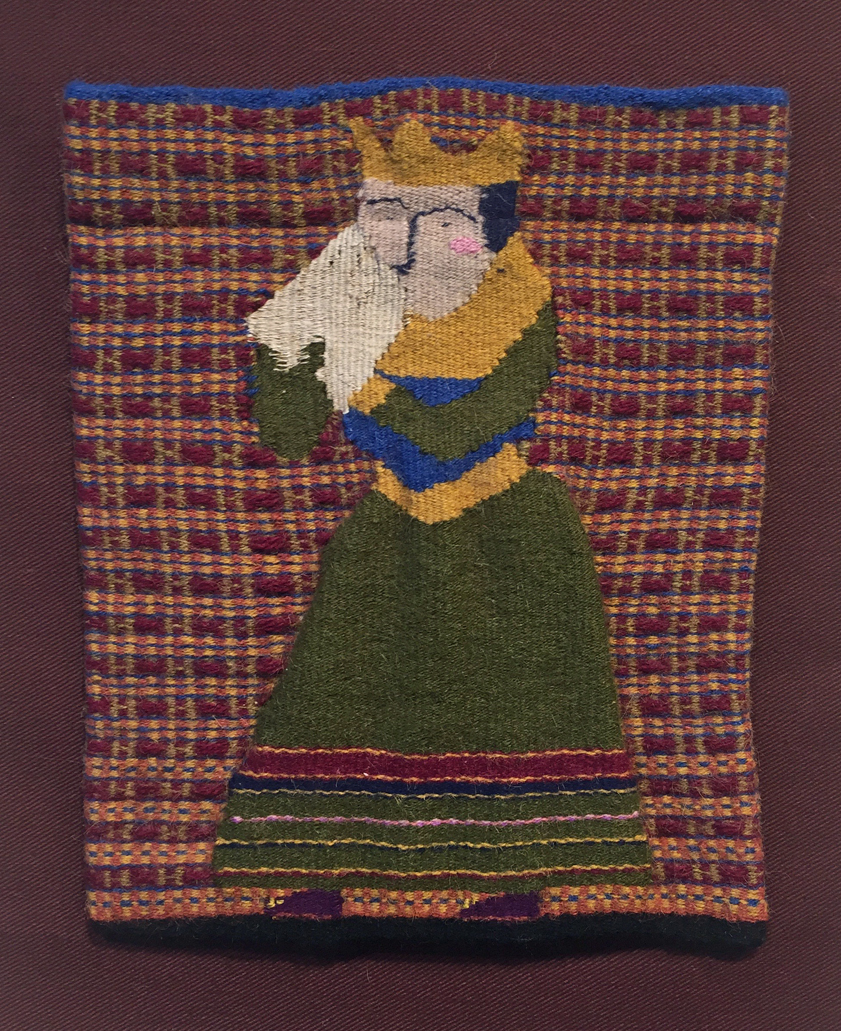
    Two of Lila’s tapestries, both owned by the Vesterheim Norwegian-American Museum, are included in the American Reboot exhibit.  One is a “virgin” with a puffy skirt.  Many people who are fans of Norwegian tapestry, or billedvev (literally, picture-weaving), weave one of the virgins from the most popular medieval weaving motif, the Wise and Foolish Virgins. Lila wove one with attitude, and with a distinctive skirt.  She wove the tapestry on a floor loom and used a clever combination of loom-controlled weave structure along with billedvev technique. When she wove the image of the woman, the threads in the “H” technique of the background floated behind, and she wove the figure in tapestry (billedvev). Perhaps it was unintentional, but that technique made the skirt pouf out.

    virgin-foolishMost of the virgins in the old tapestries held stylized small squares to their faces.  (See the detail here, from a Wise and Foolish Virgins tapestry owned by MIA, the Minneapolis Institute of Art.) On Lila’s virgin, there is no doubt that the foolish virgin is crying into a substantial and functional handkerchief. This piece shows Lila’s lifetime love of experimentation in her weaving. It was also chosen because the exhibit will include many other virgin interpretations, showing the influence of that design in traditional Norwegian weaving.
    lila-virgin.jpg

    Lila’s other tapestry in the show illustrates another characteristic of Lila’s work–her frequent commentary on politics and world events.
    9.3 Tree of death (2'5"x2'1")
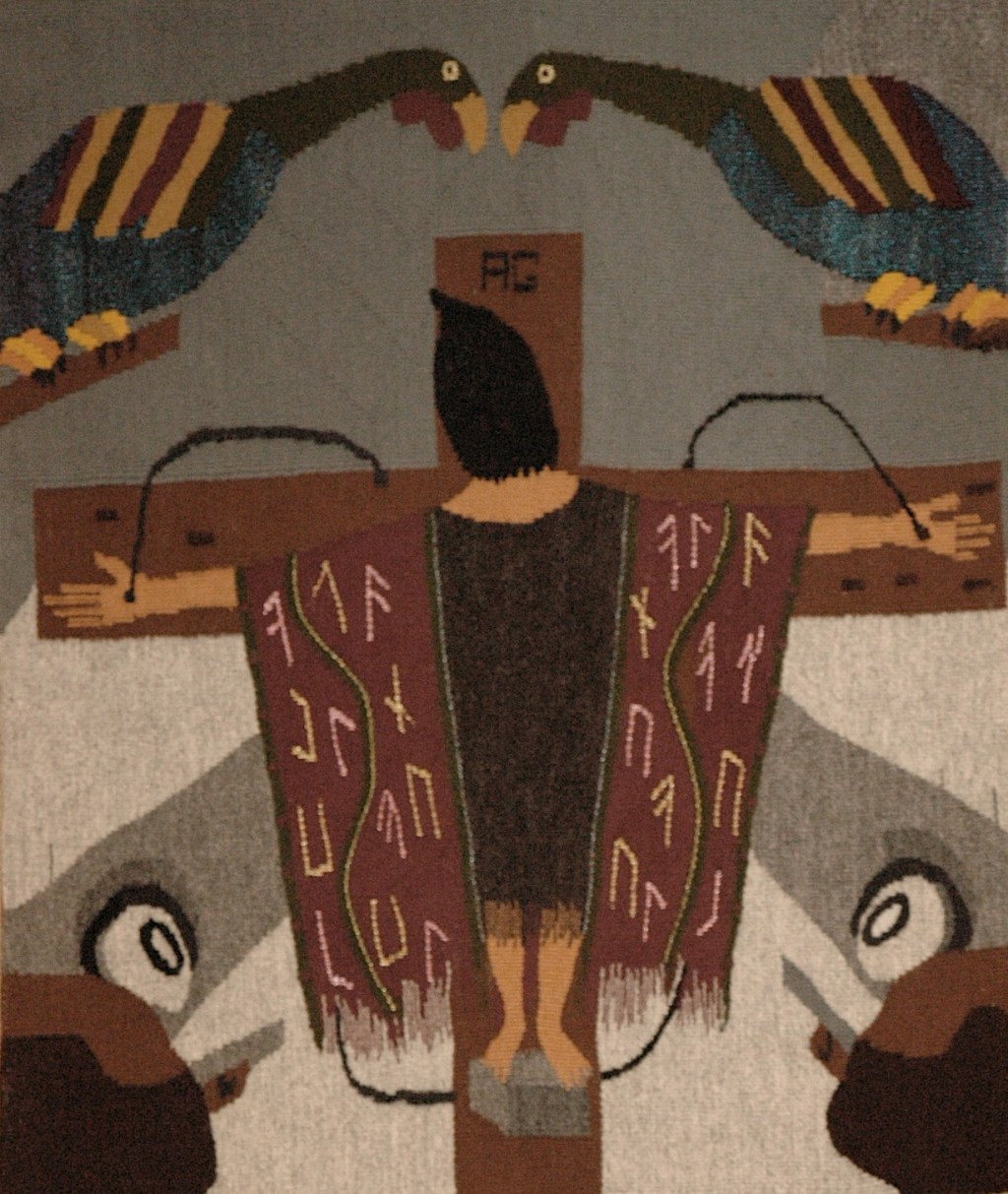
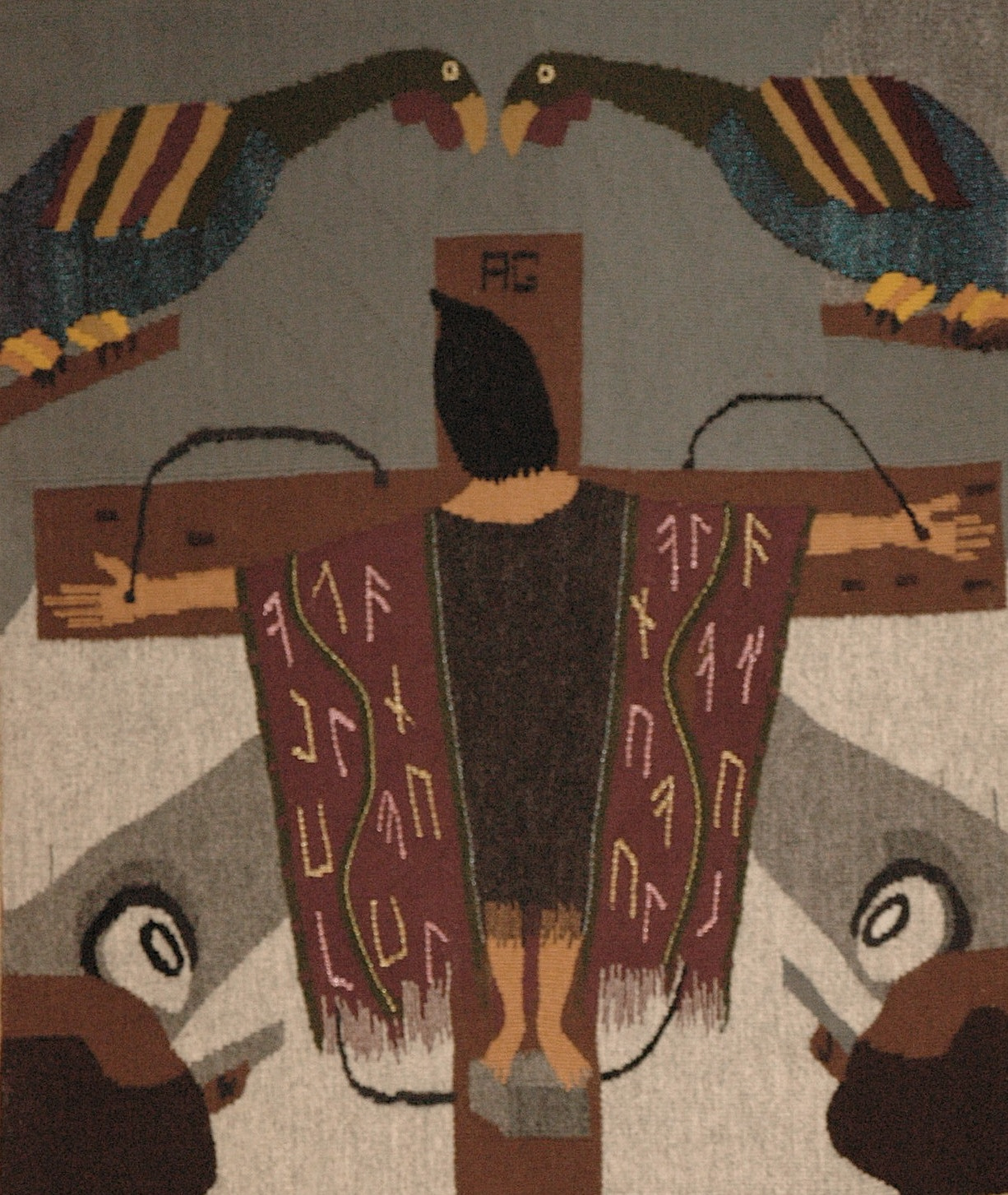
    Tree of Death. Lila Nelson, 2004


    It was inspired by the photo, “Torture at Abu Ghraib,” by Seymour Hersh in the New Yorker on May 10, 2004.  Here are Lila’s comments, as related in an interview with Sam Iverson.

    “I saw an image of how they were treating some of the prisoners to get them to talk at Abu Ghraib and I thought this was quite horrifying. I think you can see that I turned this [image] into a cross-like thing and the AG stands for Abu Ghraib. At the bottom are impersonal guards or soldiers. The characters at the top are “vultures” that are in charge of all this. The designs on the garment are being ironic. They are from one of the Finnish runic alphabets and they are sort of the letters for love.”

    Only two pieces from Lila’s loom are in the American Reboot exhibit, but her influence, whether through acquiring textiles for Vesterheim, or mentoring aspiring weavers, can be directly tied to many other weavings on view.

    Explore more about Lila’s work in these online articles.

    The Tapestries of Lila Nelson: Poetry, Myth, and Protest. This article was published at the time of an exhibit of her work at the Textile Center of Minnesota, November 2 – December 16, 2015. Also, this document includes images and commentary from the show. (Warning: it is a large file and will load very slowly.)

    From Tradition to Protest: Lila Nelson’s Weaving Life.  An overview of a retrospective of Lila Nelson’s work at the Vesterheim Norwegian-American Museum, December 5, 2015 – November 16, 2016.

    At a celebration of her life held on June 25, 2015, several friends spoke about Lila: Robbie LaFleur, Laurann Gilbertson, Carol Colburn, Lisa Torvik, Claire Selkurt, Wendy Stevens, and Mary Skoy.

    The May 2012 issue of the Norwegian Textile Letter was devoted to Lila and her work.

    Watch a video interview by Sam Iverson about Lila’s political weavings, here.
  • A Two-sided Textile: Pick Your favorite Side

    A Two-sided Textile: Pick Your favorite Side

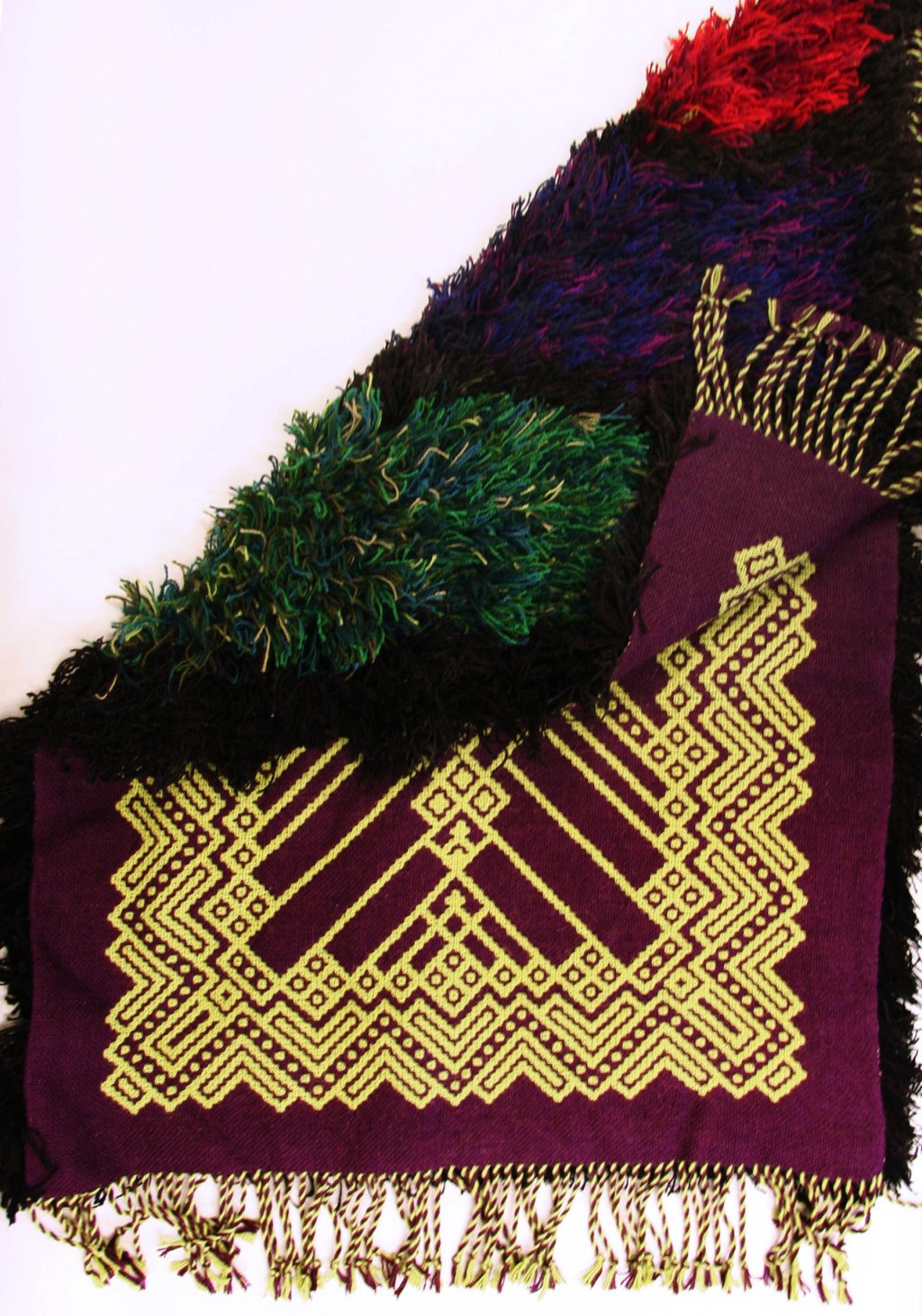
    Iowa artist Laura Demuth sets up amazing weaving challenges for herself.  Often, not content with just buying and weaving with beautiful wool, she spins and dyes yarn from her own sheep.  In a number of weavings she has gone beyond weaving for beauty on one side, and combined techniques to make unique two-sided textiles.  One of those will be included in the upcoming “Traditional Norwegian Weaving: American Reboot” exhibit at Norway House from July 20-September 10, 2017.

    On one side of the hanging, Laura wove an intricate pattern in a complex doubleweave technique.  She hid the knots of the rya pile between the two layers of the doubleweave. Because the doubleweave pick-up surface needs to be the upper side during weaving, she tied the knots upside-down on the lower surface. (Rya weavers would understand: this is tricky.)

    Rya3-1

    On the other side, colorful stripes of beautifully-blended yarns are dense and enticing. This piece perfectly fulfills its purpose as a warm throw.

    Rya2

    Biography:

    Laura Demuth has been weaving for over 30 years and enjoys all aspects of textile production, from raising the sheep to taking a finished piece off the loom. Living on a small acreage just  seven miles northeast of Decorah, Iowa, Laura has a small flock of registered Blue Faced Leicester sheep that keep her hands busy spinning wool all winter. She often dyes the handspun yarn with natural dyes from the garden before putting it to use in a woven or knitted textile.

    Because Laura lives so close to Decorah, Vesterheim Norwegian American Museum has been a continual source of education and inspiration throughout her weaving career. Laura has  focused on traditional weaving structures and techniques, especially bound weave and doubleweave.

    IM000401.JPG

    Don’t miss this piece and so many more in “Traditional Norwegian Weaving: American Reboot.” The opening night at Norway House, July 20, 5-8, would be a smashing time for a first peek.

  • “Traditional Norwegian Weaving: American Reboot:” Take Classes Right in the Gallery

    The Norway House/Weavers Guild of Minnesota exhibit this summer, Traditional Norwegian Weaving: American Reboot, includes special events and programming.  (Full list here.) Three classes by Weavers Guild instructors will be offered, all on Mondays, and will be held right in the Norway House Galleri.  This is a great opportunity to learn a new skill while surrounded by the color and texture of the textiles in the show.  Sign up soon!

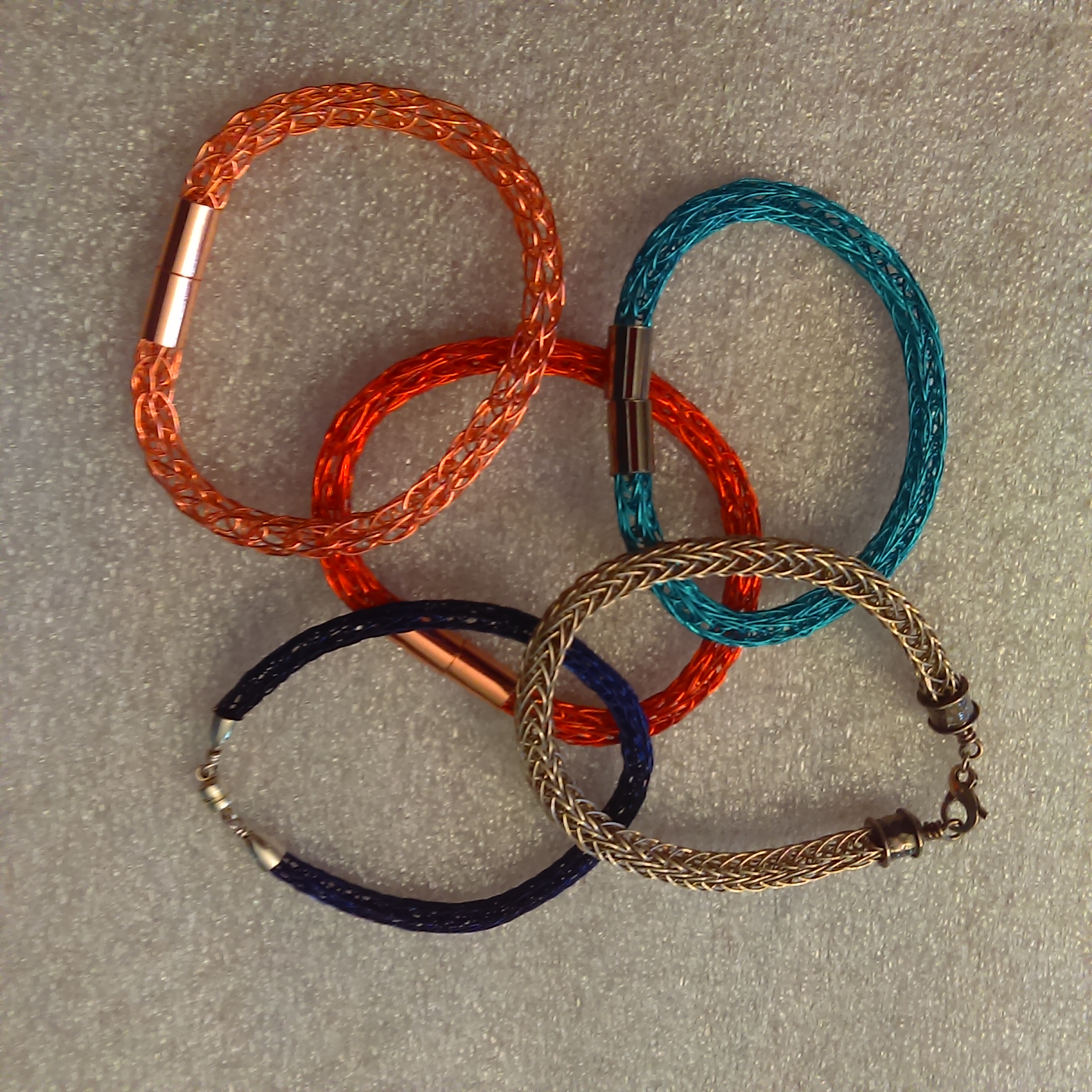
    Viking Metal Bracelet: July 24, 2017, 10 am – 2 pm. Instructor: Melba Granlund

    viking-knit

    Learn an ancient wire looping technique called Viking knit.  Dating back to the Viking era, it was used in jewelry making and as ornamentation on garments.  In this class, students will learn how to use various nickel-free wires (stainless steel, copper, brass, or gold plated copper) or colored artistic wire to create a one-of-a-kind bracelet.   Materials fee of $12 payable to the instructor.  Maximum number of students: 8. Sign up


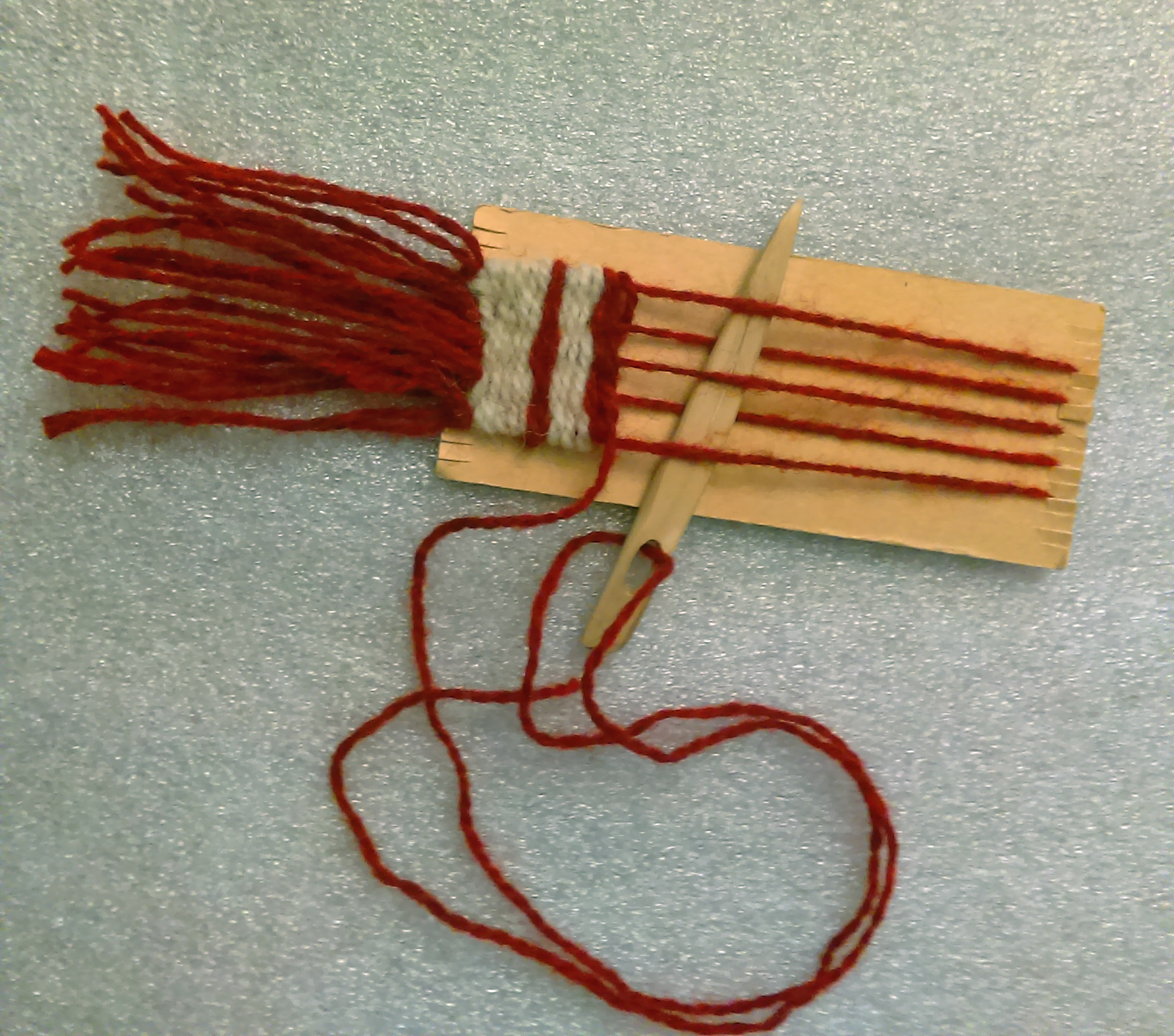
    Cardboard Loom Weaving for Kids: August 7, 2017, 10 am to 12 noon.  Instructor: Melba Granlund

    cardboard-loom

    Easy to learn weaving for kids (age 9 and older).  In this class, kids will learn basic weaving skills to make a bookmark using a needle, yarn or embroidery floss, and a cardboard loom.   All materials are provided.  A great project to keep little fingers and minds occupied on a long road trip or as an alternative to an electronic device. Choice of yarns and threads in bright, vivid colors make weaving fun.  If project does not get finished during the class, child may take their work home to complete on their own.  Materials fee of $5 payable to the instructor. Maximum number of students:  8. Sign up


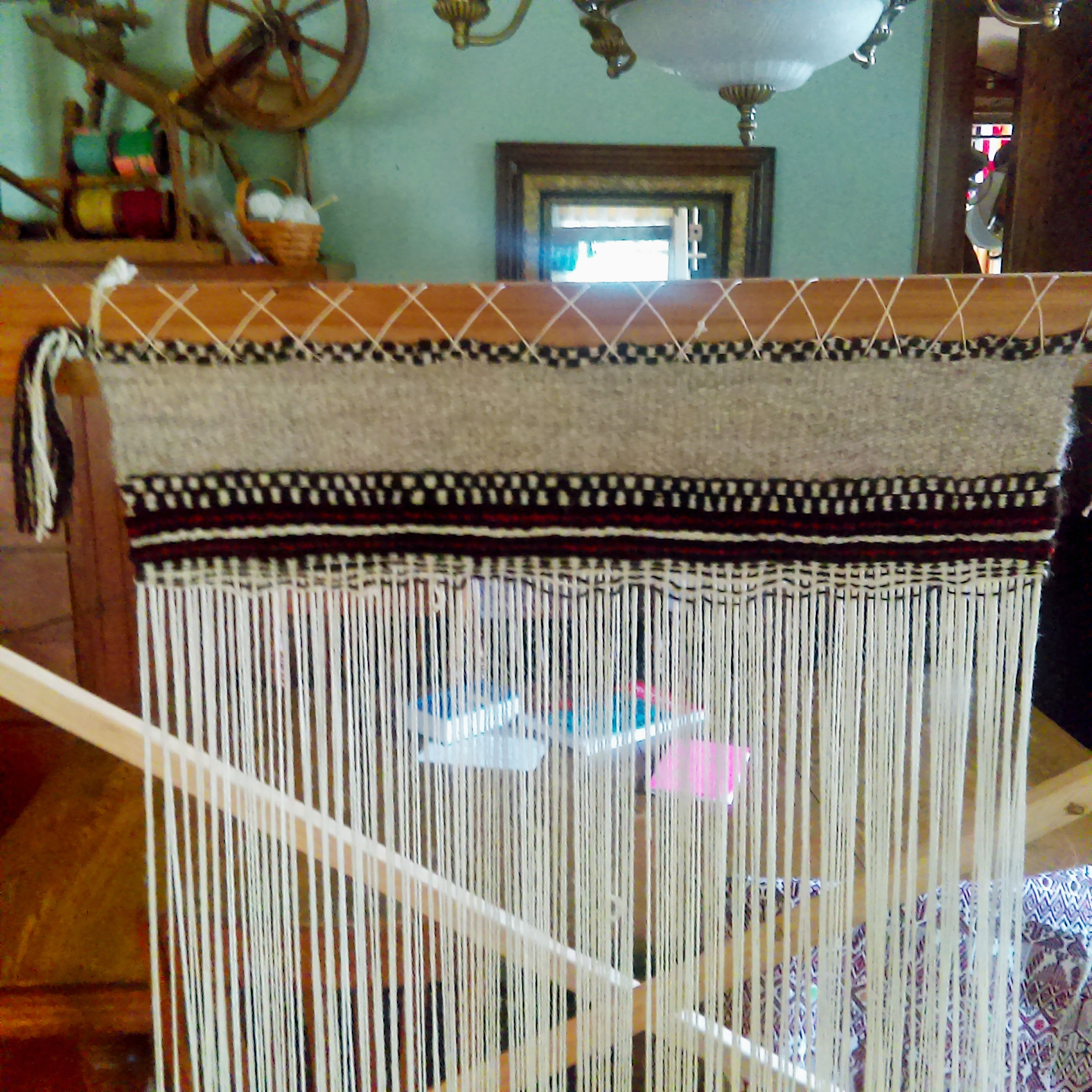
    Sami-Style Band Weaving: Mondays, August 14 and 21, 12-4 pm.  Instructor: Keith Pierce


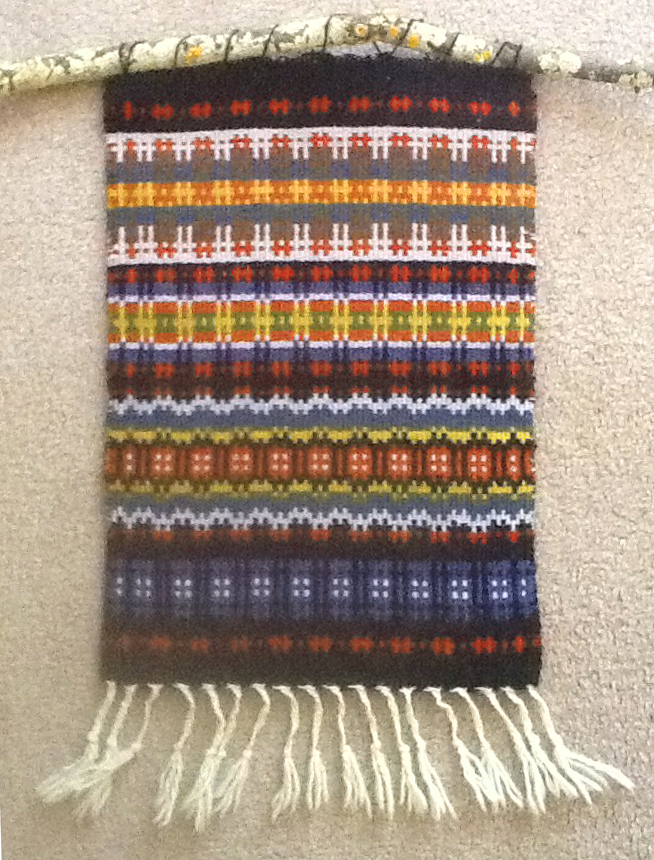
    keith-band-classLearn to weave intricately patterned and colorful bands found throughout Scandinavia and the Baltic regions, and used by the Sami people as embellishments on their folk costumes. Students will weave using methods and tools traditionally used for centuries in northern Europe. In the first session students will start weaving immediately with a pre-warped heddle and will learn to read a pick-up pattern to create short bands for bookmarks or key fobs. In the second session students will learn to warp a heddle for weaving a pattern of their choice. Maximum number of students: 8. Sign up
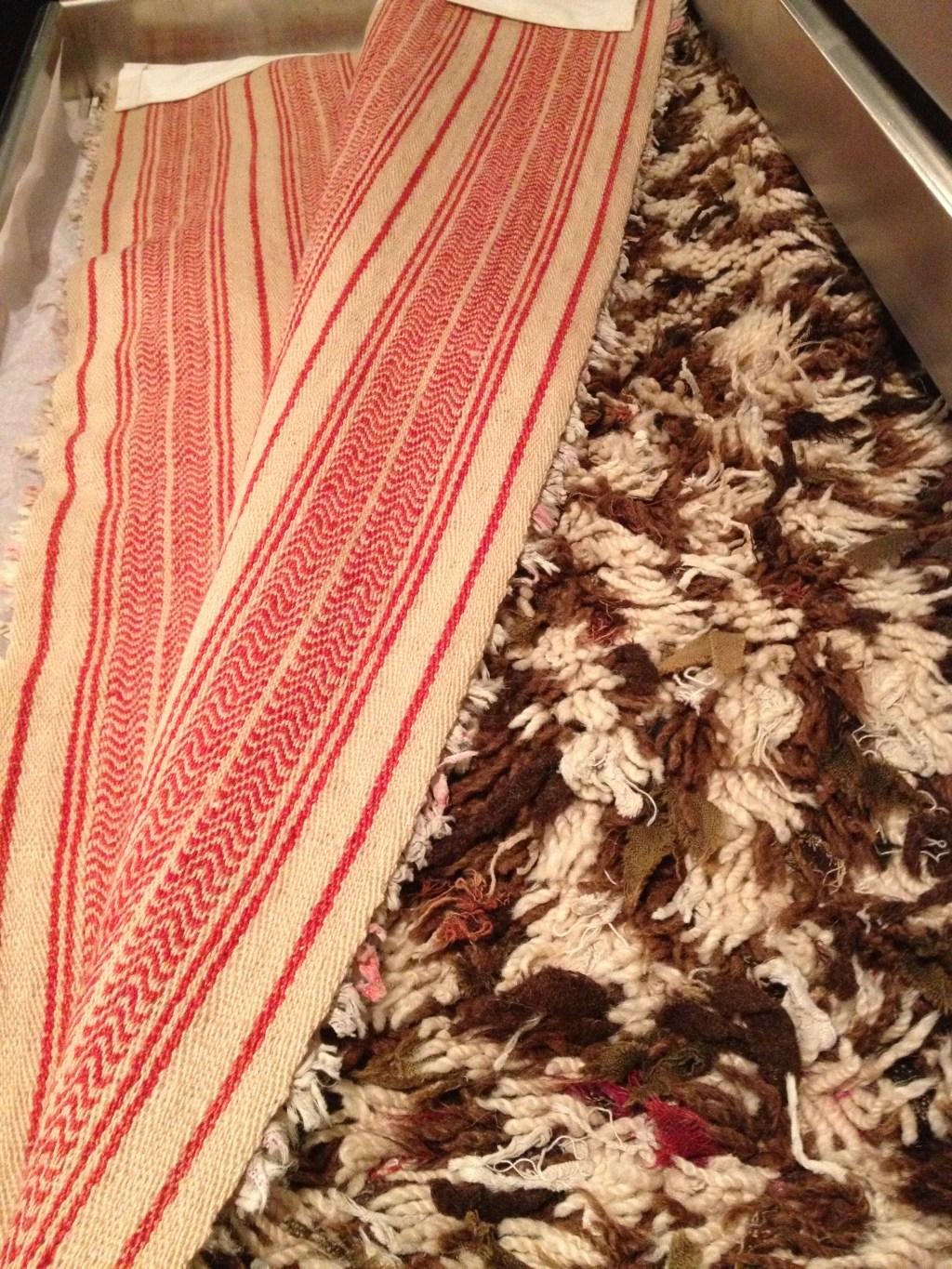
    A $20 materials fee is payable to the instructor and includes a variety of yarns and a heddle and shuttle that you can take home to create additional bands on your own.


  • Traditional Norwegian Weaving: American Reboot

    Traditional Norwegian Weaving: American Reboot


    Traditional Norwegian Weaving: American Reboot

    An Exhibit at Norway House: July 20-September 10, 2017
    Sponsored by Norway House and the Weavers Guild of Minnesota


    Vesterheim-krokbragd
    A traditional krokbragd coverlet from the collection of the Vesterheim Norwegian American Museum

    Make Minneapolis your destination thus summer for an exhibit joining Norwegian weaving past and present. Inspired by historical textiles, American weavers have used Norwegian weaving techniques to create a new body of work, contemporary in design or materials. Enjoy traditional pieces from the collection of the Vesterheim Norwegian American Museum and outstanding weavings from recent decades that honor the past and break through with modern expression.  

    The exhibit of invited pieces (40 in all) is based around several techniques, including rya; tapestry; krokbragd and other boundweave variants; band weaving; and overshot weaves such as monks belt and skilbragd.  Other pieces are chosen to illustrate where American weavers learned their skills in Norwegian techniques, and where weaving in the Norwegian tradition has been exhibited over the years.

    Related events include lectures and classes and weaving demonstrations.  A loom will be set up in the gallery where members of the Scandinavian Weavers Study Group will weave a rutevev (square weave) runner.

    • Opening celebration: Thursday, July 20, 2017, 5-8 pm.
    • Gallery talks: Sundays, July 23 and August 13, 2 pm.
    • Weaving demonstrations: Wednesdays and Sundays from July 23-September 10, 12 pm-3 pm
    • Afternoon with an Expert, featuring Laurann Gilbertson, Curator, Vesterheim Norwegian-American Museum: Saturday, September 9, 1-3:30 pm.  Following the lecture, “Warmth and Color: Traditional Norwegian Coverlets,” Gilbertson will conduct an Antique ID clinic.  Members of the public are encouraged to bring Nordic textiles to learn more about their age, origin, and function (but no appraisals).   
    • Classes: Sami-style Band Weaving, Mondays, August 14 and 21, 12-4 pm; Make a Viking Knit Bracelet, Monday, July 24, 10 am-2 pm; Cardboard Loom Weaving for Kids, Monday, August 7, 10 am – noon.

    IMG_5189Information on the exhibit is also found on the Norway House website. Be sure to sign up for Sami-style Band Weaving with Keith Pierce, or Make a Viking Knit Bracelet with Melba Granlund. Maybe you know a kid to sign up for the fun introduction to weaving. This is a special opportunity to see the weaving exhibit in depth, as these Weavers Guild classes will be held at Norway House, right in the main gallery.
    Also, follow the Scandinavian Weavers Study Group blog in the coming weeks to read about many of the individual pieces.

    This 19th century “boat rya,” a treasure of the Vesterheim Norwegian-American Museum, will hang next to several contemporary rya weavings.


  • Grene Demonstration on a Warp-Weighted Loom

    Grene Demonstration on a Warp-Weighted Loom

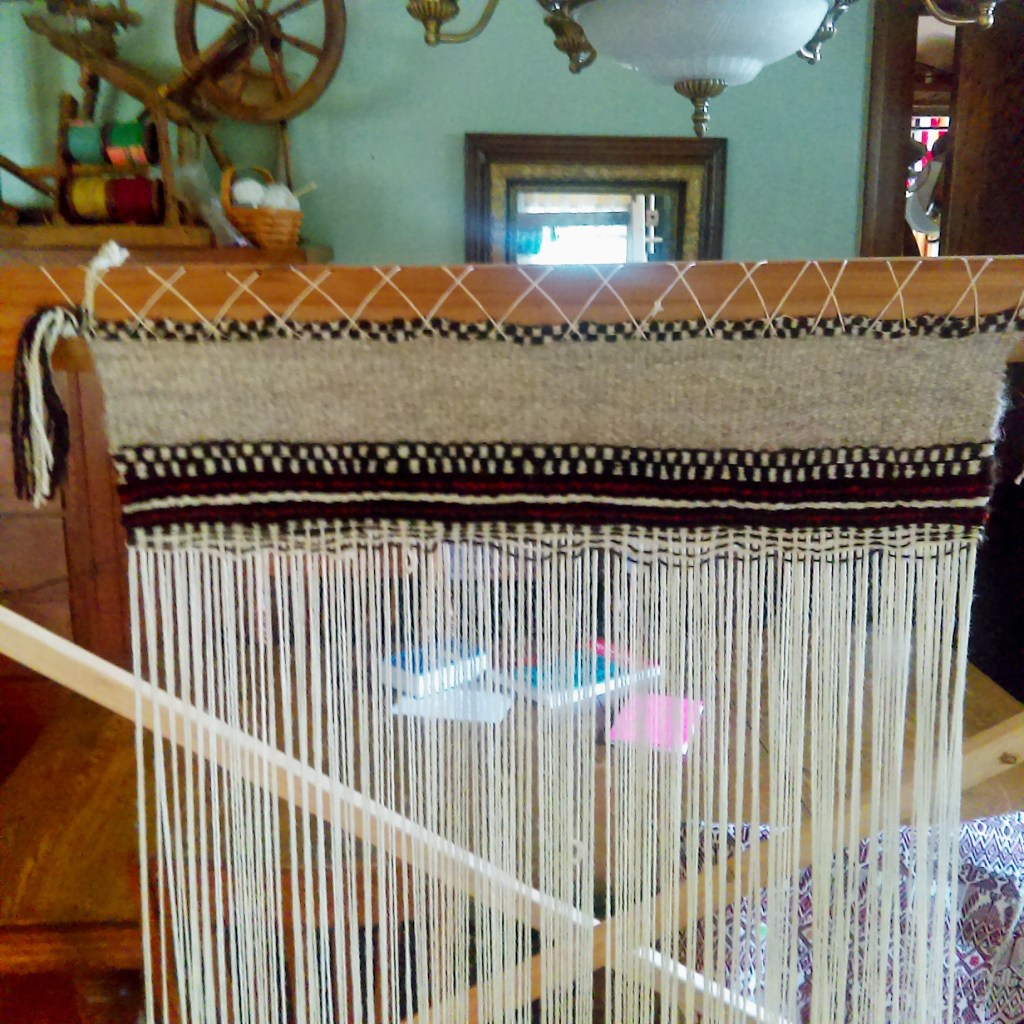
    Melba Granlund set up a warp-weighted loom (courtesy of the Vesterheim Norwegian-American Museum) at the 2017 Shepherd’s Harvest Festival, as part of the Weavers Guild of Minnesota booth.  She started work on a traditional Sami-style grene, a banded coverlet technique woven with thick, lofty wool.  It was a smashing success!  Though she planned to give a formal presentation at one point, that never happened.  Instead, she was inundated with questions from curious visitors from beginning to end.  And all that didn’t leave time for much actual weaving progress, only about 4-1/2 inches.

    melba-grene

    With the festival over, and the loom moved back to her home, Melba is continuing the project.  Watch the blog for updates on the grene, and a description of the wonderful yarn she is using.

    melba-grene-2

    Did you miss this cool loom at the Shepherd’s Harvest Festival this year?  There’s always 2018.  Melba said that there was so much interest that a warp-weighted loom demo would be great for next year, too.

  • Krokbragd, Big and Small

    Krokbragd, Big and Small

    img_2192By Robbie LaFleur

    This month Melba Granlund, a member of our Scandinavian Weavers Study Group, gave a talk at another of our Weavers Guild interest groups, the New and Occasional Weavers, about krokbragd.  She asked me to bring along a piece I made, a krokbragd backed by a skinnfell.


    The weaving incorporates traditional pattern elements from Lom and Skjåk in Norway.  For the Norwegian Textile Letter, I had translated an article from a 1985 issue of the Norwegian magazine, Husflid, and wove five pieces, experimenting with the traditional pattern bands.

    You can read the article and see photos of some of the “old pattern” pieces, here.

    At the New and Occasional Weavers meeting, one person expressed interest in trying out krokbragd at a fine sett. That seemed like a fine experiment, though no one had any particular guidance to give.

    A few days later, for a completely different reason, I was looking through previous issues of the Norwegian Textile Letter, and ran across a photo of a small-scale krokbragd woven by Catherine Forgit, in the same pattern as my larger one.  She wove it from the pattern I had published.

    cathy-old-pattern

    Cathy’s version is 11″ x 16.” Shrinking down a coverlet technique traditionally used for bed coverings in the cold climate of Norway makes a piece that could even be called darling. She used a wool warp (but doesn’t remember exactly what brand of yarn), set 16 ends per inch.  The weft was Rauma billdevev yarn (tapestry yarn). She wove it on her four-shaft floor loom, and doesn’t remember having any particular difficulties. “It was fun to weave.”

    Cathy lives outside of Fertile, Minnesota – way up north.  She reports, “It’s been a good winter for weaving and other fiber things – too cold to go outside!”  I hope her sheep are warm, too.

  • Meatballs and Snow

    The holiday gathering of the Scandinavian Weavers took place at Lisa Torvik’s home in St. Paul. Part of the fun of having a meeting in the home of a weaving friend is knowing you will feel at home.  Of course the loom has a prominent place in the dining room!

    img_0577

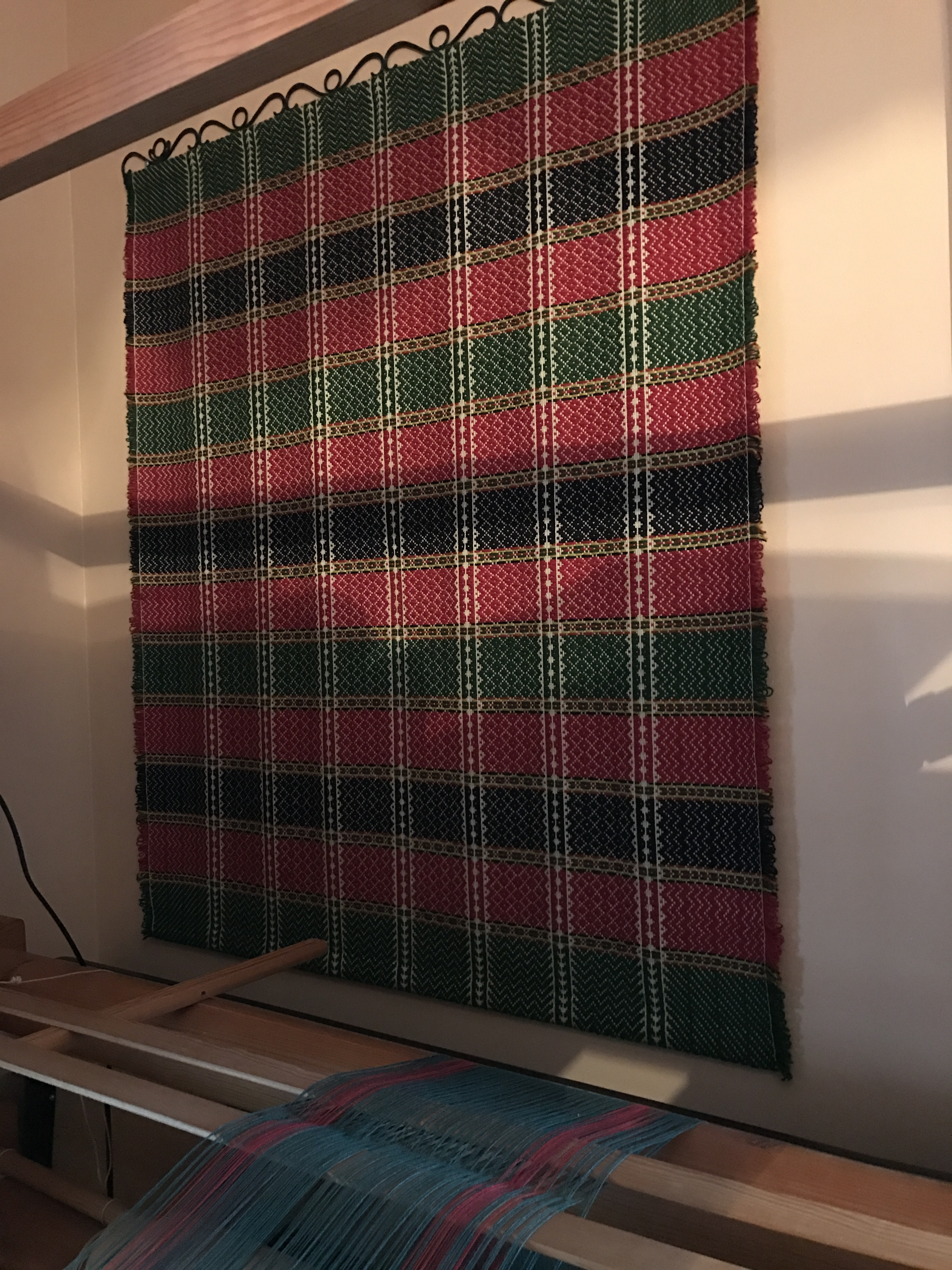
    And behind the loom was a beautiful Valdres kristneteppe (skilbragd) that Lisa made in Husflidsskole many years ago.

    img_0580

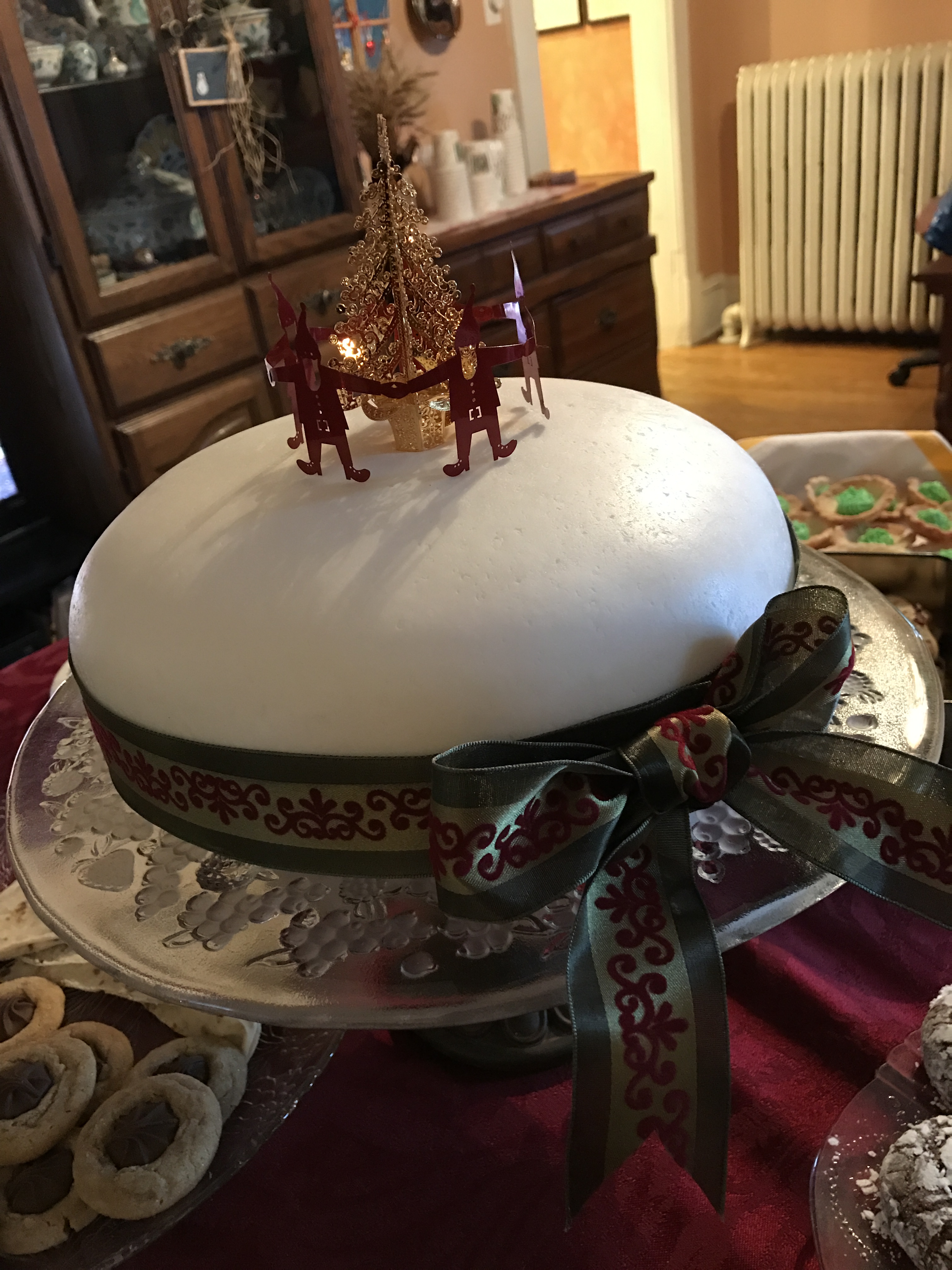
    A big snowstorm threatened that day, so attendance was lower than it would have been – more meatballs for those who came.  And more DELICIOUS princess cake, made by Karin Maahs.

    img_0583

    For those who braved the snow, it was a great afternoon — thanks, Lisa!

    img_0581

  • Scandinavian Heirloom Textiles

    Over the years, my friends have told me about their fabulous old Scandinavian textiles — inherited from family or friends in “the Old Country;” found in out-of-the-way antique stores, thrift shops, garage sales, or flea markets; or even rescued from barns.  Let’s tell their stories!

    Later this fall we will be mounting a display of historical textiles from the Nordic countries, along with their stories, on the walls of the Weavers Guild.  The items will also be featured in the upcoming (November) issue of the Norwegian Textile Letter.  Pieces will be submitted not only by the members of the Scandinavian Weavers Study Group, but also by other Weavers Guild of Minnesota members.

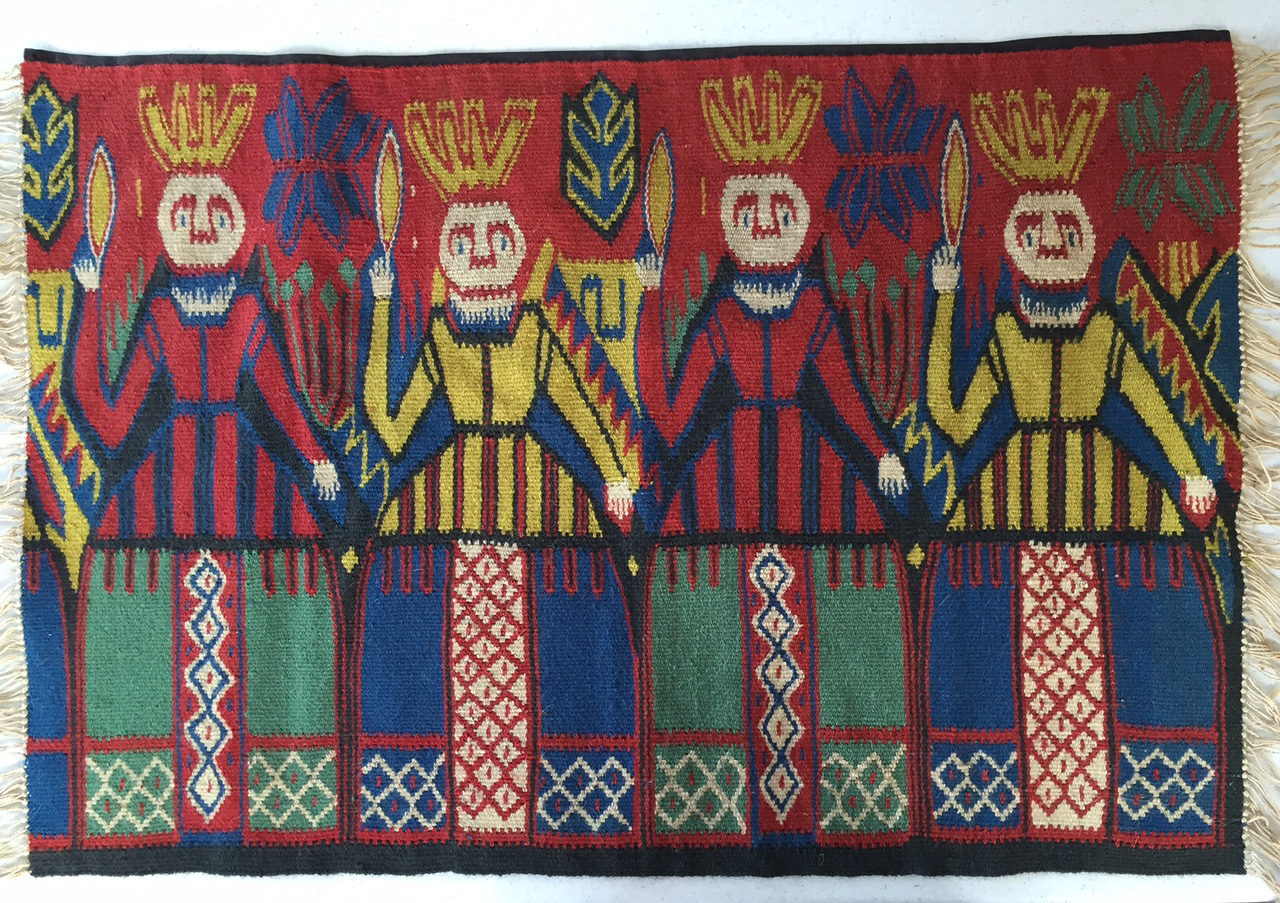
    At yesterday’s meeting of the Scandinavian Weavers, we saw great examples of old textile finds.  Jane Connett said that she had been a bit laid up recently, so she spent a lot of time on Ebay. Look at this beautiful Norwegian tapestry find.  It was advertised as an “Albanian kelim,” but fans of Norwegian tapestry know perfectly well that it is a replica of a portion of a Norwegian Wise and Foolish Virgins tapestry.  It was faded on one side, but the colors were clear and strong on the other.  And since the weaving followed Norwegian tradition, all the ends were sewn in so that either side is equally beautiful.

    virgin1virgin2

    Jane said she didn’t remember how much she paid, but probably only around $25.

    She also bought a beautiful small rolakan weaving.  Judy Larson noted that the loops on the back side, where the colors jump over a few threads, are typical of Swedish rolakans.

    rite-uprite-back

    Lisa Torvik showed a treasure-in-progress.  She rescued it from a friend’s barn, where it had supported feed sacks and whatever else needed a resting place. The bench was badly damaged, but still retained one crudely-carved dragon foot.  The top of the bench cover was so dirty that no color peeked through.  Was it even woven, or just embroidered, Lisa wondered.

    barn-front

    Once it was off the bench, however, you could see that it was a nicely-woven dukagang.

    The mystery remains – will Lisa ever be able to retrieve color on the dirty front side?  She had just taken it off the bench hours earlier.  Perhaps we won’t know for a while, as several members of our group thought that waiting until winter for a thorough snow-washing might be the best route.


  • RED – Veronna Capone

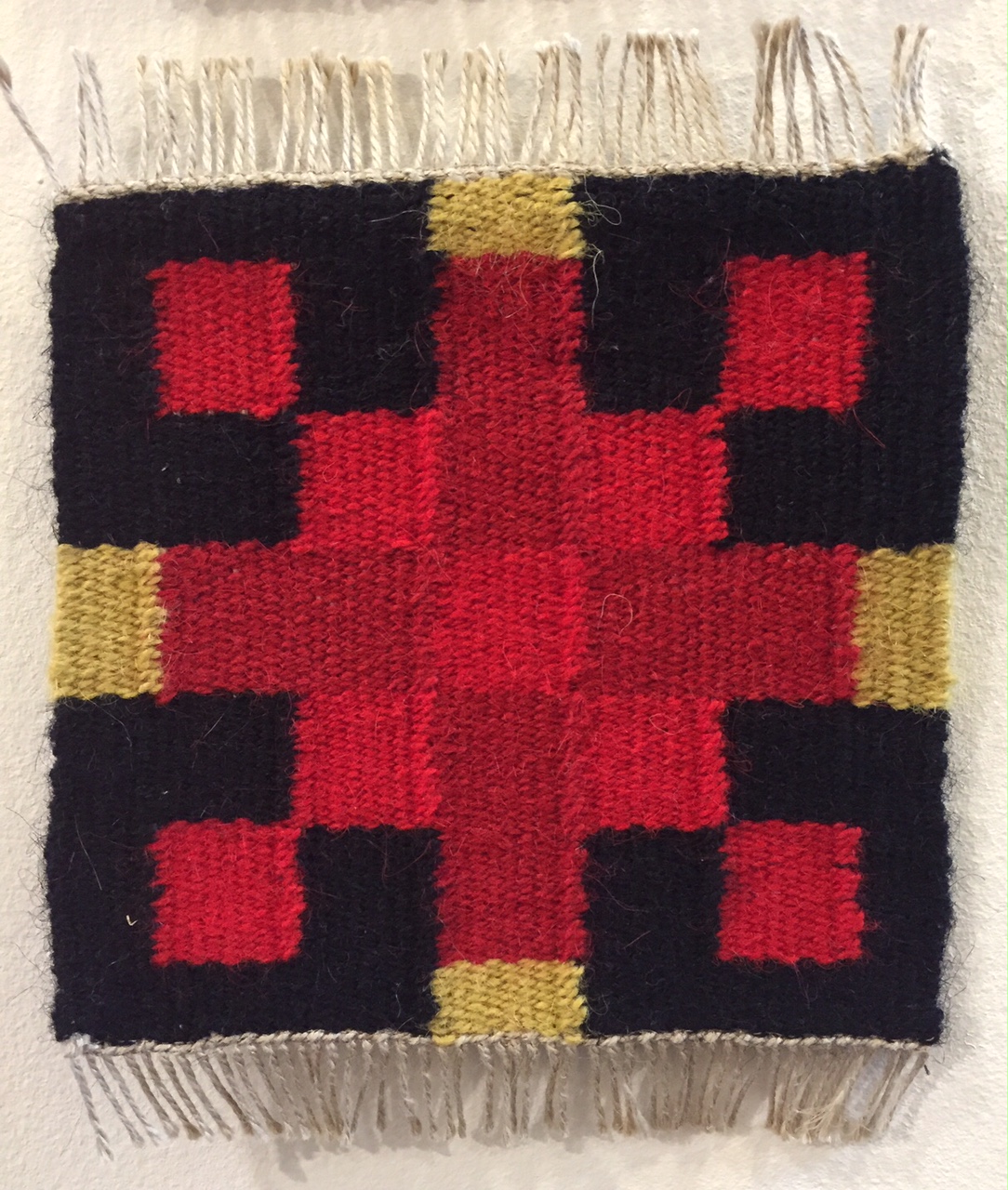
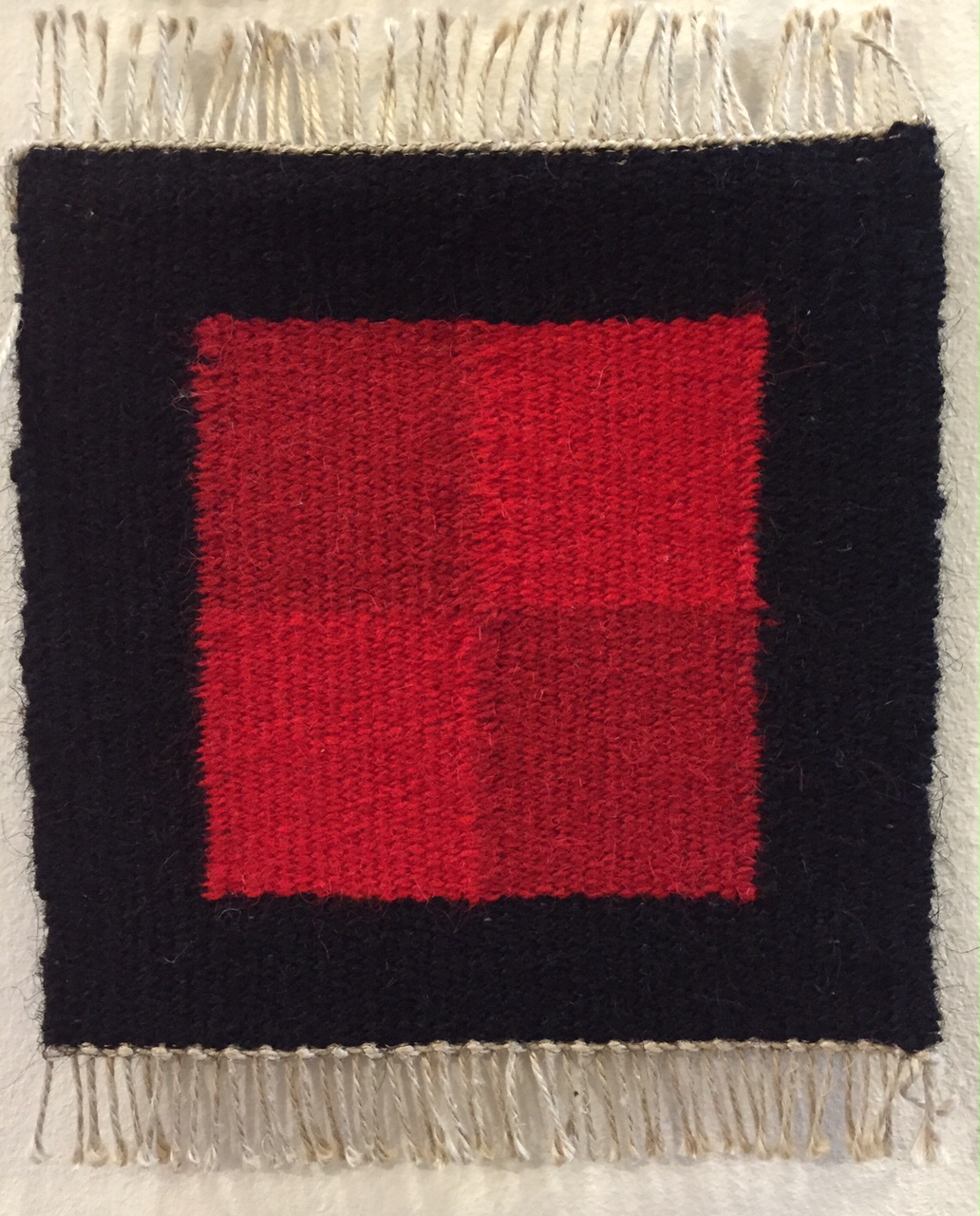
    Five Studies. Each 6″ x 6.”  Linen weft, wool warp.

    Five small tapestries.  The first of these five small tapestries uses traditional Norwegian ‘lynild,’ or lightning weave’; the others are in rutevev, or square weave.

    veronnaFullSizeRender-4FullSizeRender-3FullSizeRender-2FullSizeRender-1

  • RED – Judy Larson

    “Rolokan Reds.” 30″ x 29″ Cotton warp, cotton weft.  Rolokan.

    Judy used a variety of red quilting cotton prints in a rolokan (Swedish tapestry) technique, spacing out the “flames” with tabby stripes.  At a distance, the sharp edges of the flame-like image is graphic and bold.  It’s worth a close look, too, where the patterns in the fabric strips look unusually dizzying.

    IMG_5540

    judy-details