History. Color. Amazing workmanship. Funny images. Text and depth in fiber. You will find these things in pieces in the exhibit at Norway House, “Traditional Norwegian Weaving: American Reboot,” up from July 20-September 10. You will also find stories. In two small tapestries at Norway House you can find a three-generation weaving story that stretches from Norway to Minnesota.
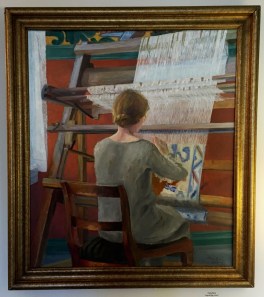
Hans Berg painted his wife Inga at the loom.
Inga Berg, born in 1897 in Lier, Norway, married artist Hans Berg in 1921. They studied art on a months-long honeymoon throughout Europe. In 1929 Inga studied weaving theory at Sister Bengston’s weaving school in Oslo, Norway. She was prolific in spinning, dyeing, knitting, weaving and sewing. Often Hans would create a pattern for his adoring wife to weave.
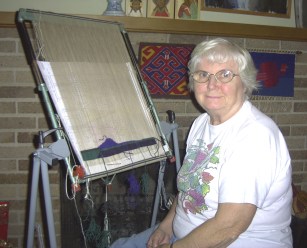
Inga’s daughter Ellen was born in Oslo, Norway, in 1924. While in Norway, she became a registered nurse and a medical technologist. During WWII she helped hide her soon to be brother-in-law Gunnar Lislerud in the attic of their home. After WWII, in the 1950s, Ellen, along with her parents, moved to Minneapolis.
Ellen married Don Anderson in 1958 and they had two children, Kent and Karin. She was an excellent strawberry farmer, beekeeper, weaver, painter, cook and caregiver. She took care of both of her parents; Inga lived to the age of 106.
Ellen had a love for weaving and her homeland, so she joined the Weavers Guild of Minnesota and the Scandinavian Weavers group. Inspired by her mother’s work, she took a tapestry class at the Weavers Guild and the Vesterheim Norwegian-American Museum. Ellen liked to use tapestry patterns from Norway that were sold for studying tapestry weaving, like this image of the girl and the cow. There is no doubt this same weaving is found on the walls of many Norwegian homes, too.
In this particular weaving Ellen was interested in perfecting her tapestry techniques, and learning the various types of joining techniques that are characteristic of billedvev, Norwegian tapestry. This was Ellen’s last weaving before she died suddenly in 2003. She left an unfinished dream: to weave a picture of her beloved strawberry farm.
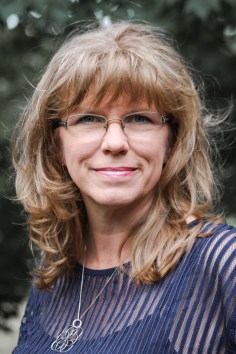
That brings us to the present, and the continuing weaving story of Karin Maahs, Ellen’s daughter, a member of the Scandinavian Weavers Study Group and a relatively new weaver. Karen relates the story of her tapestry in the American Reboot show.
Karin Maahs
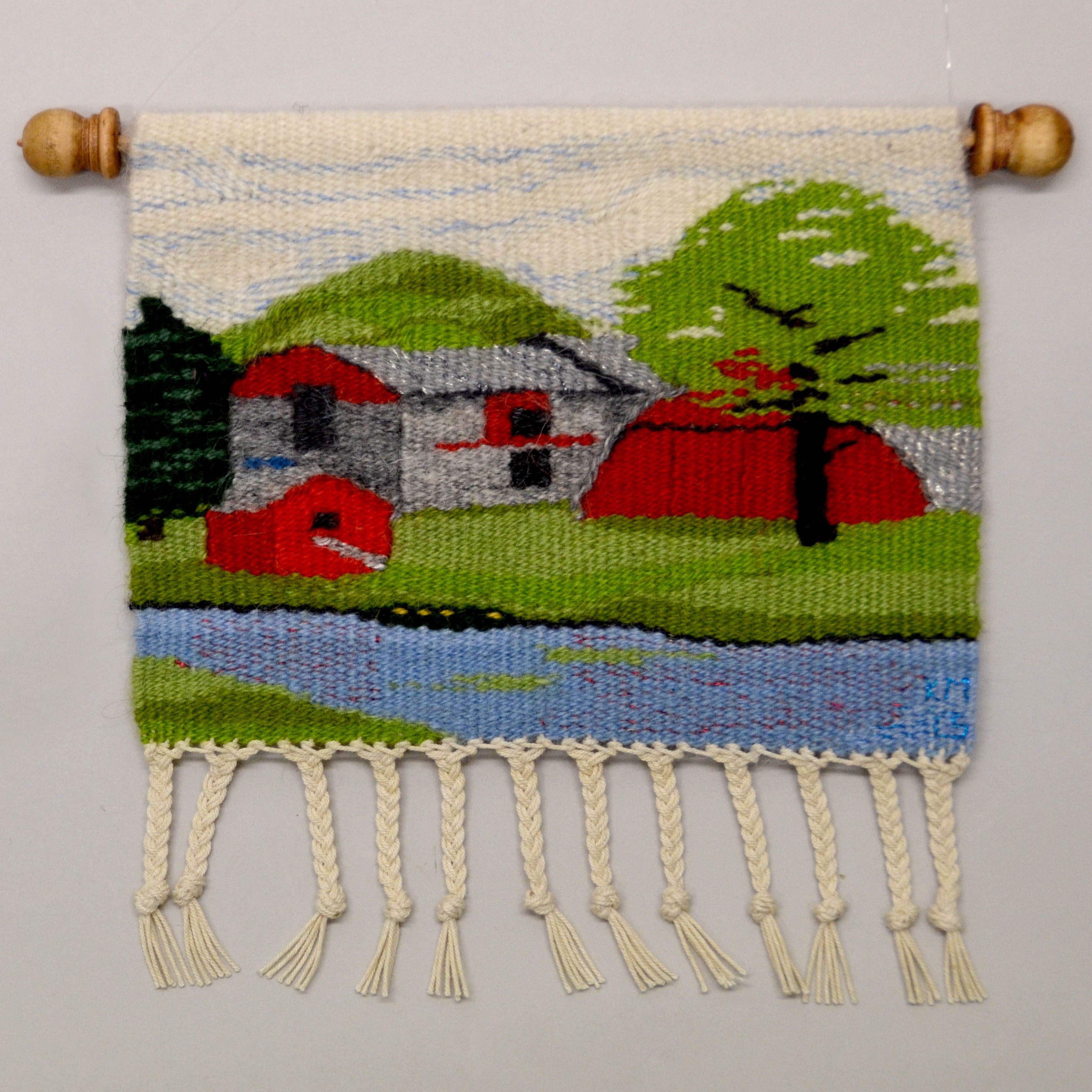
My inspiration was from the love of my mother. For years my mom wanted me to draw a weaving for her of our strawberry farm. After my mother’s death, I inherited all of my her and my grandmother’s wool, looms, spinning wheels, books and weaving journals. I initially joined the Scandinavian Weavers Study Group in 2003-2005. I took some beginning floor loom classes to learn how to use my mom’s loom. I was home schooling my children at the time so I stopped weaving and focused on them. After both my kids started college I could not stop the burning desire to work with the loom again. The big question was, “What should I start with?”
I knew there was some very special yarn in my stash, Kunstvevgarn Spelsau yarn in every color of the rainbow, shipped from my aunt in Norway to my mother. In an attempt to honor my mom, grandmother and aunt I decided to weave the tapestry my mom always wanted to do, a picture of “The Farm.” At first it was intimidating because I knew nothing about how to start. After some great encouragement from my mom’s Scandinavian weaving friends, and a plethora of books I inherited, I dove in. My thought was—I know I can paint this, so why not treat the yarn like it was paint? It didn’t take long to absolutely fall in love with working in wool. Especially this wool… my mom’s wool.
Karin has two grown children. Perhaps it is time to stretch the weaving tradition to a fourth generation? The Weavers Guild of Minnesota is a perfect place to learn.
Mark your calendars for a trip to Norway House between July 20 and September 10. Come to the opening! Thursday, July 20, 5-8 pm.
How did the contemporary weavers in the “Traditional Norwegian Weaving: American Reboot” exhibit learn to weave in traditional techniques? Sometimes it was a class, other times by studying an old textile. But books are key.
If you could create a state-by-state map showing ownership of weaving books in Norwegian, Minnesota would win, hands-down. Many weavers around the state have collections of books bought on trips to Norway or many times, from the Vesterheim Norwegian-American Museum. It doesn’t even matter if the owners don’t read Norwegian, weavers find inspiration from the photos and can read the drafts for the loom.
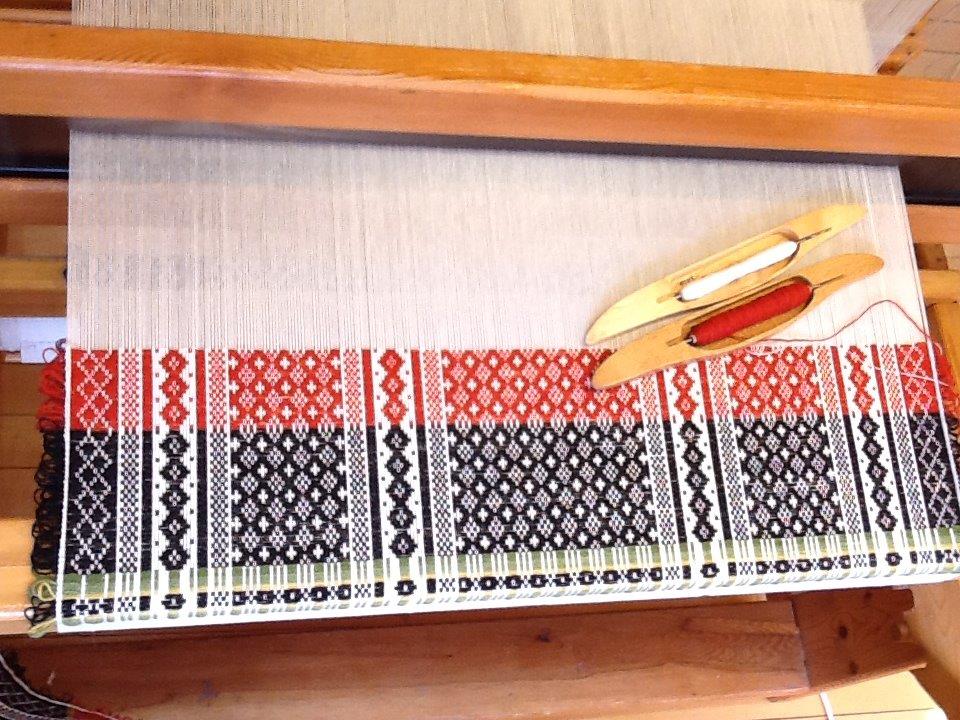
Jeanine Swanson Ehnert‘s beautiful and traditional weaving in skilbragd technique was inspired by the draft for a “Skilbragd from Fosnes” found in a book published in 2001 by the Nord-Trøndelag Husflidslag, Om Fellen Kunne Fortelle: Åkletradisjon til Inspirasjon by Randi Breistet (loosely translated as If the Blanket Could Talk: Coverlet Traditions for Inspiration). She used a draft similar to this one from the book.
Jeanine weaves in Frazee, Minnesota, with a concentration on traditional Norwegian weaving techniques. She also conducts weaving workshops and classes at the Vevstuen Nordic Weaving Studio, located in her home, which includes two floor looms and several table looms. Some workshops are for beginning weavers, and others focus more on Scandinavian design aspects.
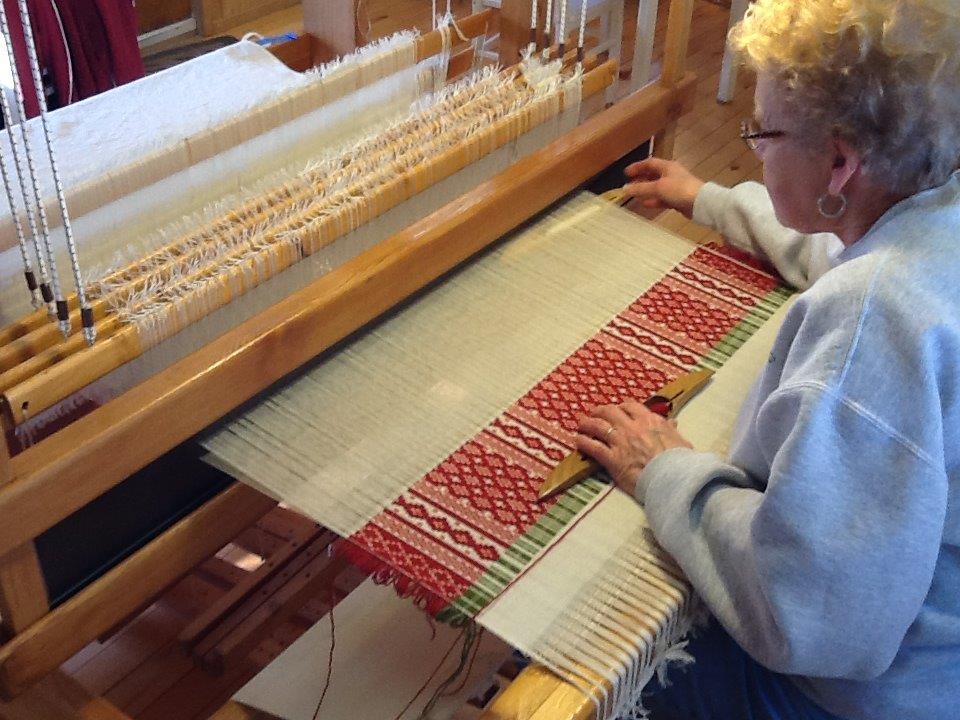
Here is Jeanine weaving the first section of her “Skilbragd fra Fosnes.”
The piece progresses.
Come to the wide-ranging exhibit at Norway House, July 20-September 10, “Traditional Norwegian Weaving: American Reboot” to see the full piece. Don’t miss it! During the run of the show, there will be classes, demonstration days, gallery talks, and a lecture. Full details here.
Most weavers featured in the American Reboot show use Norwegian yarns in their pieces, which they acquire by purchasing in Norway, or pulling from their extensive personal stashes, or maybe ordering online; you know, the slacker way of getting your materials. For much of her work, Nancy reaches back to more traditional roots, by raising her own sheep, shearing them, spinning the yarn, and then weaving. Ellison Sheep Farm, outside of Zumbrota, Minnesota, is a magical place, filled with sheep, chickens, goats, ducks, and Nancy’s collections of antique spinning wheels and looms.
Most of the yarn in Nancy’s American Reboot piece is purchased, but I’m sure the fuzzy tombstones are from home-grown yarn. While krokbragd designs are usually abstract, small figures can also be designed. Nancy Ellison’s “Sheep Pasture by the Cemetery” is a summery homage to pastors, wives, sheep, tombstones, and fences–all lined up in a green pasture.
When Nancy first wove this piece, it was featured on this blog, and noticed by a weaving student in England. The student’s instructor asked for permission to reproduce the pattern. As a result, Nancy’s Norwegian-inspired weaving has traveled back across the ocean, and two British weavers made similar pieces. (Read “Woven Pastors in a Row – American and British.)
Nancy is a dealer for a number of brands of spinning wheels and looms. She teaches spinning and weaving, including weaving on the Norwegian cradle loom, in her studio on her farm and elsewhere.
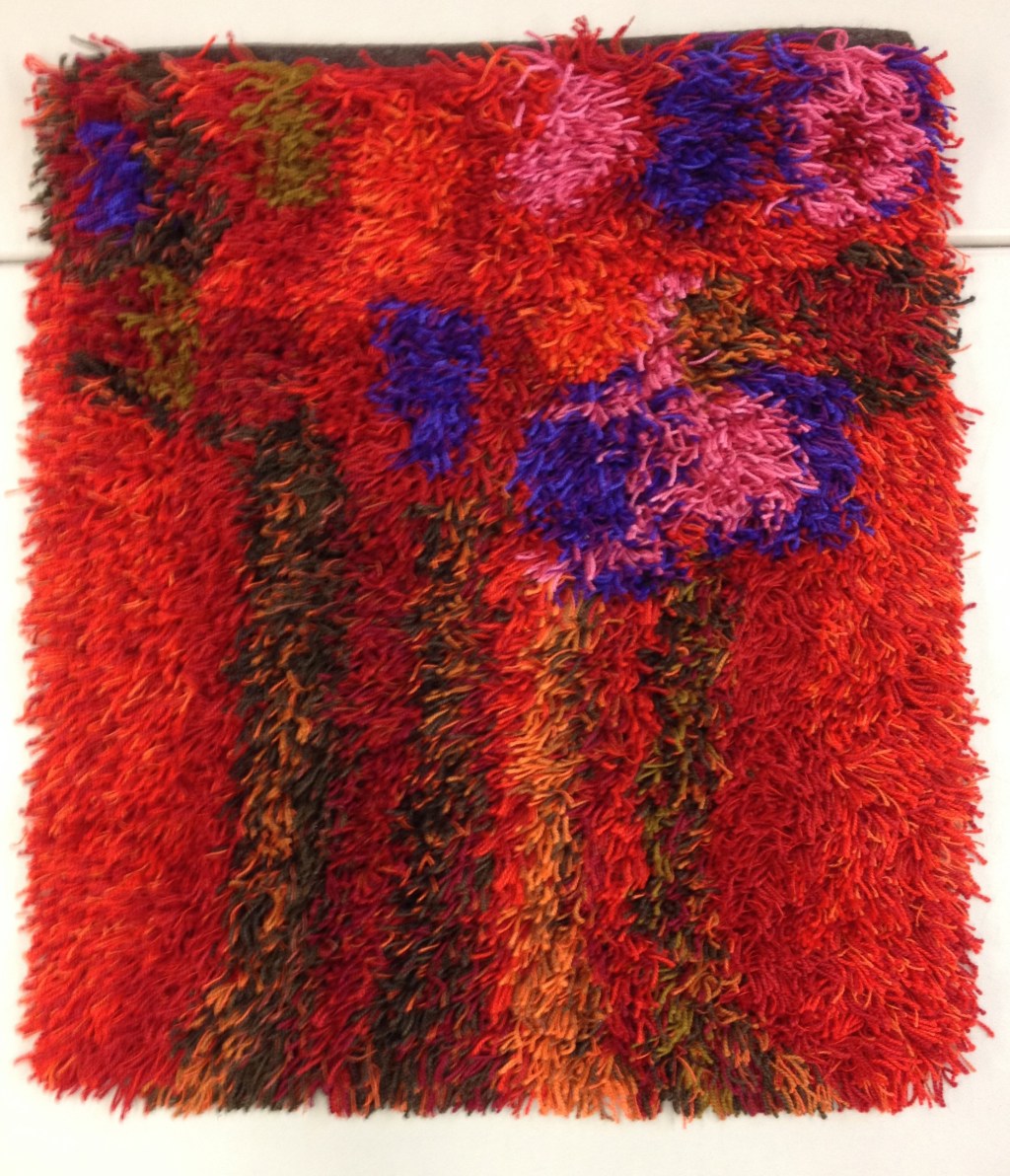
Corwyn Knutson, from St. Paul, wove “Hardanger Cherry Blossoms,” inspired by flowers he saw on a memorable driving trip through Norway. The trees with red, pink, and purple form a beautiful abstract image. It is so deftly balanced, in fact, that it was once hung in an exhibit upside-down and it was just as beautiful! Corwyn’s rya was a double winner at the Minnesota State Fair; it received a blue ribbon and the Doris Tufte award for Creative Loom Weaving in Scandinavian Tradition.
Marilyn Moore
Marilyn Moore, from Cedar, Minnesota, learned to weave rya from Jan Mostrom, co-curator of the “American Reboot” exhibit, at the Weavers Guild of Minnesota. Excited about the possibilities of color blending, Marilyn quickly moved to an interpretation of her perennial garden, which includes 25 varieties of day lilies and gives her color all summer long. Marilyn wrote, “It introduced me to a freedom that I had not experienced before working with color and fiber, and I loved every minute of it.”
This summer, enjoy flowers outdoors and the indoors at the Norway House Galleri, from July 20-September 10. Come to the opening! July 20, 5-8 pm.
Rya coverlets are perfect for Norway, aren’t they? If you are covered with shaggy threads of wool, just like a sheep’s fleece, the heat of your body is trapped, and you manage to keep warm in a drafty old wood home, or a loft in a barn, or in a cold, damp fishing boat along the coast.
Båtrye, or boat rya, from the collection of the Vesterheim Norwegian-American Museum
Along the west coast of Norway, boat ryas were woven by women for everyday use in a hard climate. They were utilitarian, yet valuable textiles. Fishermen used the båtryer in boats on their trips to the offshore fishing banks, or while bunking in a cold and damp rorbu, or fisherman’s cottage. They were ideal to roll yourself up in against the cold and raw weather. The båtryer, with thick pile, were woven counterparts of sheepskins, but much better because a sheepskin stiffens when it gets wet.
Women wove båtryer for their husbands and sons and they were used for many years, sometimes generations. A boat rya used ten to twenty kilos of wool, which was a significant portion of the annual production of a small farm. To ensure they lasted it was important to dry them thoroughly between each use, so the yarns would not rot. They were crucially important objects, as illustrated by the story of a fisherman whose boat capsized. He floated in the water and thought about all of the things in the boat that were lost. When the rescuers arrived, his one thought was, “Save the rya first!”
The “Traditional Norwegian Weaving: American Reboot” exhibit includes a wonderful donated båtrye from Skodje, Sunnmøre, Møre og Romsdal, Norway. The coverlet was made by Nikoline Indreberg, the great-grandmother of the donor, in ca. 1890, for her new husband Ole. The coverlet was one of the few belongings that the family brought with them when they had to move after Ole died.
The smooth side of the rya was woven in twill weave with red and white bands. The pile side was woven with rya knots of wool, along with narrow strips of cloth. To save wool, weavers often used wool rags in the knotted pile. You used what you had.
In addition to the important utilitarian boat ryas, by the eighteenth and nineteenth century another tradition of decorative rya bed coverlets developed, although not to the extent they were woven in Finland and Sweden. The patterns on the decorative top side were generally simple: checks, plaids, or warp-wise stripes in a variety of twills.
Lisa-Anne Bauch
Moving to contemporary pieces woven in rya technique, American weavers generally create pieces for wall display, and sometimes for pillows, too. The ability to mix yarns in each rya knot enables subtlety and depth in color changes. The textural aspect of the knots adds richness. Locally, the interest in rya led to a year-long study group and exhibit in 2015. See “The Fruits of Rya Exploration.”
“Moonlight,” Edvard Munch
Lisa-Anne Bauch used the technique to mimic the atmosphere of a famous Edvard Munch painting, “Moonlight,” from 1895. Lisa wrote, “I was fascinated by the way Munch captured the glint of moonlight on water. I replicated the effect by adding linen, which catches the light, to the wool knots. I also used a pale yellow yarn in the moonlit sections to draw the viewer’s eye.”
Watch for posts on more contemporary ryas in the American Reboot exhibit.
A traditional krokbragd coverlet from the collection of the Vesterheim Norwegian American Museum
Sometimes textiles in the museum have detailed provenances and specific dates; this one does not. Curator Laurann Gilbertson guesses that it was not woven before the late 1800s, as the addition of bright pink means that chemical dyes were used. Also, it has hemmed ends, rather than fringe. At least in the coverlets at Vesterheim, fringed ends became more common in the first decades of the 20th century.
Claire Caughey Most. Photo by Jenny Rediske
Krokbragd bed coverlets were commonly found in most regions of Norway. It remains a popular weave structure for contemporary weavers in Norway and the U.S.; nearly all of the members of the Scandinavian Weavers Study Group have woven at least one.
Claire Caughy Most, from Stillwater, Minnesota, has explored luminosity in a series of krokbragd weavings, and the American Reboot show includes “Beyond Midnight #2.” Claire uses the same technique as the 19th century piece, but in a graphic and contemporary interpretation with narrow interlocking stripes. The shades of turquoise and green almost glow.
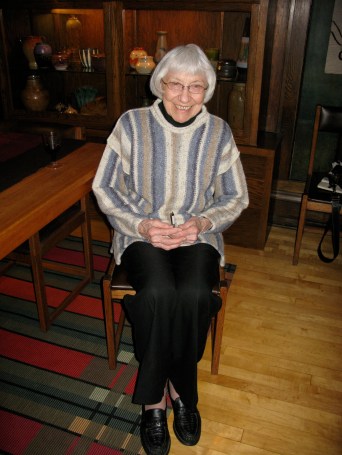
Lila Nelson, who died in 2015 at age 93, was the Registrar and Curator of Textiles at the Vesterheim Norwegian American Museum for 27 years, and a mentor to many of the weavers whose works are in the “Traditional Norwegian Textiles: American Reboot” show. No retrospective of American weaving in the Norwegian tradition would be complete without her work.
Two of Lila’s tapestries, both owned by the Vesterheim Norwegian-American Museum, are included in the American Reboot exhibit. One is a “virgin” with a puffy skirt. Many people who are fans of Norwegian tapestry, or billedvev (literally, picture-weaving), weave one of the virgins from the most popular medieval weaving motif, the Wise and Foolish Virgins. Lila wove one with attitude, and with a distinctive skirt. She wove the tapestry on a floor loom and used a clever combination of loom-controlled weave structure along with billedvev technique. When she wove the image of the woman, the threads in the “H” technique of the background floated behind, and she wove the figure in tapestry (billedvev). Perhaps it was unintentional, but that technique made the skirt pouf out.
Most of the virgins in the old tapestries held stylized small squares to their faces. (See the detail here, from a Wise and Foolish Virgins tapestry owned by MIA, the Minneapolis Institute of Art.) On Lila’s virgin, there is no doubt that the foolish virgin is crying into a substantial and functional handkerchief. This piece shows Lila’s lifetime love of experimentation in her weaving. It was also chosen because the exhibit will include many other virgin interpretations, showing the influence of that design in traditional Norwegian weaving.
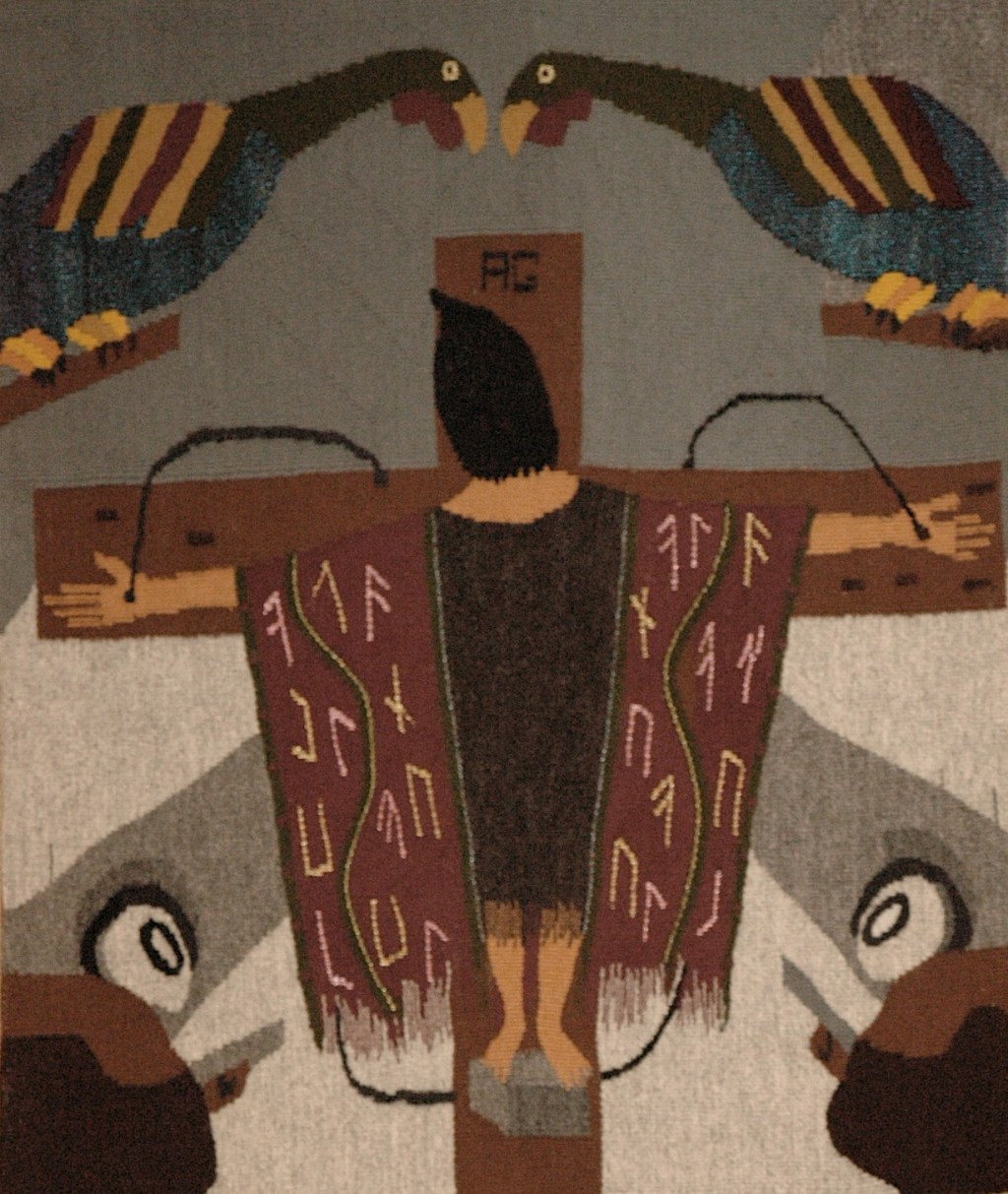
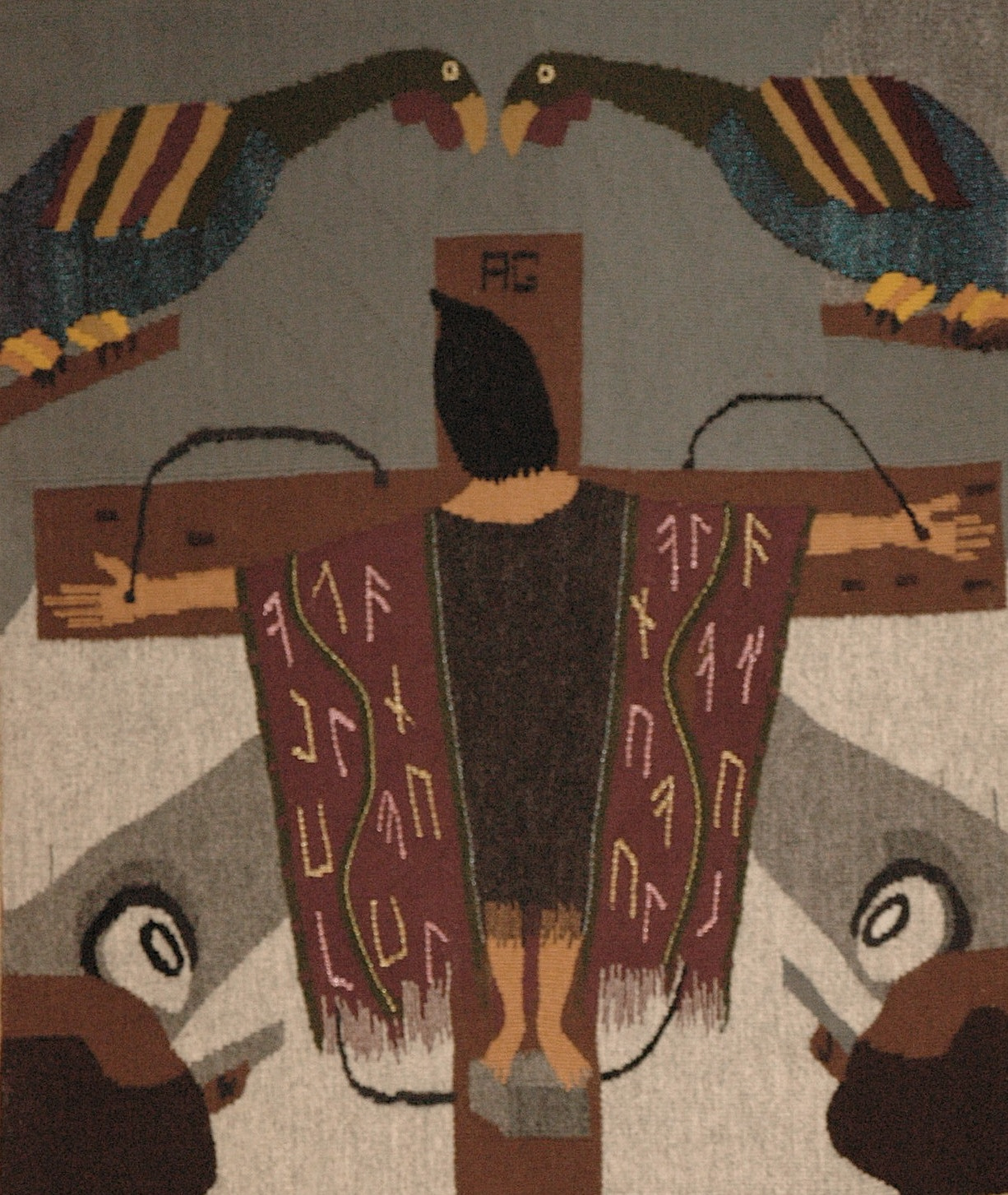
Lila’s other tapestry in the show illustrates another characteristic of Lila’s work–her frequent commentary on politics and world events.
Tree of Death. Lila Nelson, 2004
It was inspired by the photo, “Torture at Abu Ghraib,” by Seymour Hersh in the New Yorker on May 10, 2004. Here are Lila’s comments, as related in an interview with Sam Iverson.
“I saw an image of how they were treating some of the prisoners to get them to talk at Abu Ghraib and I thought this was quite horrifying. I think you can see that I turned this [image] into a cross-like thing and the AG stands for Abu Ghraib. At the bottom are impersonal guards or soldiers. The characters at the top are “vultures” that are in charge of all this. The designs on the garment are being ironic. They are from one of the Finnish runic alphabets and they are sort of the letters for love.”
Only two pieces from Lila’s loom are in the American Reboot exhibit, but her influence, whether through acquiring textiles for Vesterheim, or mentoring aspiring weavers, can be directly tied to many other weavings on view.
Explore more about Lila’s work in these online articles.
The Tapestries of Lila Nelson: Poetry, Myth, and Protest. This article was published at the time of an exhibit of her work at the Textile Center of Minnesota, November 2 – December 16, 2015. Also, this document includes images and commentary from the show. (Warning: it is a large file and will load very slowly.)
The Norway House/Weavers Guild of Minnesota exhibit this summer, Traditional Norwegian Weaving: American Reboot, includes special events and programming. (Full list here.) Three classes by Weavers Guild instructors will be offered, all on Mondays, and will be held right in the Norway House Galleri. This is a great opportunity to learn a new skill while surrounded by the color and texture of the textiles in the show. Sign up soon!
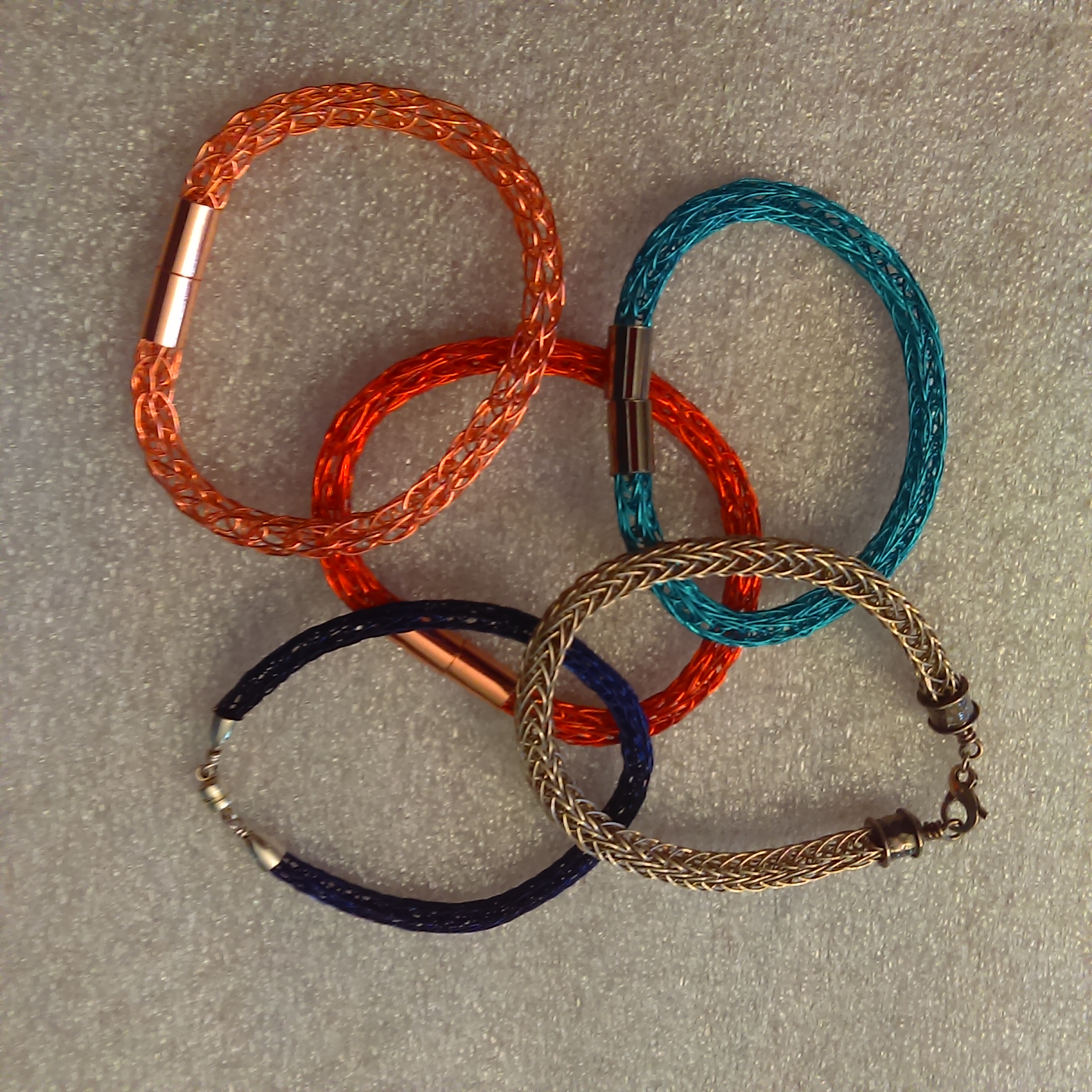
Viking Metal Bracelet: July 24, 2017, 10 am – 2 pm. Instructor: Melba Granlund
Learn an ancient wire looping technique called Viking knit. Dating back to the Viking era, it was used in jewelry making and as ornamentation on garments. In this class, students will learn how to use various nickel-free wires (stainless steel, copper, brass, or gold plated copper) or colored artistic wire to create a one-of-a-kind bracelet. Materials fee of $12 payable to the instructor. Maximum number of students: 8. Sign up.
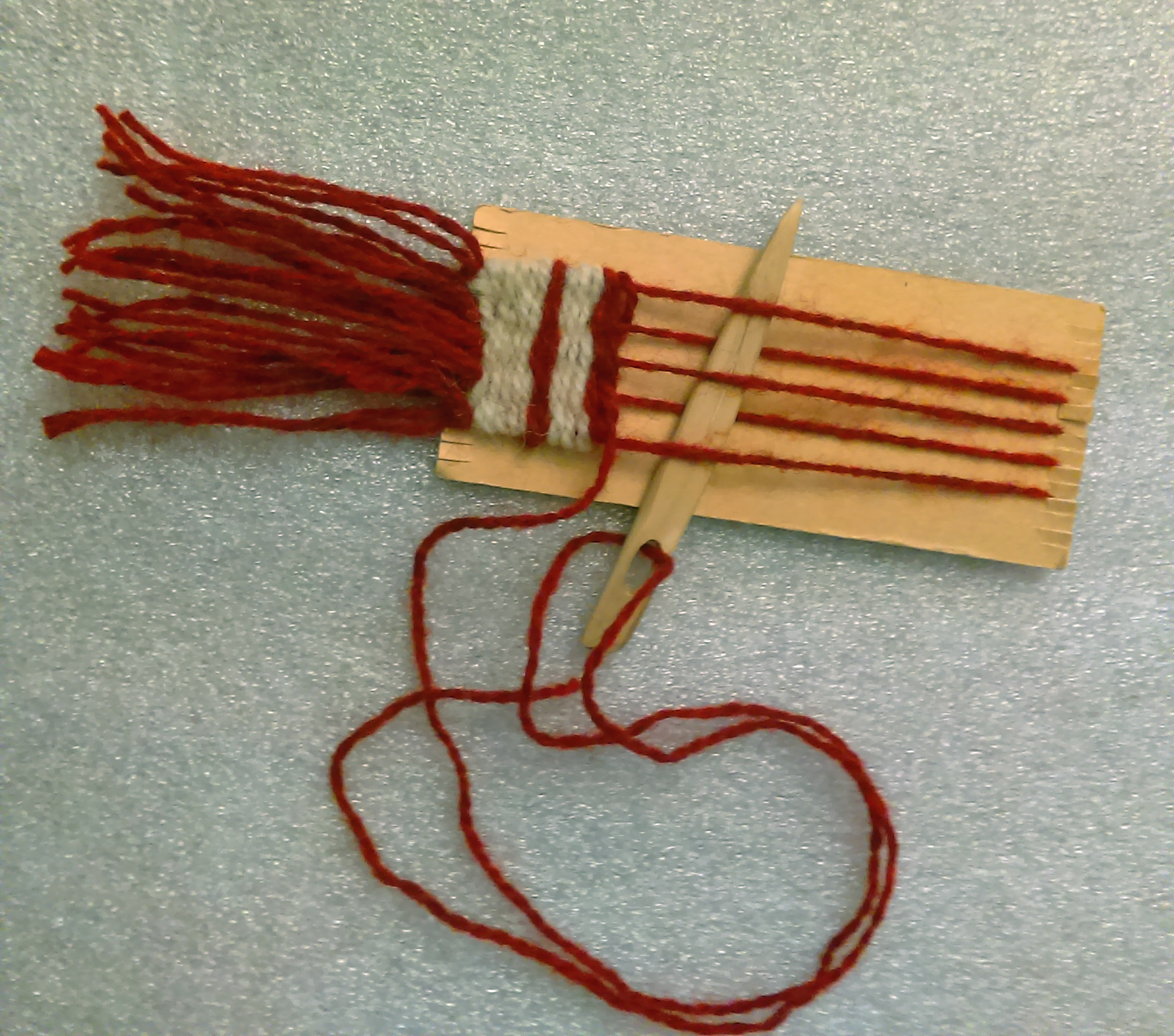
Cardboard Loom Weaving for Kids: August 7, 2017, 10 am to 12 noon. Instructor: Melba Granlund
Easy to learn weaving for kids (age 9 and older). In this class, kids will learn basic weaving skills to make a bookmark using a needle, yarn or embroidery floss, and a cardboard loom. All materials are provided. A great project to keep little fingers and minds occupied on a long road trip or as an alternative to an electronic device. Choice of yarns and threads in bright, vivid colors make weaving fun. If project does not get finished during the class, child may take their work home to complete on their own. Materials fee of $5 payable to the instructor. Maximum number of students: 8. Sign up.
Sami-Style Band Weaving: Mondays, August 14 and 21, 12-4 pm. Instructor: Keith Pierce
Learn to weave intricately patterned and colorful bands found throughout Scandinavia and the Baltic regions, and used by the Sami people as embellishments on their folk costumes. Students will weave using methods and tools traditionally used for centuries in northern Europe. In the first session students will start weaving immediately with a pre-warped heddle and will learn to read a pick-up pattern to create short bands for bookmarks or key fobs. In the second session students will learn to warp a heddle for weaving a pattern of their choice. Maximum number of students: 8. Sign up.
A $20 materials fee is payable to the instructor and includes a variety of yarns and a heddle and shuttle that you can take home to create additional bands on your own.
Traditional Norwegian Weaving: American Reboot An Exhibit at Norway House: July 20-September 10, 2017
Sponsored by Norway House and the Weavers Guild of Minnesota
A traditional krokbragd coverlet from the collection of the Vesterheim Norwegian American Museum
Make Minneapolis your destination thus summer for an exhibit joining Norwegian weaving past and present. Inspired by historical textiles, American weavers have used Norwegian weaving techniques to create a new body of work, contemporary in design or materials. Enjoy traditional pieces from the collection of the Vesterheim Norwegian American Museum and outstanding weavings from recent decades that honor the past and break through with modern expression.
The exhibit of invited pieces (40 in all) is based around several techniques, including rya; tapestry; krokbragd and other boundweave variants; band weaving; and overshot weaves such as monks belt and skilbragd. Other pieces are chosen to illustrate where American weavers learned their skills in Norwegian techniques, and where weaving in the Norwegian tradition has been exhibited over the years.
Related events include lectures and classes and weaving demonstrations. A loom will be set up in the gallery where members of the Scandinavian Weavers Study Group will weave a rutevev (square weave) runner.
Opening celebration: Thursday, July 20, 2017, 5-8 pm.
Gallery talks: Sundays, July 23 and August 13, 2 pm.
Weaving demonstrations: Wednesdays and Sundays from July 23-September 10, 12 pm-3 pm
Afternoon with an Expert, featuring Laurann Gilbertson, Curator, Vesterheim Norwegian-American Museum: Saturday, September 9, 1-3:30 pm. Following the lecture, “Warmth and Color: Traditional Norwegian Coverlets,” Gilbertson will conduct an Antique ID clinic. Members of the public are encouraged to bring Nordic textiles to learn more about their age, origin, and function (but no appraisals).
Information on the exhibit is also found on the Norway House website. Be sure to sign up for Sami-style Band Weaving with Keith Pierce, or Make a Viking Knit Bracelet with Melba Granlund. Maybe you know a kid to sign up for the fun introduction to weaving. This is a special opportunity to see the weaving exhibit in depth, as these Weavers Guild classes will be held at Norway House, right in the main gallery.
Several curious Scandinavian Weavers Group members gathered to cut the dukagång group warp off the Glimakra last night. It was so fun to see the completed pieces, right side up, and not just peeking from the back of the loom as they rolled around the beam. Jan Mostrom, who should be duly thanked for her work setting up the project and getting the yarn, clipped it off. (There was a section of unwoven warp at the very end, which Lisa Torvik is going to use for firfletting.)
Mary Skoy brought her sewing machine and sewed fine, straight seams between the pieces so they could be cut apart without raveling.
Melba Granlund was the designated snipper.
Oh, you wanted to see the individual pieces? Coming soon. They will be displayed on a wall of the Weavers Guild, and published here, on Friday.
 Ellen married Don Anderson in 1958 and they had two children, Kent and Karin. She was an excellent strawberry farmer, beekeeper, weaver, painter, cook and caregiver. She took care of both of her parents; Inga lived to the age of 106.

 How did the contemporary weavers in the “






 The “
The “


 Lila Nelson, who died in 2015 at age 93, was the Registrar and Curator of Textiles at the Vesterheim Norwegian American Museum for 27 years, and a mentor to many of the weavers whose works are in the “
 Most of the virgins in the old tapestries held stylized small squares to their faces. (See the detail here, from a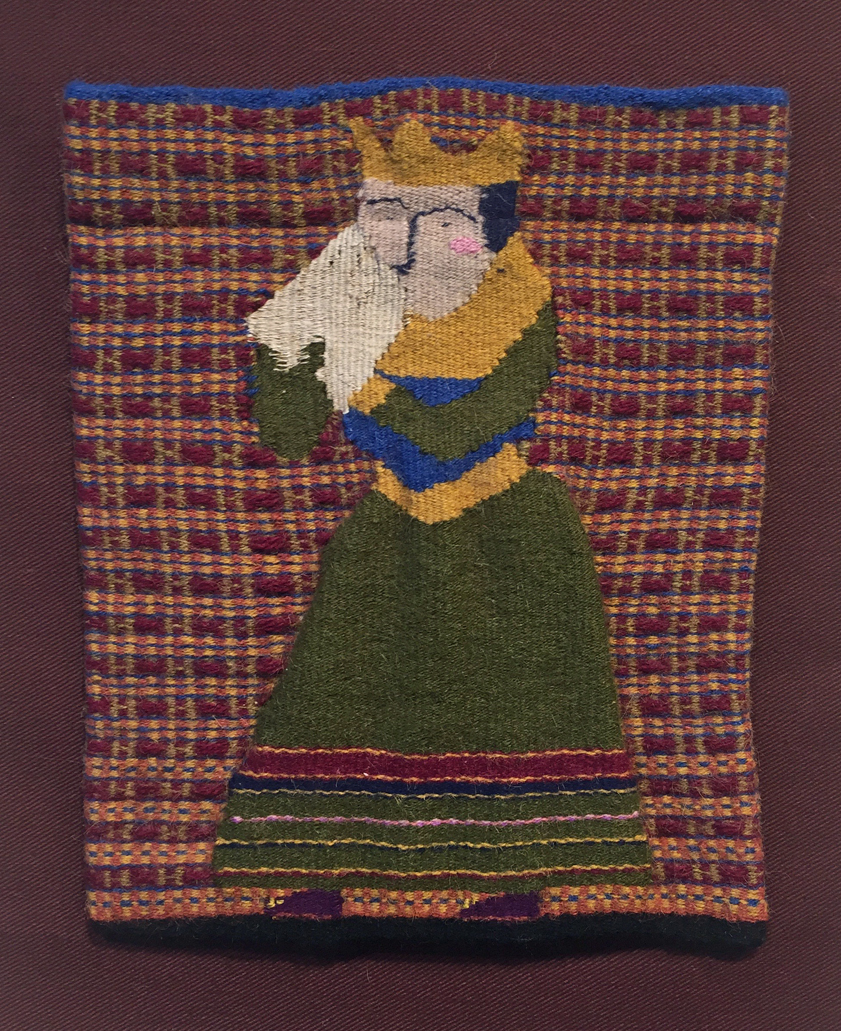
 Learn to weave intricately patterned and colorful bands found throughout Scandinavia and the Baltic regions, and used by the Sami people as embellishments on their folk costumes. Students will weave using methods and tools traditionally used for centuries in northern Europe. In the first session students will start weaving immediately with a pre-warped heddle and will learn to read a pick-up pattern to create short bands for bookmarks or key fobs. In the second session students will learn to warp a heddle for weaving a pattern of their choice. Maximum number of students: 8.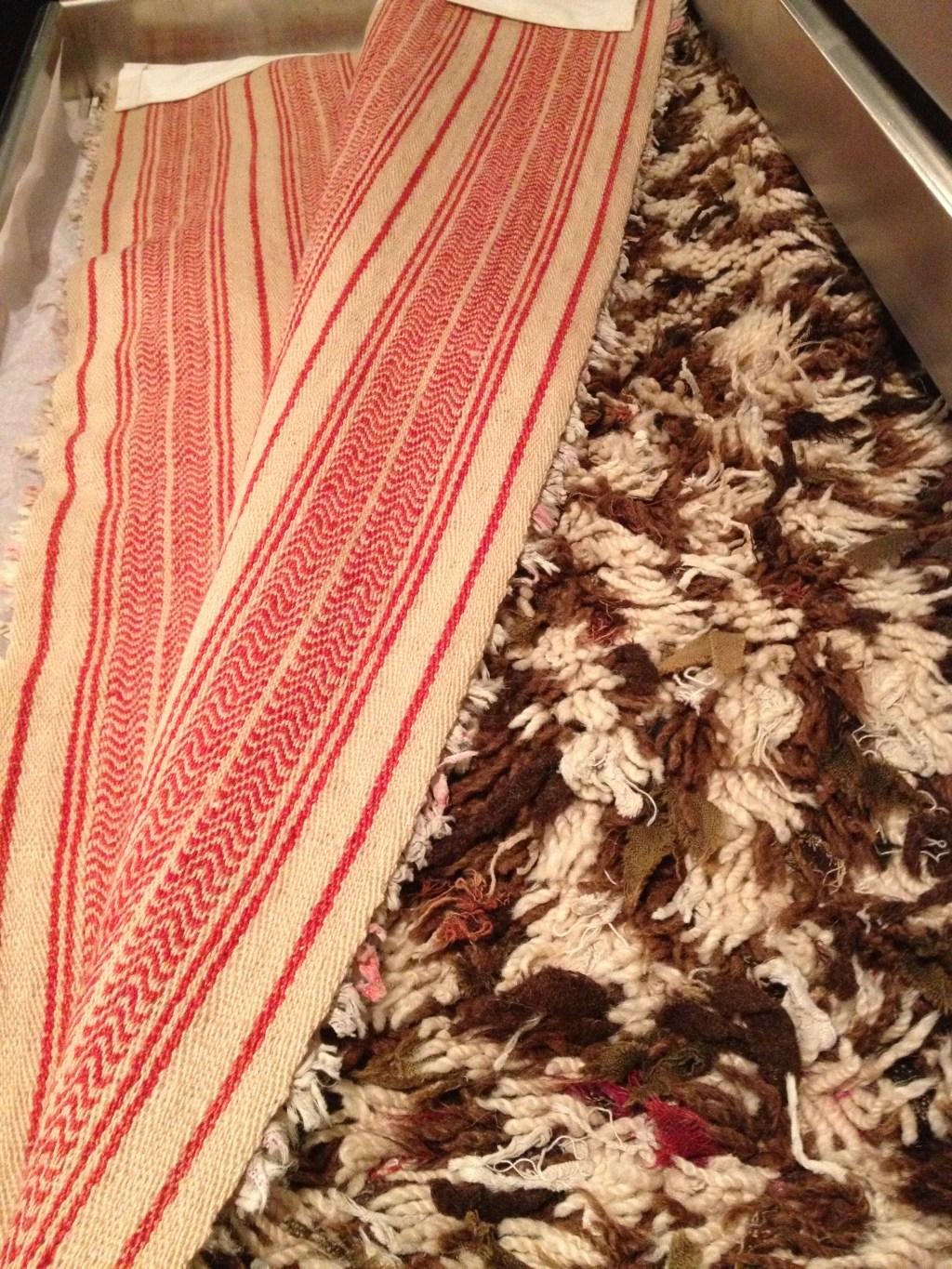

 Information on the exhibit is also found on the


 Scandinavian Weavers Study Group