Category: Swedish weaving

  • Phyllis Waggoner: Rya Rag Rug

    Phyllis Waggoner

    Rya Rag Rug

    36″ x 24″
    Linen, wool, cotton fabric
    NFS

    Bio: Phyllis Waggoner has a BA in Art Education and a Masters degree in Design, from the University of Minnesota. She traveled to the Southwest with faculty and students of the University of Wisconsin, River Falls, studying the culture and weaving of the Hopi and Navajo people. Additional weaving classes include: The Marshfield School of Weaving in Vermont, taught by master weaver, Norman Kennedy, The Gotland Hemslöjd, in Visby, Sweden and The Weavers School, with weaver and author Madelyn van der Hoogt. Phyllis was awarded the American Swedish Institute Lily Lorenzen scholarship for study in Sweden and in March, 1999, she attended the weaving course offered at the Comvux school for adult education in Upplands Väsby, where she focused on drawloom weaving with weaver, teacher and author Kerstin Lovallius. Phyllis has taught classes in Color and Design and Weaving for the Extension Division of the University of Minnesota; The Art Center of Minnesota; The Norwegian-American Museum in Decorah, Iowa; The American Swedish Institute (ASI); and The Weavers Guild of Minnesota. She has volunteered for over 30 years at the American Swedish Institute, working with their textile collection. She was a guest curator for three exhibitions: Dreams of Home, Swedish Woven Coverlets; Hilma Berglund, Swedish Immigrants’ Daughter; and The Fabric of Life, Textiles from the ASI Collection. Articles featuring her work have appeared in The Weavers Journal, Handwoven and New Sweden Minnesota. She is a longtime member of the Weavers Guild of Minnesota.

    Description: My inspiration was “Blå transryan”, 1934, created by Swedish designer Märta Måås-Fjätterström. She recycled bits of leftover linen warp yarn and cotton rags which were dyed and then used for the rya knot bundles. Technique: rya. The tapestry warp is linen. The weft is wool for the ground and borders; with linen and cotton over-dyed in indigo for the rya knots.

    rpwaggoner2@gmail.com
  • Holly Hildebrandt: Cloudberries

    Holly Hildebrandt

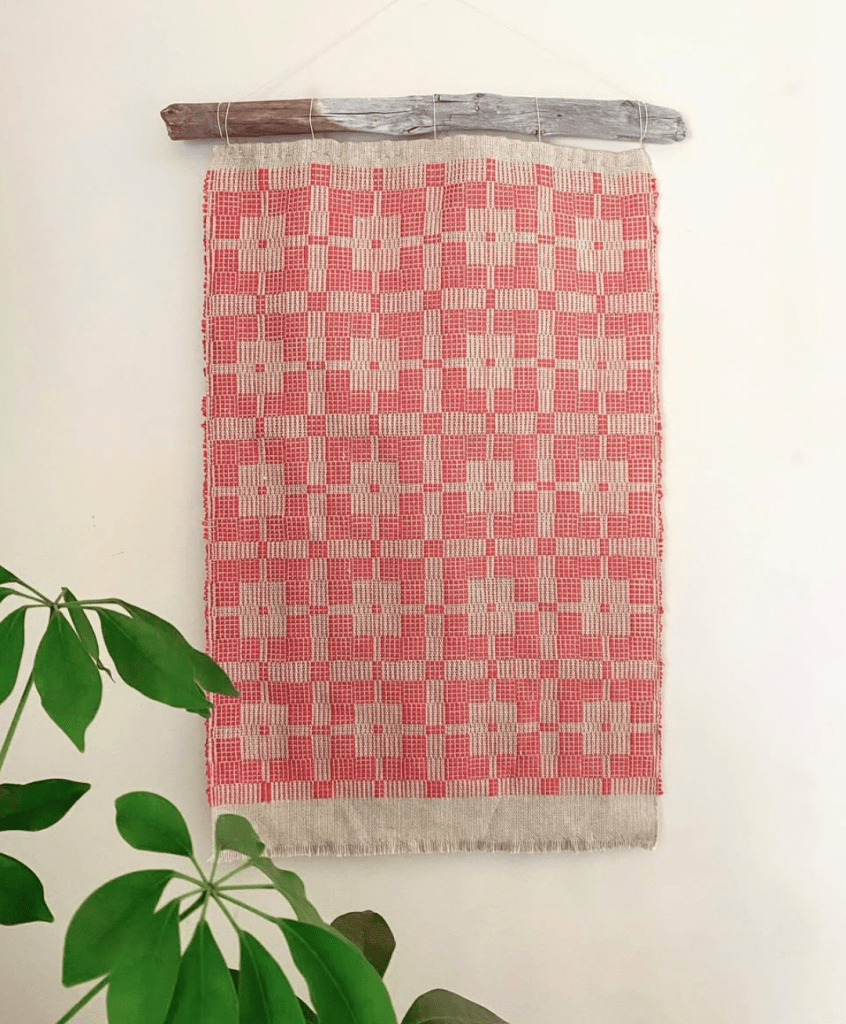
    Cloudberries

    24″ x 15″
    Linen
    NFS


    @hollyhilda_mn

    Bio: Holly Hildebrandt lives in the Minnesota St. Croix River Valley. She is a commercial interior designer by day and has a fascination with weaving and the fiber arts. She taught herself how to weave on a frame loom in 2018, and was gifted a floor loom in 2019. This led to many classes, lectures, joining the Scandinavian Weavers Study Group, participating in makers’ markets, and an inevitable lifelong passion for weaving. Holly is inspired by natural surroundings, uncovering family heritage, and studying global design history. With her craft, she hopes to excite an appreciation for functional art, connection to the past, and an intentional way of living in the world today.

    Description: I learned to weave this technique along with other members of the Scandinavian Weavers Study Group in early 2024 on a group warp. The lovely geometric pattern took on so many different identities with different weavers’ color selections. Mine took a bold and organic turn with its bright poppy red and creamy natural linen colors. I love the way this traditional technique took on such a modern flair by introducing the softness of the linen to the geometry of the little squares and highly contrasted scarlet weft. A technique I plan to explore more in the future, definitely.

    hollyrhildebrandt@gmail.com

  • Veronna Capone: Monk’s Belt Runner

    Veronna Capone

    Monk’s Belt Runner

    40″ x 70″
    Linen warp and ground weft, wool pattern weft
    NFS

    Bio: Veronna began to learn how to weave while taking adult education classes in Whittier, CA and found ways to learn the techniques, vocabulary, materials, looms, history, and applications while moving from one part of the US to another. While both of her grandmothers wove, one for making money, one out of necessity, the knowledge skipped a generation and she learned from others by taking classes, workshops, and travel.

    Description: After the upheaval of moving once again I had an urge to fill the loom, use a steady repeat of a pattern I liked, favorite colors of Harrisville singles stash for quiet movement, natural linen for ground and background, a thumb measure to fringe the sides and hide bad selvedges—and this small coverlet was born.  A friend once described it by saying, “ I immediately thought of Finland when I saw it.”  I’m flattered by that as it must have touched an old memory.  Monk’s belt, in one of the simplest ways to weave it, is a clear repetition of the square.  The repetition of few colors and similar sized bands are another simple way to weave.

    Regarding the Scandinavian Weavers Group: The study group is both intimidating and inspirational: People with great skill, talent, and energy to learn, share their wealth of knowledge, and keep the treasure of weaving activity lively and full of opportunity.

    venopac@swiftel.net

  • Judy Larson: Nicross (Nine Cross)

    Judy Larson

    Nicross (Nine Cross)

    42 x 42”
    Seine Twine warp with quilting cottons as weft
    NFS

    Bio: Judy Larson began weaving when her mother got her great-grandmother’s loom out of the grainery 22 years ago. She was given a used loom, and began her learning journey, always ready to take on a challenge. Primarily a rug weaver, she enjoys using fabrics in creative ways and exploring Scandinavian weaving traditions. Retired from teaching elementary school, she now teaches weaving and enjoys sharing her passion with weavers of all ages. Judy Larson now has a weaving studio at Color Crossing in Roberts, Wisconsin where she weaves on an 8-foot Cranbrook loom and a 10-foot Glimakra loom. She incorporates several different techniques such as shaft switching, taquete, and rosepath into her weavings. She is the leader of the Rag Rug group at the Weavers Guild of Minnesota and is also active in the Scan Weavers and New and Occasional Weavers study groups. Weaving encourages her to play with color, texture, design, pattern, and materials. There is enough challenge and new learning to keep her busy for years, creating pieces that are uniquely hers, while still being functional. Combining design, color, and durability always leads to wonderful surprises, even when carefully planned out, which keeps weaving both amazing and satisfying.

    Description: This piece was inspired by a Nicross (9 cross) design on wallpaper at Vesterheim in Decorah, Iowa. Taking that design and recreating it as a square weave wall hanging was a lesson in patience, persistence, and careful counting! The initial block pattern was off, so it was unwoven and rewoven with the correct block placement. Using blue and yellow fabrics instead of yarns gives the weaving a unique texture, while still honoring the initial design. This wall hanging has been shown at Vesterheim.

    Regarding the Scandinavian Weavers Group: The Scandinavian Weavers Group are skilled weavers who are inspiring others, encouraging others, and genuinely passionate about preserving traditional techniques and sharing their legacy. Being a part of this group has enhanced my own weaving skills and expanded my circle of friends. Taking on a cooperative weaving project with American Swedish Institute as part of the Karin Larsson: Let the Hand Be Seen exhibit, the members had the opportunity to demonstrate weaving for many visitors. It was so popular that visitors began asking, “Are the weavers here today?”

    chjulars77@gmail.com
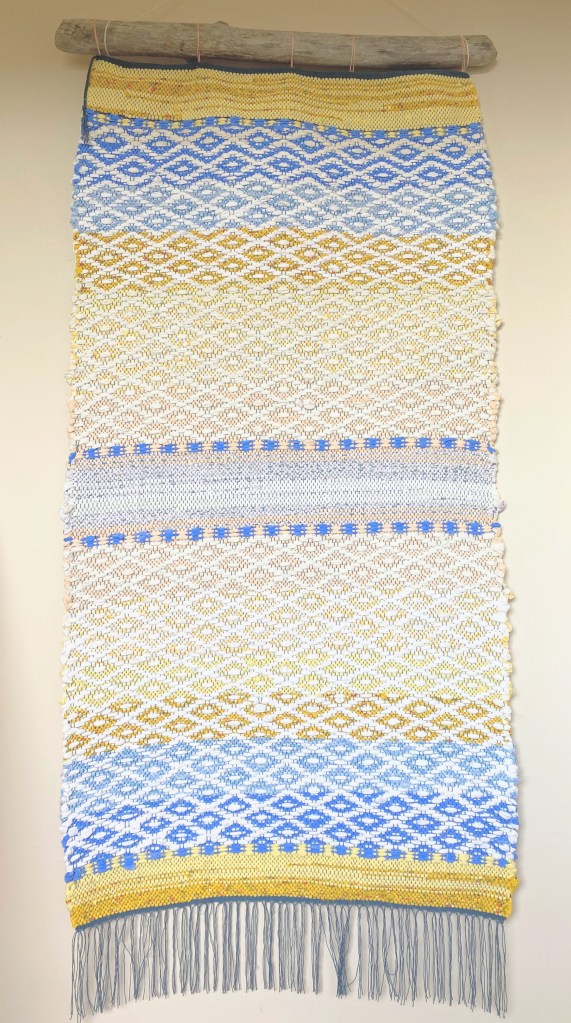
  • Holly Hildebrandt: Belt of Venus

    Holly Hildebrandt

    Belt of Venus

    25″ x 54″
    Cotton
    NFS


    Insta: @hollyhilda_mn

    Bio: Holly grew up on the North Shore of MN and now lives in the St. Croix River Valley where she continues to be inspired by forests and great bodies of water. She taught herself how to weave on a frame loom in 2018, and was then gifted a floor loom in 2019. This led to many classes, lectures, joining the Scandinavian Weavers Study Group, participating in makers’ markets, and an inevitable lifelong passion for weaving. Holly is inspired by natural surroundings, uncovering family heritage, and as an Interior Designer, enjoys studying global design history. With her craft, she hopes to excite an appreciation for functional art, connection to the past, and an intentional way of living in the world today.

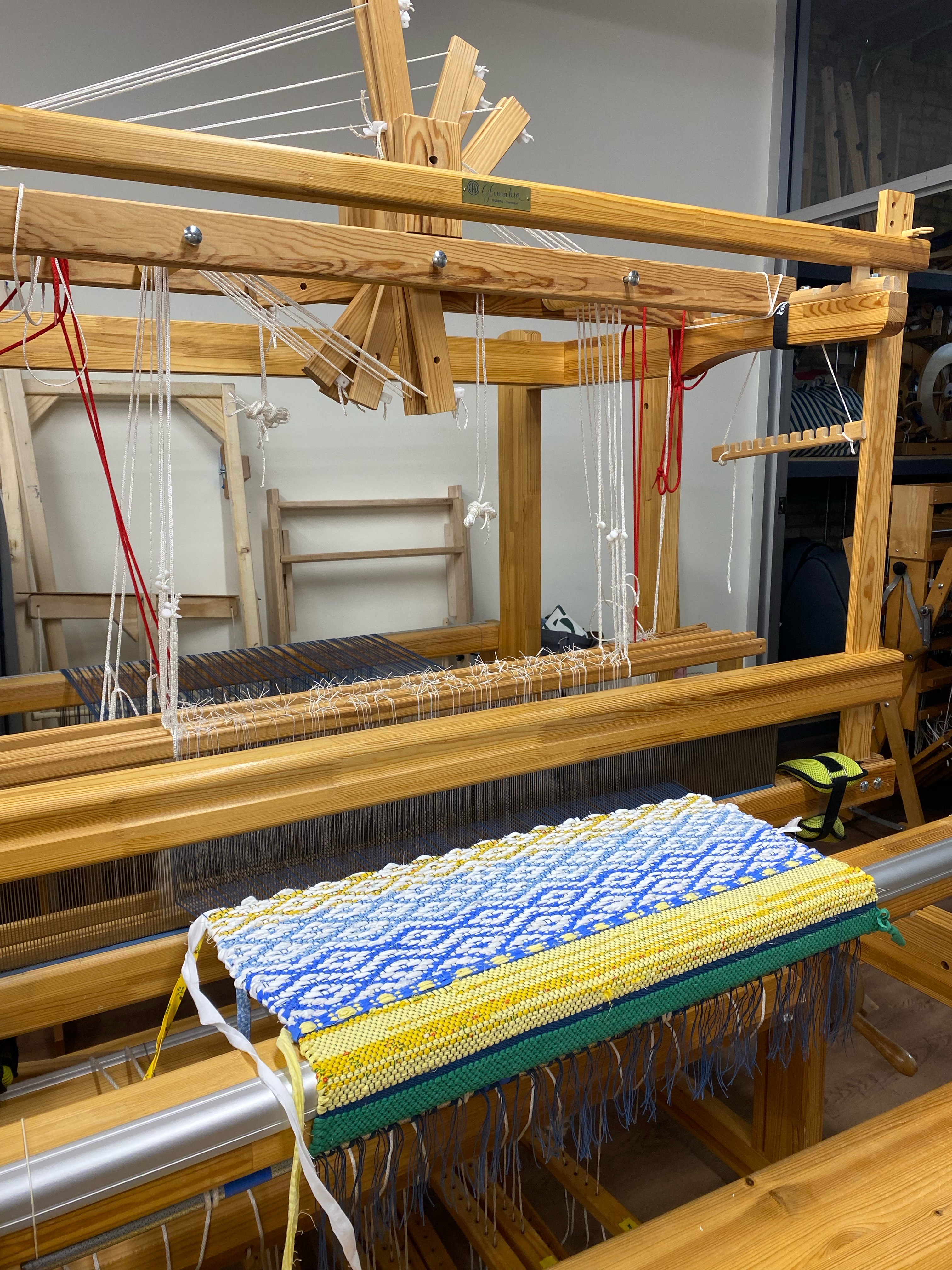
    Description: My first rag rug. It was woven in conjunction with the Karin Larsson “Let the Hand Be Seen” exhibit at the American Swedish Institute in 2024. The color scheme is comprised of cloth my mother had leftover from when I was a little girl: the curtains from my bedroom, a blanket from my sister’s bed, extra fabric from a doll pillow. I supplemented the color scheme with some purchased cloth and some kindly shared with me. The rosepath pattern in white I feel creates somewhat of a gate that you can look through to the gradient from peach to periwinkle, much like the Belt of Venus that is so visible at sunrise and sunset. The organic striations at the center are very much to me a lake that reflects a gradient sky onto the water. This year I have done a lot of visiting the North Shore, where I am from, and have been totally captured by the Belt of Venus over Lake Superior. Serene, restful, cheerful. 

    hollyrhildebrandt@gmail.com

  • Nancy Ebner: The Two Sides of beauty

    Nancy Ebner

    The Two Sides of Beauty

    54″ x 14.25″

    Cotton warp and weft

    NFS

    Bio: Nancy started weaving in earnest at the Minnetonka Center for the Arts in 2017 by taking classes offered by Traudi Bestler. She wanted to learn to weave independently prior to her retirement and has tried her hand at a multitude of four- to six-shaft weave structures. She continues to explore techniques via classes for the opportunity to learn and to connect with other makers. She is drawn to bright, vibrant colors and especially the color PINK! Nancy enjoys both the design and the technical aspects of completing a woven piece. As a bonus, textile-related travel has taken her to: New Mexico, Massachusetts, Sweden, Norway, Ireland, and most recently to the Peruvian Andes.

    Description: In 2021, I had the chance to take a week-long class at Vävstuga weaving school in Shelburne Falls, Massachusetts. I chose to weave a Smålandsväv table runner designed by Becky Ashenden. While she taught a beginning-level class, I wove in an opposite corner of the barn on a loom (Glimåkra) that could accommodate the structure. It was an amazing setting and retreat. Take a look at the back of the piece to see a different, lovely color combination. This is the most complex piece I have woven in which the treadling pattern was not outlined in detail. It required that I continually observe the piece and noodle the next treadling sequence. I would like weave additional Smålandsväv designs and my next step is to modify my home loom to do so.

    naebner@msn.com

  • Latest News from Scandinavian Weavers!

    Latest News from Scandinavian Weavers!

    Follow the Scan Weavers Blog! (And see more beautiful blue rugs by Judy Larson!)

    It’s been a busy summer for our Scandinavian Weavers Group and promises to be a busy fall, as well. Stay tuned for a summer wrap-up and fall preview, including the following:

    Scan Weavers win ribbons the Minnesota State Fair!

    Scan Weavers in the news!

    Recent and Upcoming travels to Scandinavia!

    Group Projects: Rosepath Rugs and Viking Twill!

    Major Exhibit Coming in 2025!

    And more! (Including waffles.)

  • Summer Weaving Demos at the American Swedish Institute!

    Summer Weaving Demos at the American Swedish Institute!

    “Karin Larsson: Let the Hand be Seen,” American Swedish Institute, June 8 through October 27, 2024

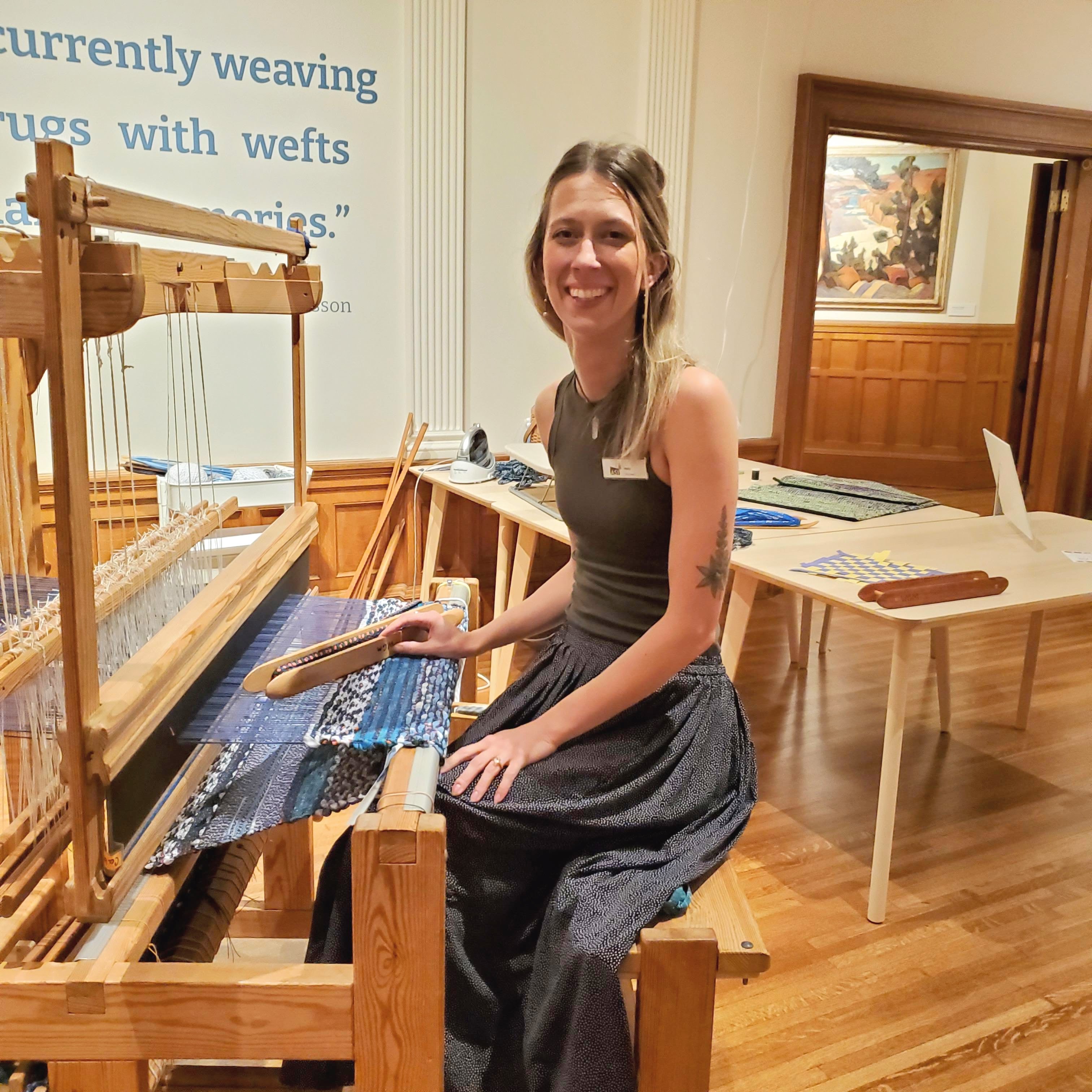
    The highly-anticipated exhibit “Karin Larsson: Let the Hand be Seen” opened yesterday with great festivity at the American Swedish Institute (ASI), where it will be on display through October. Members of the Scandinavian Weavers and Rag Rug Weavers of the Weavers Guild of Minnesota were on hand to demonstrate the art of Swedish-style rag rug weaving and will continue on key dates through the run of the exhibit.

    Swedish loom in the ballroom at the American Swedish Institute

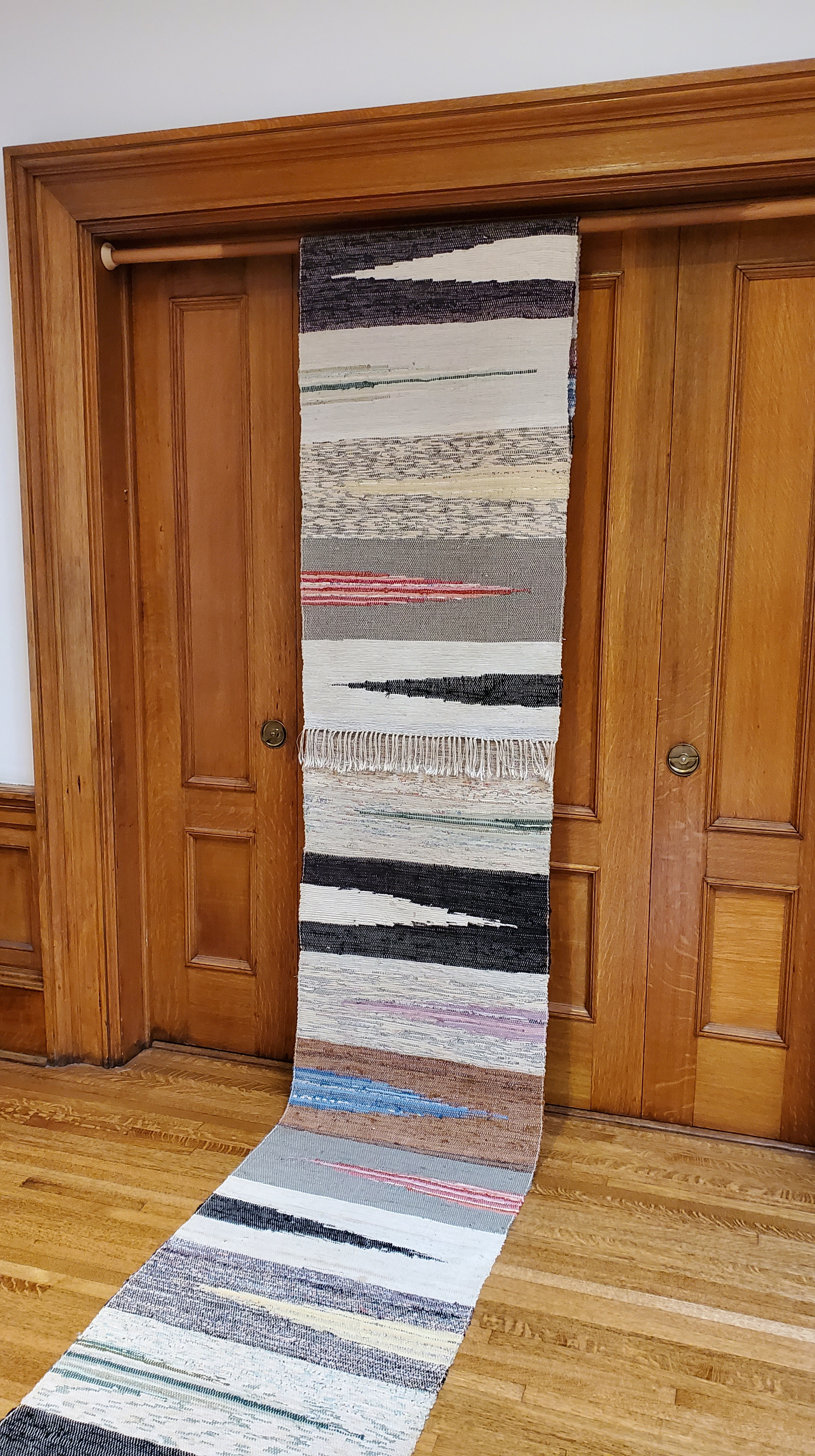
    In addition to Karin Larsson, we took inspiration from a 14-meter rag rug in ASI’s permanent collection. It was woven by Maria Jonsson in the province of Värmland, Sweden and donated to ASI in the 1950s.

    Maria Jonsson’s masterful rug

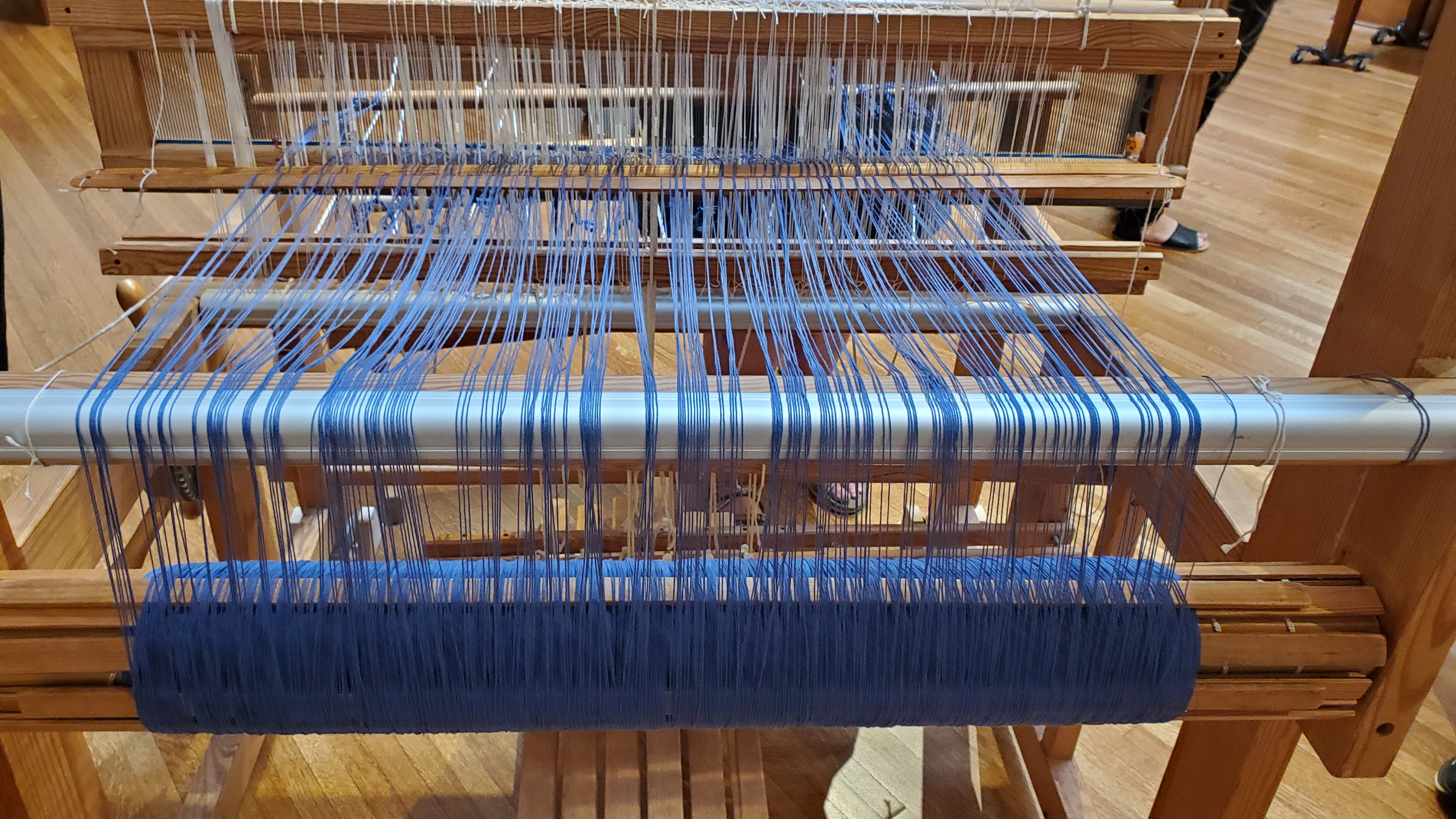
    Judy Larson, coordinator of the Rag Rug Group, warped a vintage Glimakra loom in “Swedish blue” and designed our first rug to feature a wedge pattern like the ones in Jonsson’s rug. (Thanks to Patty Johnson of Color Crossing for lending her loom.)

    Loom warped in cotton seine twine
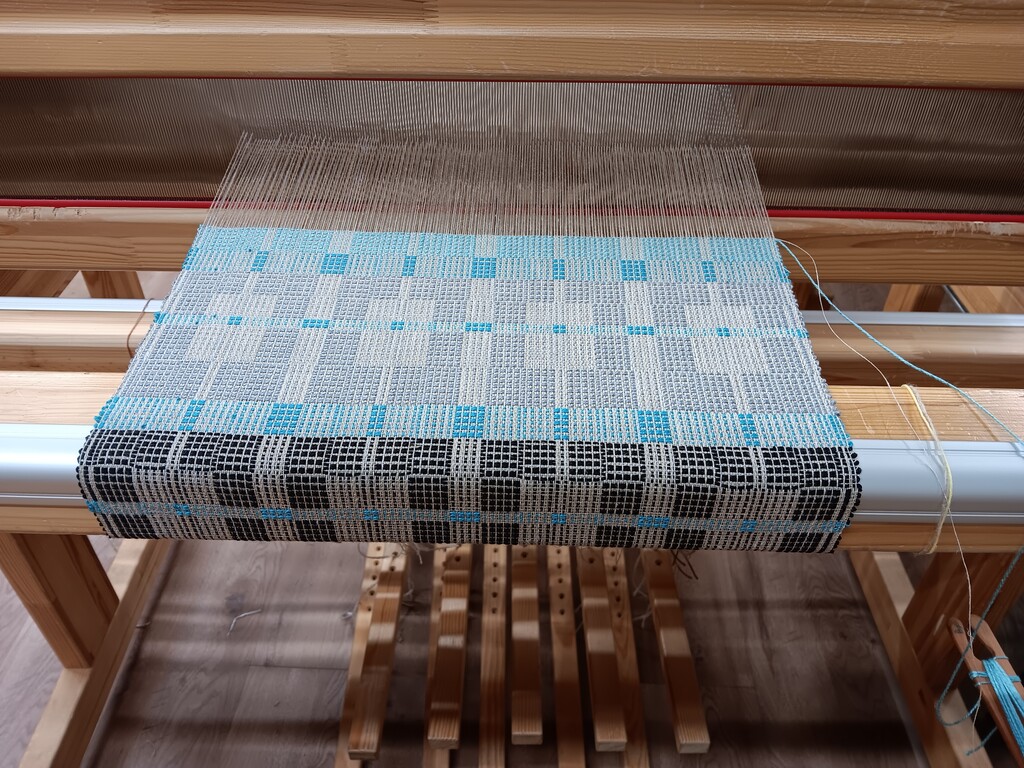
    Wedge weave in blue fabric strips

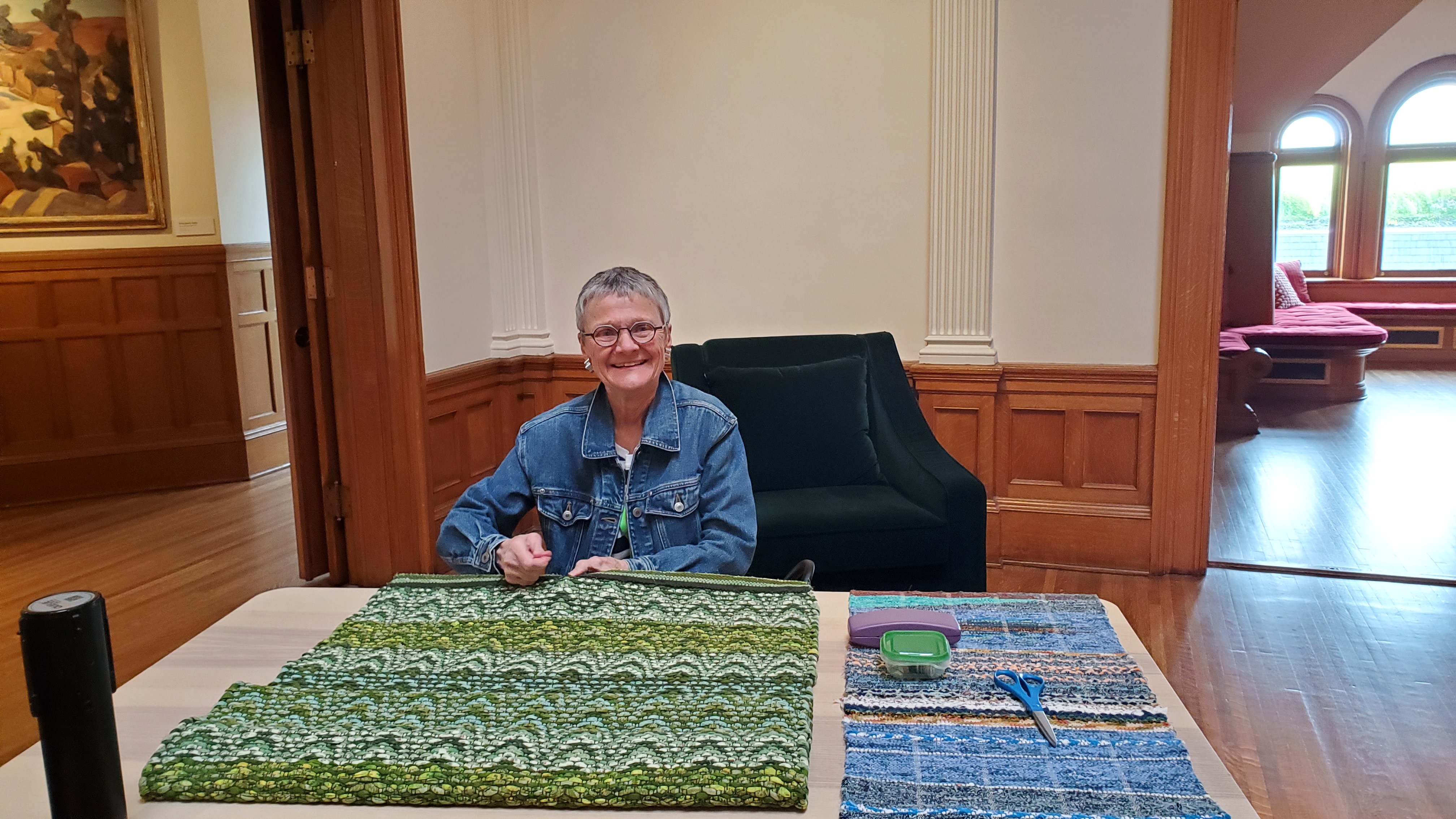
    Besides weaving at the loom, volunteers demonstrated the entire process of rag-rug weaving, from preparing fabric to finishing techniques. Finished rugs are also on display.

    Cotton fabric strips prepped for weaving
    Nancy hand-finishing one of her beautiful rugs

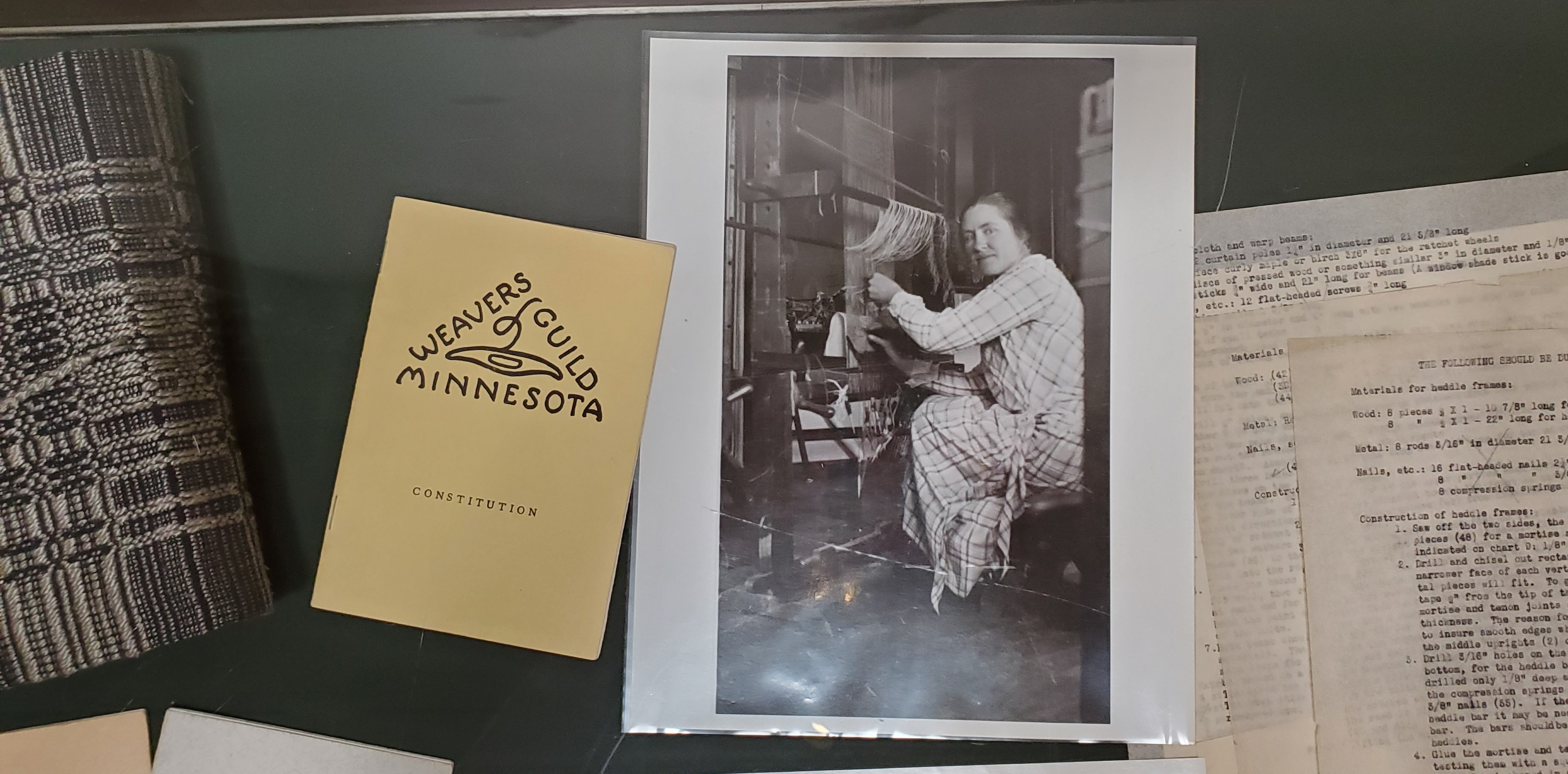
    The collections staff at ASI has also put together a display about Hilma Berglund, one of the founders of the Weavers Guild of Minnesota.

    Display features photos, examples of Hilma’s weaving, and documents, including the constitution of the Weavers Guild

    Weaving demonstrations will be held on the following Thursday evenings from 5:00 to 8:00 PM: June 13, and 27, July 11 and 25, August 8 and 22, September 5 and 26, October 10 and 24. Note: Admission to the museum will be free after 3:00 PM.

    In addition, demonstrations will be held at ASI’s Midsommar Celebration, Saturday, June 15 from 10:00 AM to 4:00 PM and Cocktails at the Castle, Saturday, September 14, from 6:00 PM to 9:00 PM. Note: These are ticketed events, so admission is required.

    A special thank-you to the staff of the Weavers Guild of Minnesota and the American Swedish Institute for coordinating this volunteer program. Stay tuned to the blog for more articles on this ground-breaking exhibit!

    For more information, please visit the ASI website:

  • Mark Your Calendars for “Karin Larsson: Let the Hand be Seen”

    Mark Your Calendars for “Karin Larsson: Let the Hand be Seen”

    The Scandinavian Weavers are honored and excited to be part of the upcoming major exhibit at the American Swedish Institute, “Karin Larsson: Let the Hand be Seen,” June 8 through October 27, 2024.

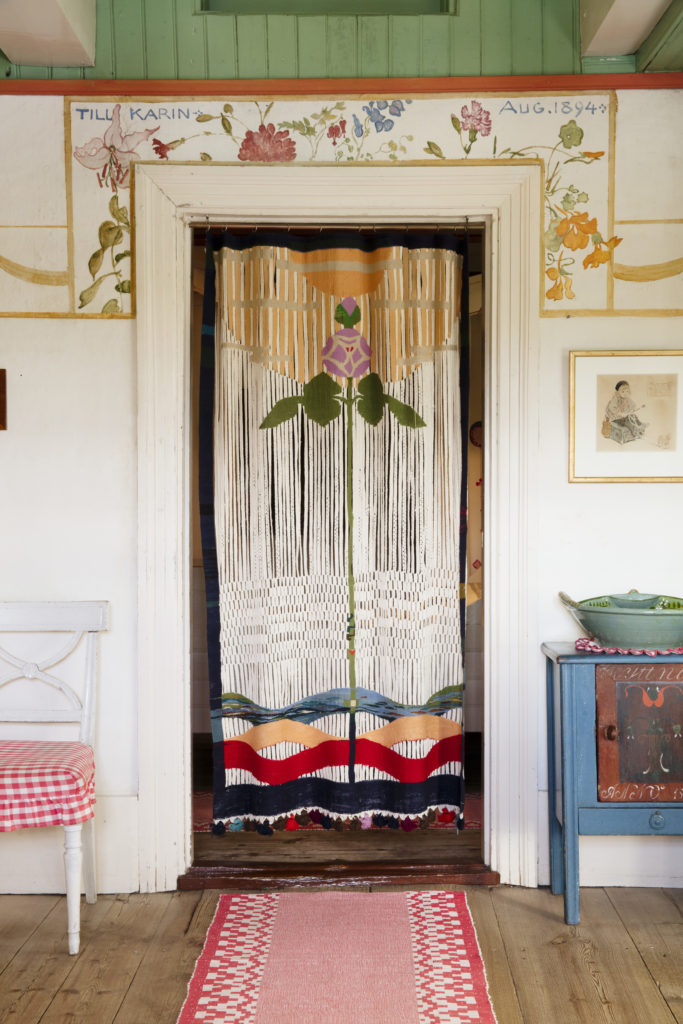
    Portier woven by Karin Larsson at Lilla Hyttnäs in Sundborn, Sweden. Photo courtesy of Carl Larsson-gården.

    Karin Bergöö Larsson (1859–1928) was a groundbreaking artist whose approach to textiles and design ushered in a new era of interior design and established the iconic Swedish style that continues to inspire artists worldwide. The floral motifs, vivid colors, and charming simplicity of her style remain heavily influential nearly a century after her death, thanks to the images captured by her painter husband Carl Larsson.

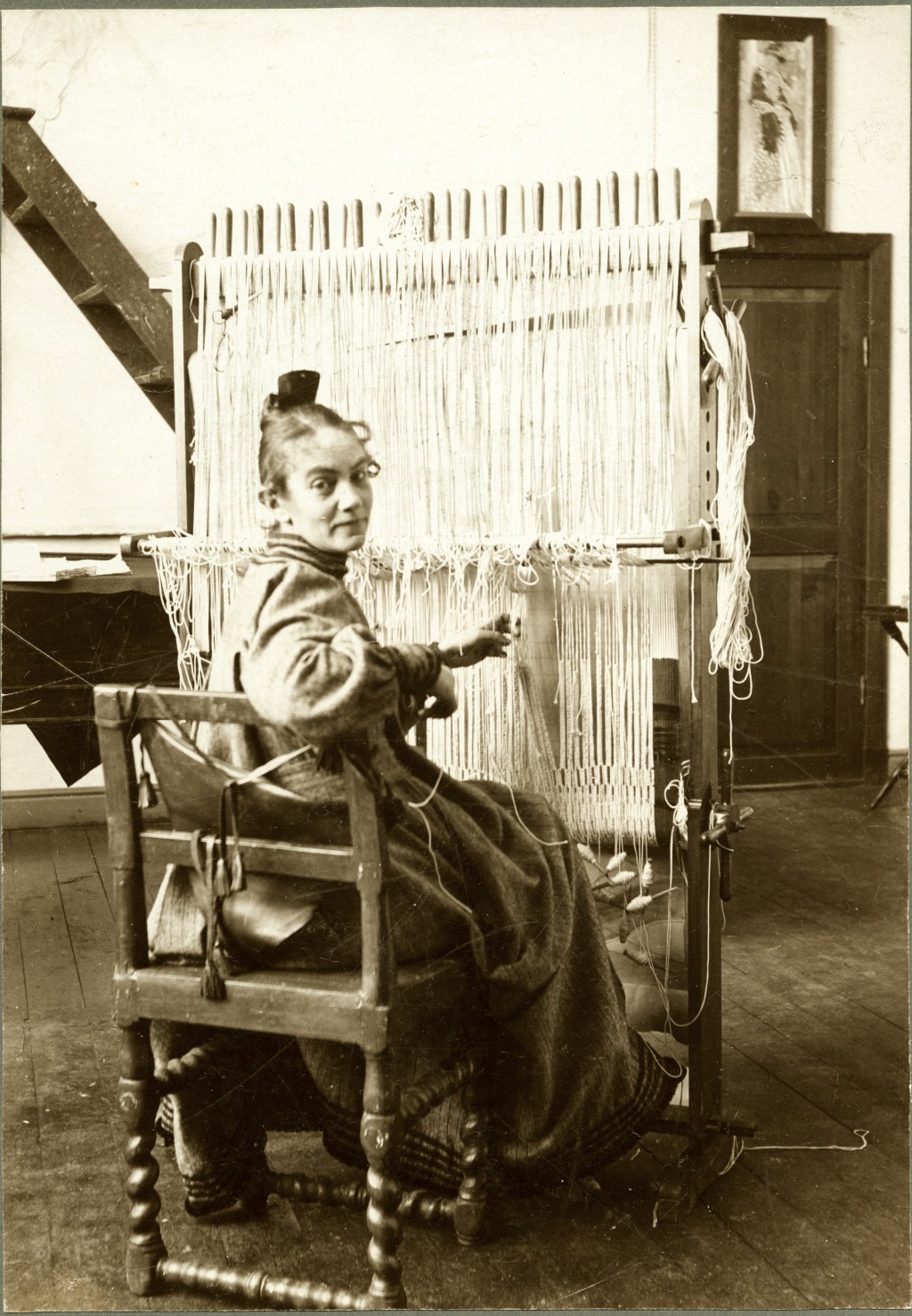
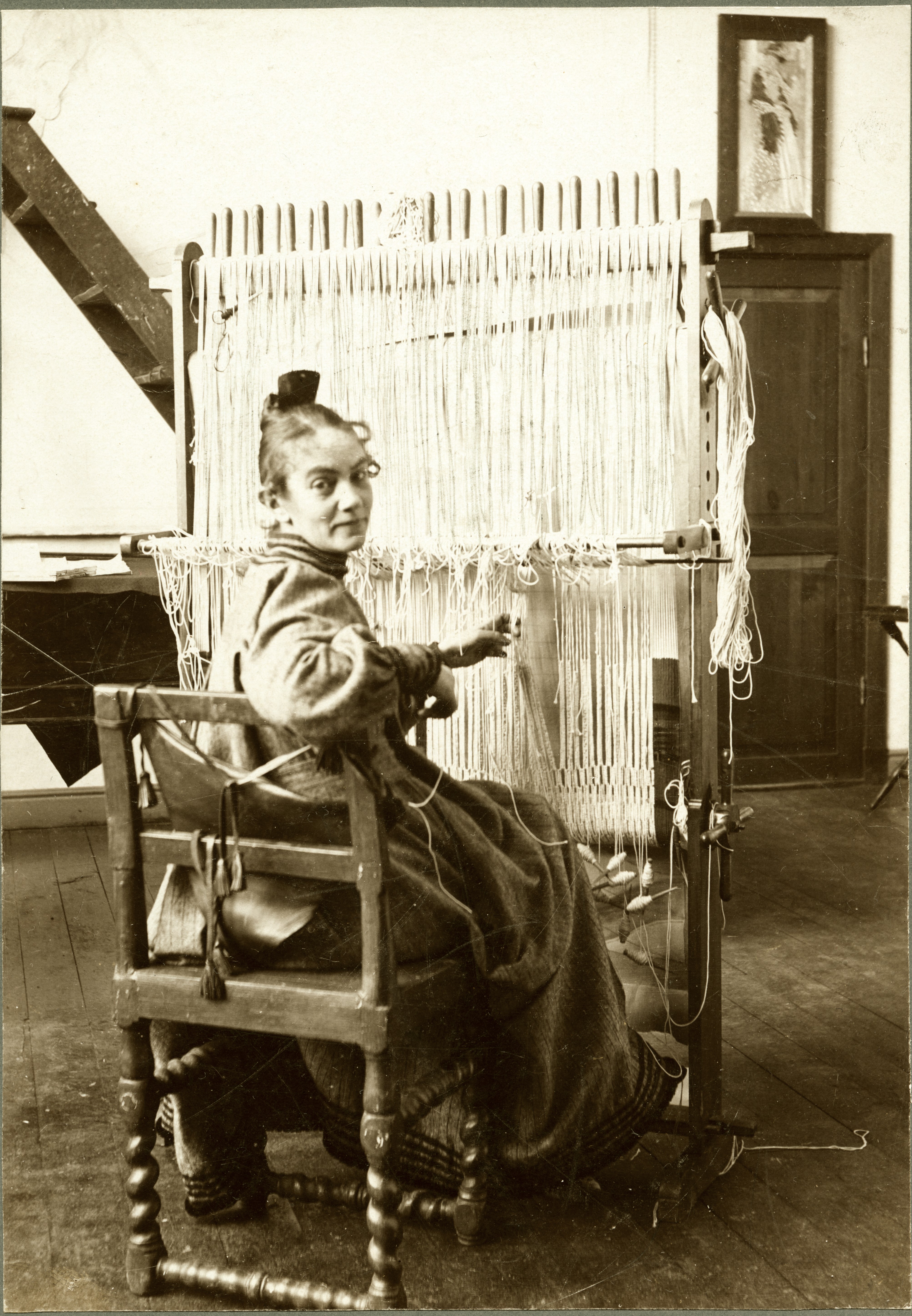
    Karin Larsson at her upright loom. Photo courtesy of Carl Larsson-gården.

    It was Karin who designed and created Lilla Hyttnäs, the Larsson’s home just outside of Falun in Sundborn, Sweden, which was so often the subject of Carl’s paintings. From the bold interiors to the modern textiles and rustic furniture, Karin’s hand can be seen across many of Carl’s works, which have become some of Sweden’s most famous paintings. The home continues to inspire and is open to the public as Carl Larsson-gården, which created this traveling exhibition.

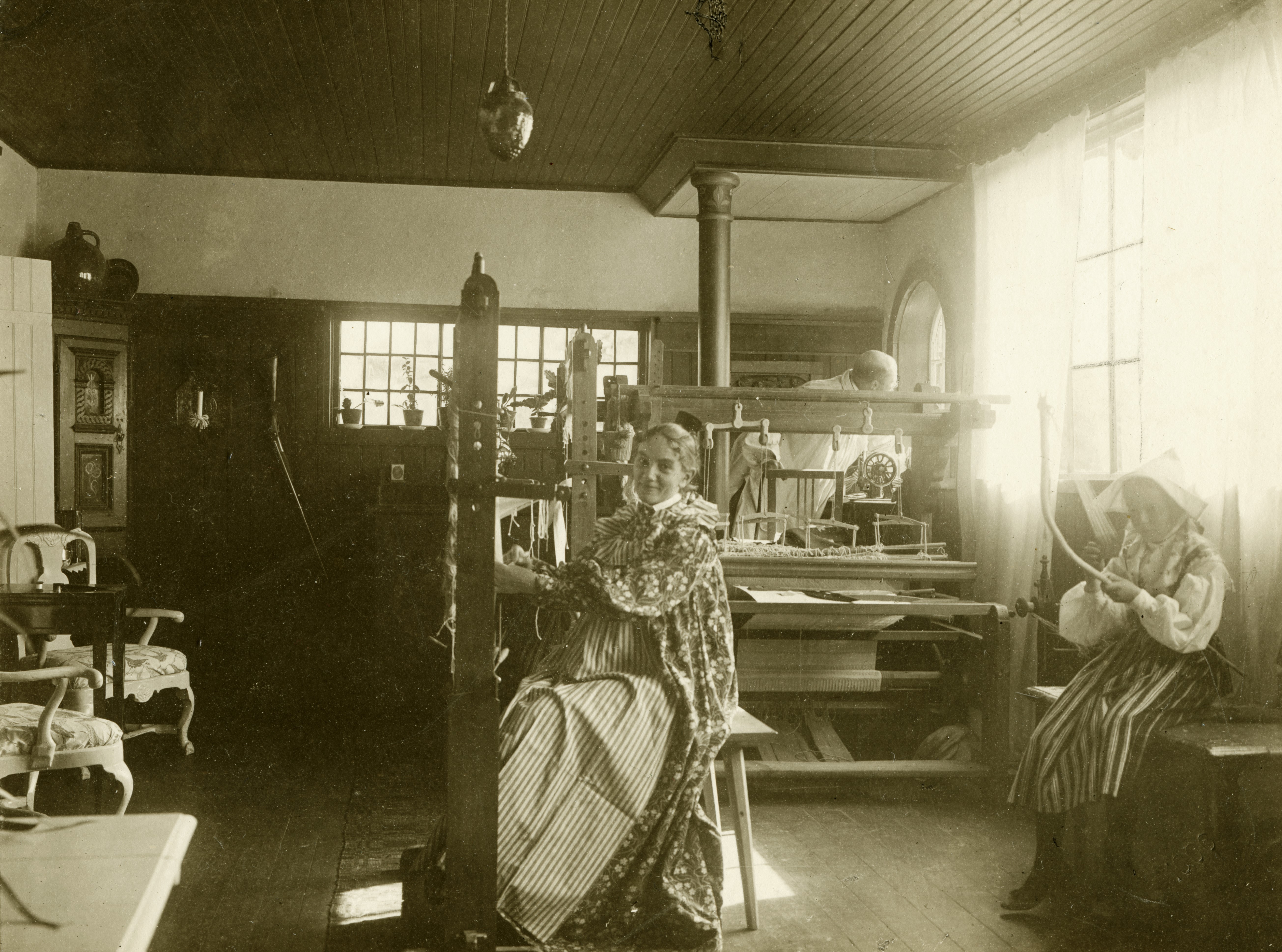
    Karin at her upright loom with her floor loom in the background. Photo courtesy of Carl Larsson-gården

    Along with members of the Rag Rug Weavers group from the Weavers Guild of Minnesota, the Scandinavian Weavers will demonstrate traditional Swedish rag rug weaving during the run of the exhibit. We will be working in the ballroom at the top floor of the historic Turnblad Mansion—AKA “The Castle”—in Minneapolis. Thanks to renovation efforts, the Turnblad Mansion is fully handicapped accessible, including an elevator, which will come in handy when transporting a large Swedish floor loom!

    Turnblad Mansion. Photo courtesy of the American Swedish Institute.

    Stay tuned to this blog for further details! In the meantime, for more information, visit the American Swedish Institute website:

  • New Year, New Project!

    A cold January is the perfect time to start a new weaving project! The Scandinavian Weavers’ latest group warp is a pattern called Kukkoladräll.

    The Kukkoladräll pattern was composed by Elsa Kerttu in 1926 when she was a student at Jämtslöjds Kvinnliga Slöjdskola (Women’s Craft School) in Östersund as an assignment to create a pattern in Jämtlandsdräll. It was named after Elsa’s hometown of Kukkola, a small fishing village in northern Sweden, just across the border from Finland. A lovely version of this pattern was woven by Ulrika Bos Kerttu, Elsa’s niece, in a palette she named Cloudberry. The draft for the pattern is copyrighted by Sveriges Länshemslöjdskonsulenter and provided bytextilhemslojd.se

    Image of cloudberries from Pinterest.

    The Weavers Guild of Minnesota is equipped with two Glimakra looms for classes and group projects. The Scan Weavers generously dug into their stashes for the linen warp. At least 14 of us will weave on this warp, so it is quite long.

    There’s nothing more beautiful than a plain linen warp. Note the slightly different colors that result from blending.

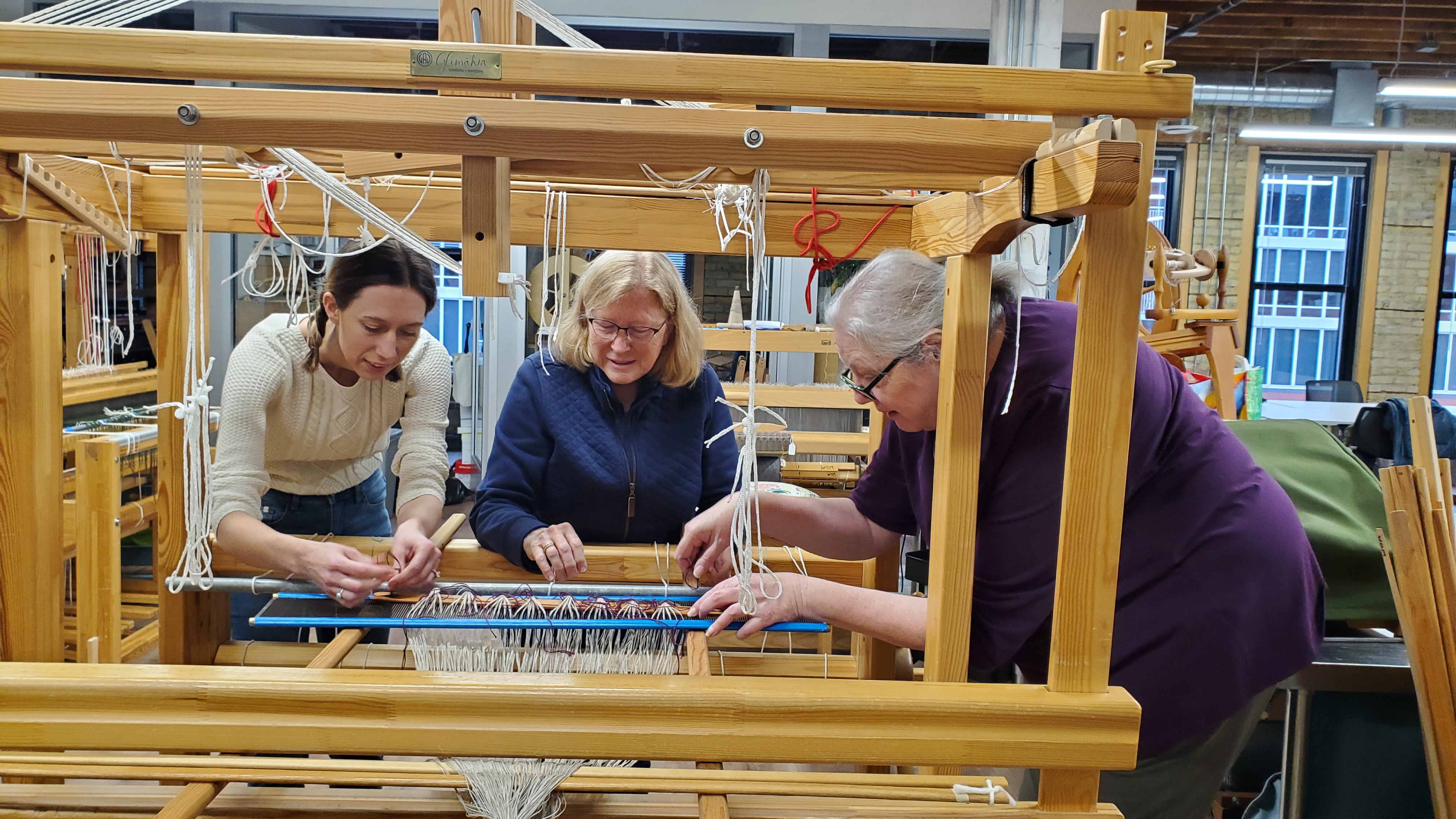
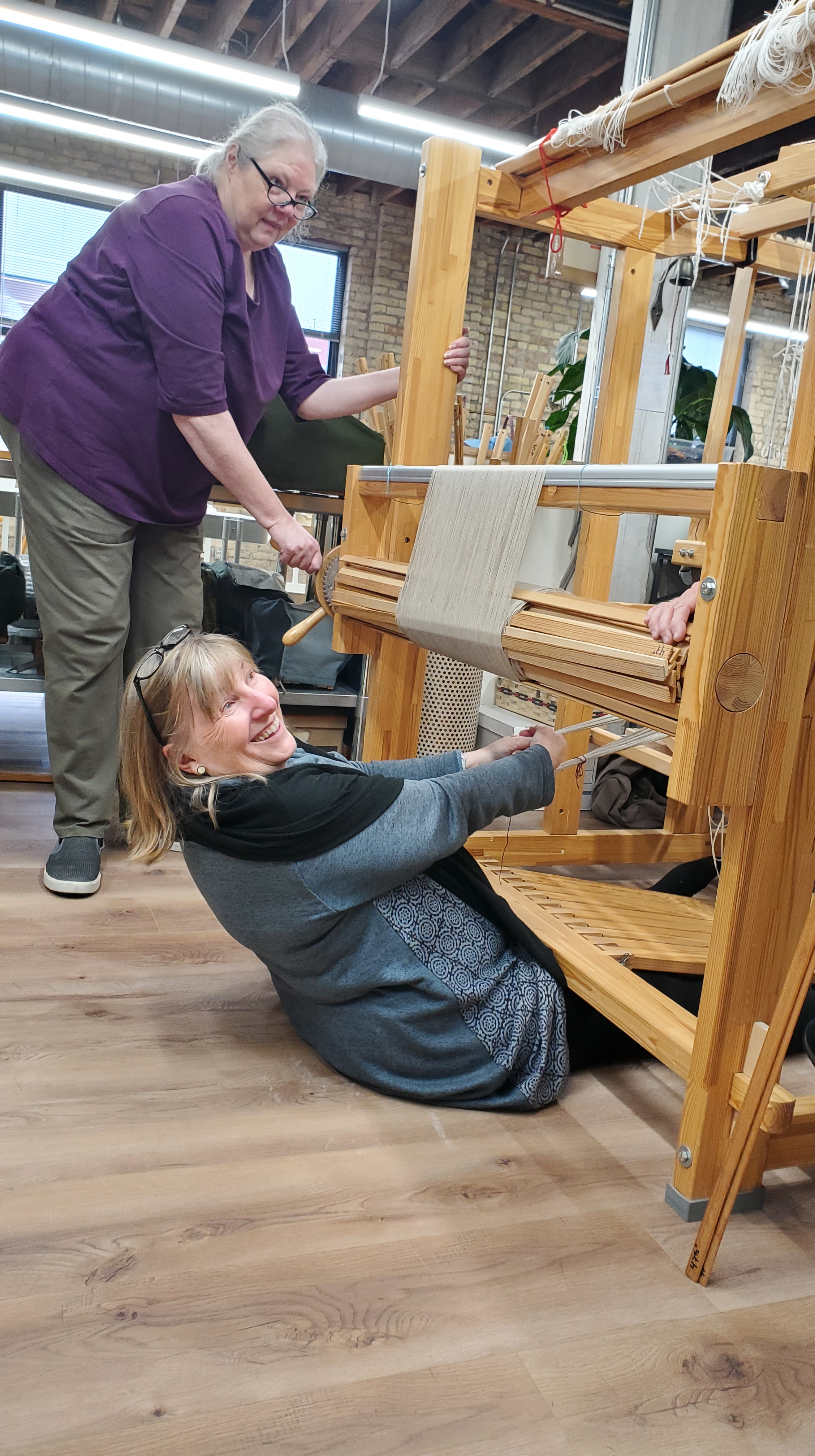
    Warping is always more fun with a group! (Especially with coffee breaks.) Below, Lisa Torvik explains the benefits of pre-sleying the reed to newer weavers Holly and Beth.

    Patty Johnson demonstrates how she used to warp her Glimakra all by herself – controlling the warp tension while winding on the back beam. Fortunately, Lisa is there to help.

    Lisa reminds everyone to spritz the linen warp with water to prevent breakage. (Lisa does this every time she advances the warp, which she does every three to four inches.)

    Lisa adapted the draft for towels and included four motifs across the width instead of three.

    Lisa wove two towels in different colorways. For the first, she used 16/1 linen doubled on stick shuttles for the pattern weft and 12/1 linen for the ground shots.

    For the second towel, Lisa chose to work with perle cotton for the pattern weft.

    Stay tuned for more updates on this project. I like to think that Elsa Kerttu’s original design of multiple squares was inspired by the many small fishing huts in Kukkola.

    Image of Kukkola from Pinterest
    Stock image

    If you now want to visit Kukkola as much as I do, search online for the Kukkola Tourist and Conference Board. They say the area provides natural beauty, peace, and creative inspiration. What could be better for weavers?