Category: Swedish weaving

  • Swedish Art Weave – with Fleece

    Swedish Art Weave – with Fleece

    Our Scandinavian Weavers group met yesterday. There wasn’t so much show and tell, but lots of discussion about an upcoming exhibit of traditional and contemporary weaving in Norwegian techniques, to be held at Norway House in Minneapolis from July 20-September 17.  Expect more information in the coming month about the exhibit and accompanying classes, demonstrations, and lectures.

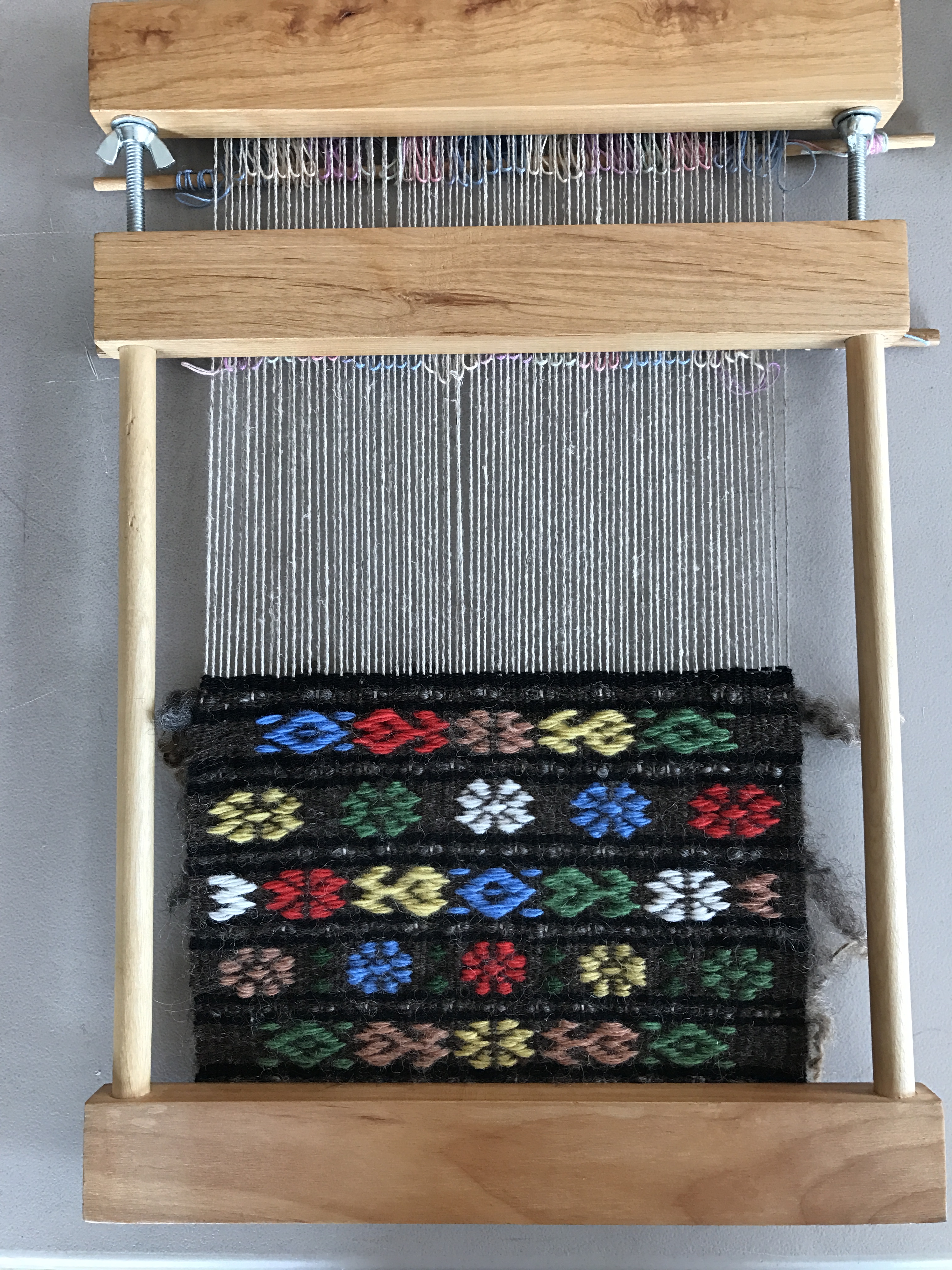
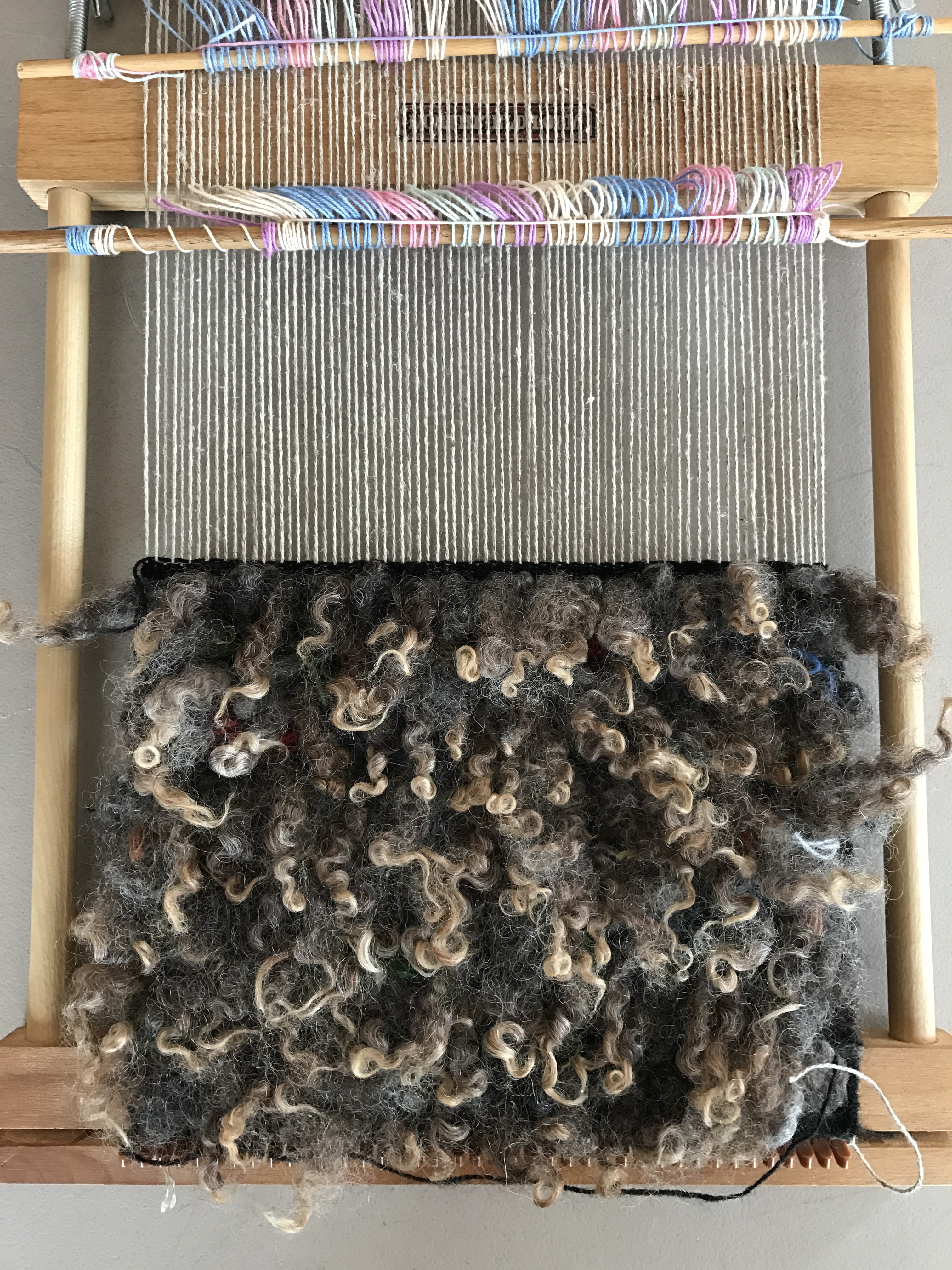
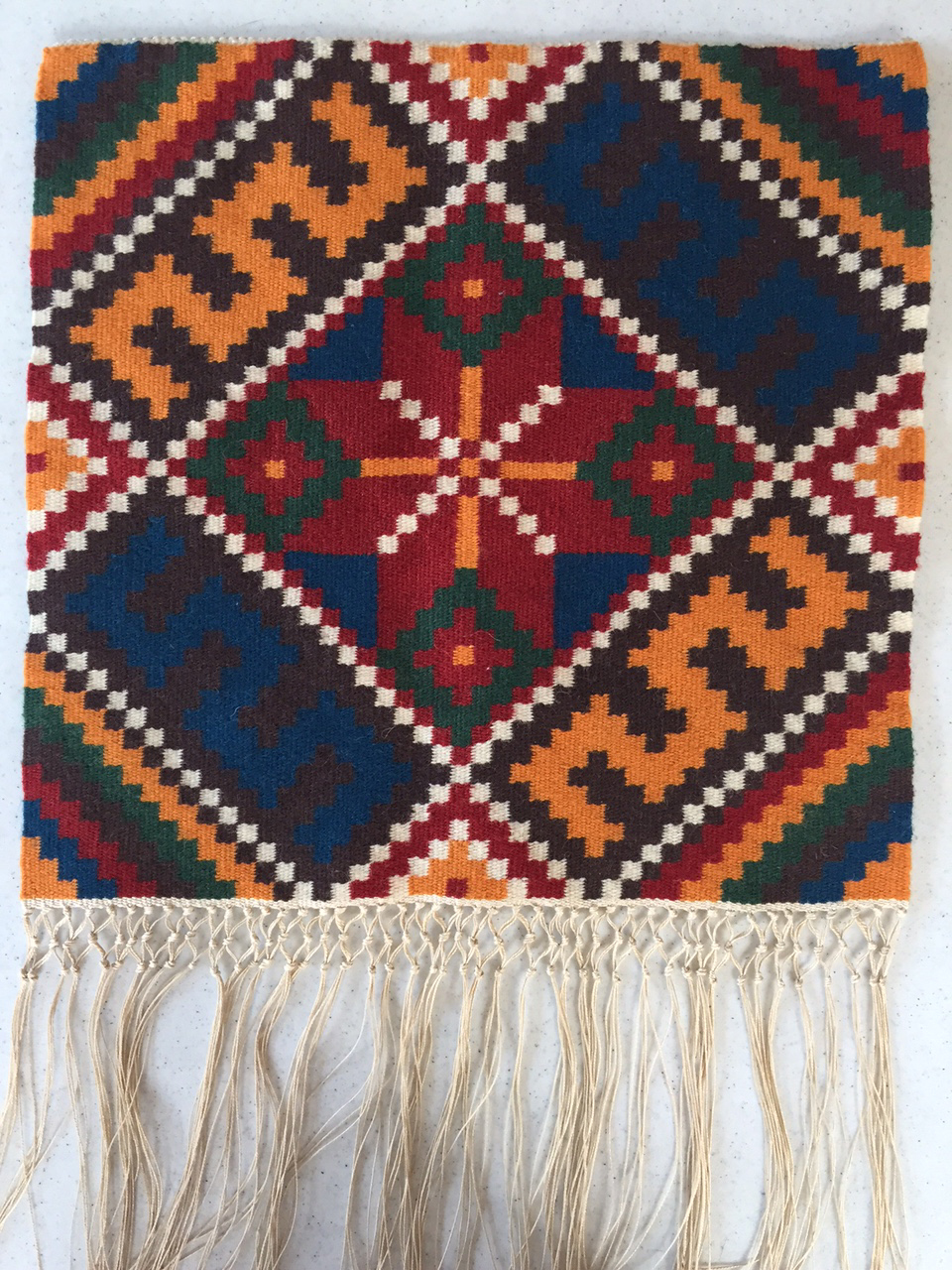
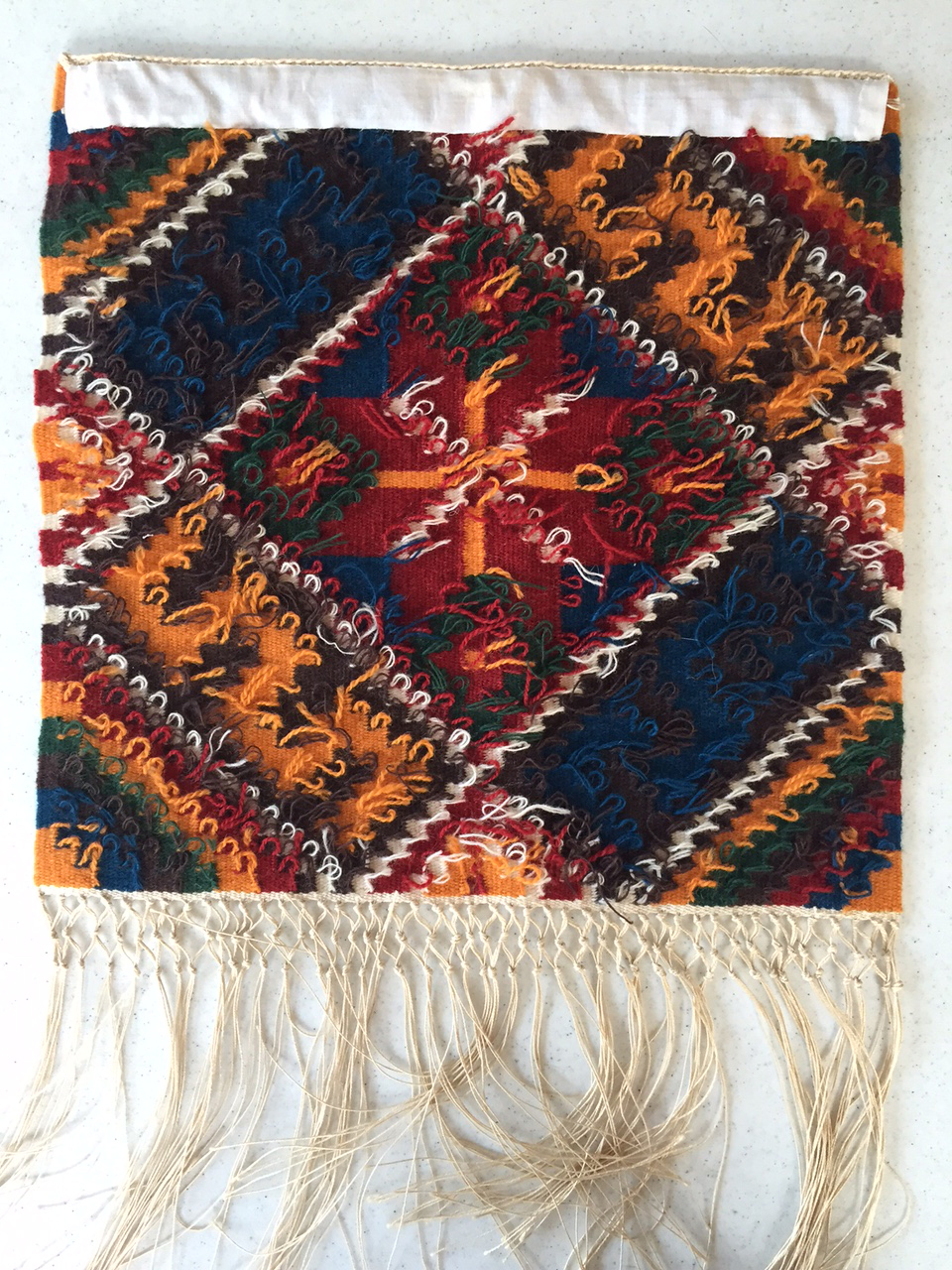
    Jan Josifek brought a wonderful small sample of Swedish krabbasnår that she is weaving on a simple tapestry loom.  Last fall one of our members brought a skinnfell – a sheepskin coverlet with printing on it to our meeting.  Jan was so taken by the fleeciness of it that she decided to add fleece to the back of her krabbasnår. One benefit of weaving the piece on her tapestry loom is that the piece can be easily turned from one side to another to check for mistakes! We look forward to the big version of this sweet piece.

    img_1919

    img_1920

    img_1921

    fullsizerender-5


  • Scandinavian Heirloom Textiles

    Over the years, my friends have told me about their fabulous old Scandinavian textiles — inherited from family or friends in “the Old Country;” found in out-of-the-way antique stores, thrift shops, garage sales, or flea markets; or even rescued from barns.  Let’s tell their stories!

    Later this fall we will be mounting a display of historical textiles from the Nordic countries, along with their stories, on the walls of the Weavers Guild.  The items will also be featured in the upcoming (November) issue of the Norwegian Textile Letter.  Pieces will be submitted not only by the members of the Scandinavian Weavers Study Group, but also by other Weavers Guild of Minnesota members.

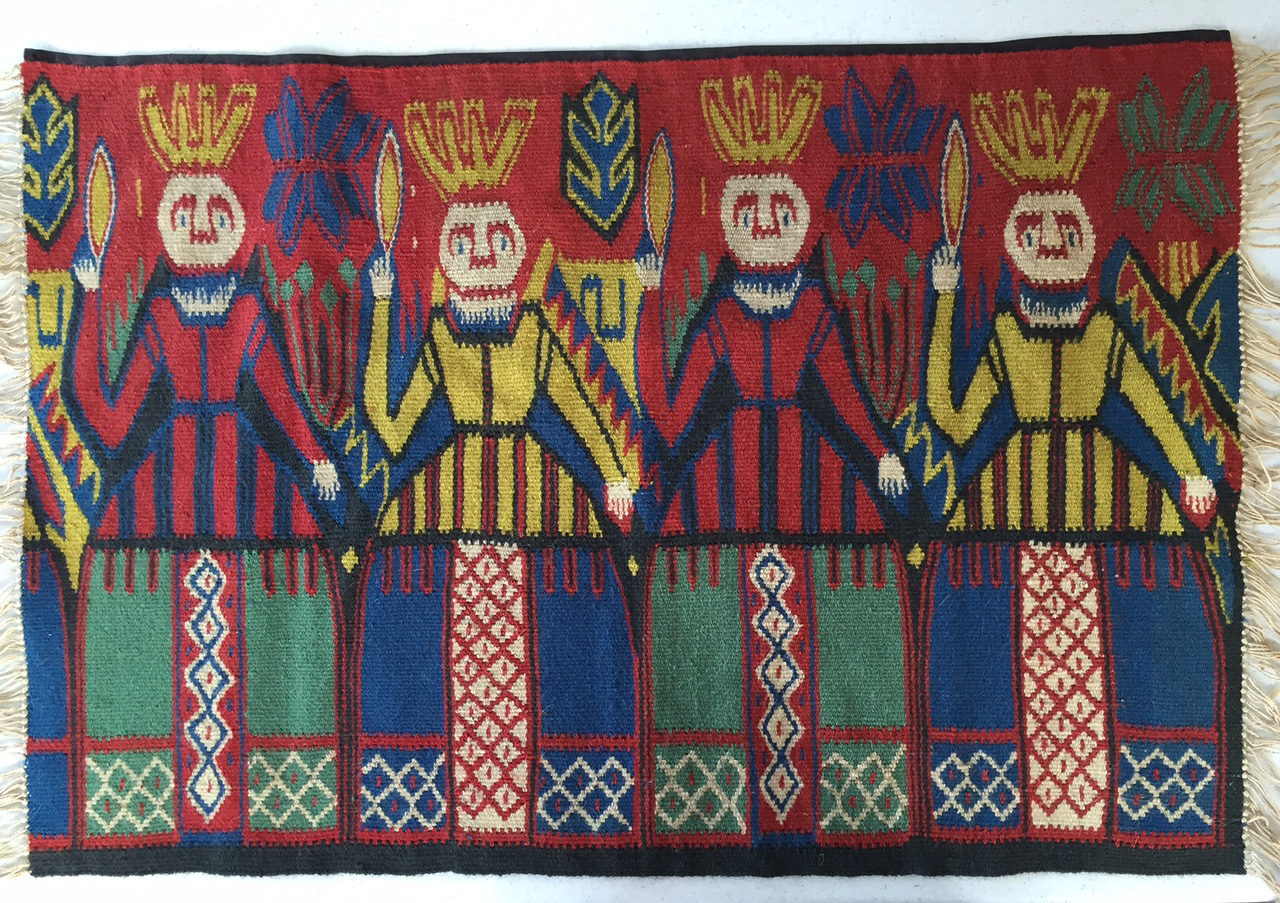
    At yesterday’s meeting of the Scandinavian Weavers, we saw great examples of old textile finds.  Jane Connett said that she had been a bit laid up recently, so she spent a lot of time on Ebay. Look at this beautiful Norwegian tapestry find.  It was advertised as an “Albanian kelim,” but fans of Norwegian tapestry know perfectly well that it is a replica of a portion of a Norwegian Wise and Foolish Virgins tapestry.  It was faded on one side, but the colors were clear and strong on the other.  And since the weaving followed Norwegian tradition, all the ends were sewn in so that either side is equally beautiful.

    virgin1virgin2

    Jane said she didn’t remember how much she paid, but probably only around $25.

    She also bought a beautiful small rolakan weaving.  Judy Larson noted that the loops on the back side, where the colors jump over a few threads, are typical of Swedish rolakans.

    rite-uprite-back

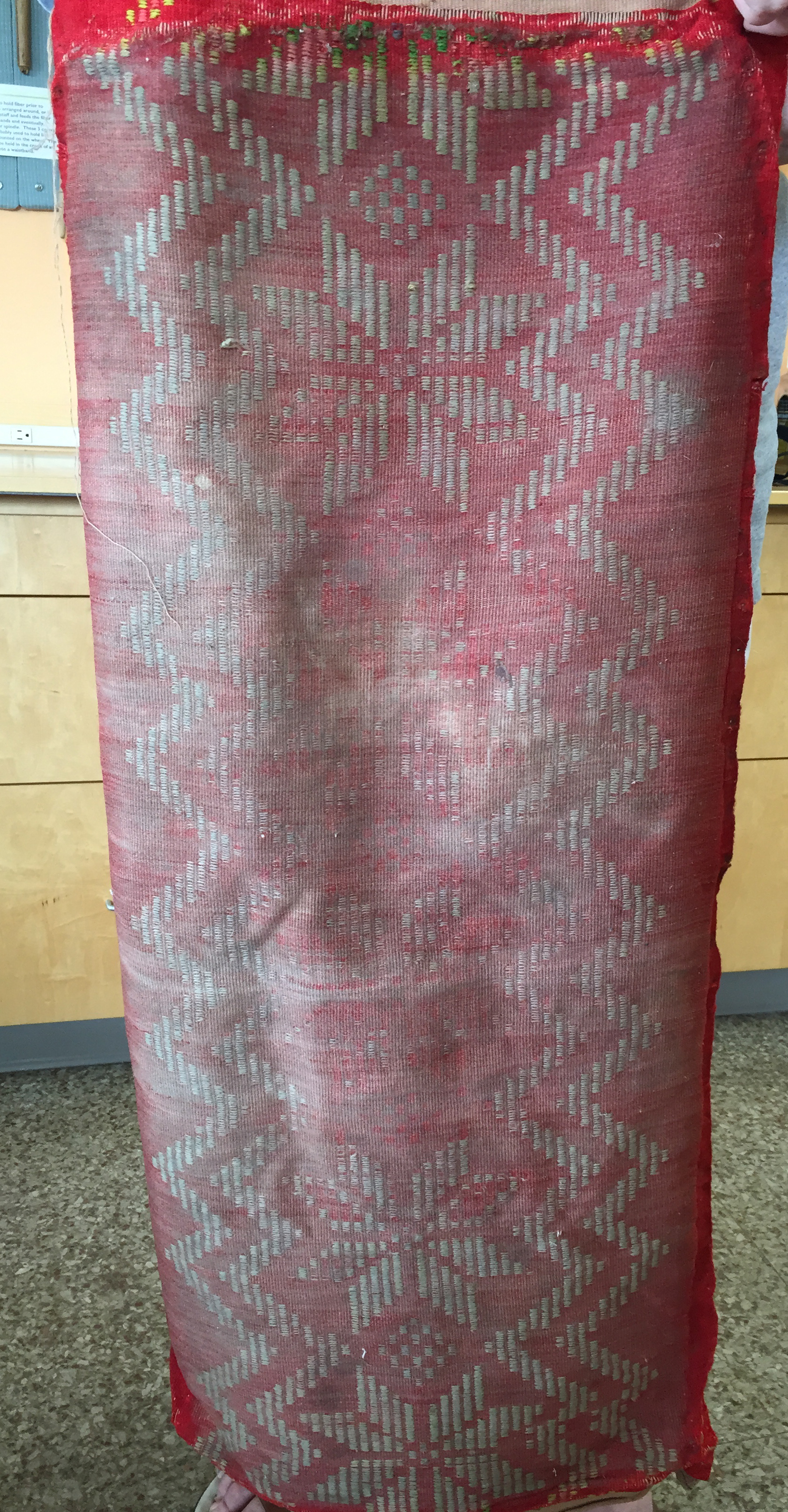
    Lisa Torvik showed a treasure-in-progress.  She rescued it from a friend’s barn, where it had supported feed sacks and whatever else needed a resting place. The bench was badly damaged, but still retained one crudely-carved dragon foot.  The top of the bench cover was so dirty that no color peeked through.  Was it even woven, or just embroidered, Lisa wondered.

    barn-front

    Once it was off the bench, however, you could see that it was a nicely-woven dukagang.

    The mystery remains – will Lisa ever be able to retrieve color on the dirty front side?  She had just taken it off the bench hours earlier.  Perhaps we won’t know for a while, as several members of our group thought that waiting until winter for a thorough snow-washing might be the best route.


  • RED – Phyllis Waggoner

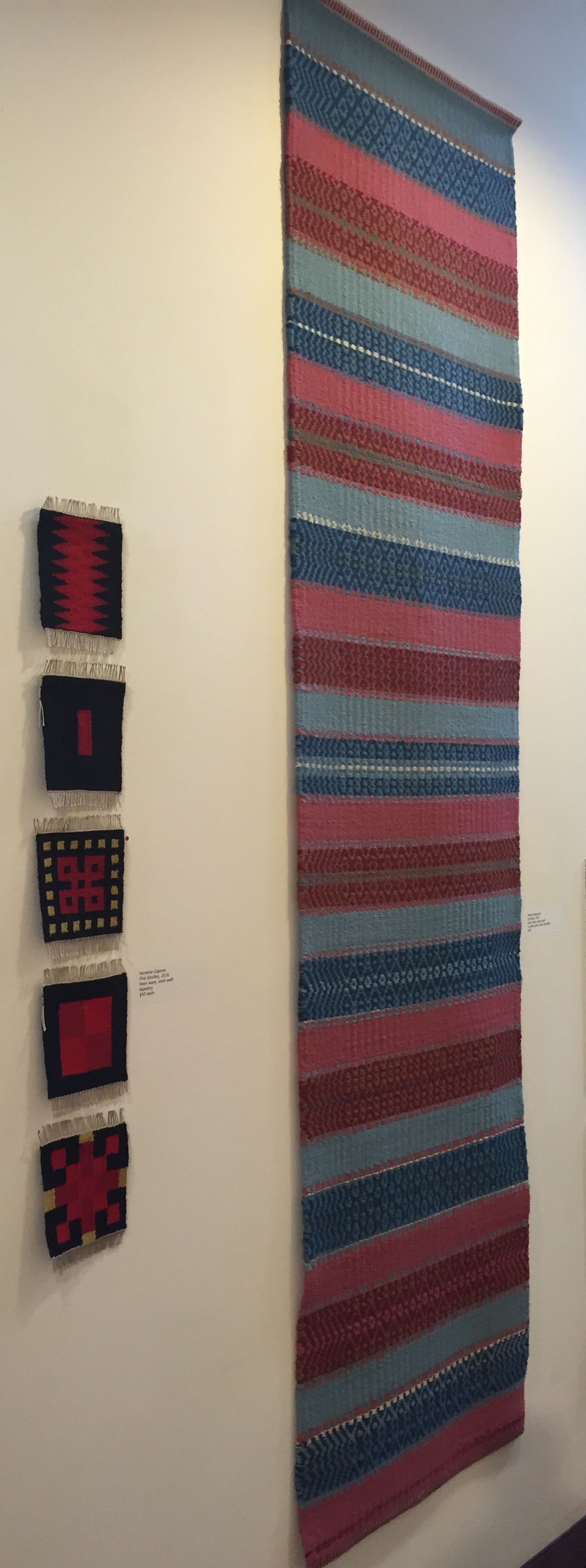
    “Untitled”  8’6” x 27”  Technique: 4 shaft point twill variation, treadles tied for 2/2 twill, “woven on opposites”  Materials:  5/8 linen warp, sett 6 epi, 3 ply rugwool weft.

    In the case of Phyllis’ long, beautiful rug, red was part of a color challenge — could she make the red work with the other colors? She had a great deal of yarn left after completing a commission. Rather than weave a shorter red rug, she chose to use all the colors to weave a long rug.  “Necessity is the mother of invention,” and Phyllis invented a design to make use of her red, and more.

    Unfortunately, the gallery configuration made it impossible to get a great head-on shot of Phyllis’s beautiful rug.  You’ll have to visit it in person, or look at it obliquely here.

    FullSizeRender


  • So Many Sources for Inspiration

    Looking at old textiles can be a wonderful inspiration for designing new textiles.  In our current Scandinavian Weavers Study Group focus on Swedish art weaves, I found digital images from Swedish museums that could help with ideas for patterns and bands.  You could look at the old pieces for color combinations, or to see how they were balanced into sections.  Just soak it in.

    In the Swedish DigitaltMuseum, try these terms: Konstvävnad, halvkrabba, krabbasnår, dukagång. I know there is overlap, as many pieces may include more than one of the techniques.

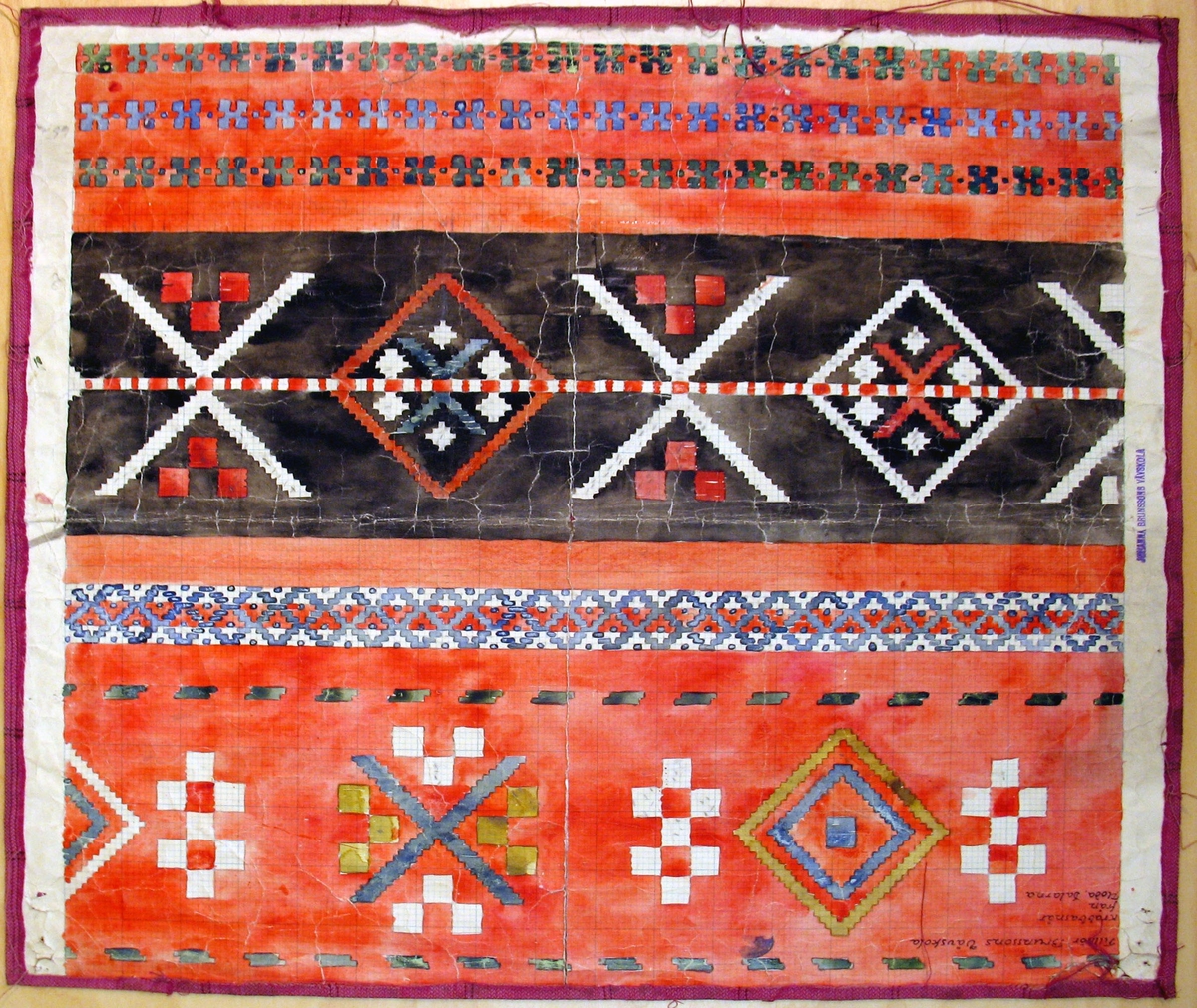
    There are images not only of woven items, but of patterns, too.  You could use them to chart your own, combining elements you like.  For example, here is a krabbasnår pattern.

    VM12697_243


  • Swedish Art Weaves at the ASI

    This week Phyllis Waggoner, Jan Mostrom, and I looked at many Swedish Art Weave pieces owned by the American Swedish Institute, to prepare for our upcoming Scandinavian Weavers Study Group meeting and choose which ones to take out for display. As you might guess, we chose almost all the pieces we looked at, except in one category.  The ASI owns many 20th century pieces that are similar in pattern.  They were sold through Hemslöjd in Sweden in the 20th century.  Though beautifully executed, if you see a couple, you get the idea.  In contrast, the older, more one-of-a-kind weavings in the collection seemed to merit more individual study and comments.

    This post includes a few detail shots of the pieces and some comments.  Later, we will post better, full-piece shots. This is just to whet you appetite!

    We came up with a few general observations.  The sett for the tabby background on the Swedish brocaded pieces was uniformly fine, not less than ten ends per inch, and in one case, about 19 ends per inch.  The wool used was a single ply, thin wool, which in some cases may have been used double-spooled in the background.  The brocaded patterns were woven with multiple strands, from 2-5.

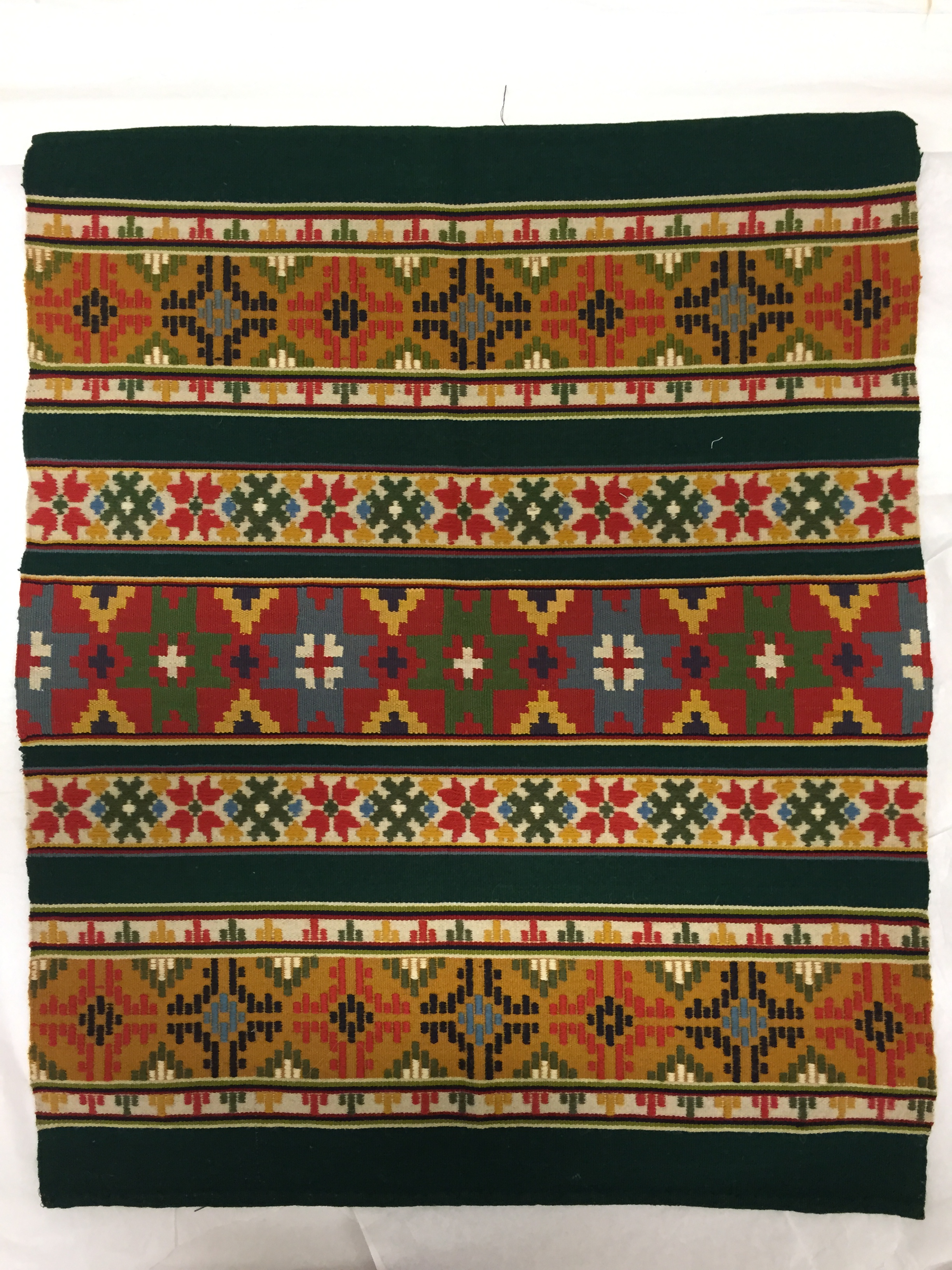
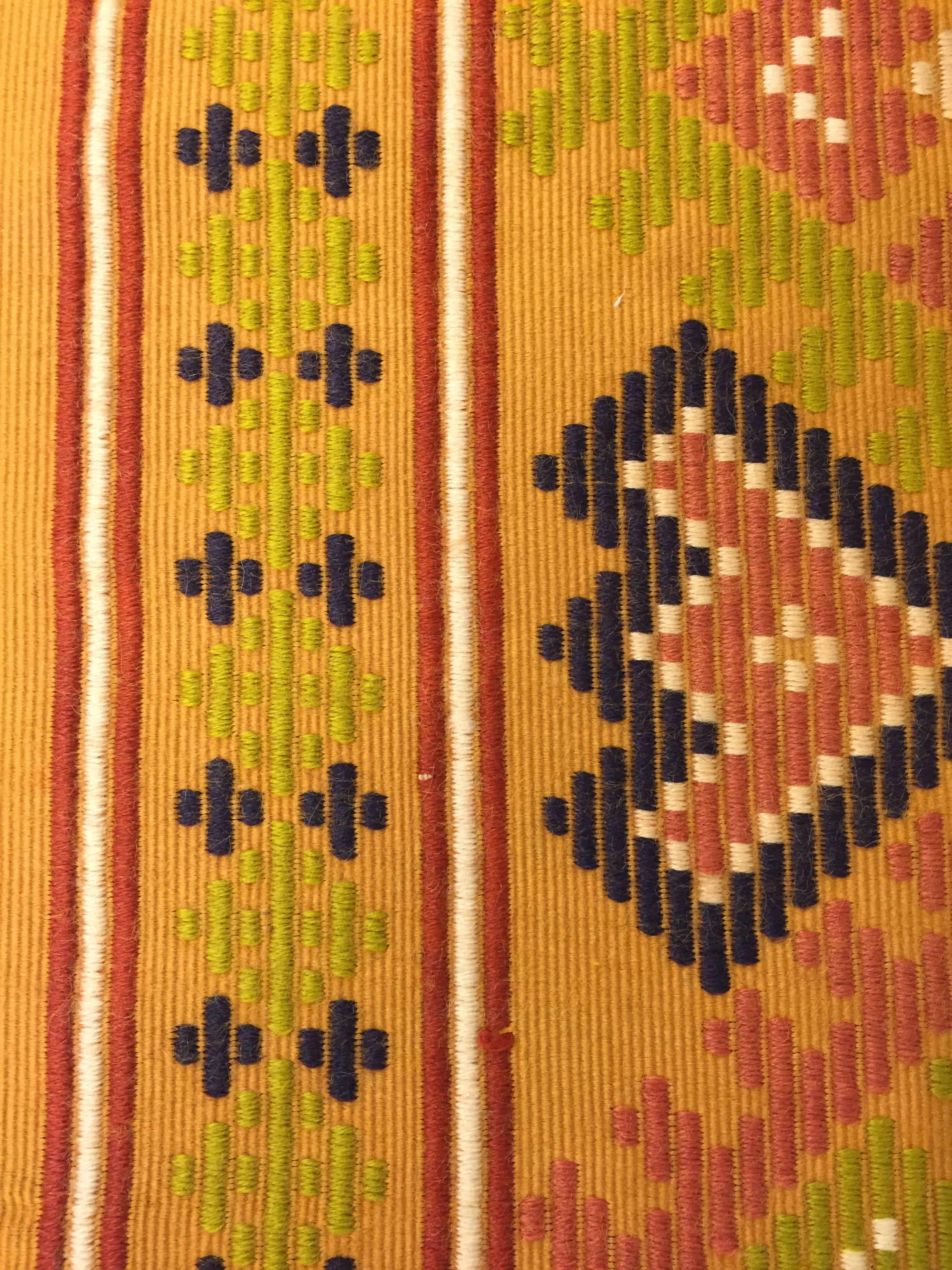
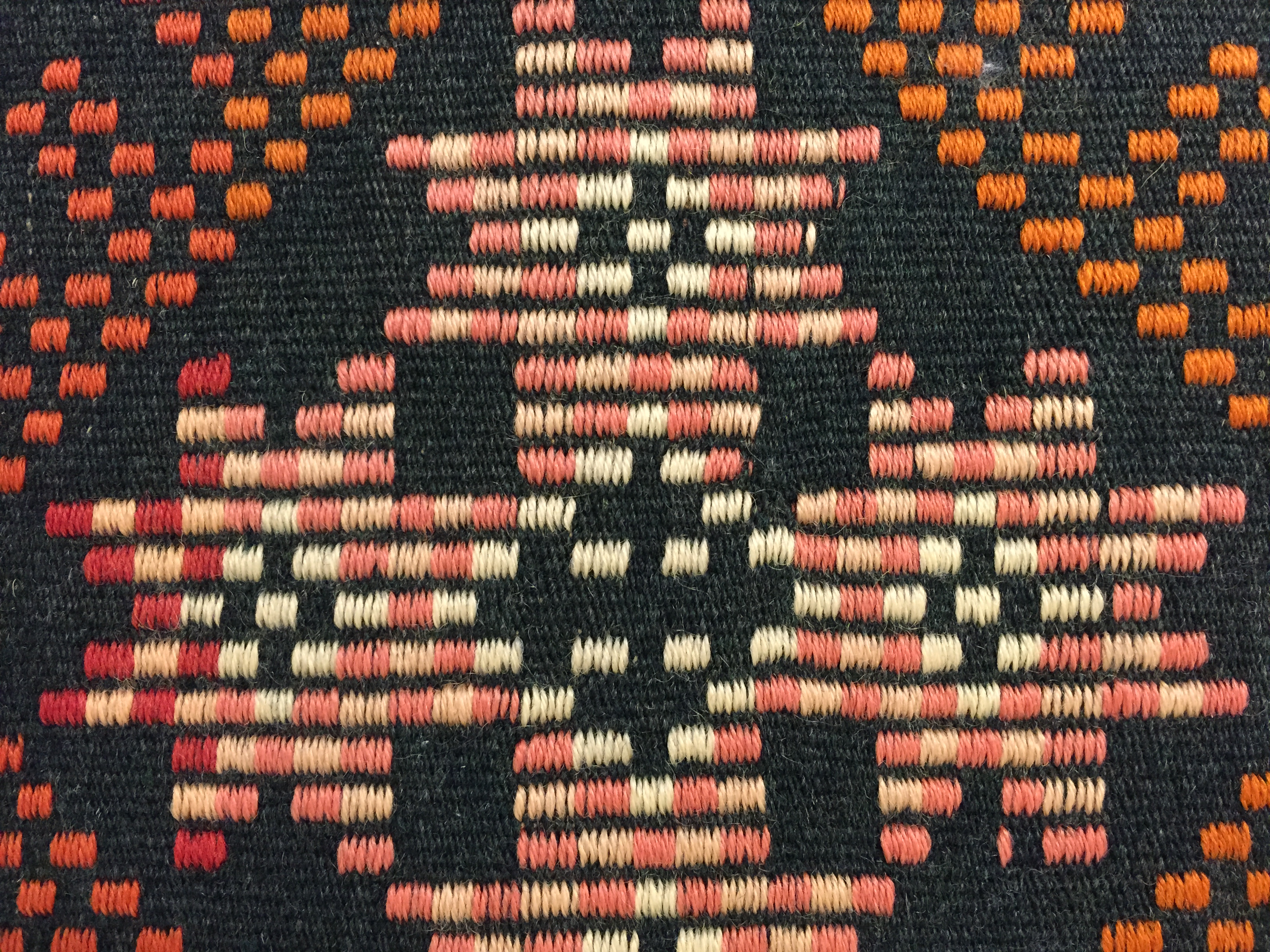
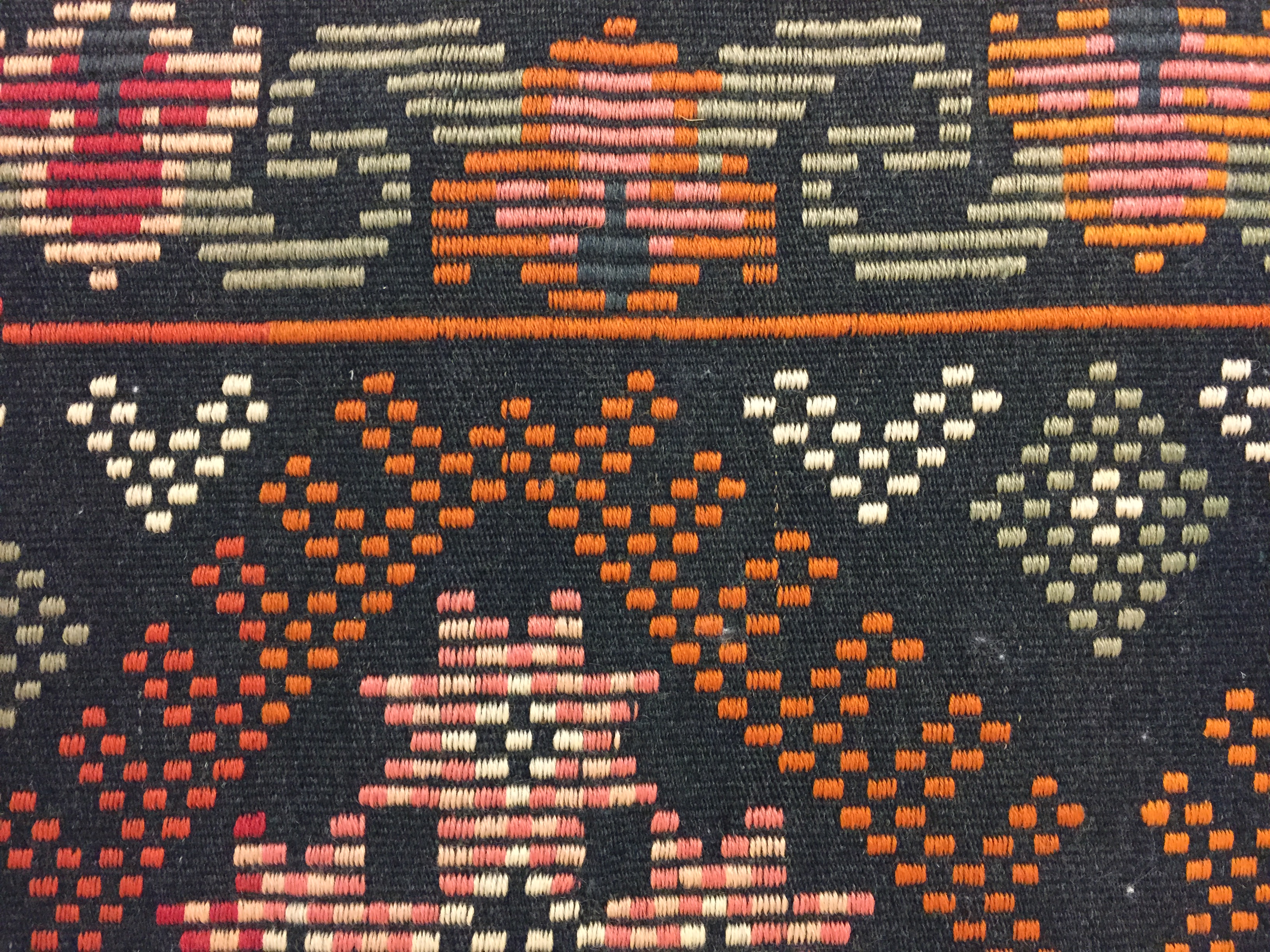
    The first piece we looked at had a bright modern flair.  The abstract patterns included many colors, and some of them, like a light turquoise, seemed unexpected.  This piece is in dukagång.  It’s easy to recognize patterns woven in dukagång by their columnar appearance created by the tie-down thread.  In the pieces we looked at, most dukagång patterns floated over three threads and under one, but we saw one with over two, under one, and one with over four, under one.

    IMG_3655

    Most likely, all the pieces were woven with the back side up.  Uniformly, the workmanship was lovely. Here’s the back side.

    IMG_3653

    Phyllis imagined that a brown piece with a simple art noveau pattern may have elegantly draped over a piano. In this piece we guessed that the rich brown-black sections were woven double-spooled, with a brown and black thread mixed.

    IMG_3656

    IMG_3660

    IMG_3658

    We looked at wool draperies woven for the Turnblad mansion, with brocaded borders. (No photo at this time.)

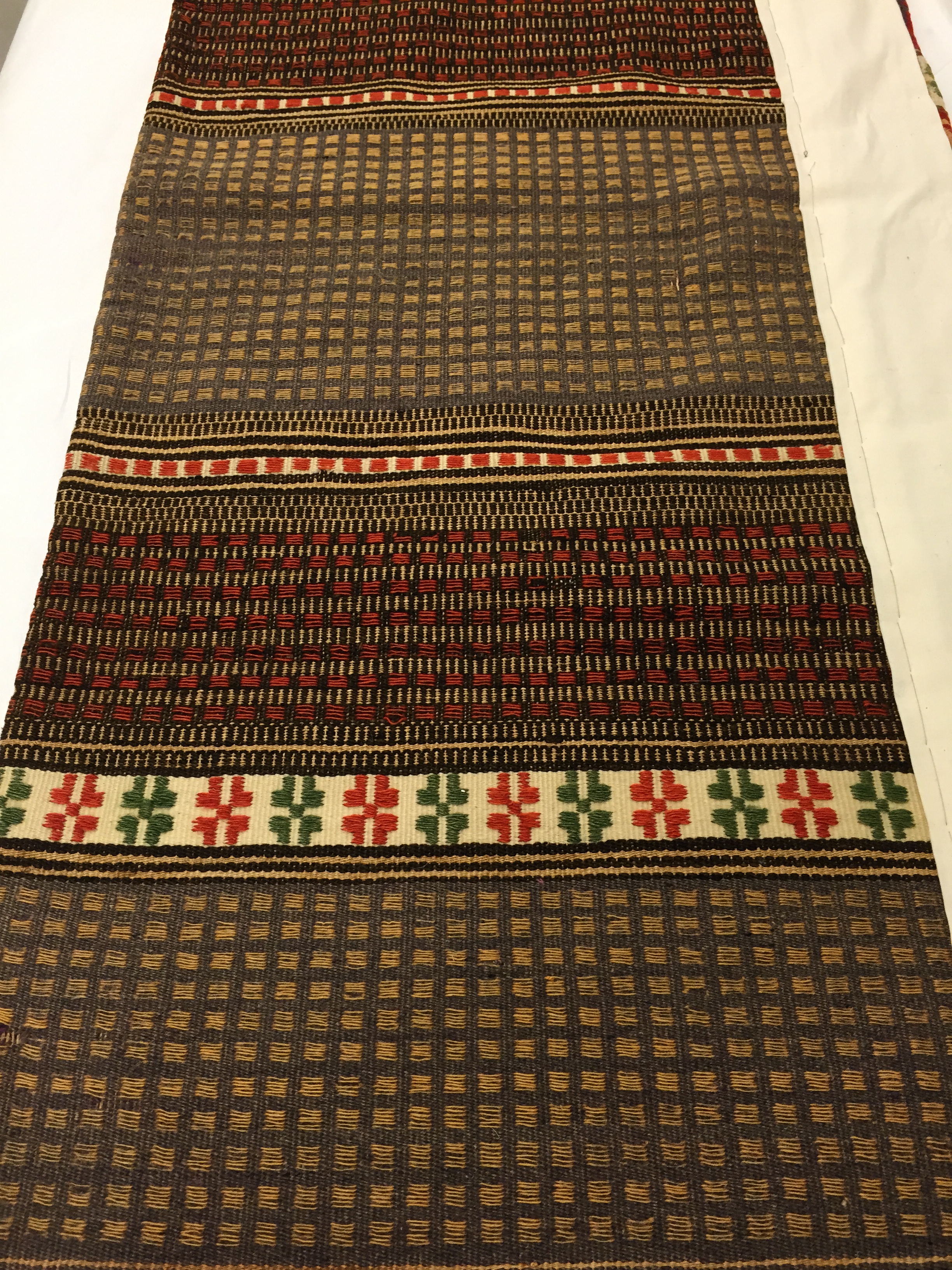
    Some pieces had sections of rolokan, like the Norwegian rutevev, or square-weave technique.

    IMG_3665

    IMG_3661

    On this piece we puzzled over a change in color near the beginning of the piece.  Was the weaver just testing before settling on the desired color combination?  Also, it was a long piece, unhemmed on either end.  Perhaps it was woven to upholster something?
    IMG_3670

    This piece also demonstrates how dukagång is used to weave a less rectilinear pattern with curves; it’s along the edge.
    IMG_3668

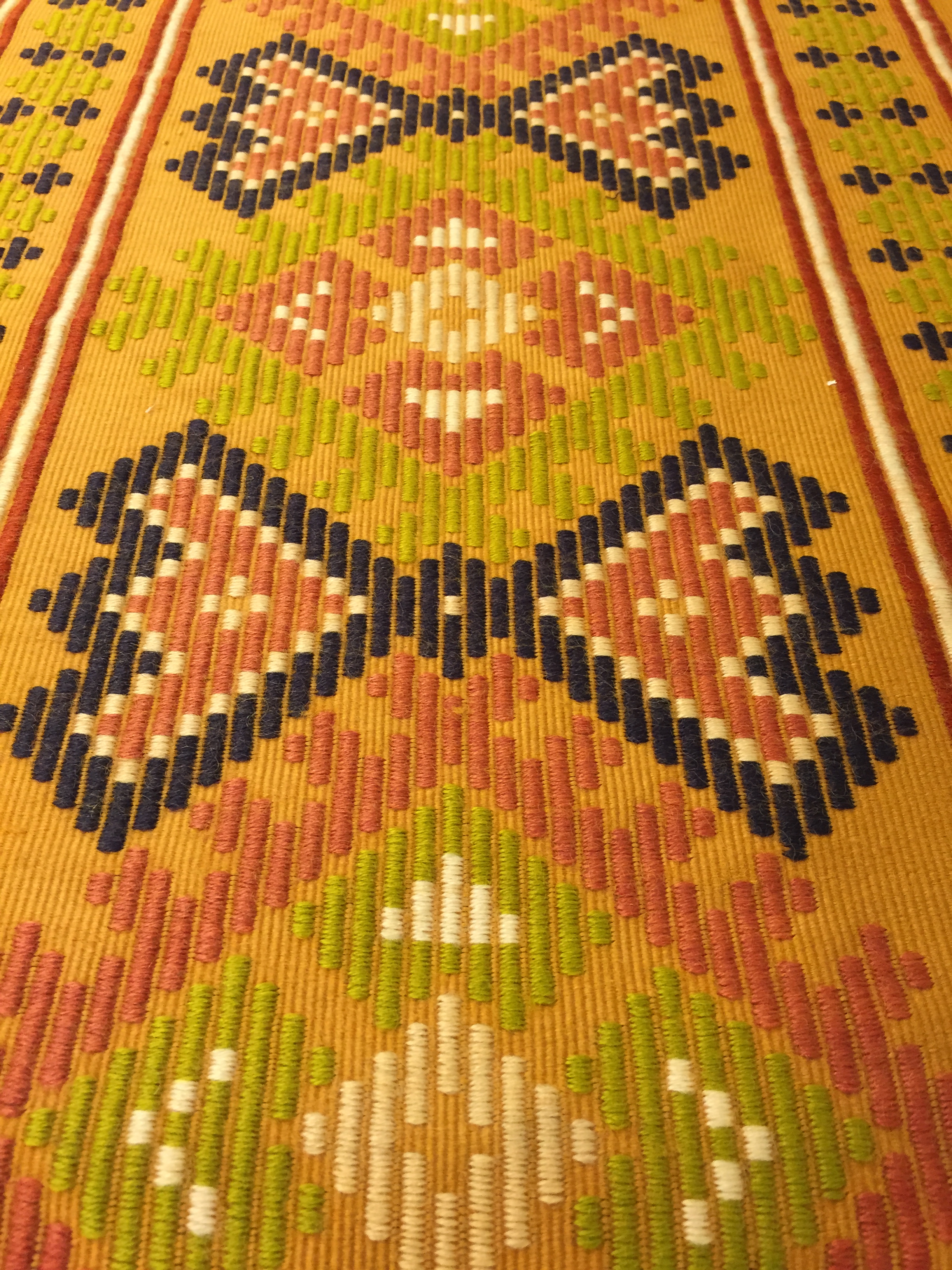
    Another beautiful dukagång piece had heart images and a beautiful palette of acid green, gold, orange, purple, and cream.  It was a length of fabric, with unfinished edges.
    IMG_3672

    IMG_3673
    These Swedish brocading techniques were often used on bench covers.  One beautiful example in the ASI collection is completely covered with krabbasnår.  It’s also interesting to see the back of the bench cover; they were generally woven in a less time-consuming weave structure.  this one was still quite beautiful and would have been even more striking if the brilliant purple we could see on the inside was not faded to gray.

    IMG_3676

    IMG_3680

    IMG_3677

    IMG_3679

    The halv-krabba and krabbasnår brocading techniques of the Swedish pieces are exactly the same technique used in Norwegian Vestfold pieces, and many of the designs I’ve seen on Swedish pieces are exactly the same as on old Norwegian Vestfold pieces.  However, the fine tabby background differed from what I know of the corresponding Norwegian Vestfold technique.  The Vestfold pieces I have seen (and made) use heavier yarn for the background.

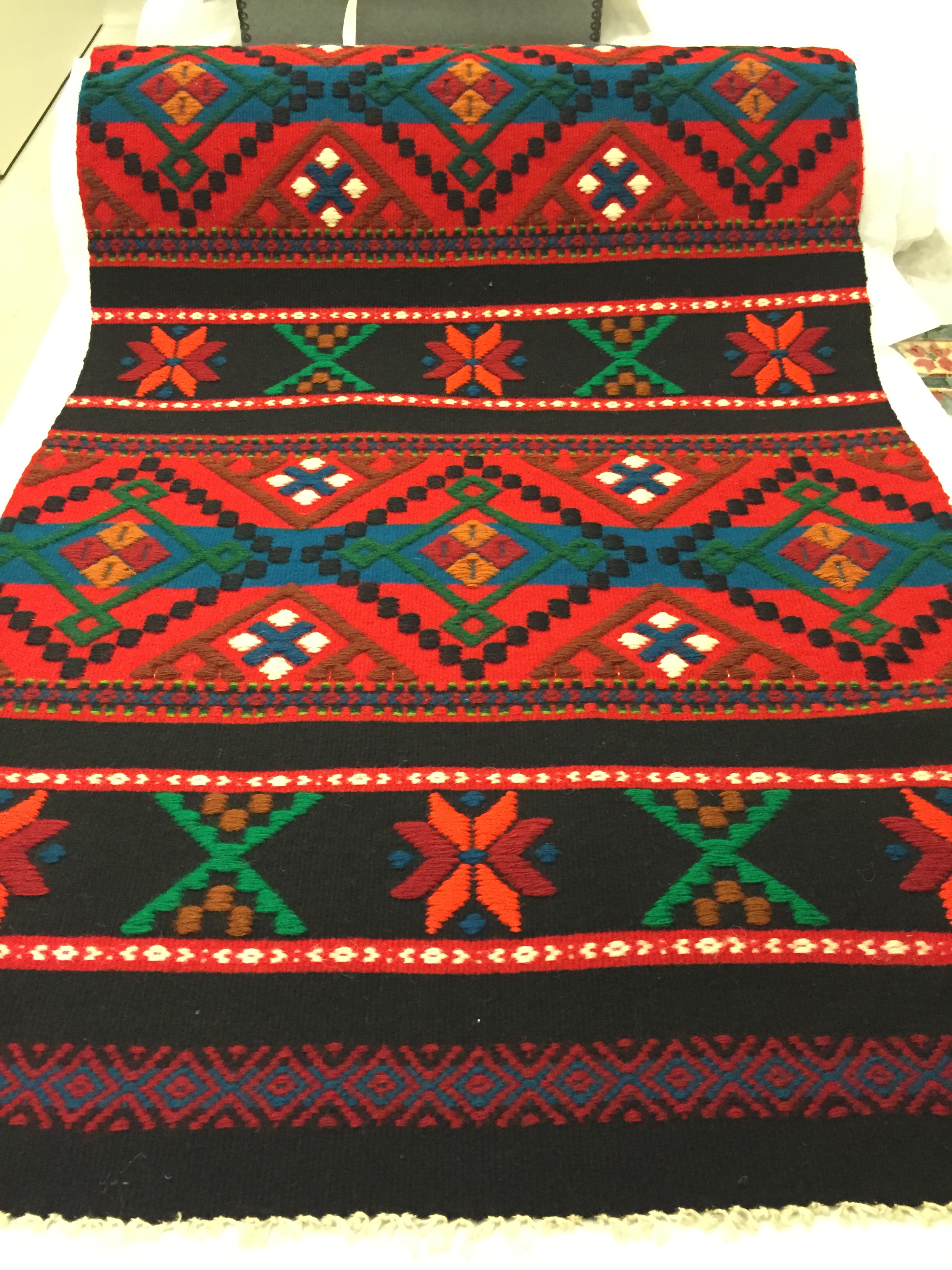
    The Swedish Institute owns several pieces that were woven and sold by Hemslöjd stores in the twentieth century.  Those pieces were characterized by larger-scale and more sparse, less all-over, designs.  They include rosepath patterning in the bands.  They were also characterized by a broad stripe in the background, behind the patterning.  Most were not hemmed nicely, but just cut and knotted.  Considering the design in the weavings as a group, they seemed more commercial and less interesting than some of the earlier pieces. Still, they are bold and beautiful.
    IMG_3683

    IMG_3685

    Finally, we noticed on a couple of pieces that the warp threads were of alternating colors.  Perhaps that was to make the counting easier when picking up patterns?  It’s a good idea!