Category: Travel

  • Sharon Moe Marquardt: Norwegian West-Coast Style Coverlet

    Sharon Moe Marquardt

    Norwegian West-Coast Style Coverlet

    13-½” x 30″
    Linen warp, wool weft
    NFS

    Bio: Sharon Moe Marquardt has been weaving since the mid-1980s. Inspired by her sister’s summer/winter cow runner, she studied rigid heddle one and two-heddle loom techniques from the Prairie Wool Companion, edited and authored by David and Alexis Xenakis. She used her notes to teach rigid heddle classes at the Weaving Works and Experimental College in Seattle. Moving to her home state of Minnesota, she taught these classes at several weaving conferences. At one conference, she discovered Syvilla Tweed Bolson’s vendor table and later signed up for her boundweave class in Decorah, Iowa. These lessons led to a life-long pursuit of learning Scandinavian techniques. She has studied at Vesterheim Norwegian-American Museum, in Norway, and at the Hemslöjden in Landskrona, Skåne, Sweden.

    Description: At Vesterheim I learned the decorative West Coast weaves from Marta Kløve Juuhl, who has explored almost-forgotten weaves from Norway, Iceland and the Shetlands. She is the main curator at the husflid in Osterøy, west of Bergen. I wove the smaller colorful hanging based on her lessons. Heidi Goldberg, art professor at Concordia College, Moorhead, Minnesota, asked me to assist with the weaving section in her traditional Nordic Arts classes. I taught the West Coast weaves first on backstrap looms and then on small warp-weighted looms that my husband had made based on the loom I had purchased at the Sami Husflid (handcraft store).

    Read more about the loom that Sharon developed in this Norwegian Textile Letter article: “Developing a Loom to Teach Scandinavian Weaving,” and about her creative use of rya for creating an image in Sharon Marquardt: Using Traditional Voss Rye Technique–to Depict Show Shoveling?, August 2020.

    Regarding the Scandinavian Weavers Group: The Scandinavian study group has been my main support for decades. I live in a small rural area where hardly anybody weaves. I’ve traveled to meetings, but with Zoom now available I can attend most of them. Mange takk to this group!

    shmarquardt@gmail.com


  • Cathie Eggan Mayr: Norwegian Spring

    Cathie Eggan Mayr

    Norwegian Spring

    31” x 16-½”
    10/2 Perle Cotton – Warp & weft tie-down; 5/2 Perle Cotton – Pattern Weft

    twotabby.com

    Bio: Inspired by a weaving exhibit at the American Swedish Institute in 1999, Cathie Mayr learned to weave at Sievers School of Fiber Arts on Washington Island, Wisconsin. It was the beginning of a life-long passion for the fine craft. She learned that her mother had done some weaving in college, but also was surprised when she discovered several ancestors on both her maternal and paternal sides were accomplished weavers. Throughout her 25-year weaving journey, Mayr learned from numerous experts and mentors across the country and in Norway. She began teaching in Central Minnesota in 2023. Mayr’s “home” Guild has always been the Weavers Guild of MN.

    Description: Norwegian Spring was inspired by a springtime visit to meet relatives in Meldal, Norway (near Trondheim) for Syttende Mai. As it turns out, most of the town of Meldal are my third cousins – and many are weavers! Spring is such a joyous time in Norway – the sun is warming and flowers are blooming in every color imaginable. I knew I’d have to capture the beauty and joy in a woven piece. Color has always defined much of my long weaving career. I’m endlessly fascinated with the interplay of color as threads intersect in various ways in woven pieces. I’ve woven scarves, blankets, rugs, towels, table runners, and much more, in nearly every type of fiber. But in the end, it’s the color that drives my design process. This piece was no different. It was pure joy to play with the color gradients to represent the four flowers in this piece. The background warp (vertical) threads are a gradient of 6 blues ranging from dark to light. This represents the still chilly / frosty skies to warming days of deepening blue skies. From the top, the four flowers represented are:
    1. Bergfrue (Pyramidal Saxifrage) known as “White Mountain Queen.” This beauty has five long white petals with increasingly dense splotches of deep magenta at the center (pistal). It was selected as Norway’s National Flower at the 1935 Botanical Congress in Amsterdam. Heather is now the National Flower since it is found across a wider range of the country.
    2. Yellow Coltsfoot (Tussilago Farfara – Daisy family) is a perennial wildflower. I love that it comes in the very early spring fairly shouting in bright yellow! It is often referred to as “Son Before Father” because the flowers come before the leaves.
    3. Red Clover (Trifolium Pratense) is seen across many of Norway’s fields and pastures. This versatile green manure crop not only adds organic nitrogen to the soil but also provides flowers that can be harvested for tea. It is often used for menopause symptoms and osteoporosis.
    4. Lupine (Lupinus) comes from lupus, Latin for “wolf”, and its related adjective lupinus, “wolfish.” Lupine fields have a highly organized social structure, with clearly distinguished leaders and followers. Although dangerous to livestock, lupines improve soil by adding nitrogen and loosening compacted earth with their strong root systems.

    catmayr@yahoo.com

  • Magical Weaving on the Shores of the Big Lake

    Magical Weaving on the Shores of the Big Lake

    Today’s blog entry is written and photographed by Scandinavian Weavers member Holly Hildebrandt.

    I got home late last night after the most incredible five days in Grand Marais, taking Melba Granlund’s class at North House Folk School! We built our own warp weighted loom the first two days, then wove on it the next three. It’s the most fun I’ve had in a long time and it was wonderful spending time with Melba.

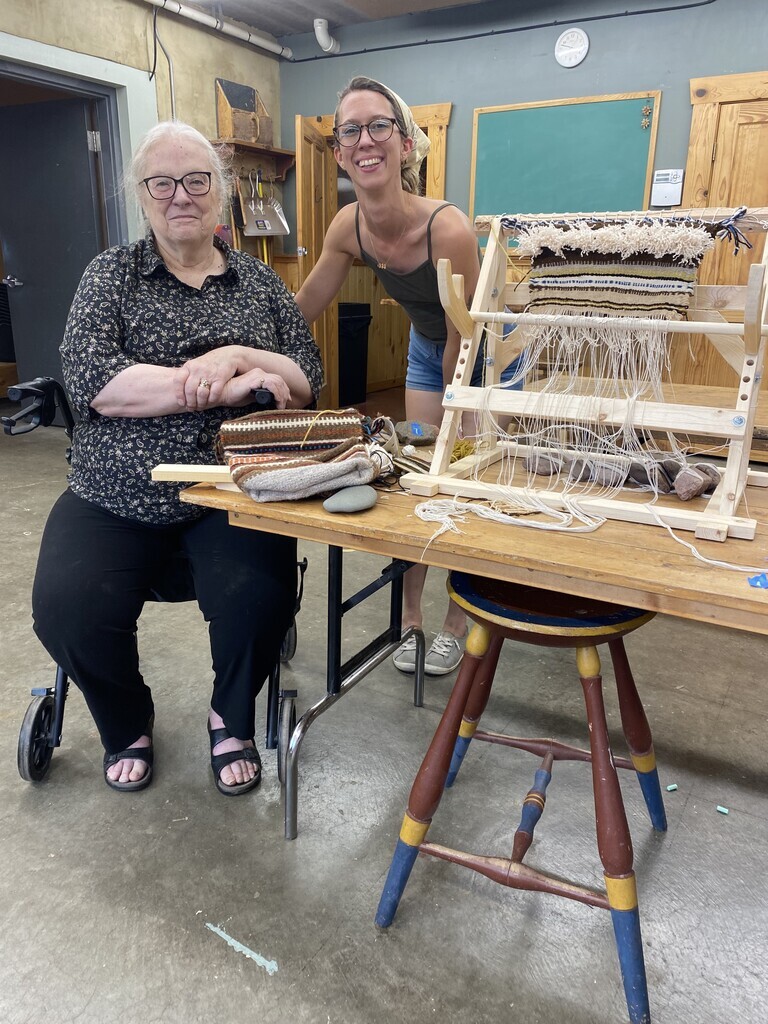
    Melba and Holly

    David Susag was our woodworking instructor. He also has a major affinity for Scandinavian tradition and is most known for springpole woodwork.

    Students with woodworking instructor David Susag

    Between the lake, smoked fish, mountain of wool yarn, and smell of pine as we chiseled, it was so magical. I am sad that it’s over but so grateful for the memories we created. Big thanks to Melba for sharing her wealth of knowledge with our little group! 

    Warp strings weighted with rocks
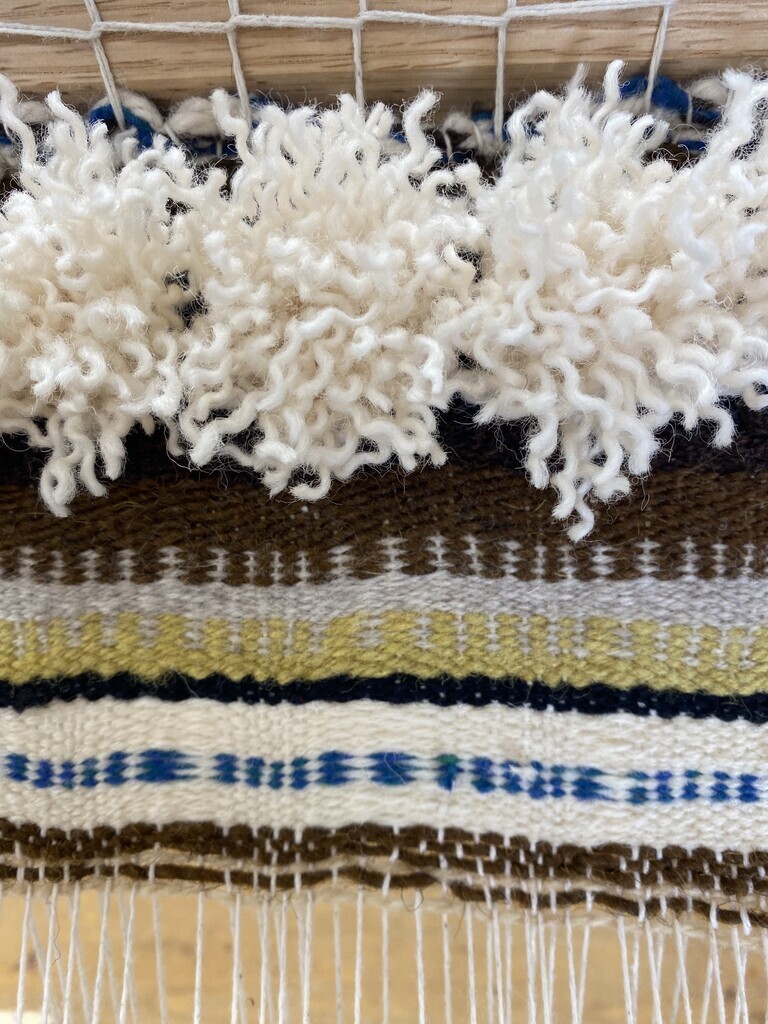
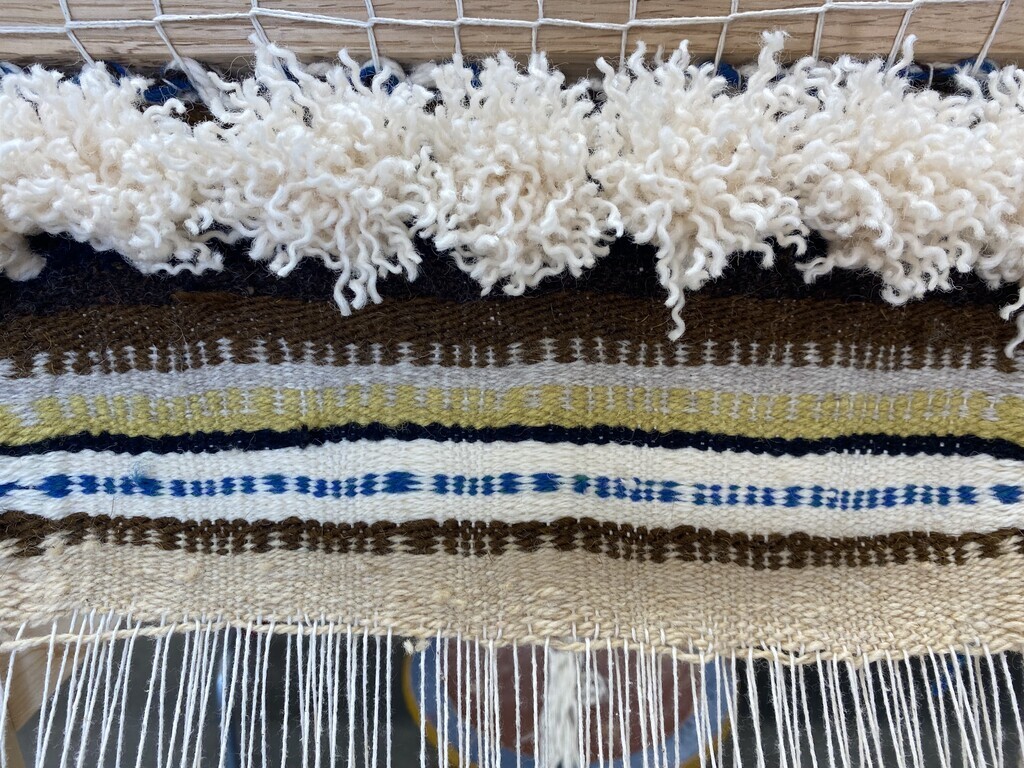
    Close-up of Holly’s weaving
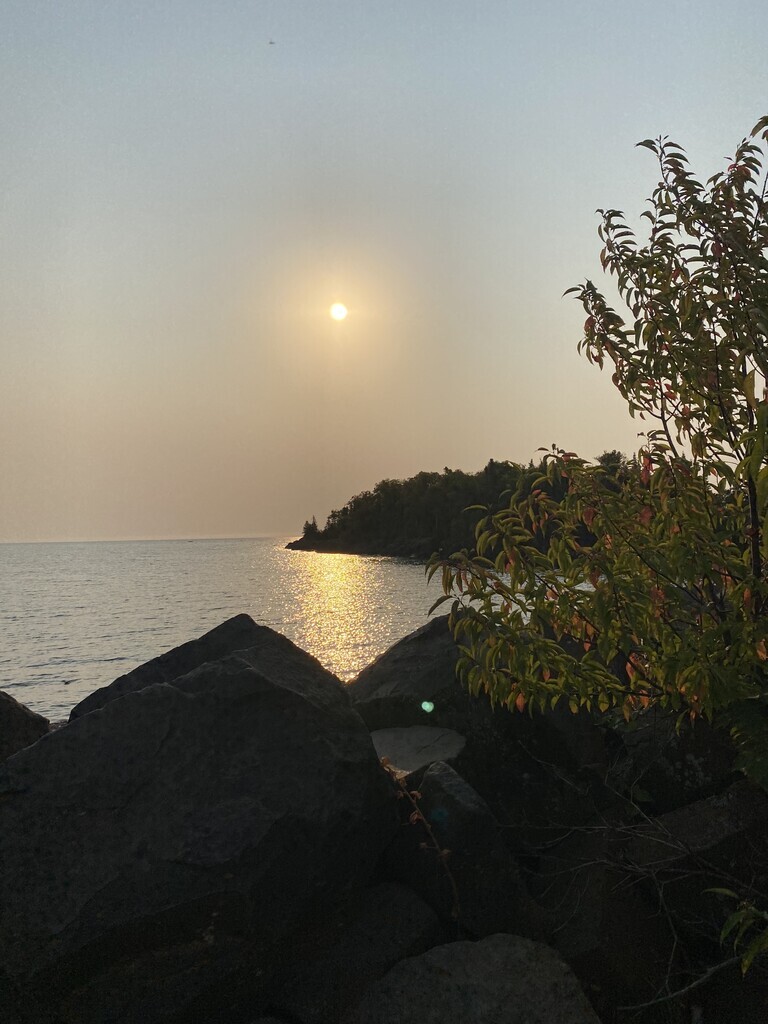
    Lake Superior shore in Grand Marais, Minnesota
    Sunset over the Big Lake

  • Latest News from Scandinavian Weavers!

    Latest News from Scandinavian Weavers!

    Follow the Scan Weavers Blog! (And see more beautiful blue rugs by Judy Larson!)

    It’s been a busy summer for our Scandinavian Weavers Group and promises to be a busy fall, as well. Stay tuned for a summer wrap-up and fall preview, including the following:

    Scan Weavers win ribbons the Minnesota State Fair!

    Scan Weavers in the news!

    Recent and Upcoming travels to Scandinavia!

    Group Projects: Rosepath Rugs and Viking Twill!

    Major Exhibit Coming in 2025!

    And more! (Including waffles.)

  • New Year, New Project!

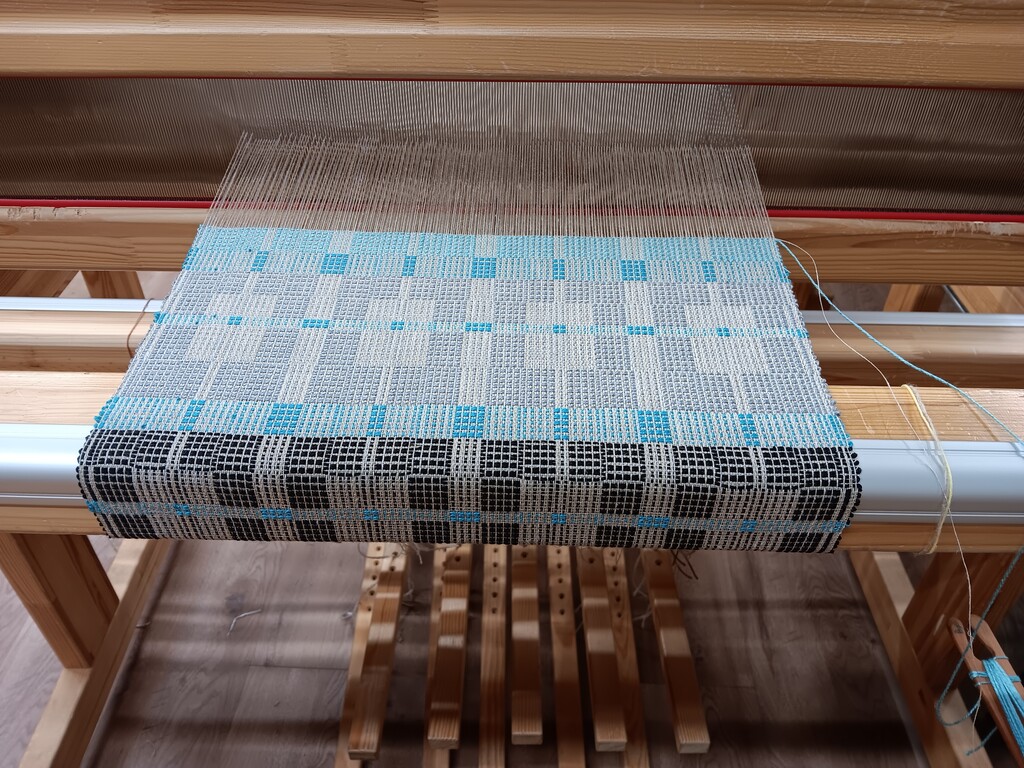
    A cold January is the perfect time to start a new weaving project! The Scandinavian Weavers’ latest group warp is a pattern called Kukkoladräll.

    The Kukkoladräll pattern was composed by Elsa Kerttu in 1926 when she was a student at Jämtslöjds Kvinnliga Slöjdskola (Women’s Craft School) in Östersund as an assignment to create a pattern in Jämtlandsdräll. It was named after Elsa’s hometown of Kukkola, a small fishing village in northern Sweden, just across the border from Finland. A lovely version of this pattern was woven by Ulrika Bos Kerttu, Elsa’s niece, in a palette she named Cloudberry. The draft for the pattern is copyrighted by Sveriges Länshemslöjdskonsulenter and provided bytextilhemslojd.se

    Image of cloudberries from Pinterest.

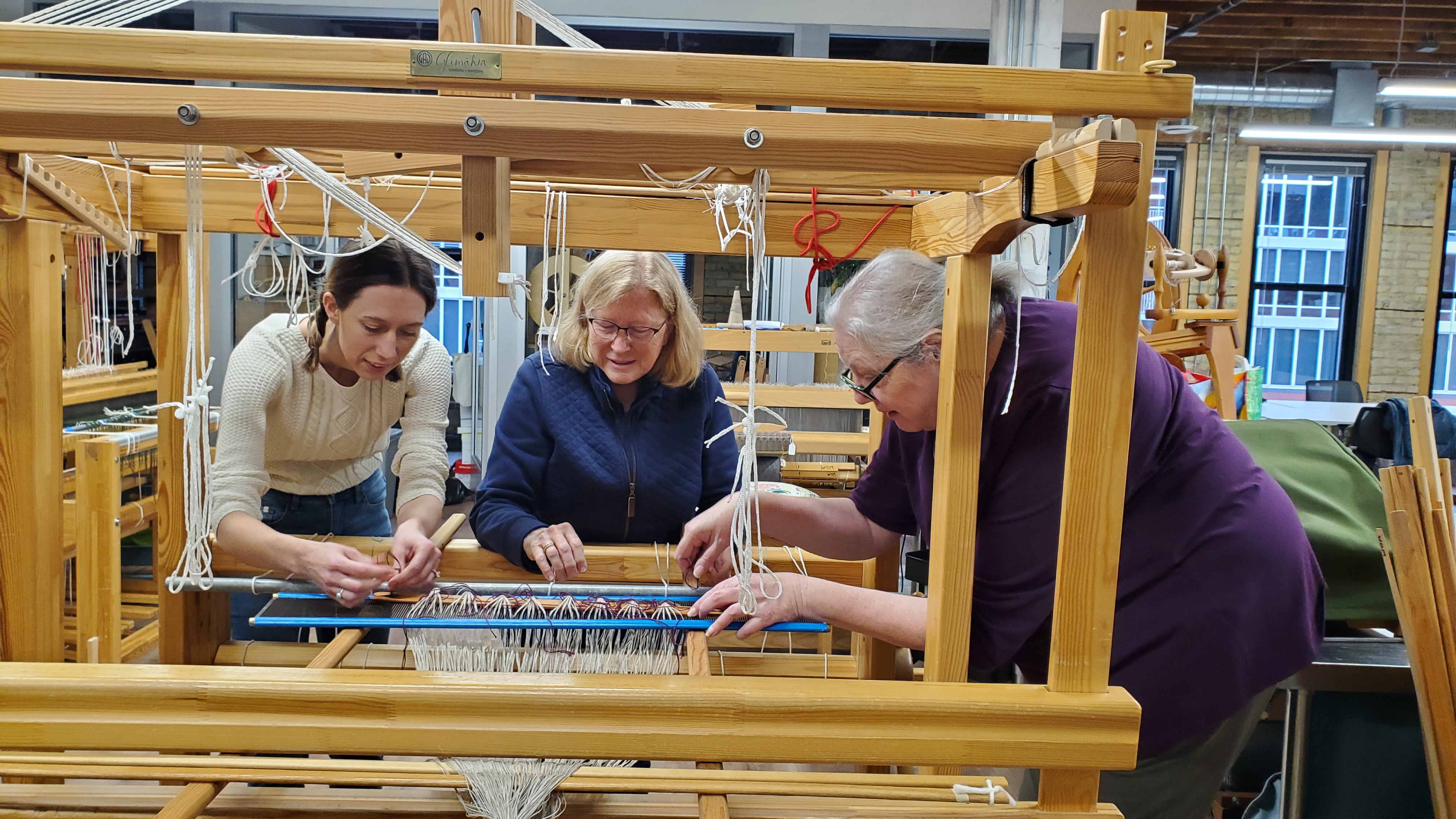
    The Weavers Guild of Minnesota is equipped with two Glimakra looms for classes and group projects. The Scan Weavers generously dug into their stashes for the linen warp. At least 14 of us will weave on this warp, so it is quite long.

    There’s nothing more beautiful than a plain linen warp. Note the slightly different colors that result from blending.

    Warping is always more fun with a group! (Especially with coffee breaks.) Below, Lisa Torvik explains the benefits of pre-sleying the reed to newer weavers Holly and Beth.

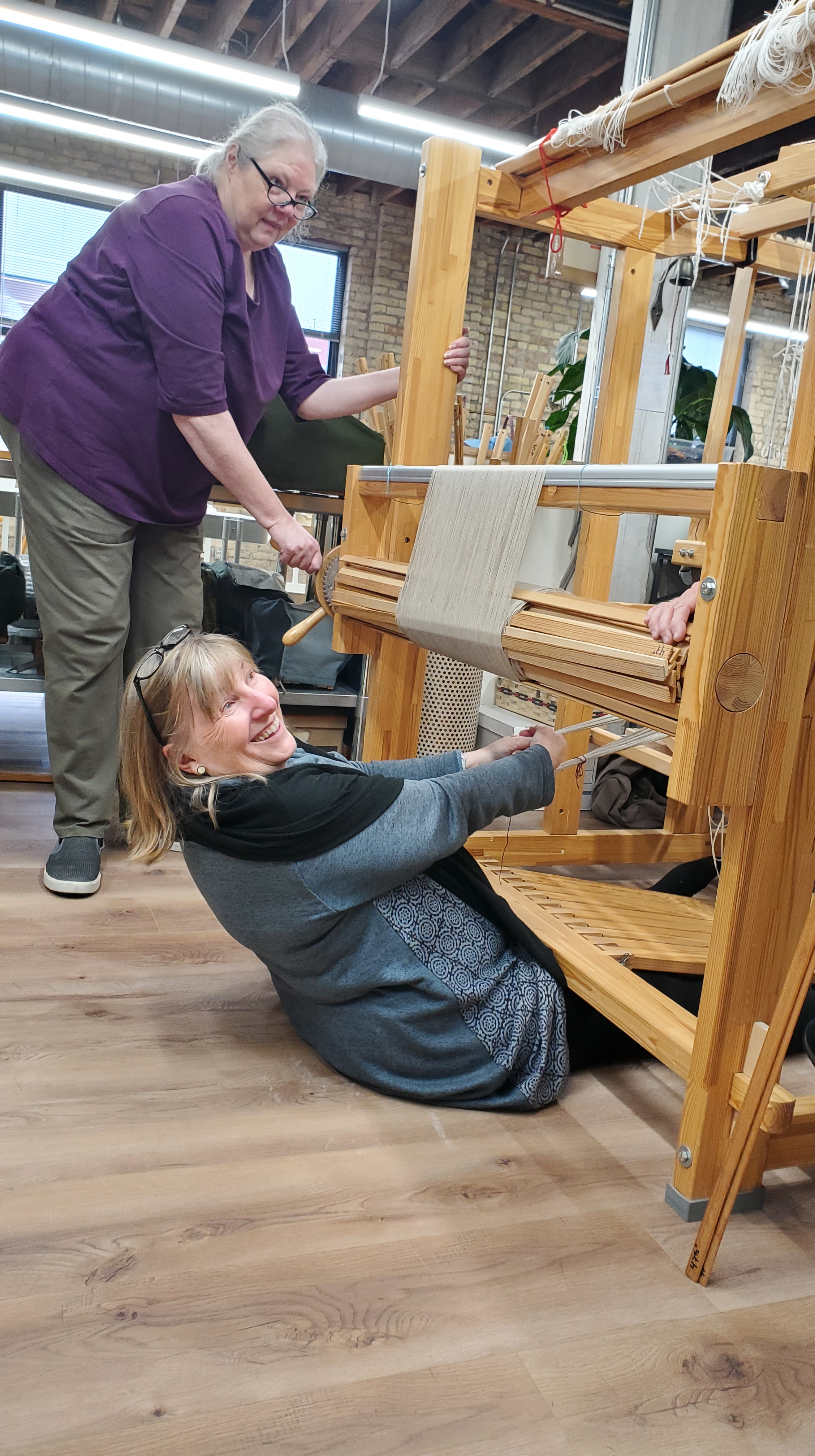
    Patty Johnson demonstrates how she used to warp her Glimakra all by herself – controlling the warp tension while winding on the back beam. Fortunately, Lisa is there to help.

    Lisa reminds everyone to spritz the linen warp with water to prevent breakage. (Lisa does this every time she advances the warp, which she does every three to four inches.)

    Lisa adapted the draft for towels and included four motifs across the width instead of three.

    Lisa wove two towels in different colorways. For the first, she used 16/1 linen doubled on stick shuttles for the pattern weft and 12/1 linen for the ground shots.

    For the second towel, Lisa chose to work with perle cotton for the pattern weft.

    Stay tuned for more updates on this project. I like to think that Elsa Kerttu’s original design of multiple squares was inspired by the many small fishing huts in Kukkola.

    Image of Kukkola from Pinterest
    Stock image

    If you now want to visit Kukkola as much as I do, search online for the Kukkola Tourist and Conference Board. They say the area provides natural beauty, peace, and creative inspiration. What could be better for weavers?