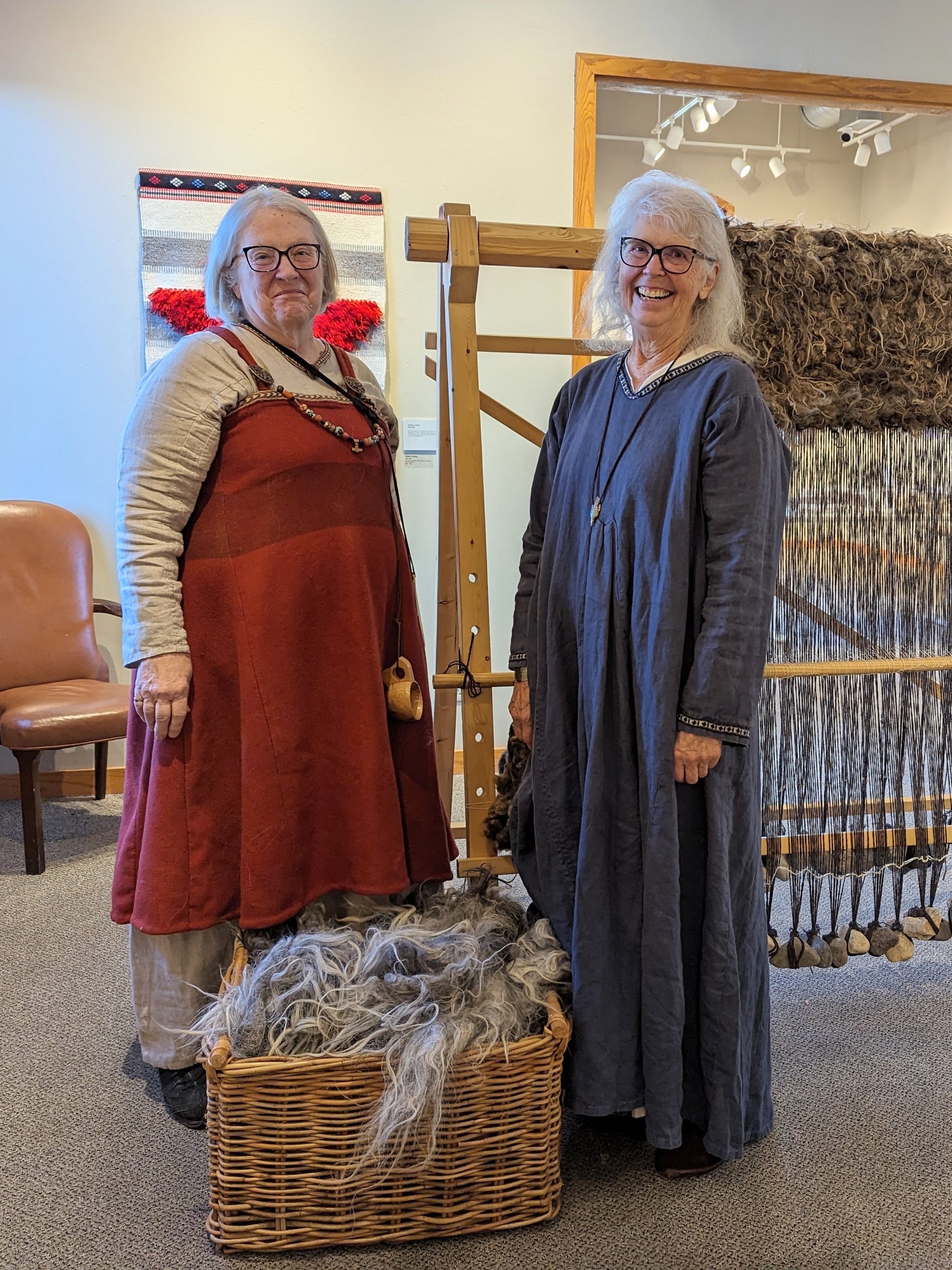
Thanks to Melba Granlund and Peg Hansen who demonstrated weaving on a traditional Scandinavian warp-weighted loom at Red Wing Arts on November 18, as part of the Scandinavian Weavers exhibit “Domestic to Decorative: The Evolution of Nordic Weaving.” Visitors were fascinated by this ancient weaving technique, and Melba and Peg looked their finest in their Viking garb!
Melba Granlund explains the history of the warp-weighted loom to visitors (dogs included). Melba teaches classes in warp-weighted weaving at the Weavers Guild of Minnesota, North House Folk School, Shepherds Harvest, and other venues.
Red Wing Arts is the perfect space for weaving on a warp-weighted loom: Plenty of room and lots of sunlight!
The big loom always draws a crowd!
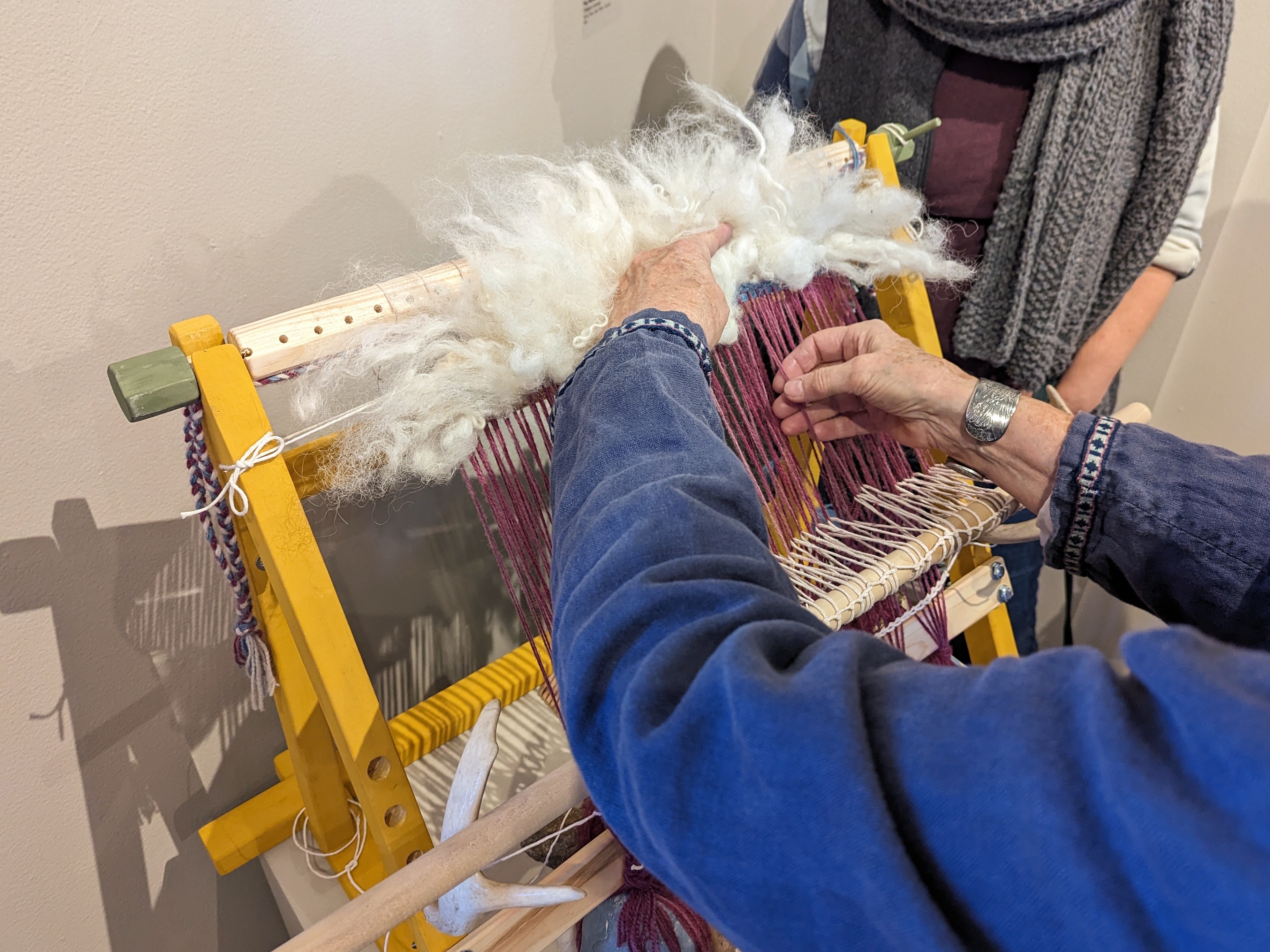
Peg Hansen demonstrates rya weaving on the small warp-weighted loom she built in Melba’s class at North House Folk School. (Notice the deer antlers.)
Any weaver who has used a warp-weighted loom will tell you the slowest part of the process is tying on the loom weights.
Yes, still tying on rocks!
Our beautiful Viking maidens!
For close-up photos of Peg’s handmade loom and the saga that inspired it, visit Robbie LaFleur’s blog post here
Four of Robbie’s pieces at Norway House have similarities; they all include bands of color and design and are woven in fairly large scale in Scandinavian wool.
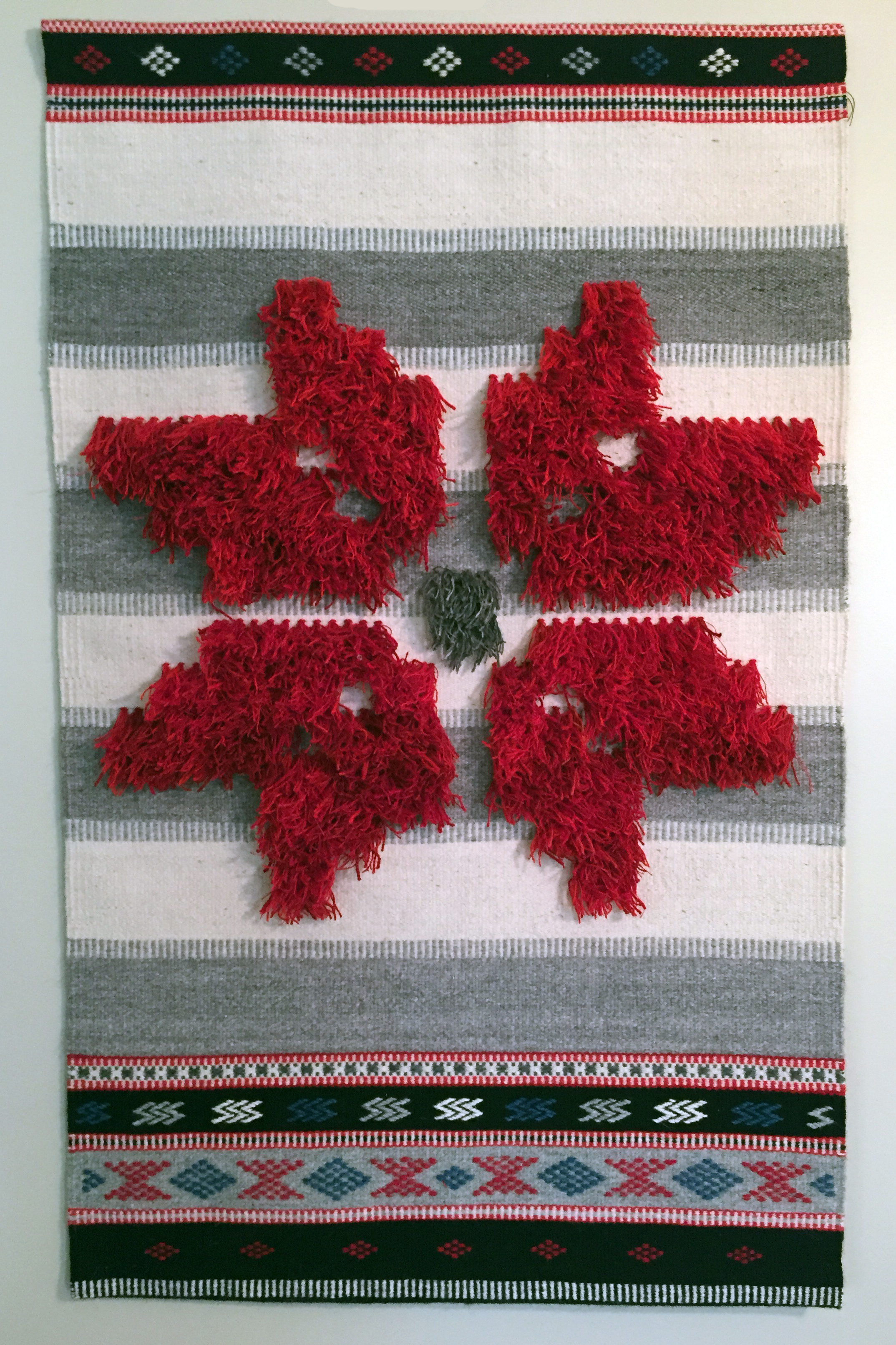
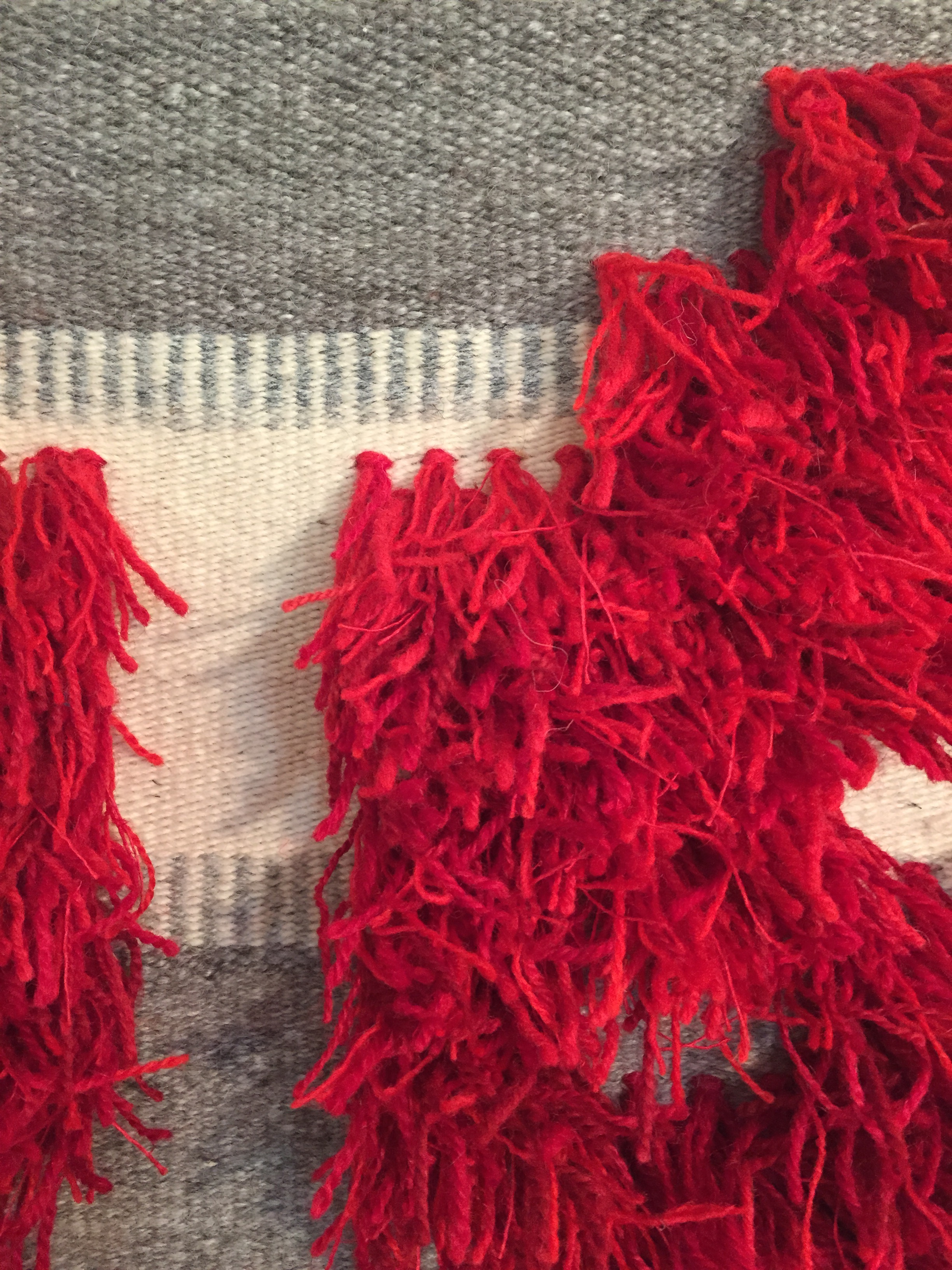
Traditional Norwegian symbols often appear in Robbie’s weaving, sometimes in an unexpected scale or materials. “Scandinavian Star” highlights a single Norwegian star, dense in shade of red rya pile. Read more about the piece in “An Eight-Pointed Star in Rya.” ($900)
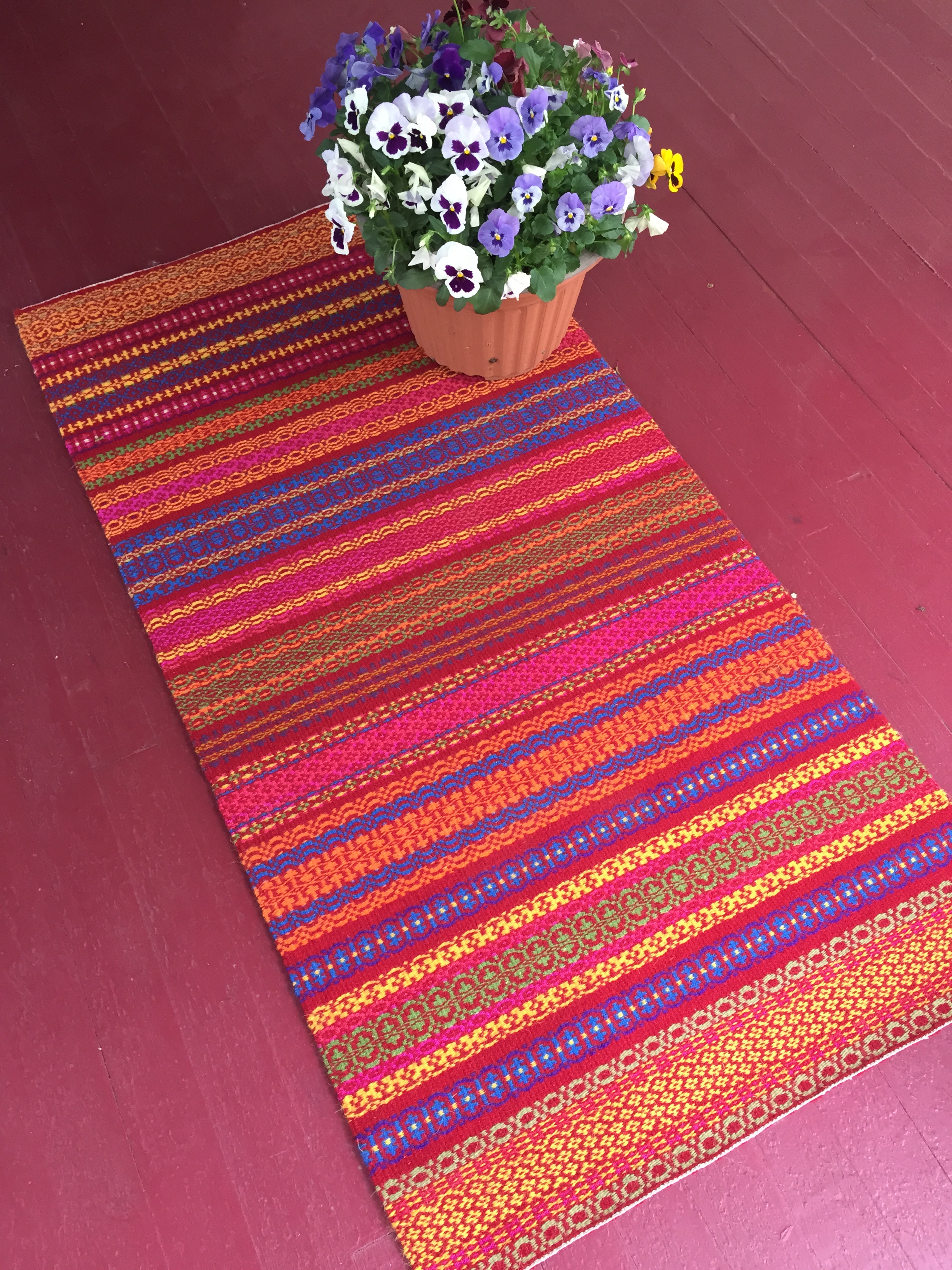
Bright bands of red, orange, and pink compose a wall hanging (or rug) made in Flesberg technique. “Flesberg” is a three-shaft bound weave technique found in that area of Norway. Read more in “A Red Rug for the Vesterheim Exhibit.” ($800)
Recently, Robbie has been experimenting with Danskbrogd, a boundweave technique found in the area of Vest Agder, near Kristiansand in Norway. Here is a detail from a piece seen in Norway earlier this summer.
Robbie was steeped in gray during a gray winter month, so the next step was to move to color. The X design became bigger and bolder, on stripes of purple. Read more in “A New Weaving, and Red Bits for the Birds.” ($900)
Biography:
Robbie LaFleur, from Minneapolis, Minnesota, has been following a thread of Scandinavian textiles since she studied weaving at Valdres Husflidsskole in Fagernes, Norway in 1977. She has continued her study with Scandinavian instructors at workshops in Norway and the U.S. Recent projects include interpreting Edvard Munch’s “Scream” painting into a variety of textile techniques and weaving tapestry portraits of her relatives. She was awarded the Gold Medal in Weaving from the Vesterheim Norwegian-American Museum in 2006. Robbie coordinates the Weavers Guild of Minnesota Scandinavian Weavers Study Group and publishes the quarterly online newsletter, The Norwegian Textile Letter.
Artist Statement:
I am a handweaver of contemporary textiles inspired by Scandinavian folk textiles. The language of my looms is based on centuries-old techniques, learned in weaving school in Norway. The core graphic impact of old folk textiles drives each new weaving, in a search for balance, color and boldness. Even when the planning process is computer-assisted, or a technique is done at a new scale or in unusual materials, I honor the fine craftsmanship of the past.
The exhibit will be up at Norway House in Minneapolis through September 10.
Rya coverlets are perfect for Norway, aren’t they? If you are covered with shaggy threads of wool, just like a sheep’s fleece, the heat of your body is trapped, and you manage to keep warm in a drafty old wood home, or a loft in a barn, or in a cold, damp fishing boat along the coast.
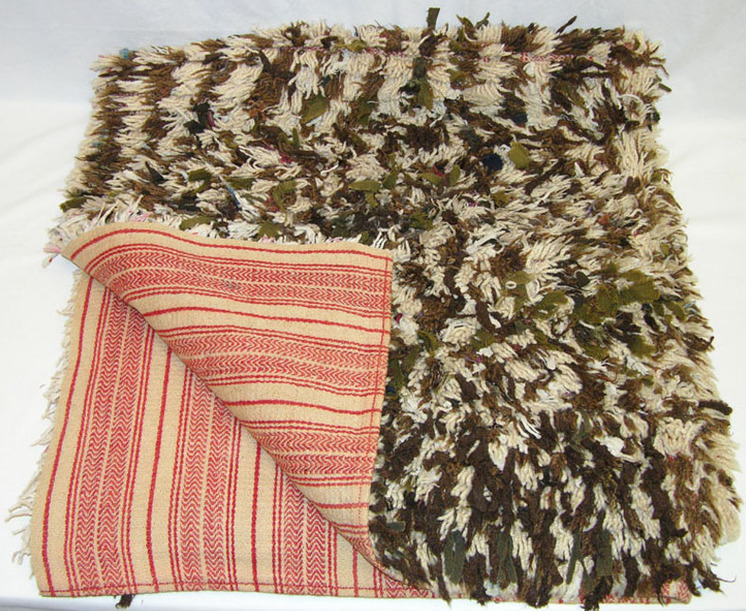
Båtrye, or boat rya, from the collection of the Vesterheim Norwegian-American Museum
Along the west coast of Norway, boat ryas were woven by women for everyday use in a hard climate. They were utilitarian, yet valuable textiles. Fishermen used the båtryer in boats on their trips to the offshore fishing banks, or while bunking in a cold and damp rorbu, or fisherman’s cottage. They were ideal to roll yourself up in against the cold and raw weather. The båtryer, with thick pile, were woven counterparts of sheepskins, but much better because a sheepskin stiffens when it gets wet.
Women wove båtryer for their husbands and sons and they were used for many years, sometimes generations. A boat rya used ten to twenty kilos of wool, which was a significant portion of the annual production of a small farm. To ensure they lasted it was important to dry them thoroughly between each use, so the yarns would not rot. They were crucially important objects, as illustrated by the story of a fisherman whose boat capsized. He floated in the water and thought about all of the things in the boat that were lost. When the rescuers arrived, his one thought was, “Save the rya first!”
The “Traditional Norwegian Weaving: American Reboot” exhibit includes a wonderful donated båtrye from Skodje, Sunnmøre, Møre og Romsdal, Norway. The coverlet was made by Nikoline Indreberg, the great-grandmother of the donor, in ca. 1890, for her new husband Ole. The coverlet was one of the few belongings that the family brought with them when they had to move after Ole died.
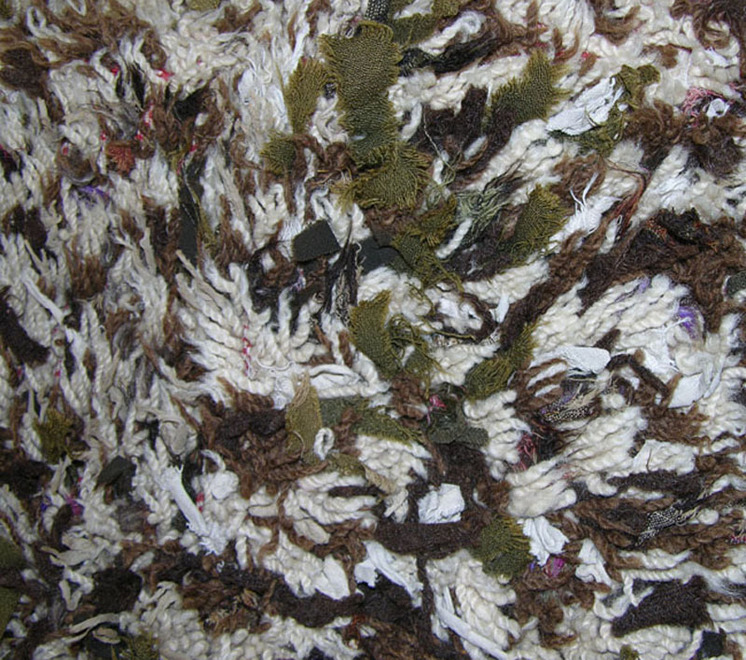
The smooth side of the rya was woven in twill weave with red and white bands. The pile side was woven with rya knots of wool, along with narrow strips of cloth. To save wool, weavers often used wool rags in the knotted pile. You used what you had.
In addition to the important utilitarian boat ryas, by the eighteenth and nineteenth century another tradition of decorative rya bed coverlets developed, although not to the extent they were woven in Finland and Sweden. The patterns on the decorative top side were generally simple: checks, plaids, or warp-wise stripes in a variety of twills.
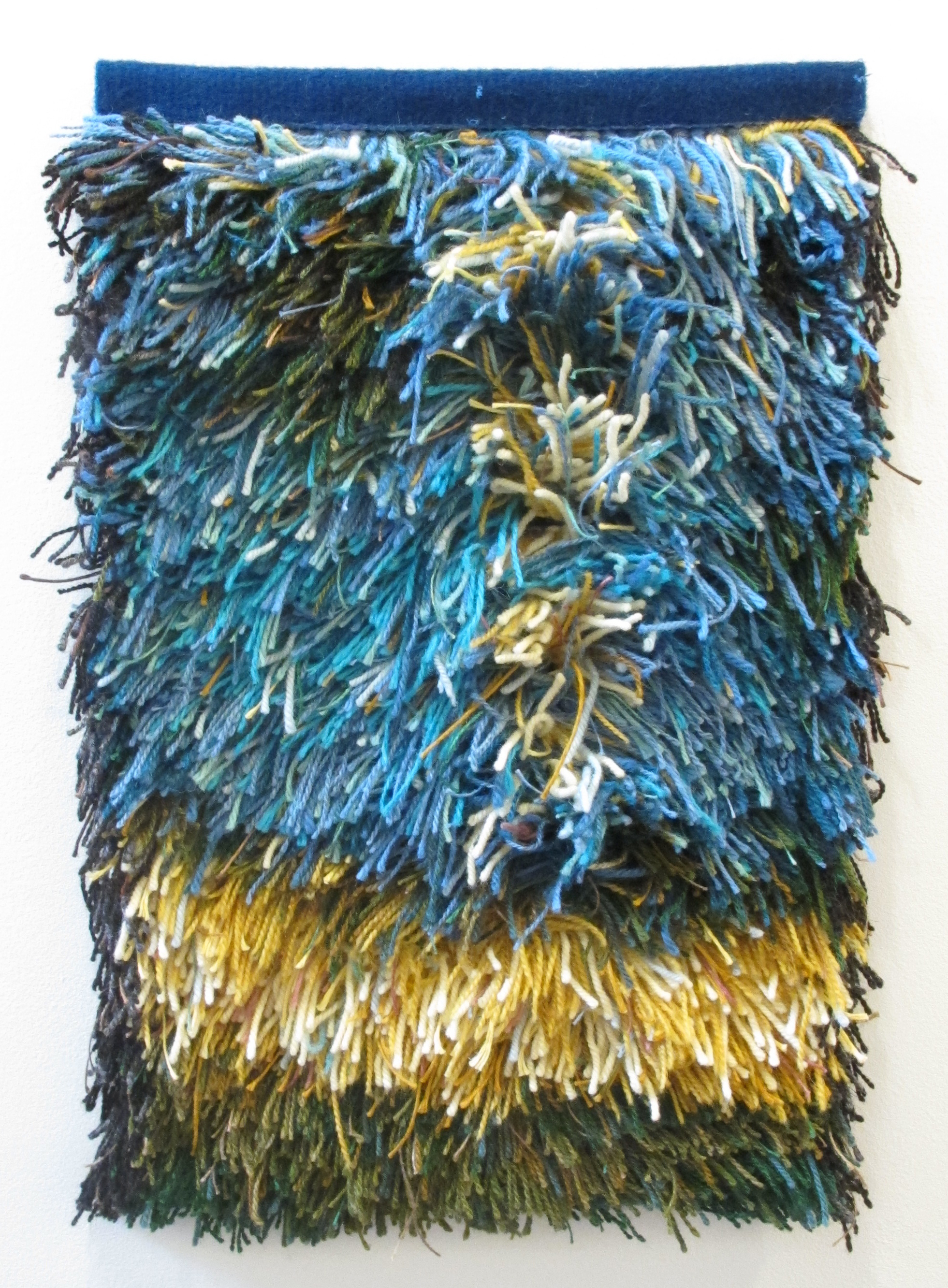
Lisa-Anne Bauch
Moving to contemporary pieces woven in rya technique, American weavers generally create pieces for wall display, and sometimes for pillows, too. The ability to mix yarns in each rya knot enables subtlety and depth in color changes. The textural aspect of the knots adds richness. Locally, the interest in rya led to a year-long study group and exhibit in 2015. See “The Fruits of Rya Exploration.”
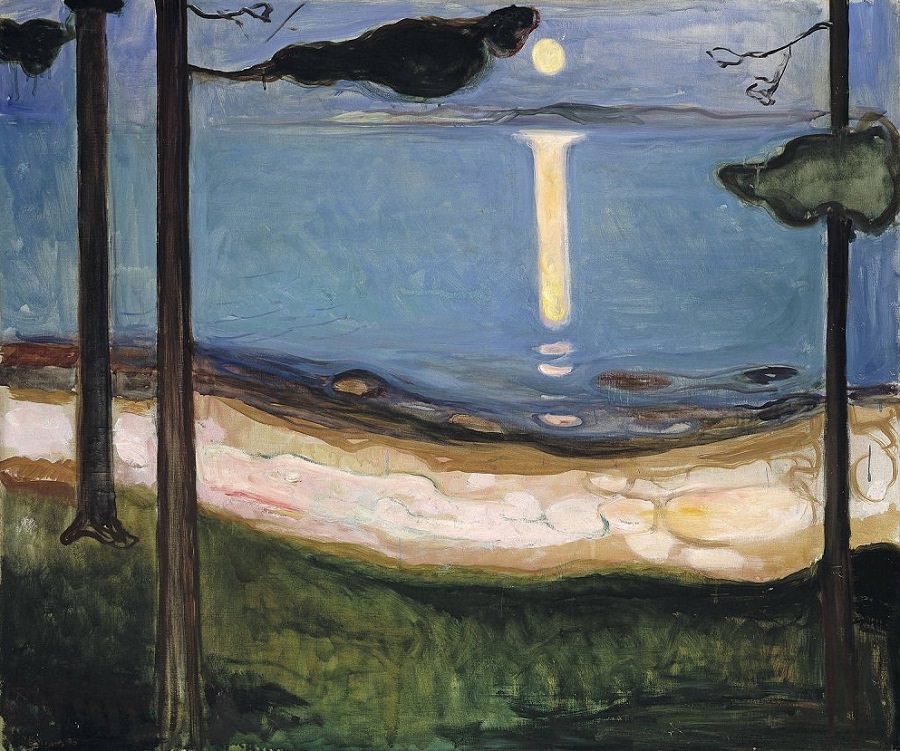
“Moonlight,” Edvard Munch
Lisa-Anne Bauch used the technique to mimic the atmosphere of a famous Edvard Munch painting, “Moonlight,” from 1895. Lisa wrote, “I was fascinated by the way Munch captured the glint of moonlight on water. I replicated the effect by adding linen, which catches the light, to the wool knots. I also used a pale yellow yarn in the moonlit sections to draw the viewer’s eye.”
Watch for posts on more contemporary ryas in the American Reboot exhibit.
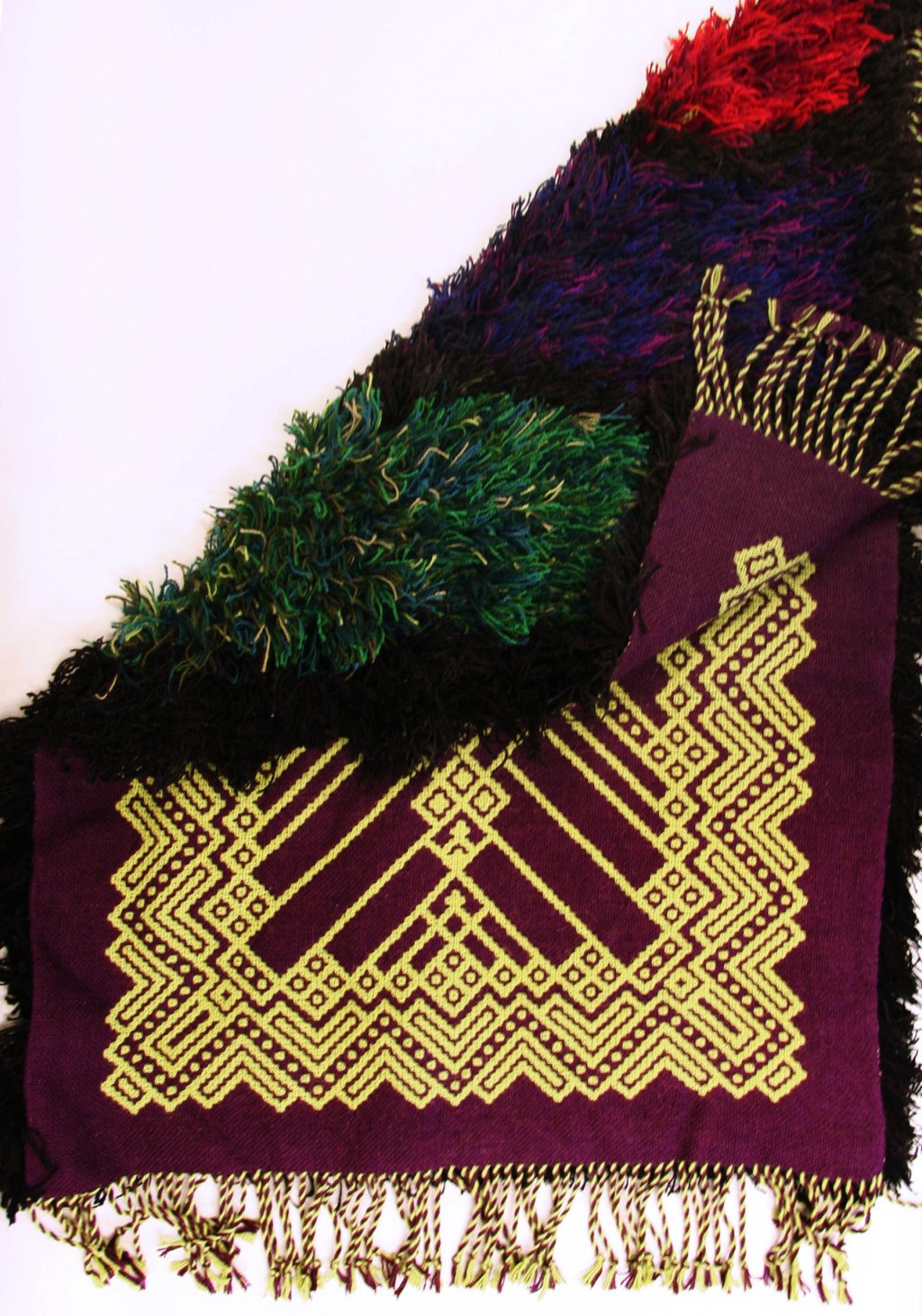
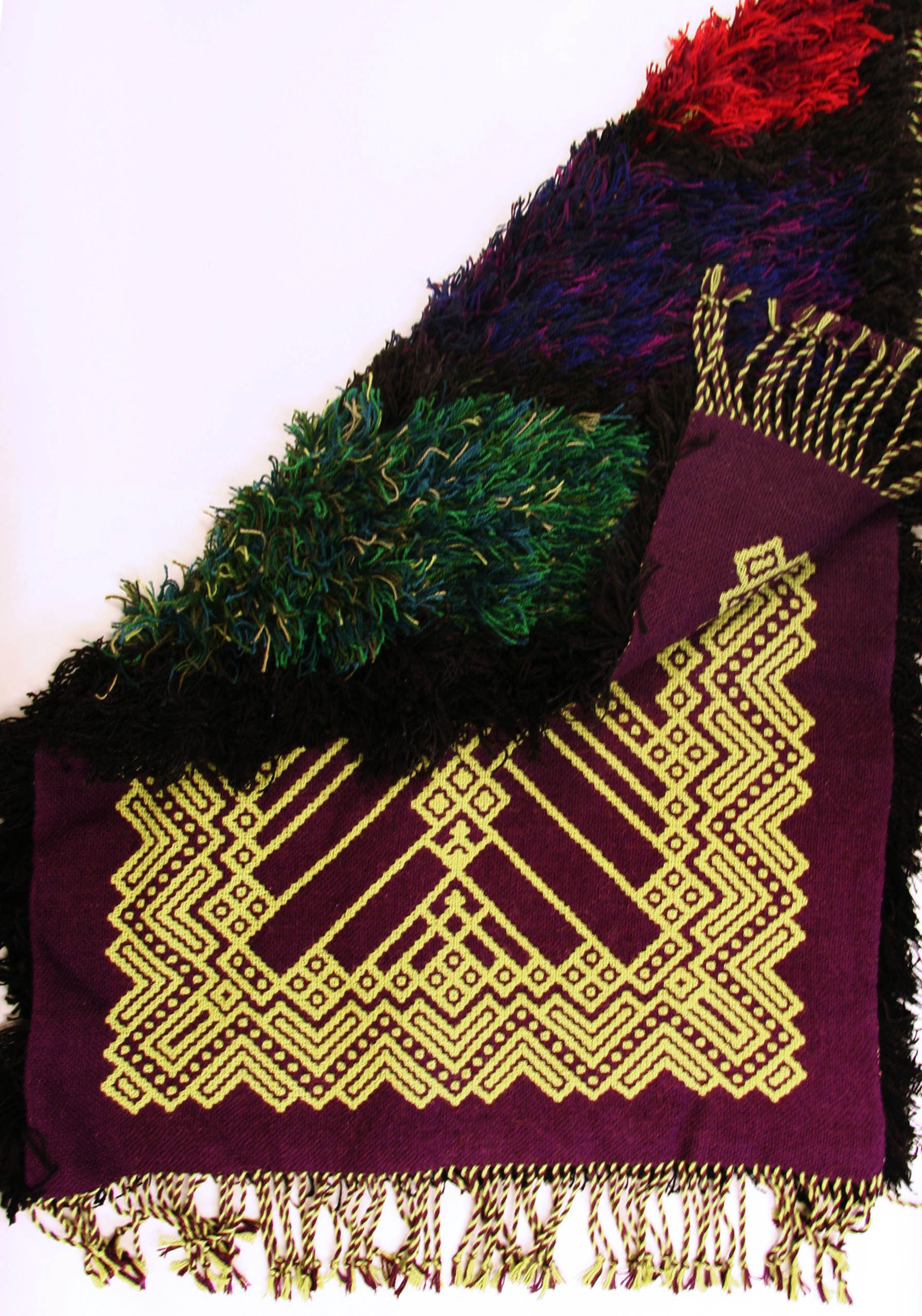
Iowa artist Laura Demuth sets up amazing weaving challenges for herself. Often, not content with just buying and weaving with beautiful wool, she spins and dyes yarn from her own sheep. In a number of weavings she has gone beyond weaving for beauty on one side, and combined techniques to make unique two-sided textiles. One of those will be included in the upcoming “Traditional Norwegian Weaving: American Reboot” exhibit at Norway House from July 20-September 10, 2017.
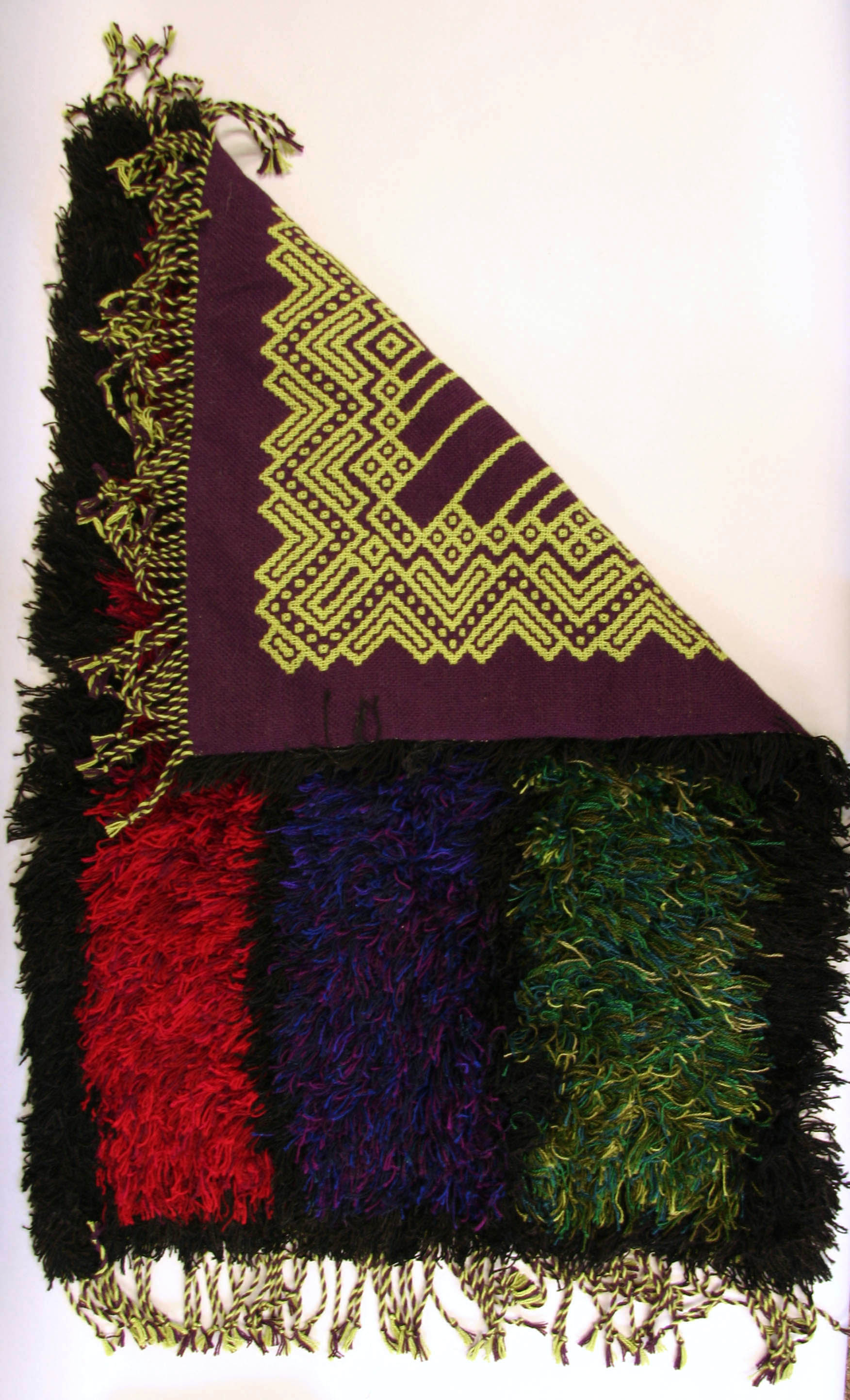
On one side of the hanging, Laura wove an intricate pattern in a complex doubleweave technique. She hid the knots of the rya pile between the two layers of the doubleweave. Because the doubleweave pick-up surface needs to be the upper side during weaving, she tied the knots upside-down on the lower surface. (Rya weavers would understand: this is tricky.)
On the other side, colorful stripes of beautifully-blended yarns are dense and enticing. This piece perfectly fulfills its purpose as a warm throw.
Biography:
Laura Demuth has been weaving for over 30 years and enjoys all aspects of textile production, from raising the sheep to taking a finished piece off the loom. Living on a small acreage just seven miles northeast of Decorah, Iowa, Laura has a small flock of registered Blue Faced Leicester sheep that keep her hands busy spinning wool all winter. She often dyes the handspun yarn with natural dyes from the garden before putting it to use in a woven or knitted textile.
Because Laura lives so close to Decorah, Vesterheim Norwegian American Museum has been a continual source of education and inspiration throughout her weaving career. Laura has focused on traditional weaving structures and techniques, especially bound weave and doubleweave.
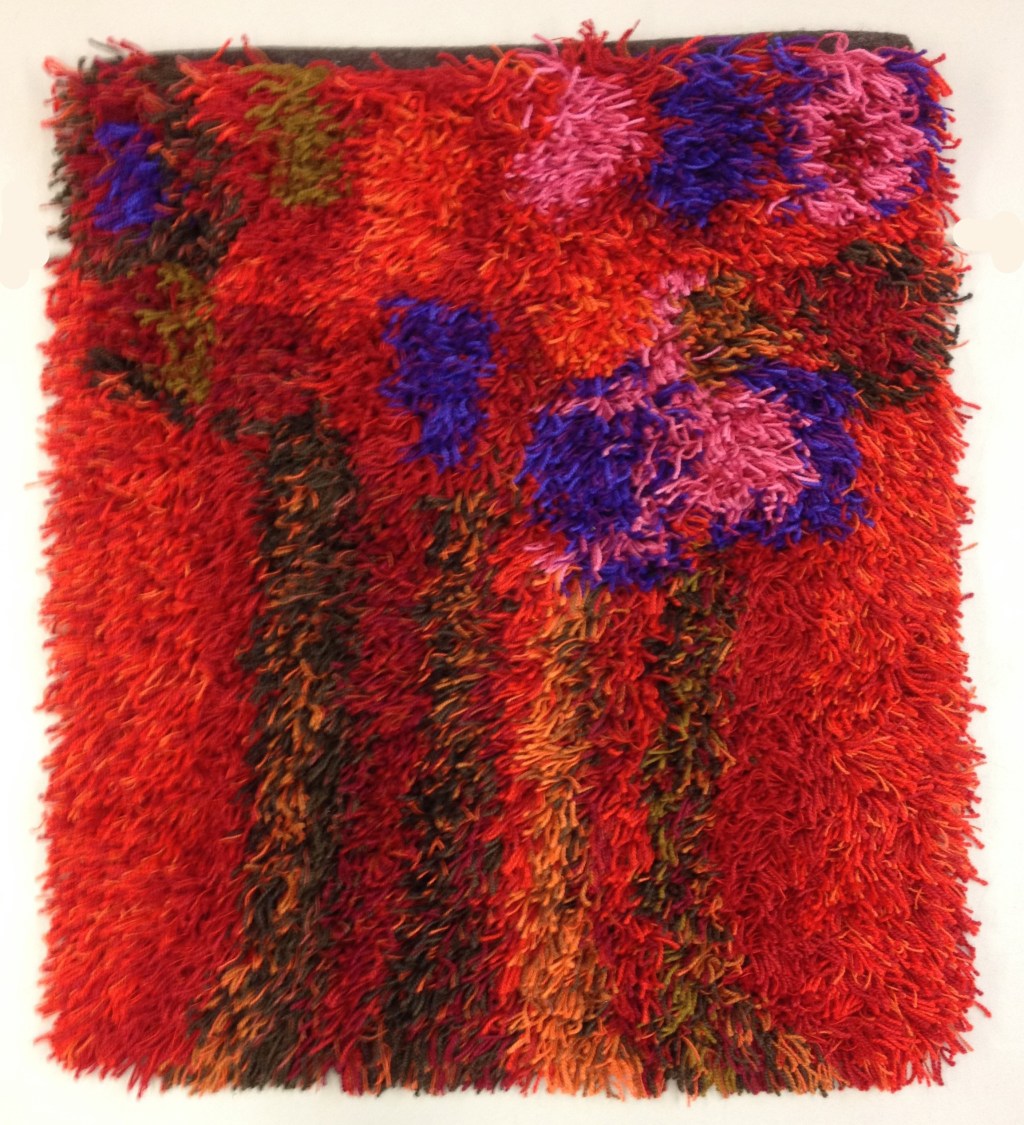
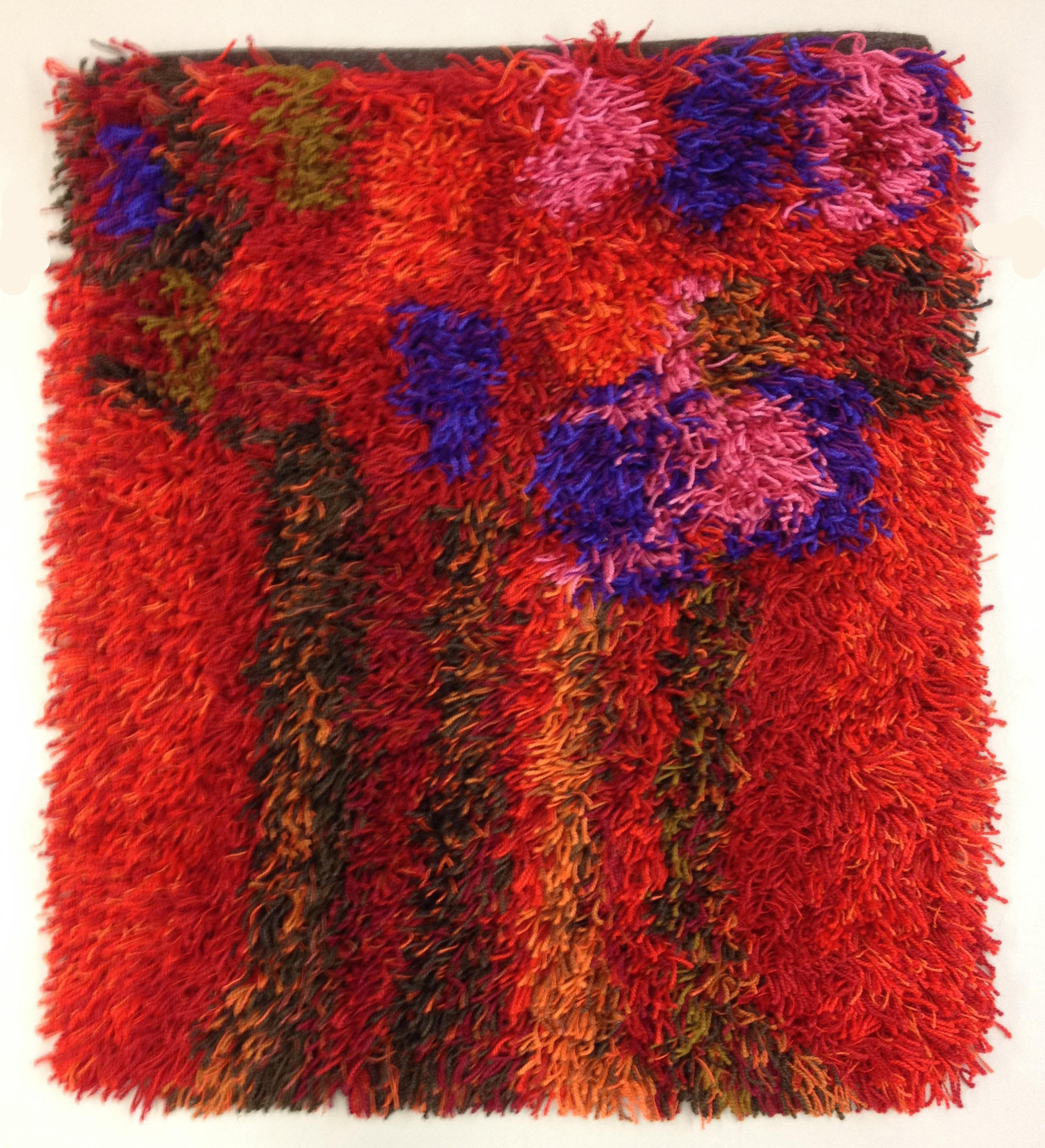
“Norwegian Cherry Tree” 31″ x 33″ Rya. Linen warp and wool weft.
Corky was on a driving trip in Norway, from Aurland to Bodø. Traveling through Hardanger on just the right spring day, he was inspired by hills that were brilliant with the bright pink flowers of cherry trees.





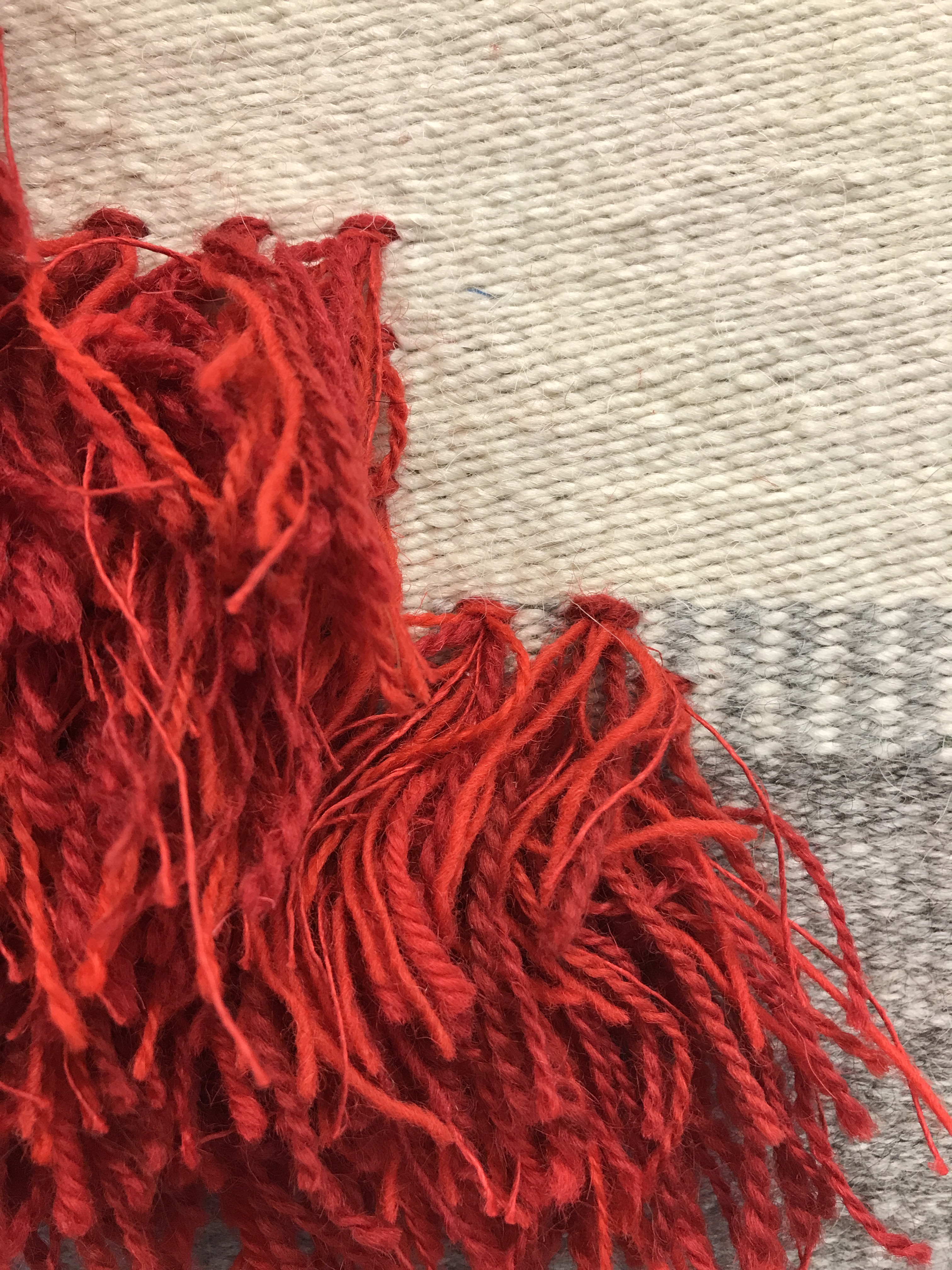 Traditional Norwegian symbols often appear in Robbie’s weaving, sometimes in an unexpected scale or materials. “Scandinavian Star” highlights a single Norwegian star, dense in shade of red rya pile. Read more about the piece in “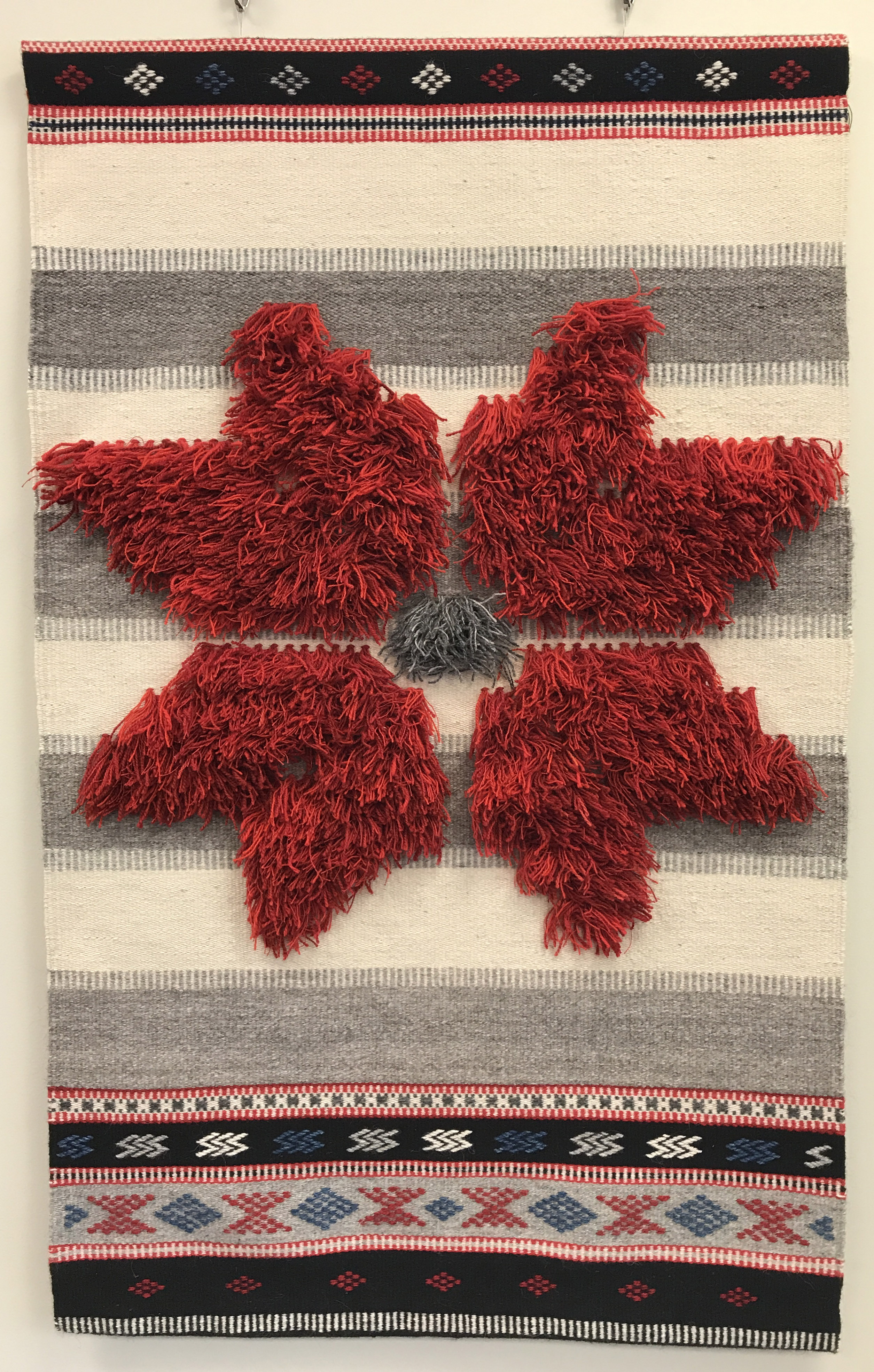
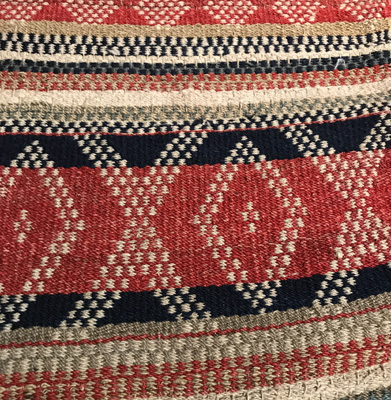 Recently, Robbie has been experimenting with Danskbrogd, a boundweave technique found in the area of Vest Agder, near Kristiansand in Norway. Here is a detail from a piece seen in Norway earlier this summer.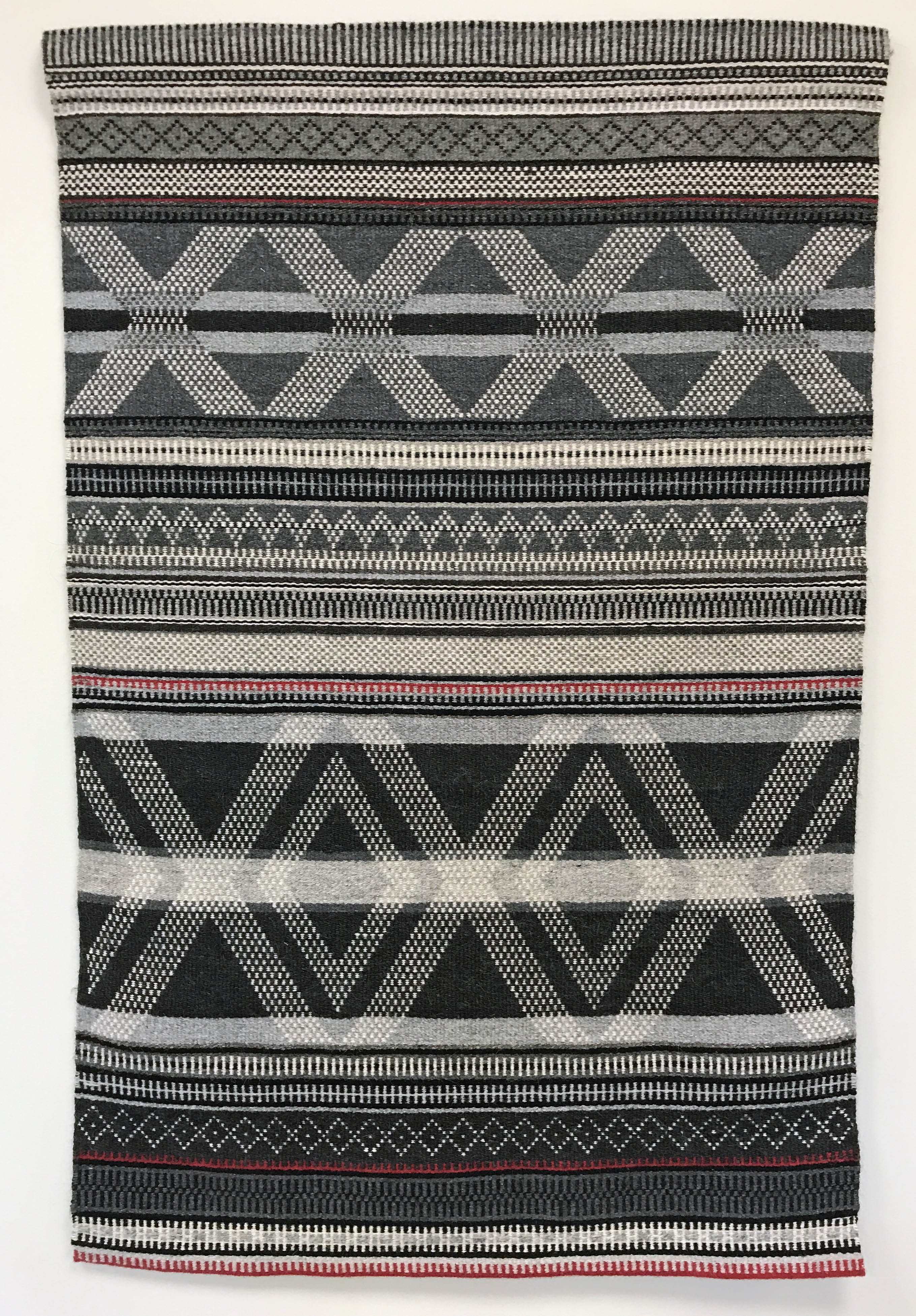
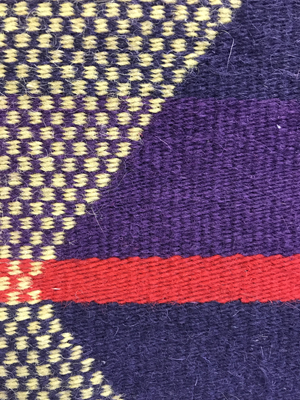 Robbie was steeped in gray during a gray winter month, so the next step was to move to color. The X design became bigger and bolder, on stripes of purple. Read more in “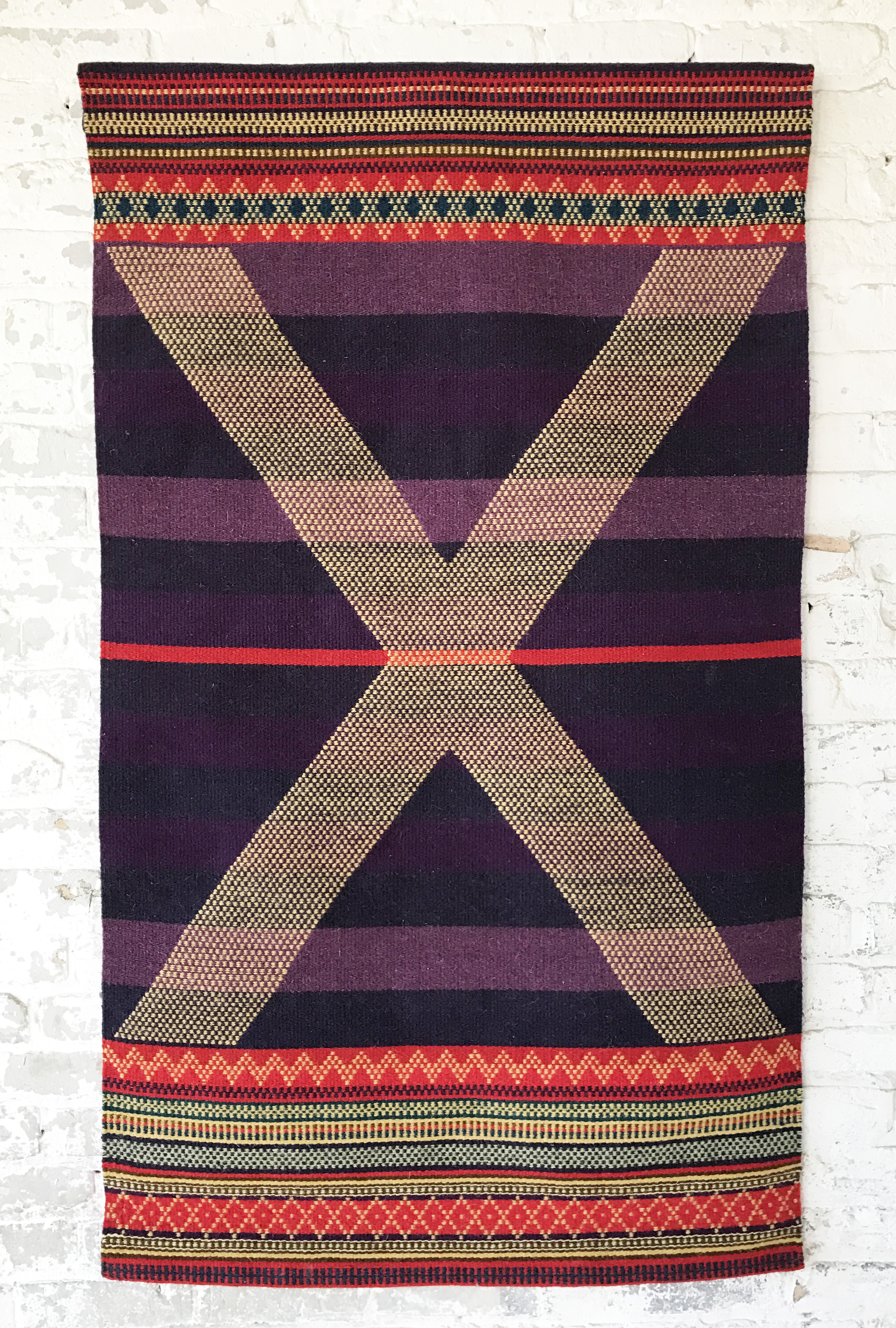

 The “
The “
 Scandinavian Weavers Study Group