Category: Uncategorized

  • Scandinavian Weavers Meeting, September 21, 2014

    After a summer hiatus, the Scandinavian Weavers met on September 21; there was lots of catch-up and show and tell.

    As we talked, many mentioned what they might weave for our current theme of red.  This year the group will use a color as inspiration, and we will discuss the use of red in Scandinavian textiles.  An exhibit of pieces will be held at the Weavers Guild beginning in mid-October, 2015.

    Jan Mostrom noted that she will teach rya next year, a second course for the Weavers Guild.  She will also teach a course at Vesterheim.  The class at the Weavers Guild will be held during the last two weeks of February; it will feature a piece with a houndstooth pattern on the back, and hidden knots.  The Vesterheim class will feature the vertical rosepath backing similar to an older Vesterheim piece and Jan’s piece called “Protection.”  The exact dates have not been set; the class will run around the tme of the Nordic Fest at the end of July.

    IMG_7937Keith Pierce showed three beautiful tablet woven bands using the “missed warp” technique.  (Mounted on a black background, these red pieces would be ready for the 2015 exhibit!)With the square cards with holes on each corner, you only use three of the four holes.  Pieces in this technique were discovered when a stave church in Norway was under restoration.  Tablet weaving reached its height of popularity during the Middle Ages, and was often used for the edges of altar cloths and vestments.  Later, when brocading became more popular for liturgical textile decoration, the ground cloth became just a base for the brocading in precious threads, like gold.  Keith has enjoyed a book about tablet weaving that describes its appeal – “The Willful Pursuit of Complexity.”  Keith recently purchased Kay Nelson’s book, The Woven Coverlets of Norway, and is considering making many of the motifs in card weaving.

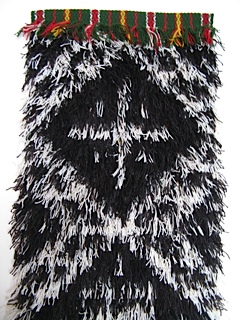
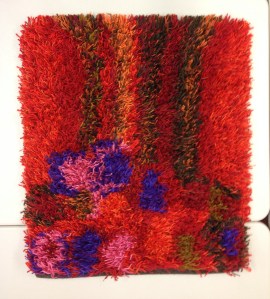
    Corky Knutson brought a beautiful red-filled rya that won a blue ribbon at the Minnesota State Fair this year, along with the Doris Tufte Sweepstakes for woven items in the Scandinavian tradition.  He told us about one fortuitous event along his road to weaving in the Norwegian tradition.  Years ago, an old aunt died and left him boxes and boxes of Rauma yarn.
    IMG_7935

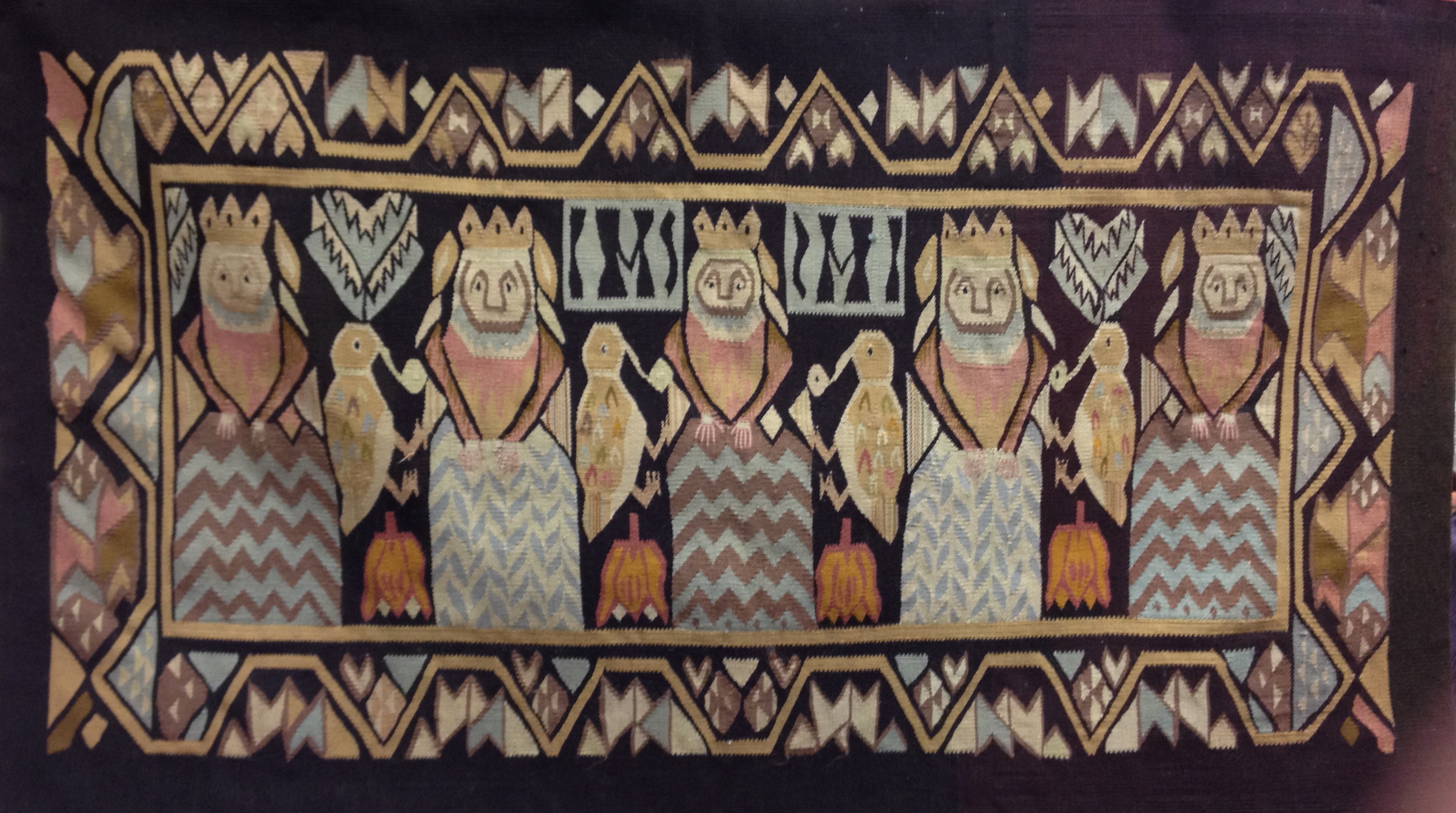
    Corky also brought a fabulous tapestry he purchased from a man in London.  Watch for the full story of the man, the weaving, and Corky’s acquisition of the tapestry in an upcoming issue of the Norwegian Textile Letter.

    Corky is filling an important role for many of us  – he is a dealer of Rauma yarn! He can be contacted at:
    IMG_7929Corwyn Knutson (Corky)
    2742 lakeview ave
    Roseville,  MN 55113
    651-330-6500
    Email:

    Knutfrondal@gmail.com

    Edi Thorstensen traveled to the meeting from St. Peter.  On the topic of rya, she mentioned that she took Jan Mostrom’s rya weaving class at the Weavers Guild, and that it was so well taught.

    She told us about a current exhibit at the Russian Museum in Minneapolis.  “At the Edge of the Forest” is billed as a wood-carving exhibit, but it is of interest to weavers, too.  The exhibit includes beautifully carved distaffs and red-embroidered textiles hung between the carved wood pieces.

    Claire Most has a number of hand-spun yarns that would work beautifully for her yet-unplanned red piece.

    Mary Etta brought a tapestry piece with a geometric design inspired by a pin made by silversmith Heikki Seppa.  The circle with a line through it has absorbed her for many years and she is now working on using tapestry, and partially Helena Hernmarck’s tapestry technique, to bring the design to life in a textile.

    Mary Skoy brought beautiful black mittens, ones she started on the 2011 Vesterheim Textile Tour.

    IMG_7941Winnie Johnson had two pieces in Helena Hernmarck tapestry technique in a show sponsored by the Elk River Arts Alliance. Marilyn Moore had a pieces in the show, too.  http://www.elkriverart.org/wordpress/#mg_ld_565

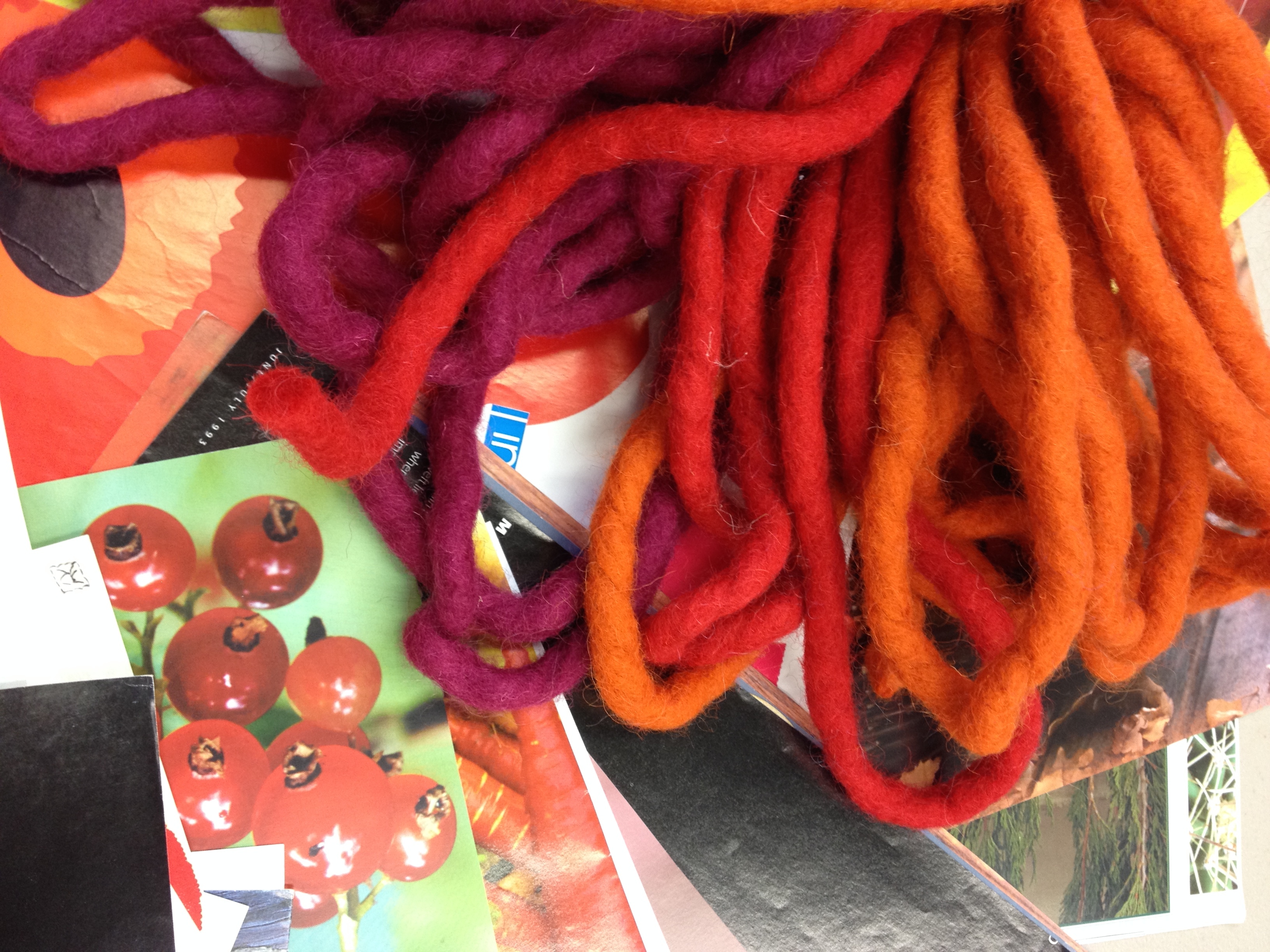
    IMG_7940Wynne Mattila has been planning her red piece, a rug that will use some Finnish fat, felted yarn.  The yarn will be cut into small tubes and the circular ends of the short tubes will stick up as small dots between the warps.  Wynne mentioned a favorite website for color inspiration, design-seeds.com.

    Melba Granlund has her red piece planned; she will weave a series of primarily-red pillows with crosses in rutevev.

    I have not been weaving at all since beginning a seven-month job at the Weavers Guild, but I wove a short piece while demonstrating at the State Fair.  It became another piece in the Scream series. Read more about “State Fair Scream” here.

    IMG_7919

    Attending:  Robbie LaFleur, Keith Pierce, Edi Thorstensen, Corky Knutson, Winnie Johnson, Marilyn Moore, Wynne Mattila, Jane Connett, Melba Granlund, Jan Mostrom, Mary Skoy, and Mary Etta.

    We will meet again on October 19 at 2pm.
  • Scandinavian Weavers Exhibit at Vesterheim

    Many of the Scandinavian Weavers Study Group displayed pieces at the Annual Weaving in the Norwegian Tradition exhibit at the Vesterheim Norwegian-American Museum.  The new issue of the Norwegian Textile Letter features all of the weaving entries in the exhibit, 33rd Exhibition of Folk Art in the Norwegian Tradition.

    banner

  • The Scandinavian Weavers Group: Continuity and Change

    This December, it was the usual for the Scandinavian Weavers Group: party time at Lila’s!

    For many years, Lila Nelson was the rock of our Scandinavian Weavers group. She attended each meeting, offered advice, solved members’ weaving problems, showed her latest works, and shared her excitement for spending time at the loom.  Then, several years ago, she announced that she was no longer going to attend the study group meetings. It was a shock!  How could we even continue?  She decided to focus on her tapestry weaving and attend meetings only occasionally. Lila’s monthly contributions have been missed, but the group has remained strong.  We have welcomed new members, some who attend often, and some who attend occasionally. Our meetings remain useful and inspiring.

    Happily, Lila wanted to continue as host of our annual holiday gathering, a December party at her home in Southeast Minneapolis. Lila’s apartment was filled with textiles, Scandinavian antiques, whimsical animals, and pottery.  The studio in the back room was lined with her tapestries, from crazy cats and polar bears wielding weapons to a gut-punching image based on the atrocities of Abu Graib. One wall was lined with yarn, waiting to move to the upright tapestry loom, chosen by Lila’s expert eye.

    Here was a place to truly celebrate.

    As if this was not enough sensory experience, the gathered weavers often brought pieces to share; those they wove, and Scandinavian textile discoveries from family or small town antique shops. They brought sweets, savories, and wine. I’ll never forget the time that Sharon Marquardt showed the runner she bought for $30 at a central Minnesota antique store.

    IMG_1151

    In the past few years Lila moved from her home to the Lyngblomsten care facility, and we moved our holiday gathering to her new home.  Lila no longer weaves, yet still shares her enthusiasm, knowledge, and hospitality.  This year Lila had the opportunity to meet with old friends and to meet the newer members of our group, those who constantly bring fresh enthusiasm to our weaving of Scandinavian textiles.

    This gathering was a reminder of all that is great about a thriving and evolving group.  On the one hand, we celebrated all that we’ve learned from each other over the years.  On the other hand, it was just another meeting.   Our business is discovery and inspiration, to learn about Scandinavian weaving, and to forge relationships with people to help sustain our work.  That happened in December, only with more chocolate and cheese than usual.

  • November Scandinavian Weavers Meeting

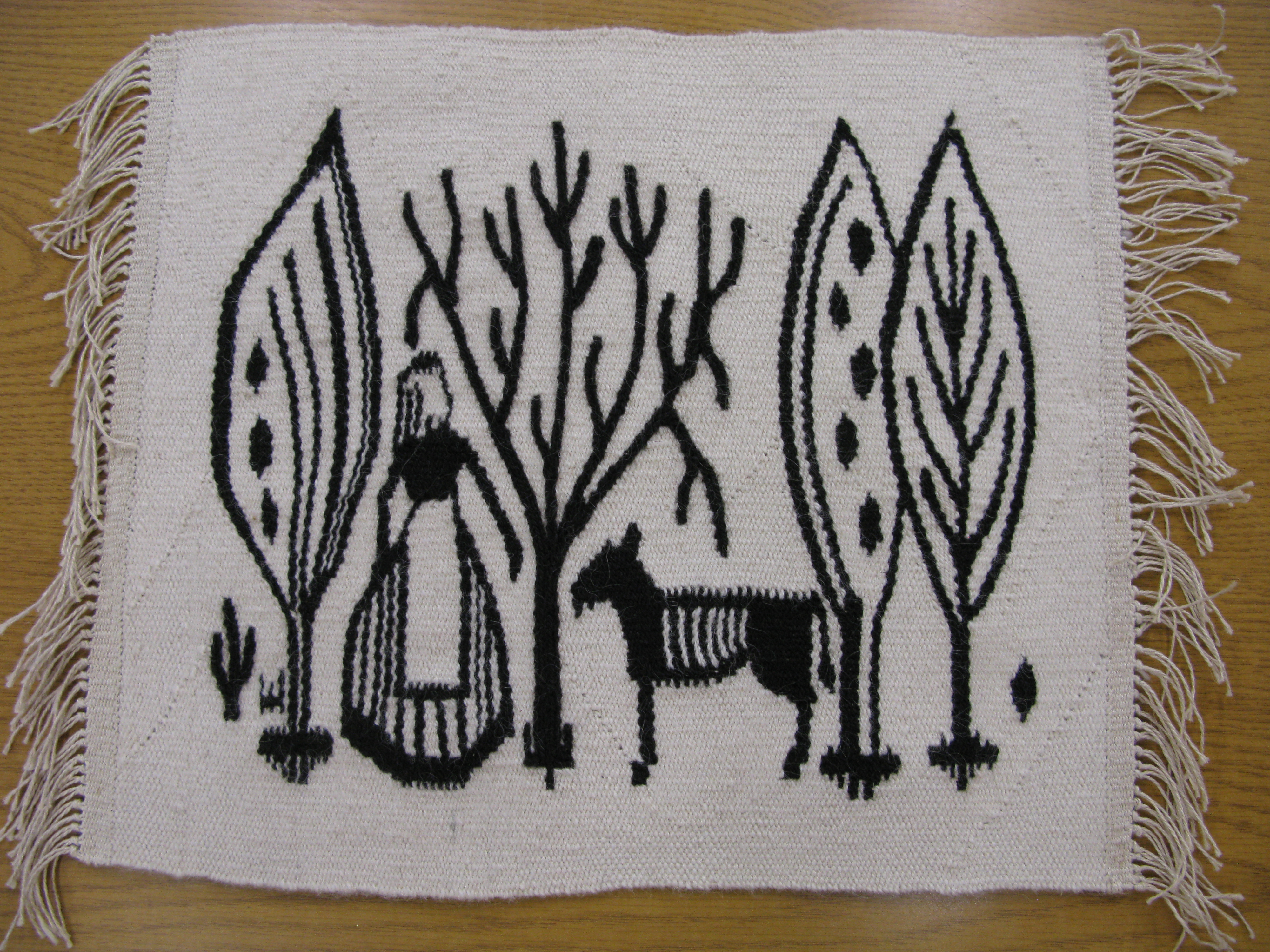
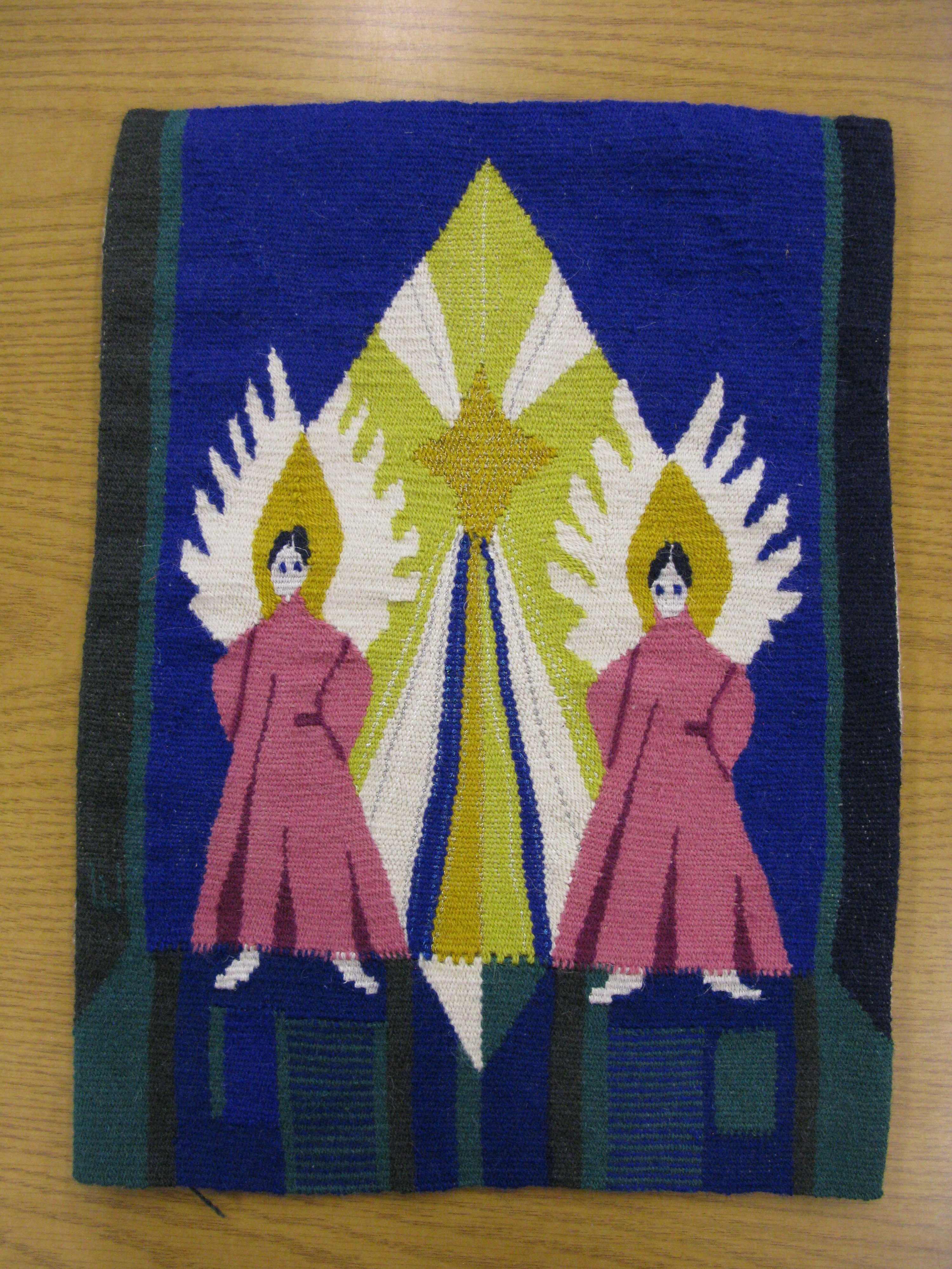
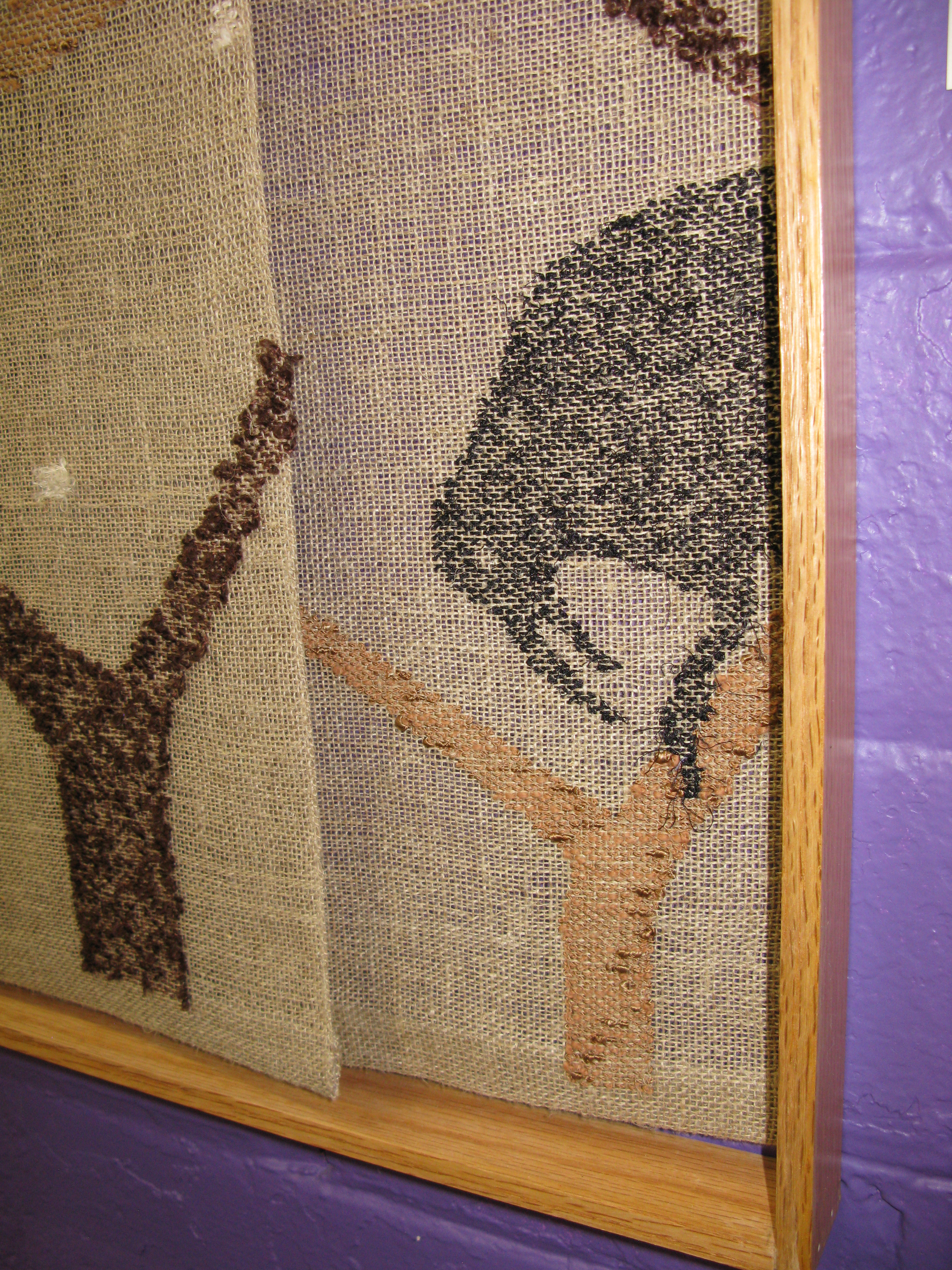
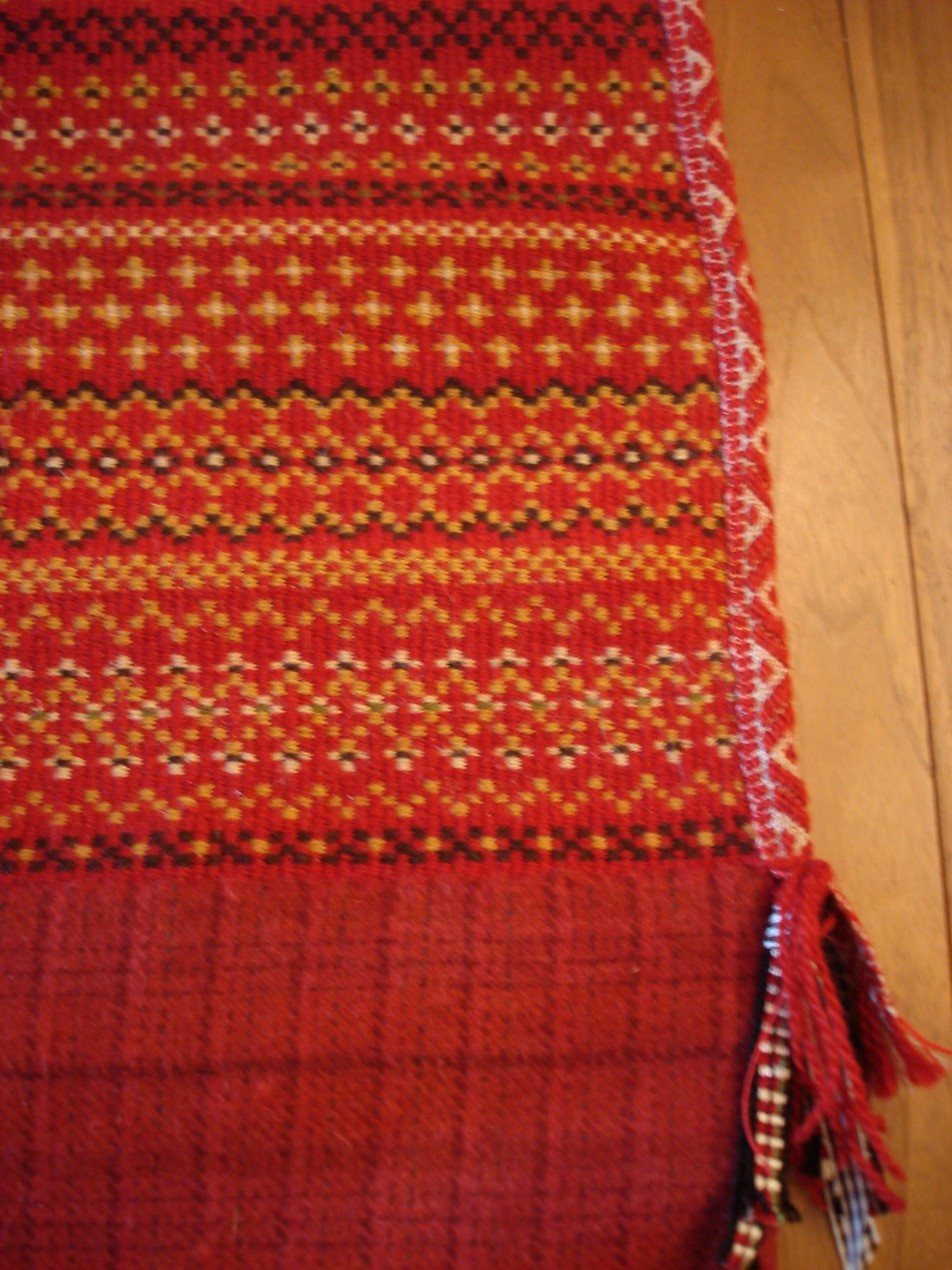
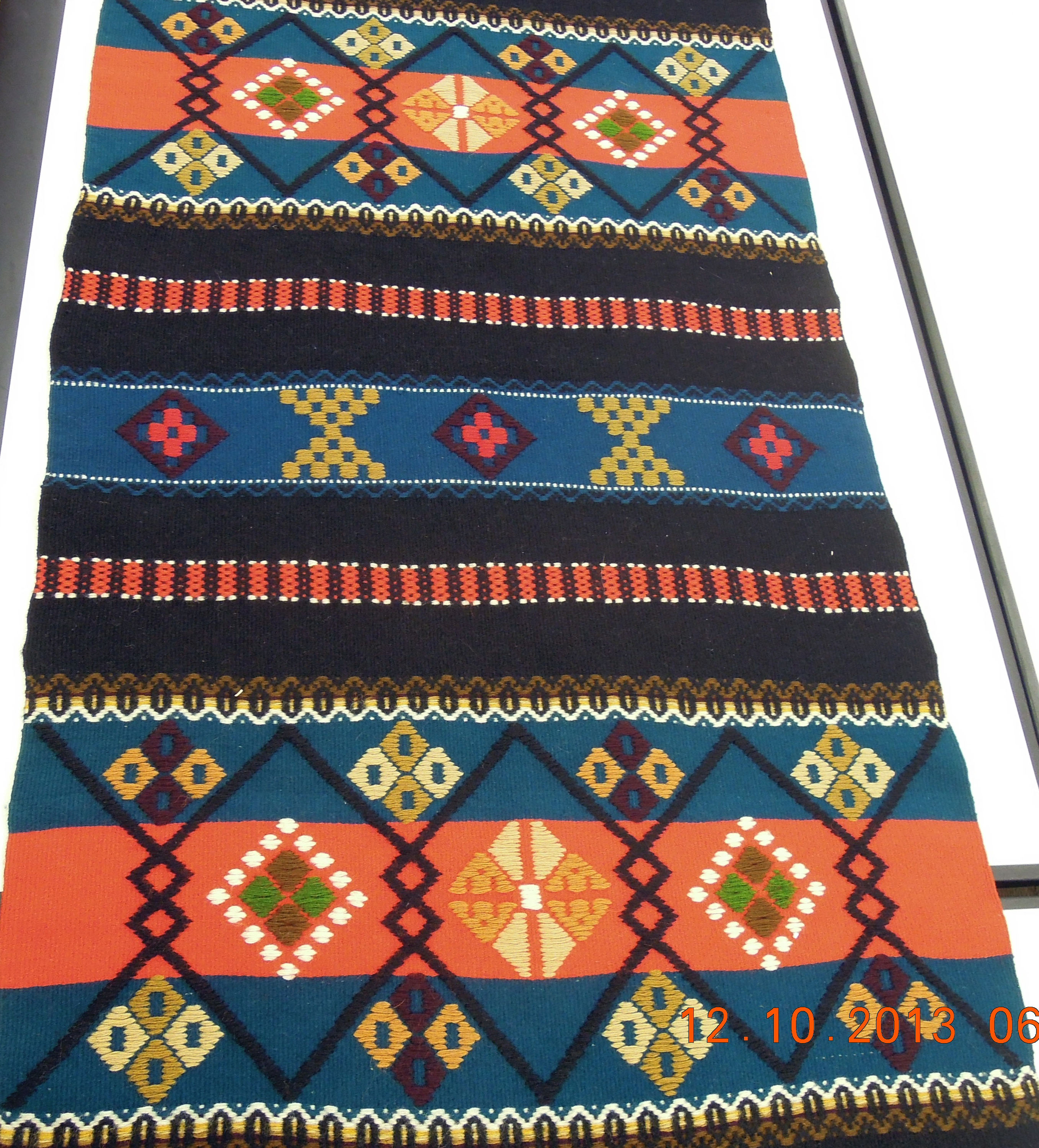
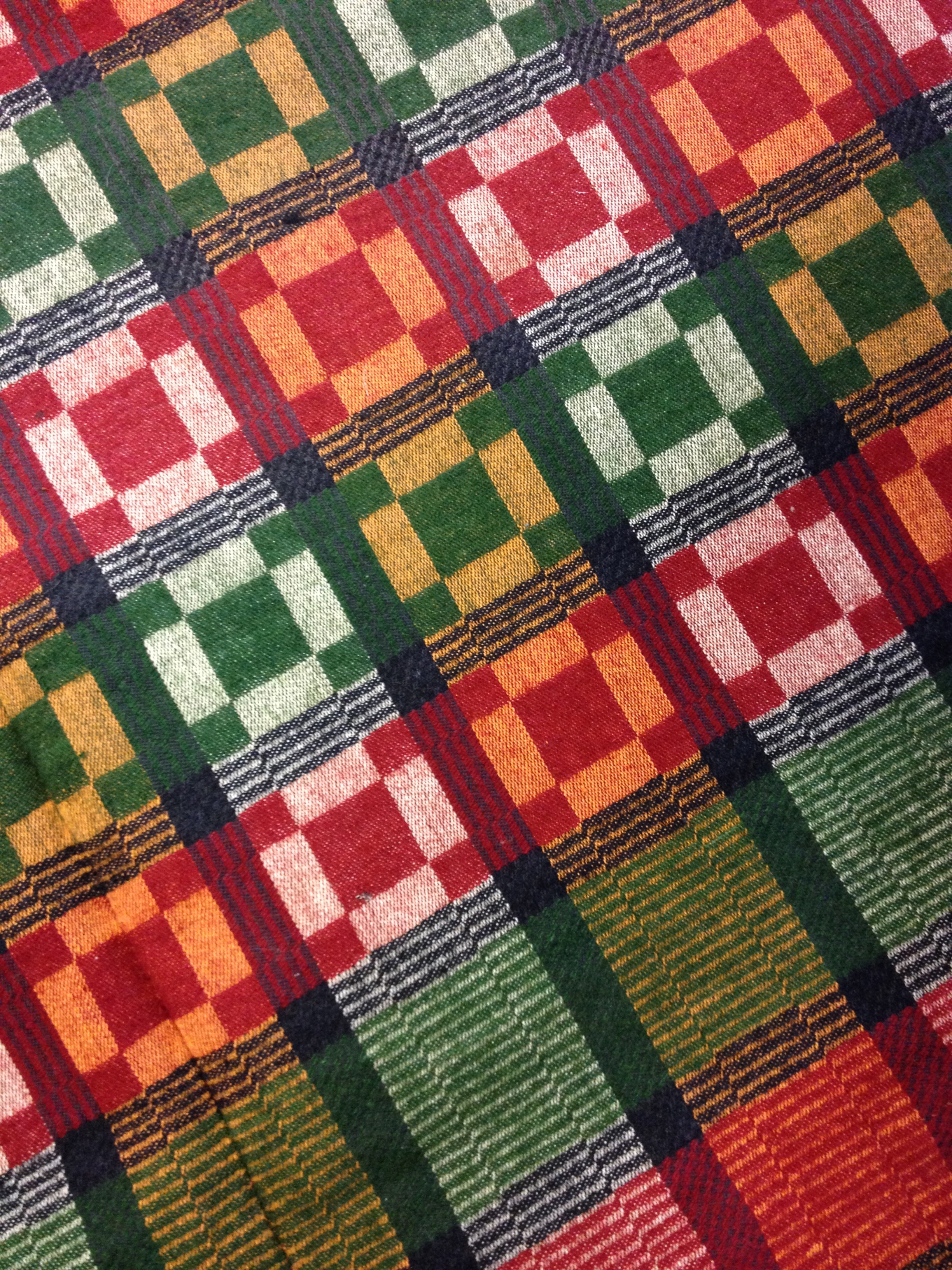
    The Scandinavian Weavers met on November 17, 2013.  During our show and tell time, some people mentioned the projects they plan to complete this year as part of our “Inspiration” study topic.  Each member is choosing an old textile and creating a new one inspired by an aspect of the old piece.  Many of these pieces are from the Vesterheim Norwegian-American Museum in Decorah, Iowa.  We plan to submit the new pieces to the annual National Exhibit of Folk Art in the Norwegian Tradition exhibit next summer.  Melba Granlund is planning to weave a piece inspired by a runner she purchased at the Helsinki flea market last summer. A portion is shown here.

    Image 3

    She guesses it is Swedish.  Vesterheim owns a very similar runner, also likely Swedish in origin, according to  curator Laurann Gilbertson.

    Image 2

    And finally, Vesterheim had a small piece that Lila Nelson wove, based on the older piece.  Inspired by the designs in these three pieces, Melba will design and weave her own interpretation.

    Image 4

    In the context of discussing how she would choose the colors for her piece, Veronna Capone mentioned a tip she heard from Jan Mostrom.   Take a photo of an existing piece, switch it to black and white, and you’ll see the tonal range.  Then you can experiment with colors, making sure that you have appropriate light and dark tones. Smart!

    Marilyn Moore brought in a beautiful Swedish tablecloth, owned by a friend.  It is probably 90 years old, and in pristine, never-used condition.  Marilyn plans to weave a similar, but smaller, piece.  When she brought it to show her friend Winnie Johnson, it turned out that Winnie had a Swedish booklet with just the instructions that Marilyn will need!

    IMG_6220IMG_6224

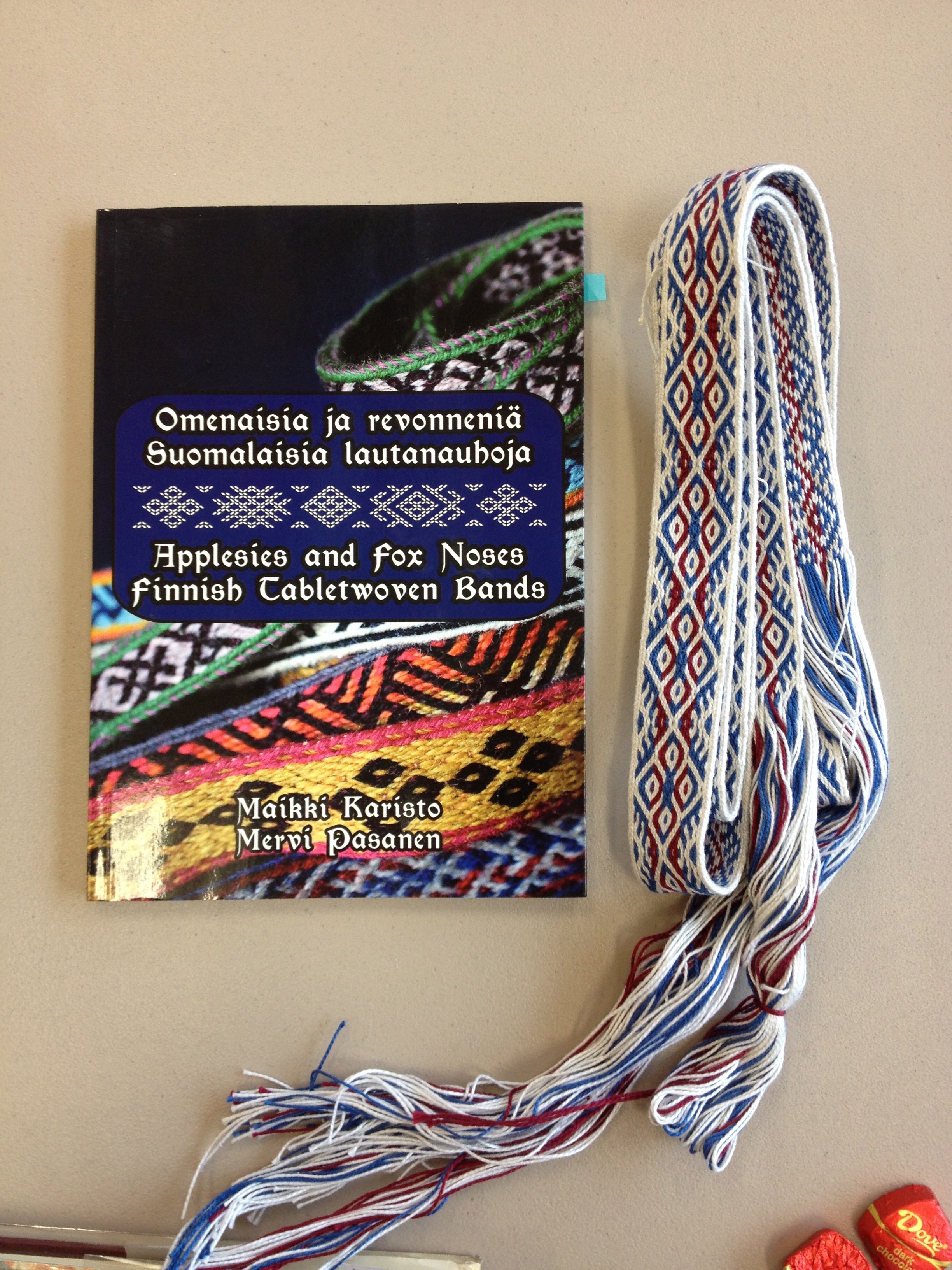
    Keith Pierce showed a band that he wove from a recently-acquired book of Finnish bands, Applesies and Fox Noses: Finnish Tabletwoven Bands, by  Maikki Karisto and Mervi Pasanen. Keith bought it from a Finnish web site.

    IMG_6226

    Jane Connett has been struggling with card weaving on her Schaacht inkle loom, and brought it in to illustrate.  Robin Meadow said her Glimåkra loom sits empty, but she has plans!  Karen Weiberg has been making plans to use her newly-inherited Margaret Bergman loom.  It came from her aunt, who carefully saved the original receipts.  It cost $85 in 1940.  It’s also amazing that the accompanying wooden bench, built with clever storage space, cost $3.00.

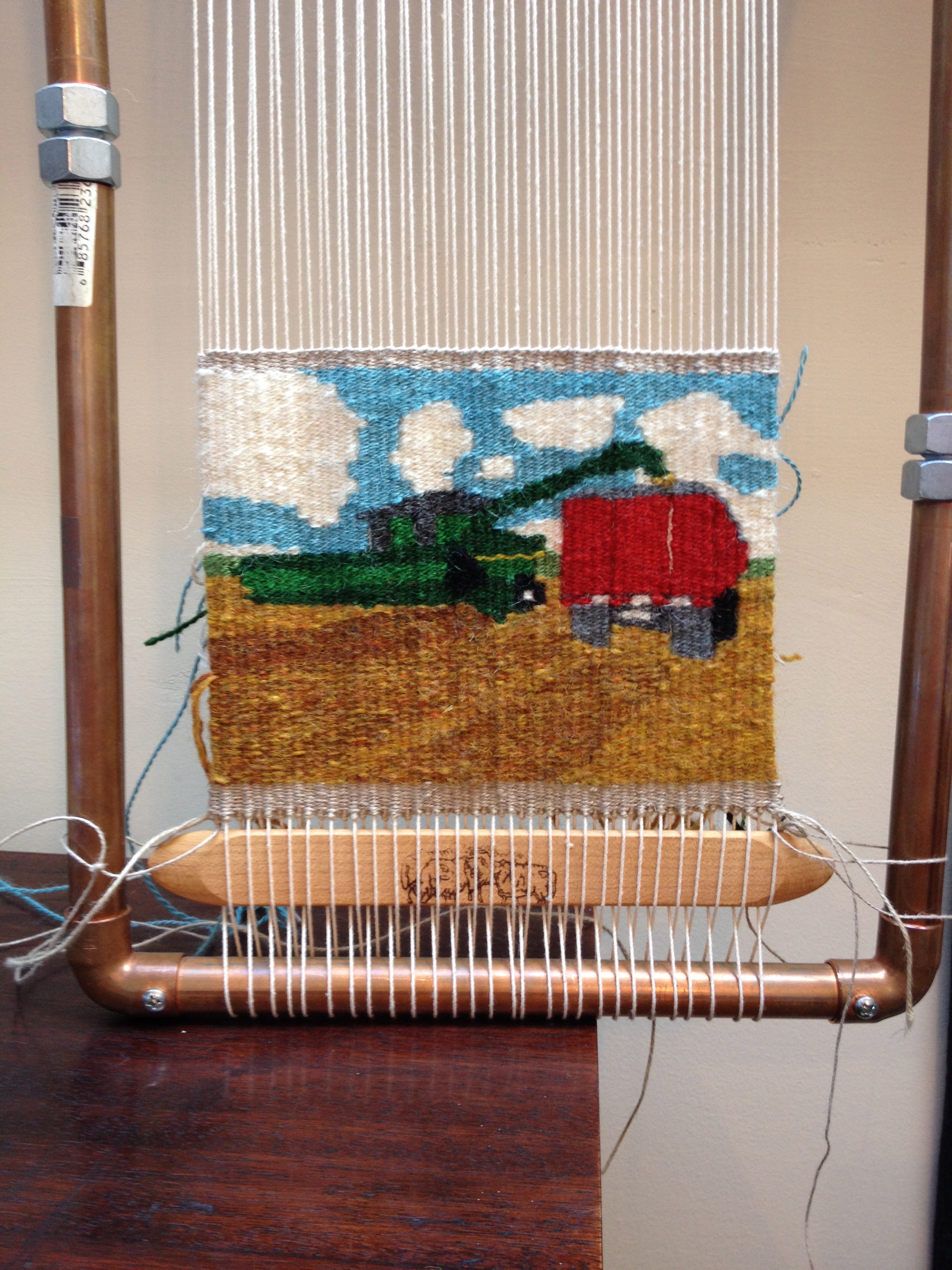
    Robbie LaFleur showed her small harvester tapestry test piece (also written about here).

    IMG_6229

  • A Gold Medal and Gifts

    Several members of our Scandinavian Weavers group entered pieces in the Vesterheim Norwegian-American Museum exhibit this summer – and won ribbons! Congratulations to Patty Kuebker-Johnson, Keith Pierce, Jane Connett, Sharon Marquardt, and Veronna Capone.  Veronna also received enough ribbon points to qualify for Vesterheim’s gold medal recognition.  Congratulations, Veronna!

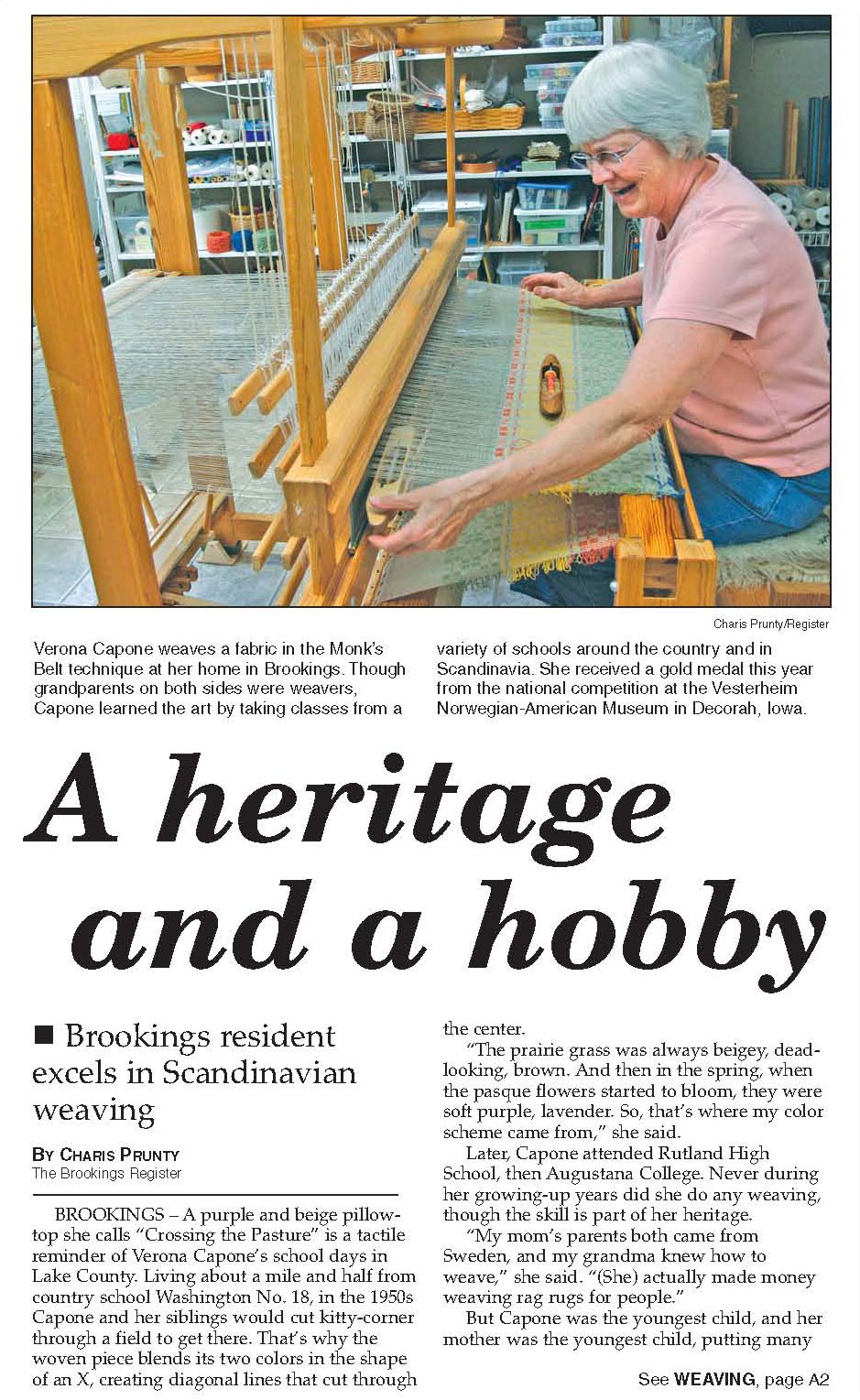
    A local reporter caught wind of Veronna’s award, which resulted in a feature article in the Brookings Register about Veronna and her weaving. The author, Charis Prunty, granted permission to reproduce the article.  (The article was sent as two jpg image files; click them for a readable enlargement.)

    Image 1Image

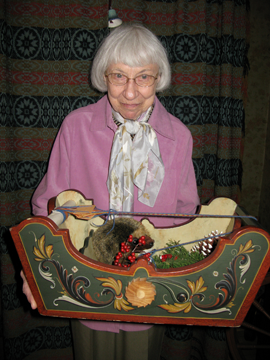
    Veronna decided to send a copy of the article to her first weaving instructor, Mieke Kerkstra, from a class she took in Whittier, California many years ago.  In response, Veronna received two meaningful gifts.  The first was a beautiful shuttle.  Her teacher is now 86 years old and wants to give away her stuff as she pleases, noting that her daughter wouldn’t even know what the object is.  She also send a linen dish towel, woven as part of her first commission after graduating from Sätergläntan Skola in Sweden. The towel was woven of hand-spun linen singles and never used, and perhaps never washed or mangled.  It had been folded, but not ironed into creases, for 50 years.  She apologized that it might be a bit yellowed.  Veronna now stores it rolled on a tube atop acid-free tissue – and shows it off at every opportunity.

    Image 2The  linen dishtowel will likely never dry her silverware, but I’m sure that Veronna will put the shuttle to good use!

  • Keith Pierce

    Many of the members of our Scandinavian Weavers Study Group have lifelong  experience with weaving; others are on the beginning path of weaving study.  Keith Pierce fills both categories.  His initial experience with weaving dates back to a unit in ninth grade shop class, when he wove a runner in overshot technique on a table loom that was only about 15″ wide.  Years later, after marriage but before kids, he picked up “Byways in Hand-weaving” by Mary Meigs Atwater. He learned tablet and inkle weaving and a few other off-loom techniques. Over the next four decades he wove on his Beka inkle loom, punctuated with large gaps as more pressing matters intervened, like job, family, and adding bedrooms to his house.
    About a year and a half ago Keith revived his weaving hobby and started working through Peter Collingwood’s book, “Techniques of Tablet Weaving”.  He wanted to try weaving a belt using double-face 3/1 broken twill, his first attempt with that technique, and settled on the double-helix pattern that he found on a Danish web site.  It was inspired by iron-age bands with helix motifs found at sites in northern Europe, for example at Mammen, Denmark and Elisehof, Germany.
    keith-closeup-3
    Peter Collingwood describes 3/1 broken twill as “the most challenging of the double-faced weaves.”  While the technique was challenging, the choice of materials was easy.  Keith said, “I used some green, black, and red 5/2 perle cotton from the stash that I dragged around the country for 40 years.”  His materials at hand worked well for the band.  “I enjoy working with Perle cotton. It’s strength, smoothness, and durability make for painless weaving. And it produces a pretty, lustrous fabric.”  He explored further, to great success.  His second band in 3/1 broken twill won a Sweepstakes ribbon at the Minnesota State Fair in 2012.
    The photo below shows the front and the back side of Keith’s double-helix band in the show.
    Keith-band-front-backKeith has two Sami bands woven in perle cotton in the current exhibit.  The background in the narrower  card-woven band used 10/2 and pattern used 3/2.

    keith-closeup-2
    The wider band used 3/2 for both, but doubled the pattern threads. The patterns are taken from the book “Sami band weaving” by Susan J. Foulkes (self-published and available at blurb.com).  It was woven using a traditional hand-held heddle.
    keith-closeup-1

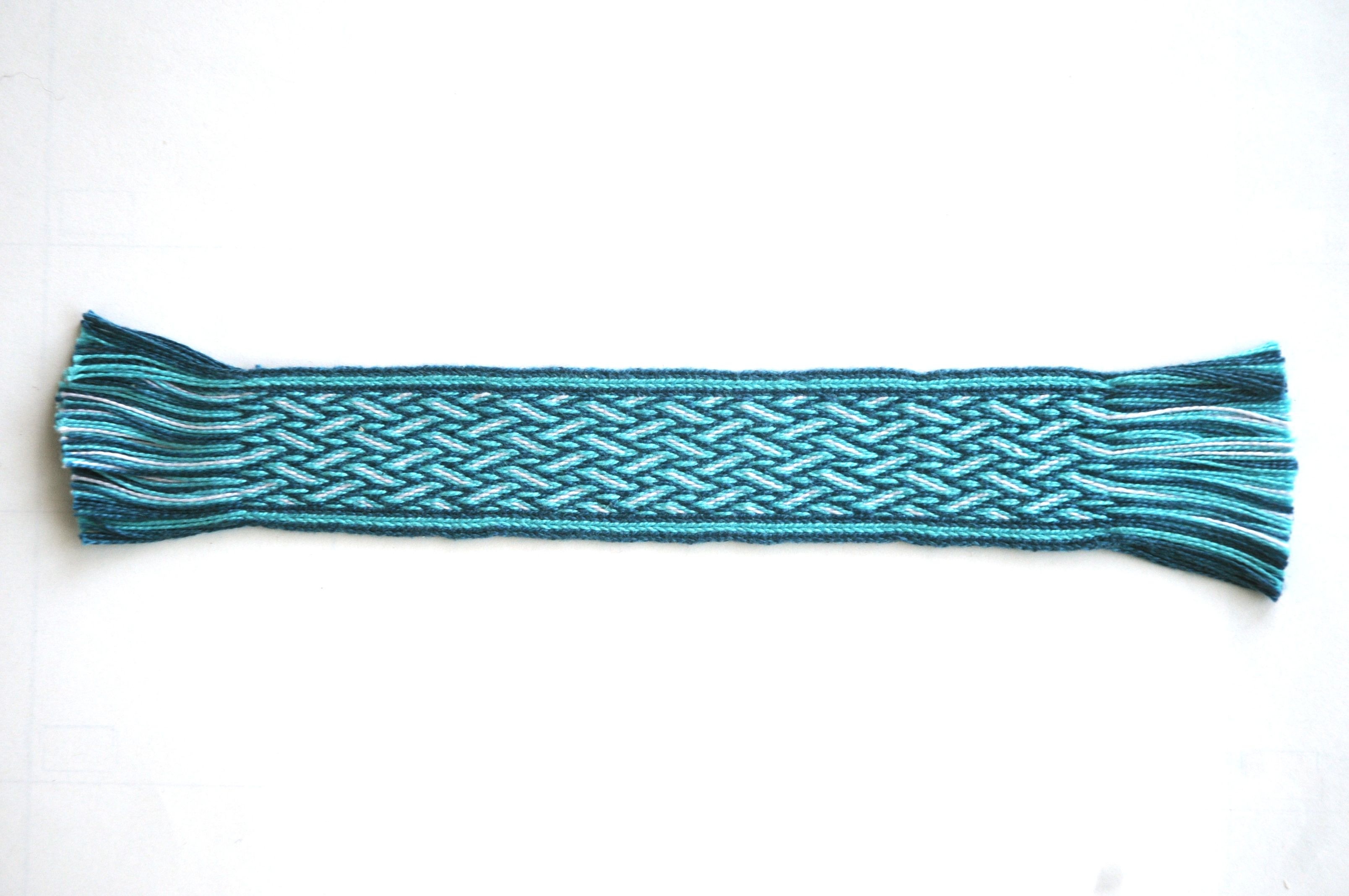
    Also in the exhibit is a blue bookmark woven with 10/2 Perle cotton. Its pattern has Scandinavian origins as described in “Viking-Style Tablet Weaving: Birka Strapwork Motif” by Carolyn Priest-Dorman.  She writes, “The motif for this tablet-weaving “recipe” is based on a Viking Age brocaded tablet-weaving pattern found on Bands 22 and 23 at Birka, Sweden. Based on both the number of finds of brocaded tablet-weaving finds and the total weight of metal brocading weft found at Birka, this was the trim pattern most commonly represented in Birka’s Viking Age burials; its popularity spanned the ninth and tenth centuries.”  Keith notes that this pattern has been used by many band weavers – just google the term “birka strapwork” as evidence.

    keith-blue-band

    keith-closeup-4
    Keith and Jane Connett are members of the Banditos Interest Group at the Weavers Guild of Minnesota.  For that group, Keith reported on another band experiment, in which he used card-weaving for a band in krokbragd technique.  How did it go?  Keith advised his fellow band weavers to stick to shafted looms, and let cards to what they do best
    (not Krokbragd). Read Keith’s detailed notes here.
    keith
    Keith’s new path of weaving study is prompted by inheriting a 1960’s vintage Scandinavian four-shaft table loom.  It’s still waiting to be used.  Keith recently joined the Scandinavian Weavers Study Group and is looking forward to working on krokbragd – but on his loom with shafts, not with cards. We look forward to many more of Keith’s beautifully executed “experiments.”
  • The Weavers Guild Annual Benefit

    One of Keith Pierce’s bands in the Scandinavian Weavers Study Group exhibit enjoys special status as the postcard image for the upcoming Weavers Guild of Minnesota benefit.  Here’s more information on the event on April 25 event, which features a live and silent auction and a smörgåsbord.

    postcard

  • Judy Larson

    Judy Larson has been weaving for ten years, and with the addition of an 8-shaft Glimakra in October, has managed to fill her living room with looms.  Patty Johnson said she dreamt Judy’s husband was sitting on a folding chair in the center of room, couches replaced with more looms.  “Not true – not yet!” Judy responded.  Still, Judy does manage to weave on several looms.  Overall, her favorite part of the weaving process is the discovery of color interactions when various weft yarns are used on the same warp.  “Even when I think I have planned it all out and have a prediction, I’m pleasantly surprised by the resulting combinations, so I like to put on a longer warp and do multiple projects in a variety of colors.”

    Judy’s new Glimakra 8-harness loom is used for finer warps; she’s used it for several Monk’s Belt pieces.  Now it is set up for rep weave placemats. “The ease of weaving on it allows me to easily create intricate patterns.”  The ergonomics of warping the Glimakra convinced her to purchase the loom.

    judy-with-loom

    A sturdy Fairloom rug loom from Sears shares her living room space.  She bought the used loom three years ago because it has a stronger “box” construction to weave rag rugs. With a huge stash of fabric, Judy will work on rugs for years, and enjoy surprising color interactions when weaving with a variety of fabrics.  She enjoys having two looms easily at hand.  “It is nice to have the options to choose each night if I want to do delicate patterns, or weave away some frustrations from the day with some good hard beats!”

    judy-at-loom-2

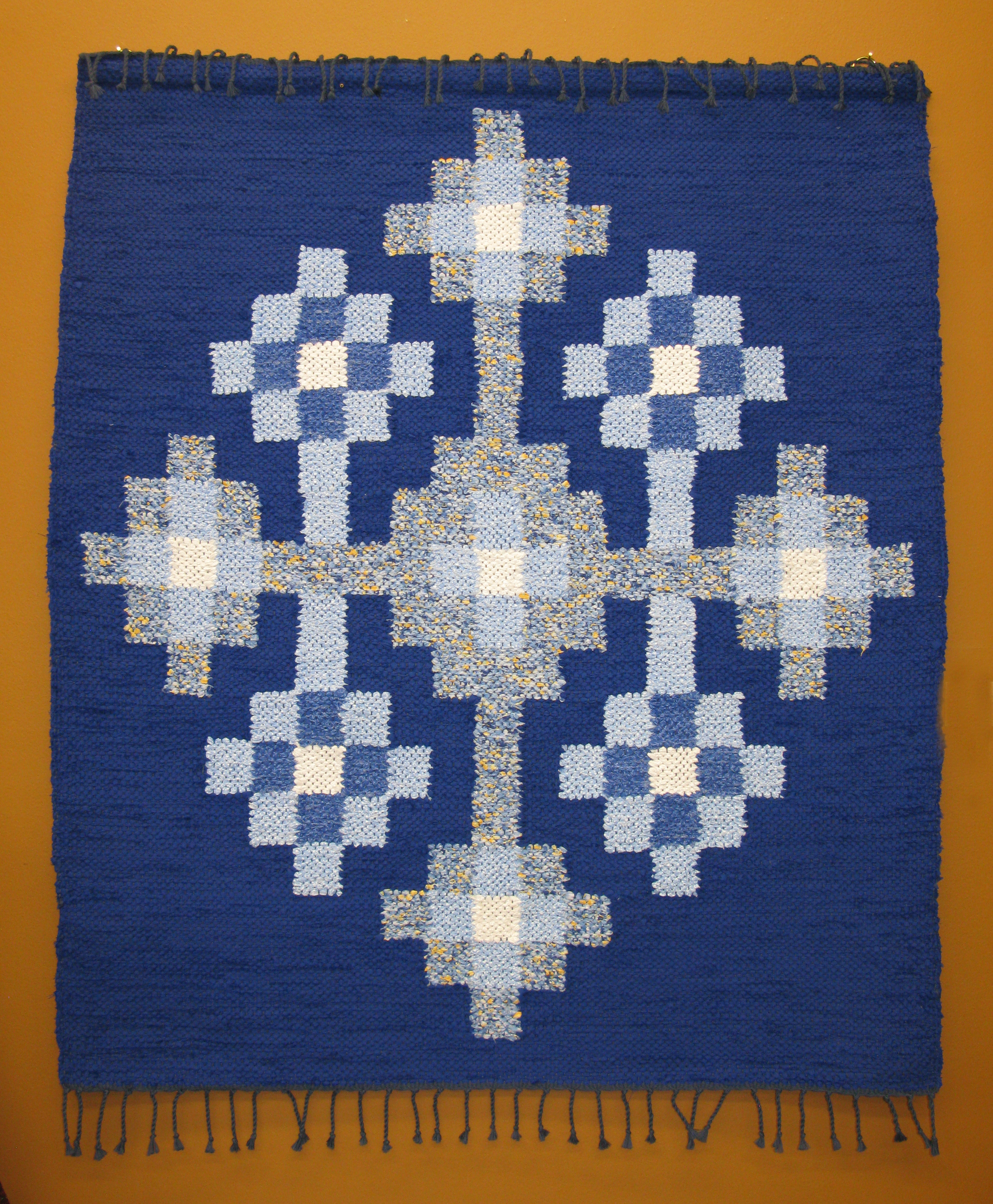
    Judy’s Monk’s Belt rug in the exhibit was woven on the Fairloom.  She was curious to see how fabric would work instead of the usual yarns, so she wove four rugs.  The navy plaid, with a sparkle of gold, was her favorite because it had the most subtle overall effect.

    judy-monksbelt-rug

    Her Monk’s Belt runner is the opposite of subtle – a bright and festive Christmas runner.  It was made on the Glimakra with 3/2 pearl cotton.

    judy-monksbelt-3

    Judy can often be found at Patty Johnson’s shop, Color Crossing, where she uses more looms.  She warps an eight-foot Cranbrook loom for room-sized rugs. Her next rug will use a linen warp and wool weft in a shaft switching technique. It will grace her newest grandson’s room.  She also uses a 60-inch twelve-shaft Finnish Toika in the studio at the shop.

    Wait!  There’s more! Judy also still has her first loom, a four shaft LeClerc.  Are there enough hours in the day?

  • Jan Mostrom

    Jan Mostrom describes her ties to Scandinavian weaving techniques and to the Scandinavian Weavers Study Group:

    “I have been weaving since a January term class taught by Lila Nelson while I was attending Luther College.  Lila and Syvilla Bolson have been long time mentors for me and their knowledge and love for Norwegian techniques influenced my own excitement about Scandinavian textiles. I have loved being part of the Scandinavian Weaving Study Group because we inspire, share and support each other while working with different weaving themes.  It helps me to have a deadline and to want to push a technique in a new direction even though I love working within the traditional weaves.  I have also enjoyed teaching some of the weaving techniques at Vesterheim Norwegian American Museum and at the Minnesota Weavers Guild.”

    IMG_5254

    Jan has three pieces in the current exhibit.  In “Protection Rya,” the twill backing design was reproduced from a rya at Vesterheim.  The knot design was inspired by the protective symbols painted on the walls of a home in the Hardanger Museum.  She used Norwegian Rauma Aklea yarn in the warp, weft and knots.

    IMG_1468

    “Sunset Skillbragd” is done in the traditional Norwegian skillbragd technique, which requires two sets of shafts to weave.  One set is for weaving the plain weave ground and the other set of shafts is to weave the pattern.  Warps go through both sets of shafts.  This piece is woven with a fine cotton warp and Rauma prydvev for the pattern.

    IMG_5261

    IMG_5262

    “Backpacker Tapestry,” adapted from a photo of her daughter, was woven with a seine twine warp and mostly Rauma prydvev yarn for the weft.  Jan dyed the skin tones for the face with acid dyes.

    IMG_2409

    IMG_2399

    IMG_2289

  • Jane Connett

    Jane Connett’s Sami bands fit well into the exploration of Scandinavian weaving techniques, but were actually woven in the context of another Weaver’s Guild interest group, the Banditos. About three months ago, Jane suggested weaving Sami bands. Jane noted that her bands on exhibit are the successful ones, after abandoning other experiments with the wrong colors, wrong wool, or the sloppy work of experimentation.  She added, “Tying the warp up to different types of small looms has been a learning experience, as it mostly does not work to do the bands this way.  I have reluctantly admitted that I have to do them back strap to get the best results.”

    Of the Scandinavian Weavers Study Group, Jany wrote, “Scan Weavers keeps me going.  Everyone is creative, sharing and inspirational.  I know that I will never be in the position I would like for weaving… lots of room, light, time and equipment.  But I can dream, and on occasion can manage some small thing that gives me much joy.”

    jane-with-band-1

    In her weaving, Jane focuses on rigid heddle, tapestry, inkle and card weaving, and has multiple looms for all those techniques.  “I used to say you could never have too many looms… but I think I may have finally reached my limit.”

    Jane loves the hands-on pleasure of working with color and pattern, on and off the loom.  “I love Krokbragd.  I like designing small and larger intricate looking patterns and graphing them out and coloring them in. Then I see what changes I can make to the design, and then what happens when I change the colors, moving the darks and lights to another area.”  She hopes to get back to tapestry weaving. “Working that close to a design and having the wool in my hands brings me a supreme sense of joy.”

    Jane came to her love of weaving serendipitously.

    “I had a Girl Scout troop for 11 years and they wanted to do a ‘weaving badge’ in the spring of 1994.  Not knowing anything about weaving, I took my first class that summer at the old Guild building, on card weaving with Karen Searle.   After teaching this to the girls they wanted more, so I took beginning rigid heddle, and tapestry with Joanna Foslien.   Eventually, the girls in my troop learned about seven different techniques and sponsored a Weaving Weekend at a summer camp for around 400 young girls.   They demonstrated the different kinds of looms and weaving, and we provided prewarped cardboard looms for all of the attendees and their leaders.  It was a lot of work but a great success!!   I was hooked, but always short on time with a LOT of volunteering at that time in my life.”

    These days Jane’s weaving time is limited by her growing family; three granddaughters, including newly-born twins.  As soon as they are old enough to manage a warp, Jane will be the perfect weaving instructor!