Category: Uncategorized

  • Scandinavian Weavers Retrospective – Edi Thorstensson

    Edi Thorstensson has been weaving since 1966.  She has studied at the Chicago Art Institute, Mora Folkhögskola in Sweden, Sievers School of Fiber Arts, the Weavers Guild of Minnesota, and in Norway.  She lives in St. Peter, Minnesota.

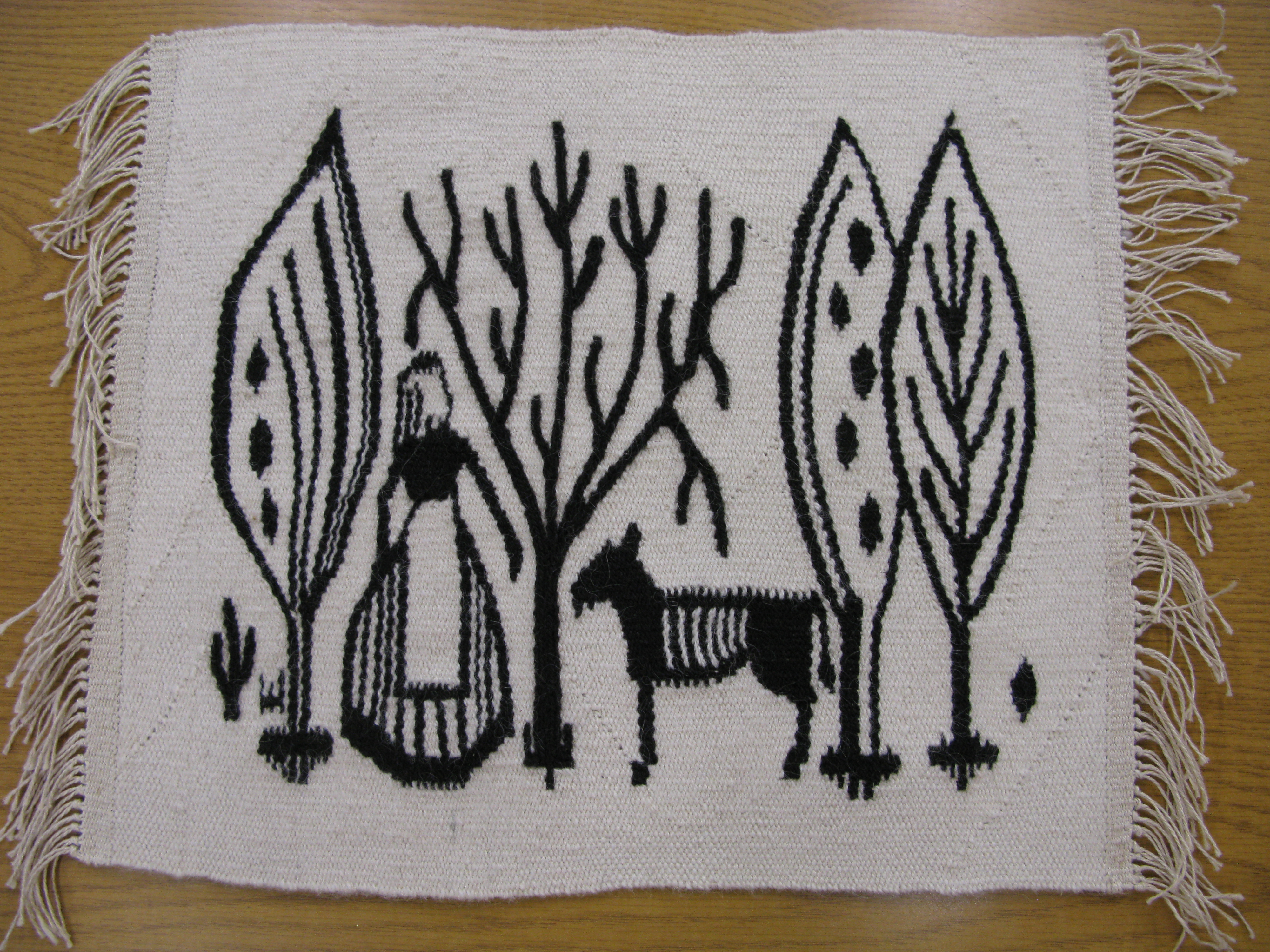
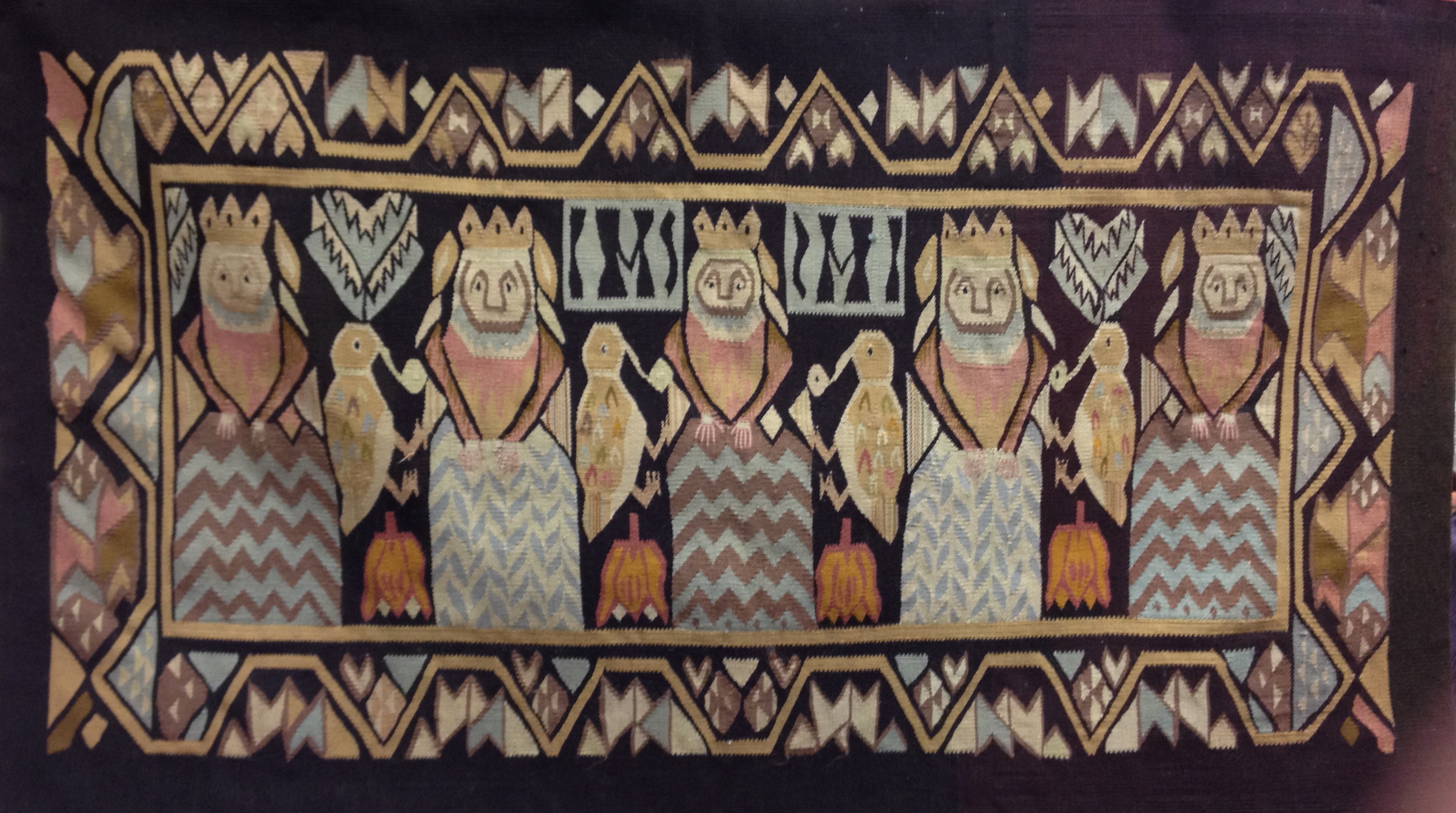
    Turkeys and Corn.  ca 1988
    Technique:  Rölakan Swedish single interlocked tapestry
    Materials:  Linen warp, Swedish cow hair weft, 16″ x 13 1/4″

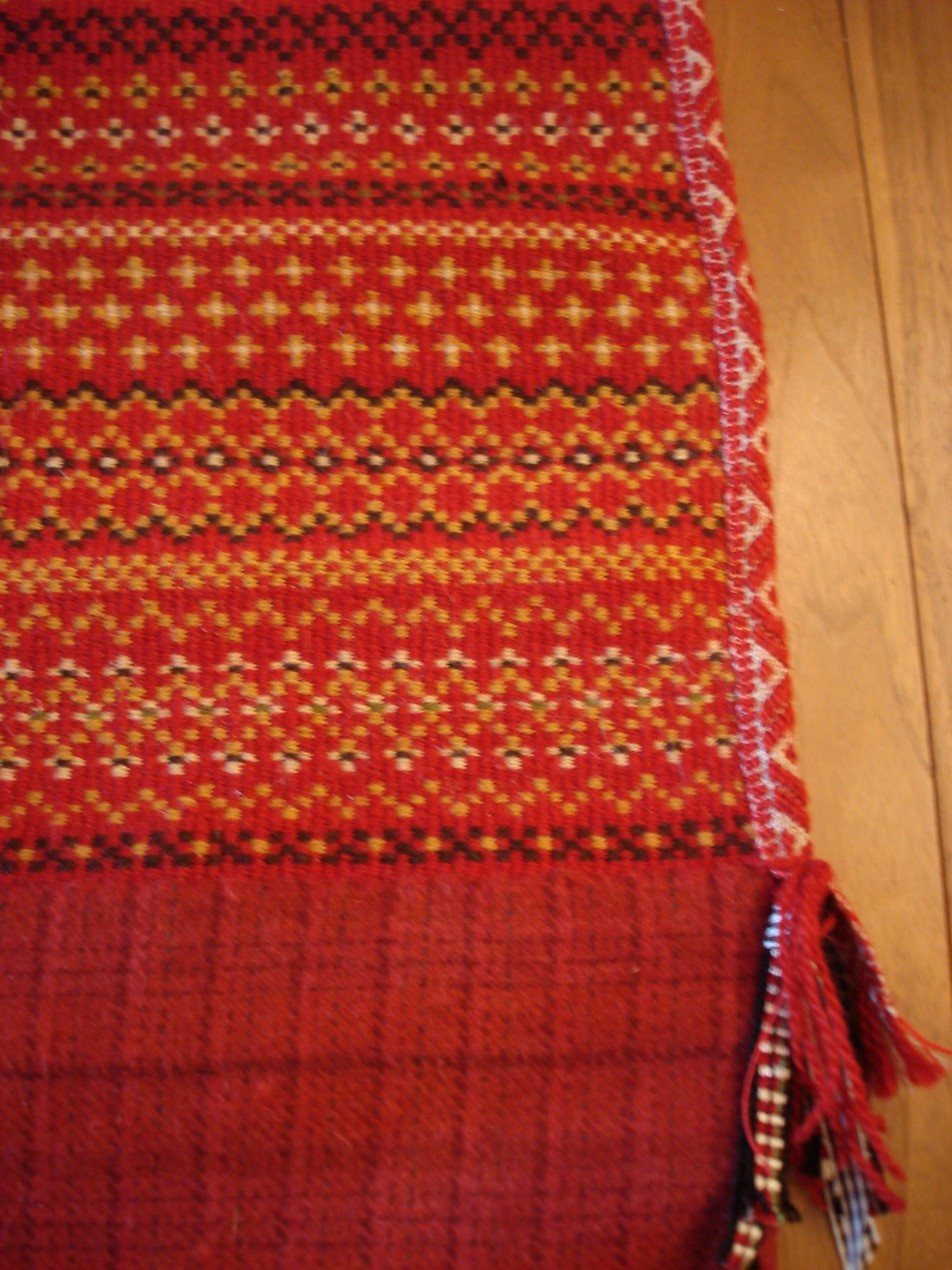
    DSCN2244Paradhandduk  (Display towel)  ca. 1988
    Technique:  Plain and pick-up weave, lace
    Materials:  Cotton and linen, 36″ x 17 3/4″

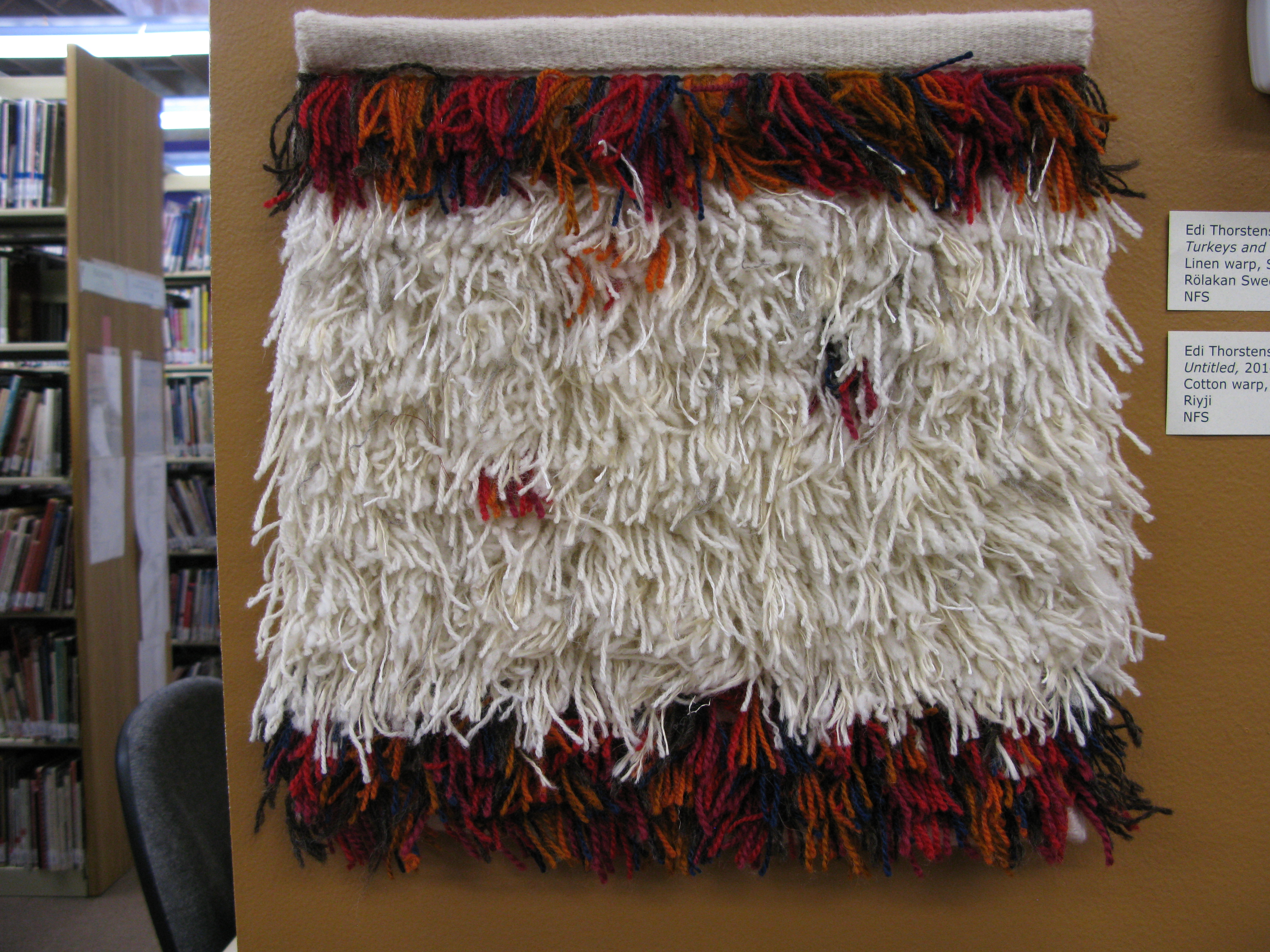
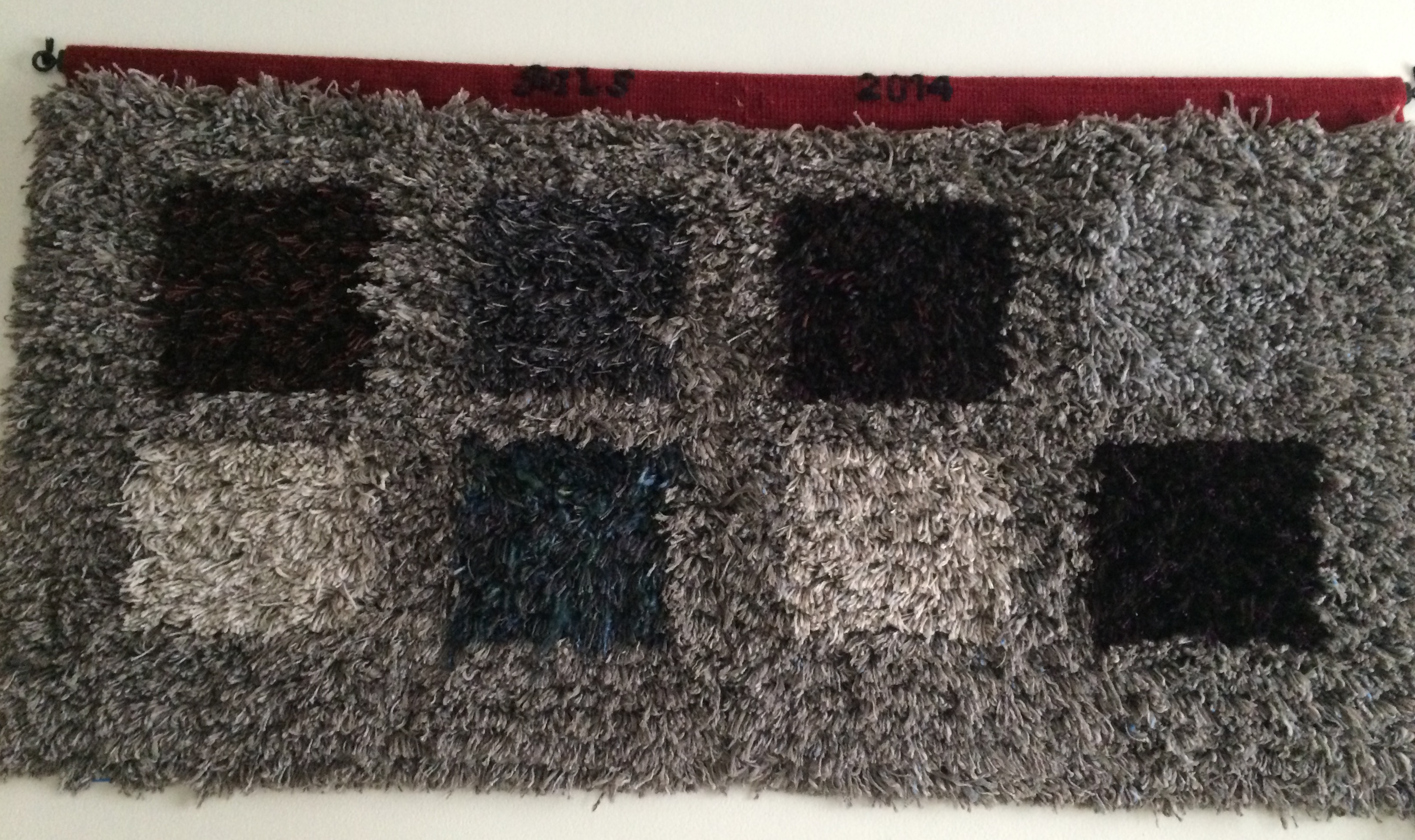
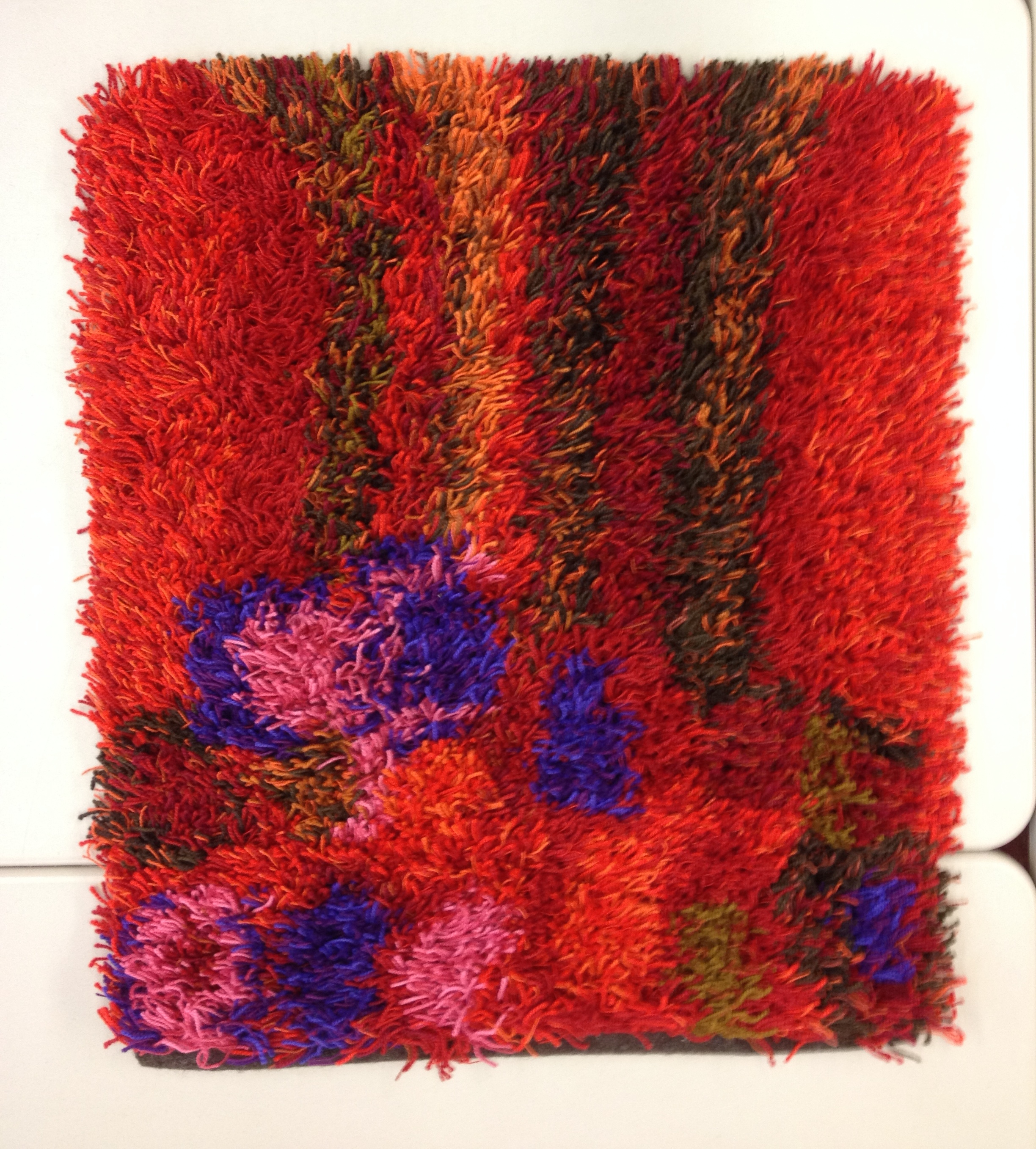
    DSCN2240Untitled  2014
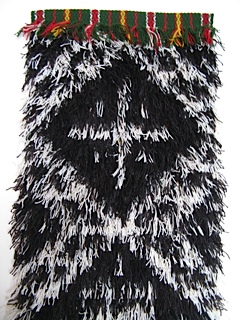
    Technique:  Riyji
    Materials:  Cotton warp; wool weft; handspun silk and wool, and linen pile, 15 1/2″ x 14 1/2″
    IMG_1634

  • Scandinavian Weavers Retrospective – Keith Pierce

    Keith Pierce has woven bands off and on for 40 years, but has practiced it seriously only since 2011, after joining the Weavers Guild and Banditos interest group. Now retired, he formerly taught mathematics and computer science, most recently at the University of Minnesota-Duluth, and practiced software engineering at several Twin Cities businesses.

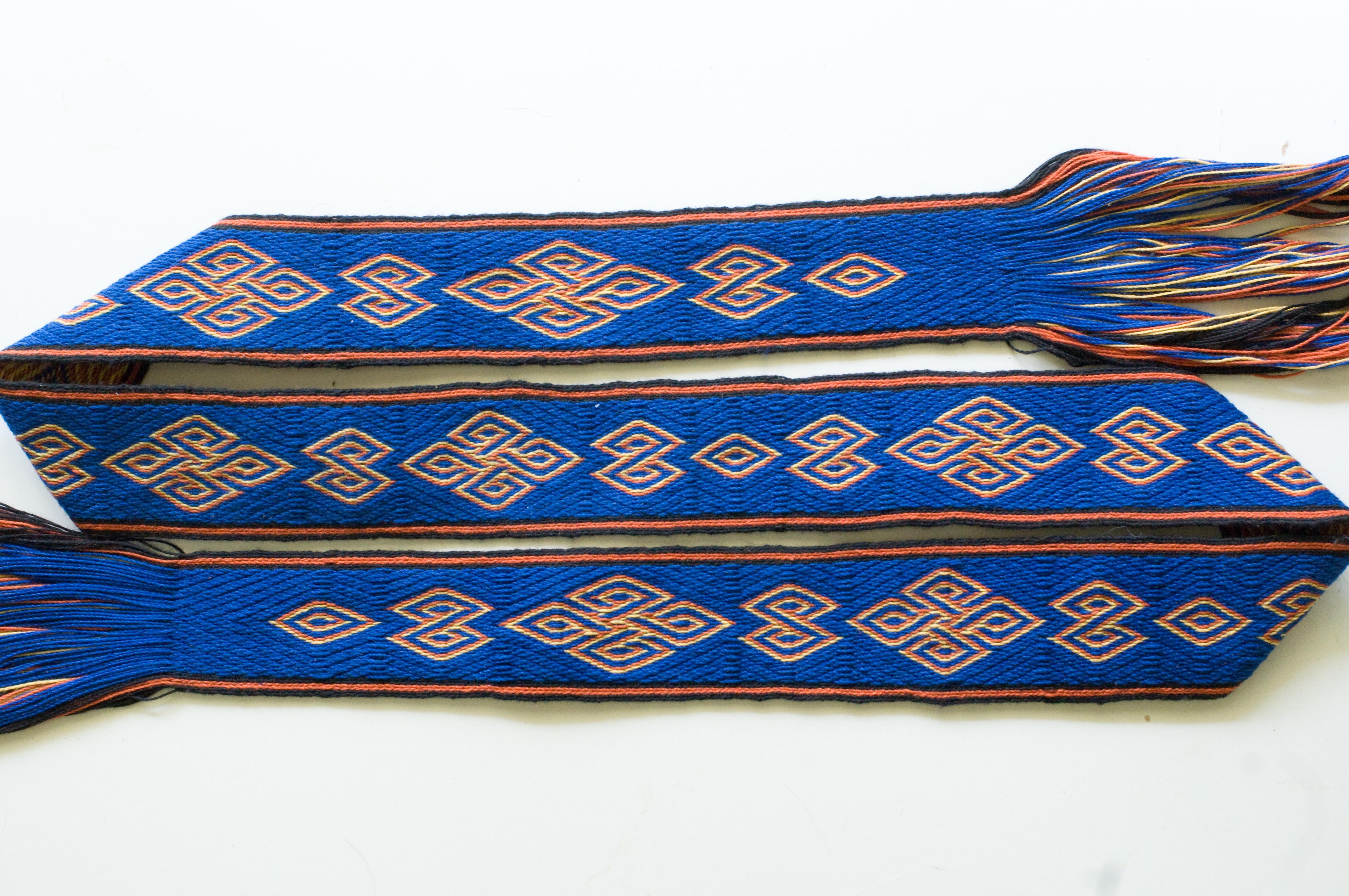
    Celtic Knots  2012
    Tablet woven, 3/1 broken twill.
    I used 10/2 perle cotton that I dragged around the country for 40 years before resuming my tablet-weaving hobby. The band won the sweepstakes award in the category “Weaving, knotting, felting and caning” at the 2012 Minnesota State Fair.

    celtic knot

    Inspired by Jörmungandr  2014
    Tablet woven, 3/1 broken twill. 8/2 Tencel.
    I was inspired not only by the classic tale in Norse mythology but also by symbols of the ouroboros, depicting a serpent eating its own tail, or occasionally two serpents devouring each other. It won first place in the band weaving category at the 2014 Minnesota State Fair.


    Estonian costume sash 2014
    This belt with supplementary-warp pattern was woven on an inkle loom using warp pick-up. It is representative of belts on women’s costumes from Estonia. The pick-up technique and similar patterns can be found throughout Scandinavia as well as the Baltic states.

    estonian sash

  • Scandinavian Weavers Retrospective – Judy Larson

    Judy Larson: I love discovering the surprises as colors interact.  Weaving changes planning and logic into enjoyable art! There are always new surprises and techniques to discover.

    Read about the latest exhibit of Judy’s work in these two articles: “Celebrating a Staff Member and an Artist Member,” and “Member News: Hudson Hospital Exhibit.”

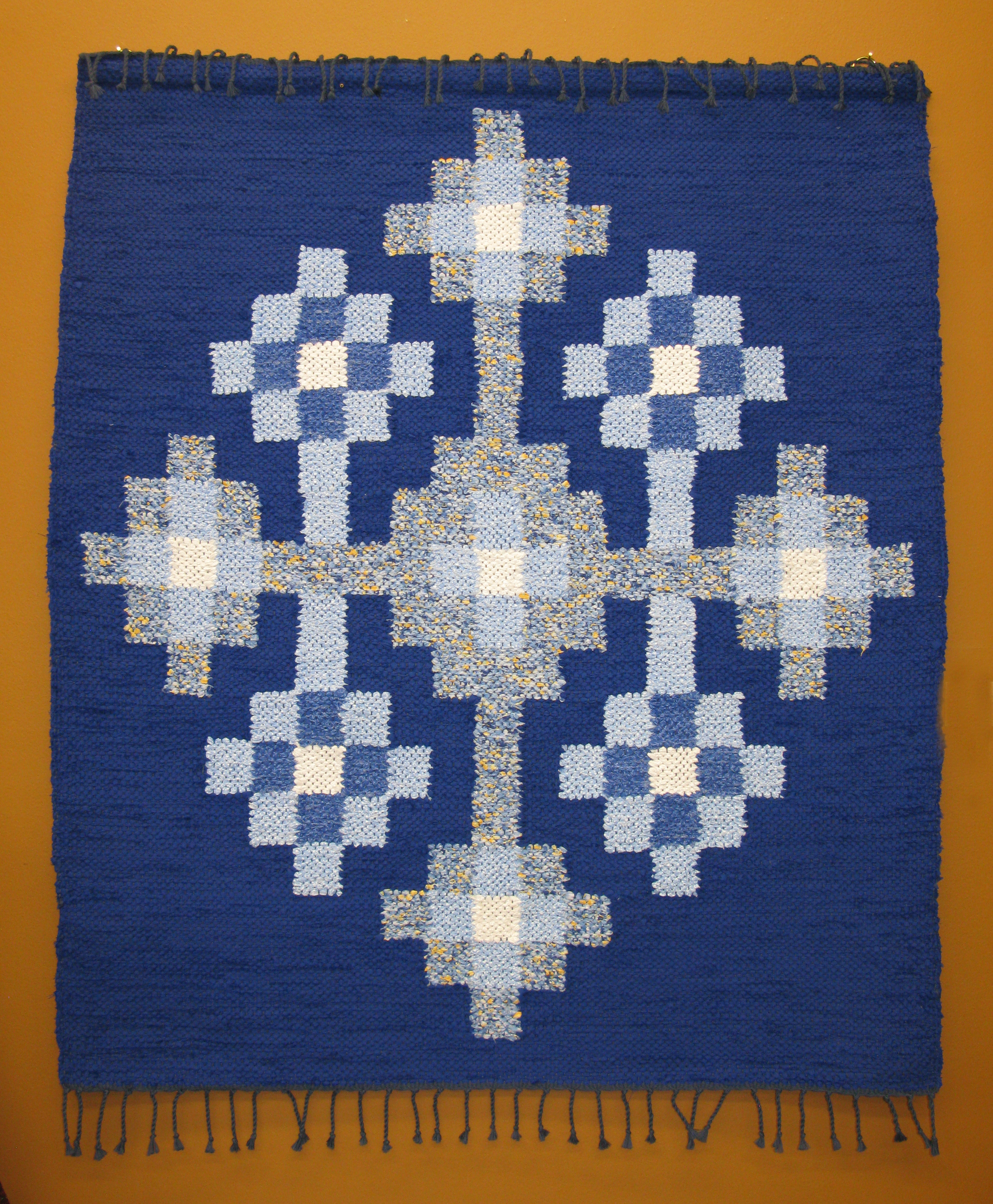
    Blue Nicross 2014
    Rutevev (Square weave)
    Cotton warp, Cotton fabric strip weft, 42″ x 42″
    This is inspired by a traditional coverlet in the Vesterheim collection, and interpreted with fabric strips.  Using small print fabrics added more interest to the design.

    IMG_1641
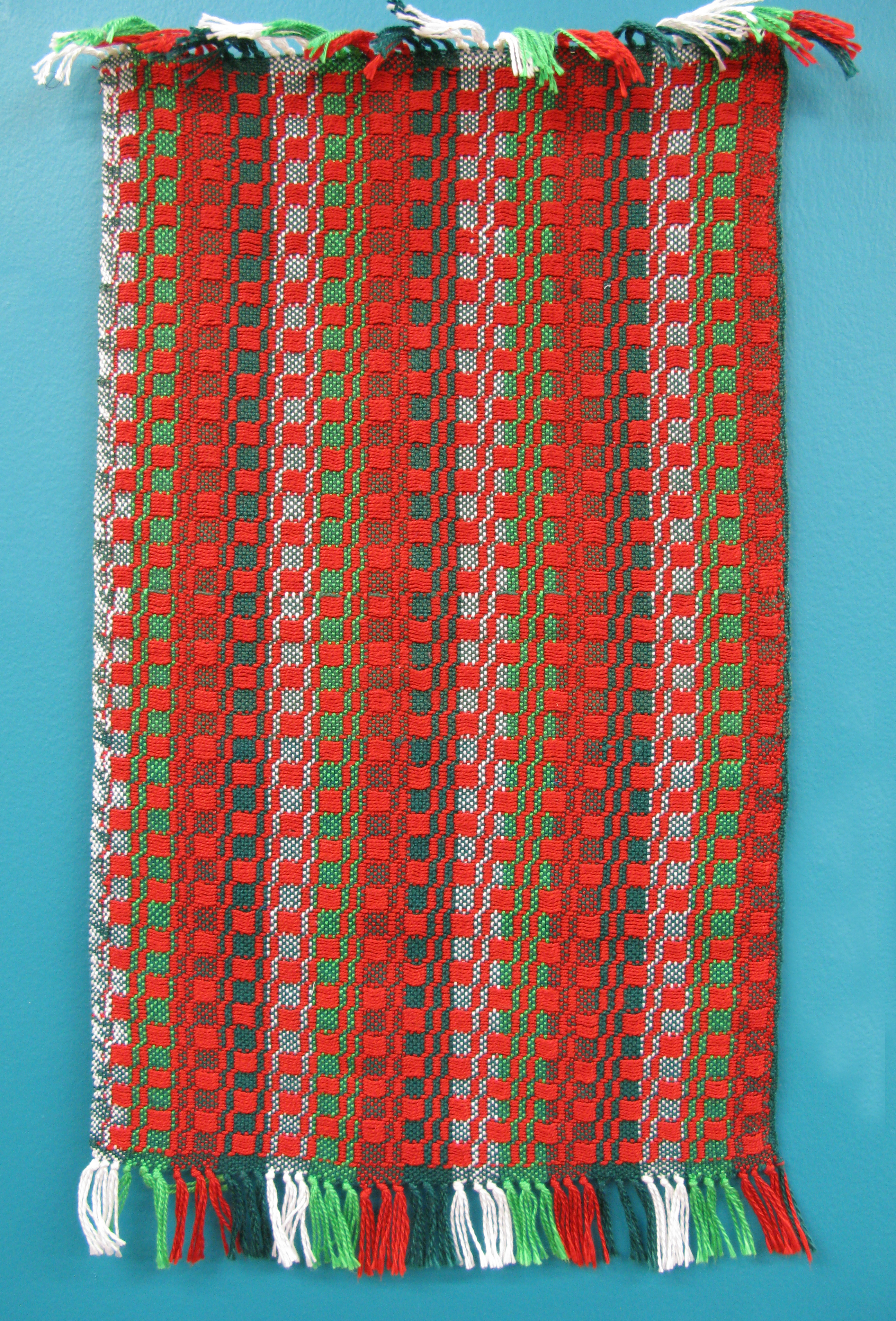
    Holiday Monksbelt
    Monksbelt (also known as tavlebragd in Norwegian)
    Perle cotton, 15 x 25″
    Using 3/2 Perle cotton in holiday colors in the warp gives a 3-D effect to the monksbelt pattern.

    IMG_1670

  • Scandinavian Weavers Retrospective — Ellen Anderson

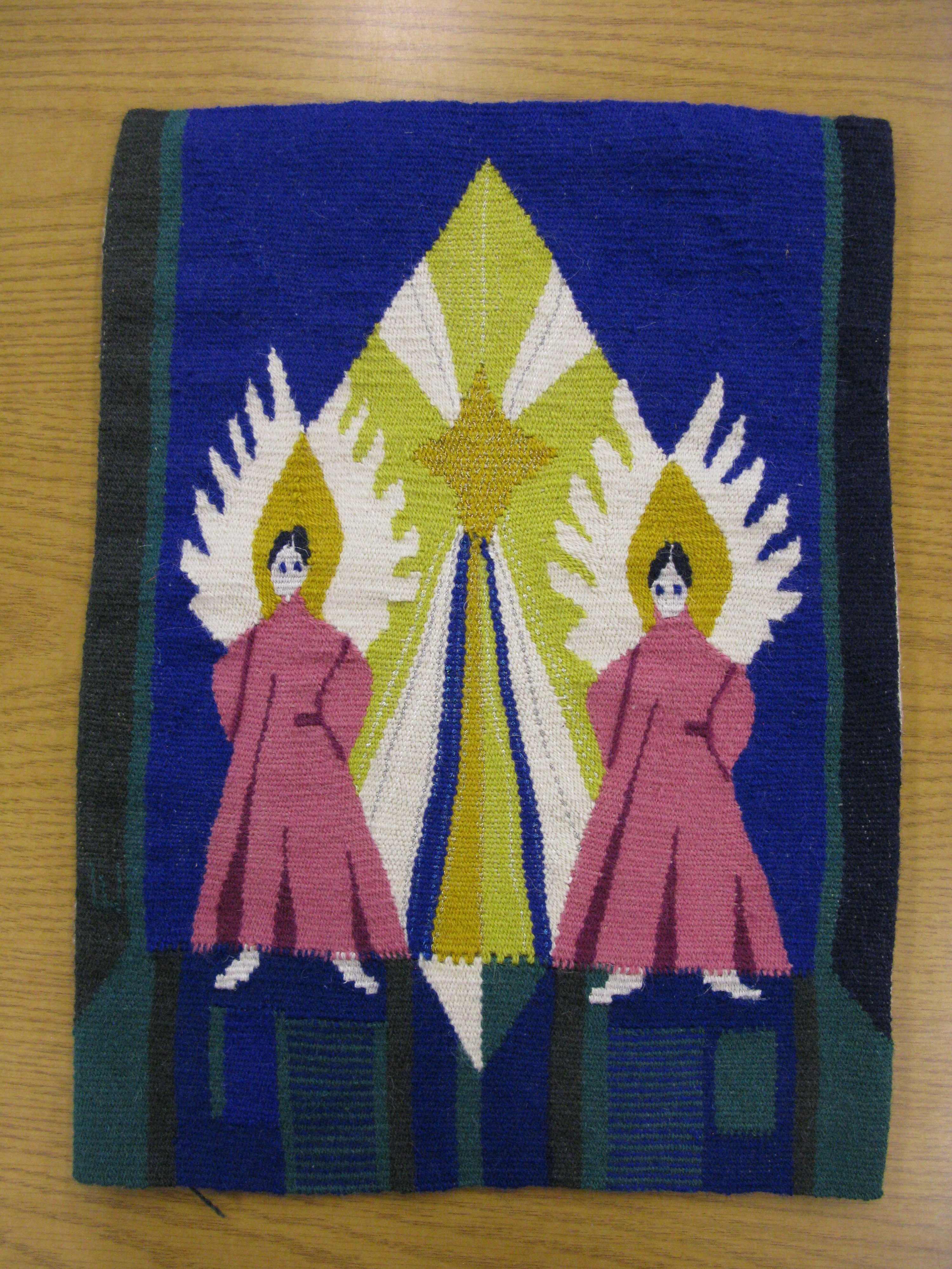
    Ellen Anderson, a member of the Scandinavian Weavers Study Group for several years, passed away several years ago.  It’s only fitting that two of her pieces are represented in the retrospective.  One tapestry is noteworthy because is is a beautifully-executed pattern that was sold by Husflid in Norway.  For decades, many weavers in Norway wove the image when learning the unique joins and technique of Norwegian billedvev.  These tapestries were provided by Ellen’s daughter Karin Maah’s, who is following in her mother’s footsteps as an enthusiastic weaver and member of the Scandinavian Weavers Interest Group.

    IMG_1692

    “Julestjernen og englene” (Christmas Star and Angels).  Karin thought that her mother purchased the pattern or took it from a book.  It was woven with Norsk Kunstvevgarn Spelsauul and DMC thread

    IMG_1709

  • Scandinavian Weavers Retrospective — Robbie LaFleur

    IMG_1674Crumbs of Friendship 2006
    Transparency technique
    Linen warp; wool and novelty yarn weft.

    The transparency weaving in the exhibit is due in large part to my participation in the Scandinavian Weavers Study Group.  Each year the group chooses a technique or theme, and several years the group chose to work in transparency technique.  I was not enthused by the decision.  But, as happens so often in life, I was WRONG.  It turned out to be a technique I loved quite a bit, and I’ve woven several over the years.

    IMG_1672

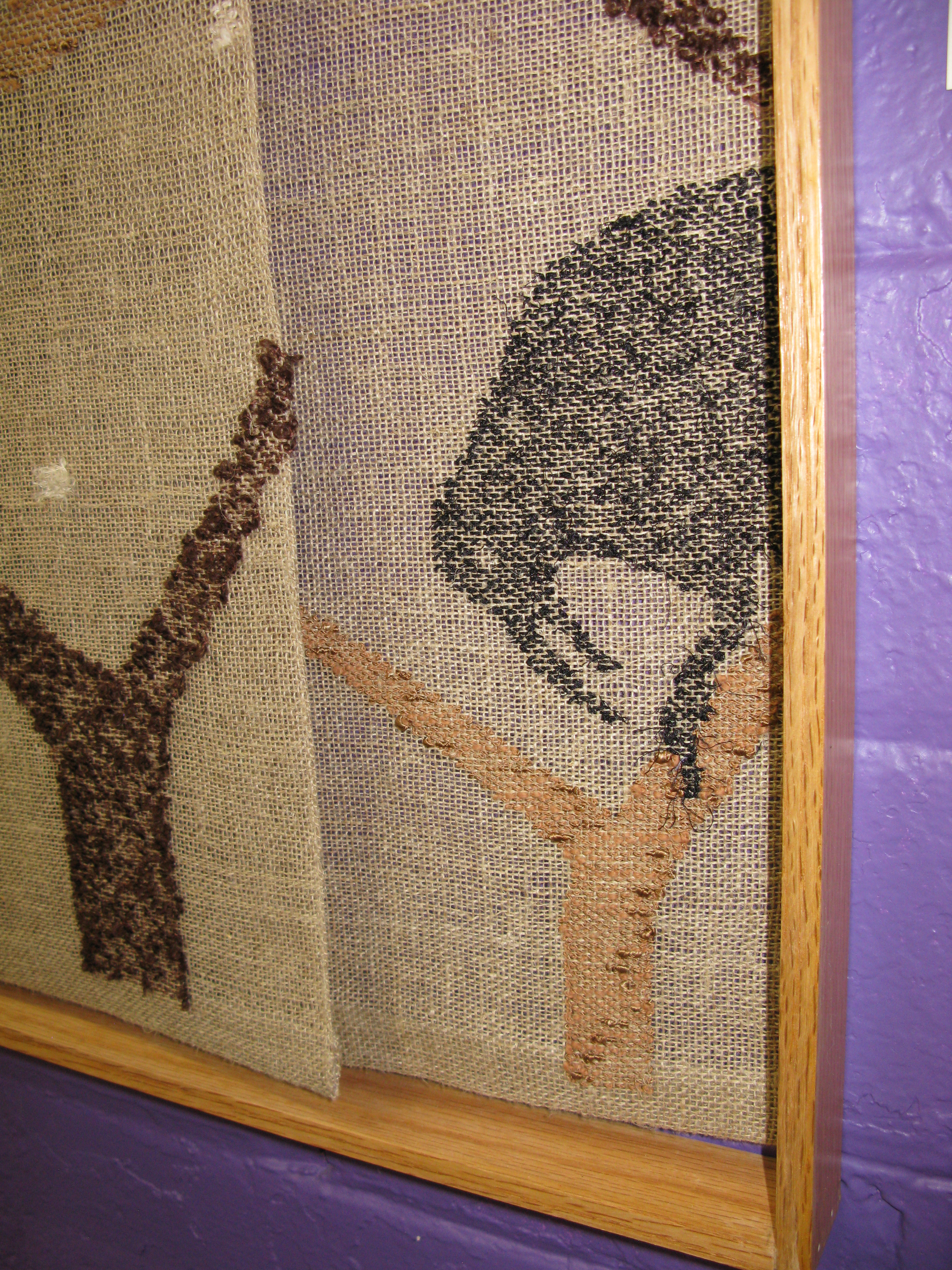
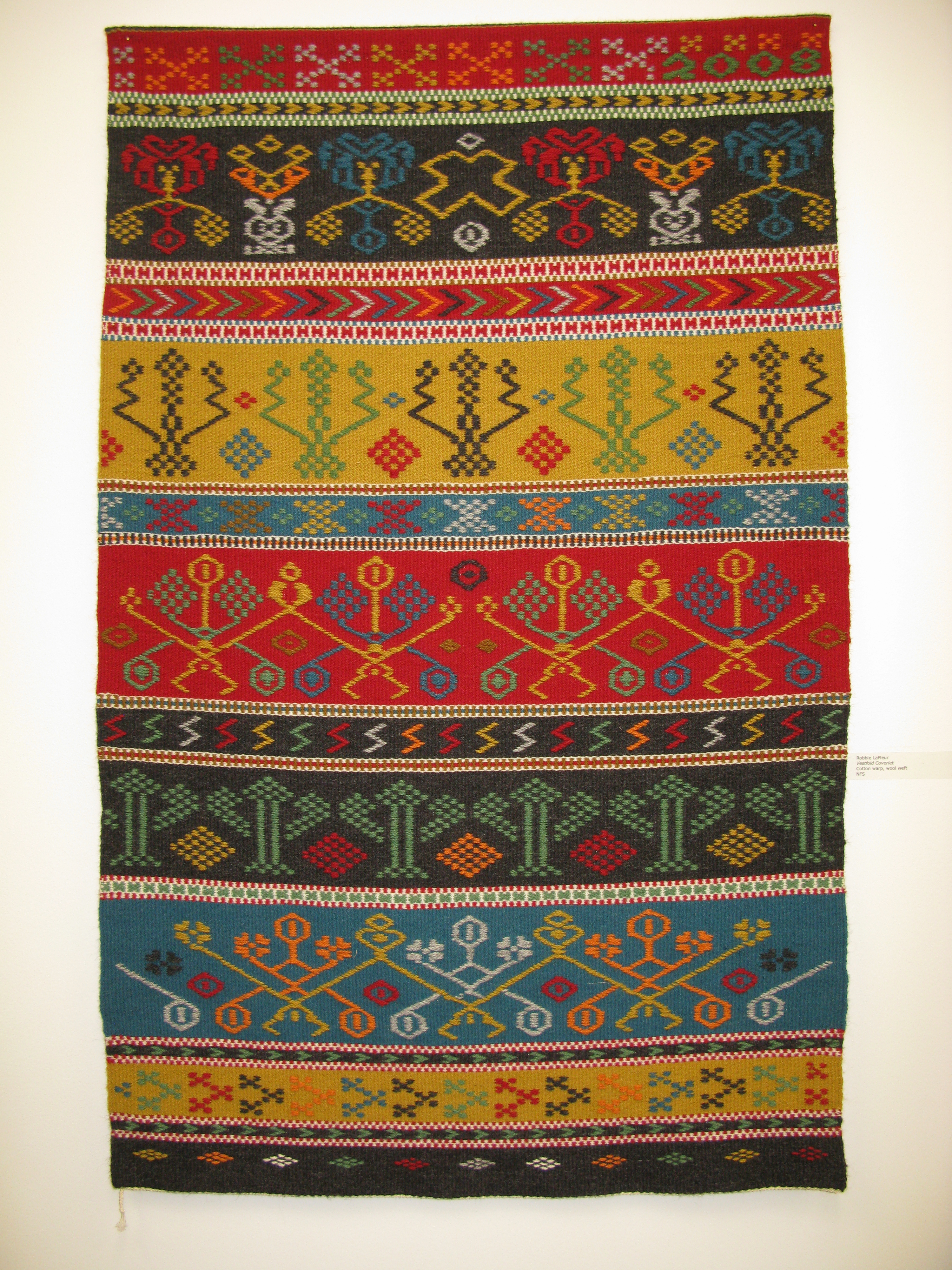
    Abstract Trees 2008
    Vestfold technique
    Cotton warp, wool weft, xx x xx.

    This weaving is in Vestfold technique, a bound weave with smaller patterns entered as the weaving progresses (a so-called embroidery weave structure).  I love using this technique because it allows choices at the loom. I choose one pattern band, weave it, and then based on the colors and patterns so far, choose another to balance the already-completed portions.

    IMG_1684

  • Scandinavian Weavers Retrospective – Mary Lønning Skoy

    Mary Lønning Skoy
    “I trace my fiber roots to my Norwegian/Irish mother who taught me to knit and further back to my Norwegian great aunt Sunniva Lønning, a weaver, spinner, teacher, and activist in mid twentieth century Norway.”

    Rya 2014
    Rya knots tied between rows of plain weave
    Cotton warp, rug wool weft, mostly handspun wool in the knots, 48” x 24”
    This rya hangs above our fireplace mantel as a reminder of our Norwegian heritage.

    IMG_1646IMG_1645Traditional Christening Coverlet
    Boundweave with pick-up woven band
    Cotton seine twine warp/Norwegian Spelsau wool weft, 26” x 40”
    This christening coverlet appealed to my fascination with the color red. pickup band around the border on an inkle loom.

    DSC02121Mary also has a pair of Norwegian twined mittens on display at the Craft Museum of Finland in Jyväskylä, Finland, this summer as part of the “Deep Roots” exhibit of textile works by Scandinavian-American artists.  Her lengthier biography for that exhibit is:

    I have been involved in the fiber community in Minnesota since the early 70s as a weaver, spinner, knitter, and frame loom weaving teacher. I wrote a booklet, Weaving on a Frame Loom: A First Project, to help weavers learn to weave with a rigid heddle loom. I organized an after school knitting club teaching dozens of teens to knit. Walking down the halls of Minnetonka High School seeing kids sitting at their lockers knitting is one of my cherished memories of 32 years there as an English teacher. I have written articles which have appeared in Handwoven Design Collection #4, Handwoven and SpinOff magazines, Weavers Journal, and A Thread through Time, the Weavers Guild of Minnesota’s 75th Anniversary book.

  • Scandinavian Weavers Meeting, September 21, 2014

    After a summer hiatus, the Scandinavian Weavers met on September 21; there was lots of catch-up and show and tell.

    As we talked, many mentioned what they might weave for our current theme of red.  This year the group will use a color as inspiration, and we will discuss the use of red in Scandinavian textiles.  An exhibit of pieces will be held at the Weavers Guild beginning in mid-October, 2015.

    Jan Mostrom noted that she will teach rya next year, a second course for the Weavers Guild.  She will also teach a course at Vesterheim.  The class at the Weavers Guild will be held during the last two weeks of February; it will feature a piece with a houndstooth pattern on the back, and hidden knots.  The Vesterheim class will feature the vertical rosepath backing similar to an older Vesterheim piece and Jan’s piece called “Protection.”  The exact dates have not been set; the class will run around the tme of the Nordic Fest at the end of July.

    IMG_7937Keith Pierce showed three beautiful tablet woven bands using the “missed warp” technique.  (Mounted on a black background, these red pieces would be ready for the 2015 exhibit!)With the square cards with holes on each corner, you only use three of the four holes.  Pieces in this technique were discovered when a stave church in Norway was under restoration.  Tablet weaving reached its height of popularity during the Middle Ages, and was often used for the edges of altar cloths and vestments.  Later, when brocading became more popular for liturgical textile decoration, the ground cloth became just a base for the brocading in precious threads, like gold.  Keith has enjoyed a book about tablet weaving that describes its appeal – “The Willful Pursuit of Complexity.”  Keith recently purchased Kay Nelson’s book, The Woven Coverlets of Norway, and is considering making many of the motifs in card weaving.

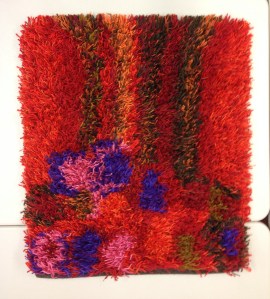
    Corky Knutson brought a beautiful red-filled rya that won a blue ribbon at the Minnesota State Fair this year, along with the Doris Tufte Sweepstakes for woven items in the Scandinavian tradition.  He told us about one fortuitous event along his road to weaving in the Norwegian tradition.  Years ago, an old aunt died and left him boxes and boxes of Rauma yarn.
    IMG_7935

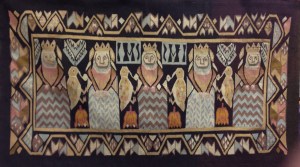
    Corky also brought a fabulous tapestry he purchased from a man in London.  Watch for the full story of the man, the weaving, and Corky’s acquisition of the tapestry in an upcoming issue of the Norwegian Textile Letter.

    Corky is filling an important role for many of us  – he is a dealer of Rauma yarn! He can be contacted at:
    IMG_7929Corwyn Knutson (Corky)
    2742 lakeview ave
    Roseville,  MN 55113
    651-330-6500
    Email:

    Knutfrondal@gmail.com

    Edi Thorstensen traveled to the meeting from St. Peter.  On the topic of rya, she mentioned that she took Jan Mostrom’s rya weaving class at the Weavers Guild, and that it was so well taught.

    She told us about a current exhibit at the Russian Museum in Minneapolis.  “At the Edge of the Forest” is billed as a wood-carving exhibit, but it is of interest to weavers, too.  The exhibit includes beautifully carved distaffs and red-embroidered textiles hung between the carved wood pieces.

    Claire Most has a number of hand-spun yarns that would work beautifully for her yet-unplanned red piece.

    Mary Etta brought a tapestry piece with a geometric design inspired by a pin made by silversmith Heikki Seppa.  The circle with a line through it has absorbed her for many years and she is now working on using tapestry, and partially Helena Hernmarck’s tapestry technique, to bring the design to life in a textile.

    Mary Skoy brought beautiful black mittens, ones she started on the 2011 Vesterheim Textile Tour.

    IMG_7941Winnie Johnson had two pieces in Helena Hernmarck tapestry technique in a show sponsored by the Elk River Arts Alliance. Marilyn Moore had a pieces in the show, too.  http://www.elkriverart.org/wordpress/#mg_ld_565

    IMG_7940Wynne Mattila has been planning her red piece, a rug that will use some Finnish fat, felted yarn.  The yarn will be cut into small tubes and the circular ends of the short tubes will stick up as small dots between the warps.  Wynne mentioned a favorite website for color inspiration, design-seeds.com.

    Melba Granlund has her red piece planned; she will weave a series of primarily-red pillows with crosses in rutevev.

    I have not been weaving at all since beginning a seven-month job at the Weavers Guild, but I wove a short piece while demonstrating at the State Fair.  It became another piece in the Scream series. Read more about “State Fair Scream” here.

    IMG_7919

    Attending:  Robbie LaFleur, Keith Pierce, Edi Thorstensen, Corky Knutson, Winnie Johnson, Marilyn Moore, Wynne Mattila, Jane Connett, Melba Granlund, Jan Mostrom, Mary Skoy, and Mary Etta.

    We will meet again on October 19 at 2pm.

  • Scandinavian Weavers Exhibit at Vesterheim

    Many of the Scandinavian Weavers Study Group displayed pieces at the Annual Weaving in the Norwegian Tradition exhibit at the Vesterheim Norwegian-American Museum.  The new issue of the Norwegian Textile Letter features all of the weaving entries in the exhibit, 33rd Exhibition of Folk Art in the Norwegian Tradition.

    banner

  • The Scandinavian Weavers Group: Continuity and Change

    This December, it was the usual for the Scandinavian Weavers Group: party time at Lila’s!

    For many years, Lila Nelson was the rock of our Scandinavian Weavers group. She attended each meeting, offered advice, solved members’ weaving problems, showed her latest works, and shared her excitement for spending time at the loom.  Then, several years ago, she announced that she was no longer going to attend the study group meetings. It was a shock!  How could we even continue?  She decided to focus on her tapestry weaving and attend meetings only occasionally. Lila’s monthly contributions have been missed, but the group has remained strong.  We have welcomed new members, some who attend often, and some who attend occasionally. Our meetings remain useful and inspiring.

    Happily, Lila wanted to continue as host of our annual holiday gathering, a December party at her home in Southeast Minneapolis. Lila’s apartment was filled with textiles, Scandinavian antiques, whimsical animals, and pottery.  The studio in the back room was lined with her tapestries, from crazy cats and polar bears wielding weapons to a gut-punching image based on the atrocities of Abu Graib. One wall was lined with yarn, waiting to move to the upright tapestry loom, chosen by Lila’s expert eye.

    Here was a place to truly celebrate.

    As if this was not enough sensory experience, the gathered weavers often brought pieces to share; those they wove, and Scandinavian textile discoveries from family or small town antique shops. They brought sweets, savories, and wine. I’ll never forget the time that Sharon Marquardt showed the runner she bought for $30 at a central Minnesota antique store.

    IMG_1151

    In the past few years Lila moved from her home to the Lyngblomsten care facility, and we moved our holiday gathering to her new home.  Lila no longer weaves, yet still shares her enthusiasm, knowledge, and hospitality.  This year Lila had the opportunity to meet with old friends and to meet the newer members of our group, those who constantly bring fresh enthusiasm to our weaving of Scandinavian textiles.

    This gathering was a reminder of all that is great about a thriving and evolving group.  On the one hand, we celebrated all that we’ve learned from each other over the years.  On the other hand, it was just another meeting.   Our business is discovery and inspiration, to learn about Scandinavian weaving, and to forge relationships with people to help sustain our work.  That happened in December, only with more chocolate and cheese than usual.

  • November Scandinavian Weavers Meeting

    The Scandinavian Weavers met on November 17, 2013.  During our show and tell time, some people mentioned the projects they plan to complete this year as part of our “Inspiration” study topic.  Each member is choosing an old textile and creating a new one inspired by an aspect of the old piece.  Many of these pieces are from the Vesterheim Norwegian-American Museum in Decorah, Iowa.  We plan to submit the new pieces to the annual National Exhibit of Folk Art in the Norwegian Tradition exhibit next summer.  Melba Granlund is planning to weave a piece inspired by a runner she purchased at the Helsinki flea market last summer. A portion is shown here.

    Image 3

    She guesses it is Swedish.  Vesterheim owns a very similar runner, also likely Swedish in origin, according to  curator Laurann Gilbertson.

    Image 2

    And finally, Vesterheim had a small piece that Lila Nelson wove, based on the older piece.  Inspired by the designs in these three pieces, Melba will design and weave her own interpretation.

    Image 4

    In the context of discussing how she would choose the colors for her piece, Veronna Capone mentioned a tip she heard from Jan Mostrom.   Take a photo of an existing piece, switch it to black and white, and you’ll see the tonal range.  Then you can experiment with colors, making sure that you have appropriate light and dark tones. Smart!

    Marilyn Moore brought in a beautiful Swedish tablecloth, owned by a friend.  It is probably 90 years old, and in pristine, never-used condition.  Marilyn plans to weave a similar, but smaller, piece.  When she brought it to show her friend Winnie Johnson, it turned out that Winnie had a Swedish booklet with just the instructions that Marilyn will need!

    IMG_6220IMG_6224

    Keith Pierce showed a band that he wove from a recently-acquired book of Finnish bands, Applesies and Fox Noses: Finnish Tabletwoven Bands, by  Maikki Karisto and Mervi Pasanen. Keith bought it from a Finnish web site.

    IMG_6226

    Jane Connett has been struggling with card weaving on her Schaacht inkle loom, and brought it in to illustrate.  Robin Meadow said her Glimåkra loom sits empty, but she has plans!  Karen Weiberg has been making plans to use her newly-inherited Margaret Bergman loom.  It came from her aunt, who carefully saved the original receipts.  It cost $85 in 1940.  It’s also amazing that the accompanying wooden bench, built with clever storage space, cost $3.00.

    Robbie LaFleur showed her small harvester tapestry test piece (also written about here).

    IMG_6229