The weather gods were with us this month, as the 12 inches of snow held off until the day after our Scandinavian Weavers meeting.
Jan Mostrom brought two books on Swedish weaving. She purchased the beautiful and huge Swedish Textile Art: The Khalili Collection, by Viveka Hansen, online. What’s the best thing about the book, I asked. The pictures. When she took the Swedish art weaves class in Sweden last summer, that book was in the classroom, and the students used it to pick out design elements for their samplers. If you look for this book online, note that there are English and Swedish editions.
In talking about buying weaving and textile books, Patty Johnson advised, “When a weaving book comes out, buy it, because when it goes out of print, it will cost way too much. They do all short runs with them.” These days, out-of-print weaving books are ridiculously expensive when trying to buy them online.
Jan also brought this small book that she bought in Sweden.
We had a round of introductions, because we have so many interested members of the group that can come only occasionally. Every month there is bound to be a few people who have not met one another. We asked each person to mention the weaving technique they like the most, or if that’s too hard, maybe mention the one they like the least.
Jan Mostrom said, “The technique I like the most is the one I am currently using. But if I’m having problems, that’s the one I like least.” Jan is a fan of krokbragd and danskbrogd, and she is teaching a class at the Weavers Guild on the techniques starting on January 29, the week that traffic in the whole city might be a giant Super Bowl snarl. Janis Aune and I also said that krokbragd and danskbrogd are favorite techniques.
Jan Josifek said her favorite technique these days is baltic pickup. She said, “I like doing it so much I have to hide my loom.” She brought two beautiful pieces. The pattern for this band was from the book Patterned Sashes: The Common Cultural Layer by Anete Karlsone. The Latvian language title is: “Rakstainas Jostas: Kopigais Kulturslanis.” She got her copy from The Baltic Smith on Easy, here. Jan thought that Vavstuga may be selling an English edition when it is available.
Patty Johnson, who favors her draw loom, said techniques with fine threads are her favorites. Jane Connett said, “I like to do small stuff; I like small designs and lots of color.” As you might guess, Jane does a lot of band weaving. She’s also taken up tatting, which she likes because it is portable.
Claire Most said, “I need to have two things going.” She likes to balance the slow work of tapestry with ikat dyeing. She added about working on tapestry, “I find it difficult to be that quiet.” Claire’s latest tapestry, “Lily,” is included in the “Common Thread” member show at the Textile Center of Minnesota now.
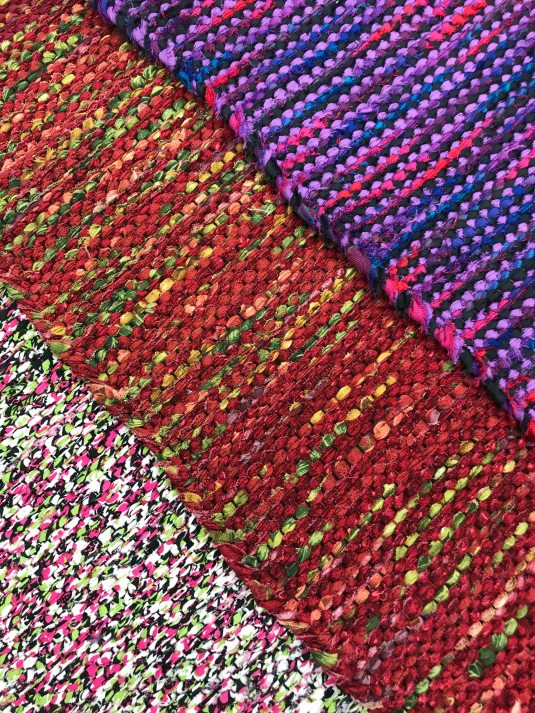
Judy Larson likes to work in a larger scale, and particularly likes the Finnish three-shuttle technique used with fabric strips. She brought a set of three rugs from her last warp–all WILDLY different.
One of the rugs was woven with fabric from the stash of Chuck Benson, a Weavers Guild member and fabulous rug weaver who passed away last year. Judy said they were fabrics she never would have chosen, especially the addition of black, but they worked well.
Kevin Olson shared a tapestry he took off the loom recently, not quite in time for his wedding anniversary. It’s adapted from a Swedish pattern. The peonies and irises are from his wedding, and the six roses stand for the six years he has been with his husband. The figures hold a wedding certificate, which is a meaningful addition to the composition, but it was also an adaptation because weaving hands was tricky! He still has quite a bit of finishing work to do, both working in the mass of threads on the back, and figuring out how to mount it. He wove it on his recently purchased upright Glimakra tapestry loom.
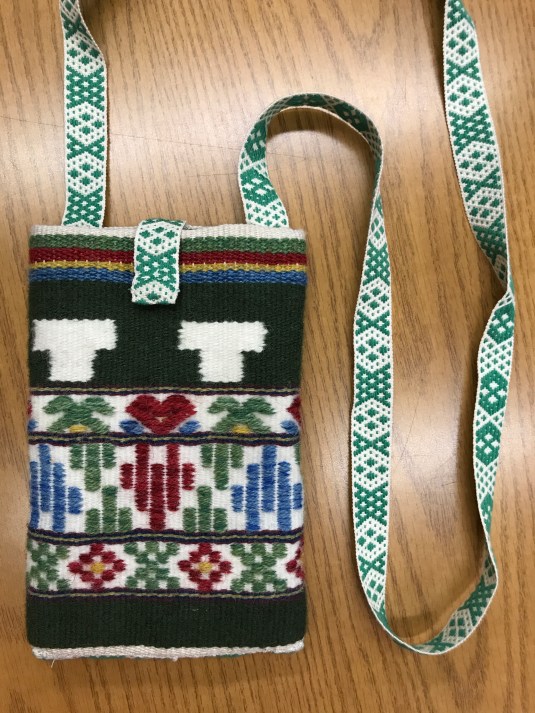
Janis Aune brought the small bag made from the sampler she wove at the Swedish art weaves course she took in Sweden last summer. (Read more about the class in the recent issue of the Norwegian Textile Letter.)
The study topic this year is a continuation of Swedish weaving, and we are interested in setting up another group warp on a Weavers Guild loom. (The last group warp was dukagang last year.) We planned to brainstorm at the next meeting, but by the end of our discussion there was enthusiasm for planning a half-heddle pick-up piece (Norwegian skilbragd, Swedish opphämta). Patty Johnson has all of the half-heddle sticks already.
Our next two meetings will be one week later than the usual third Sunday; they will be on February 25 and March 25. April and May 20 are the final spring meetings.
Are you near Moorhead, Minnesota? You will want to visit the upcoming exhibition, Craft and Identity – Summer School in Norway: Learning Weaving Traditions of Western Norway, at the Prairie Fiber Arts Center, opening this Friday, January 12, 2018.
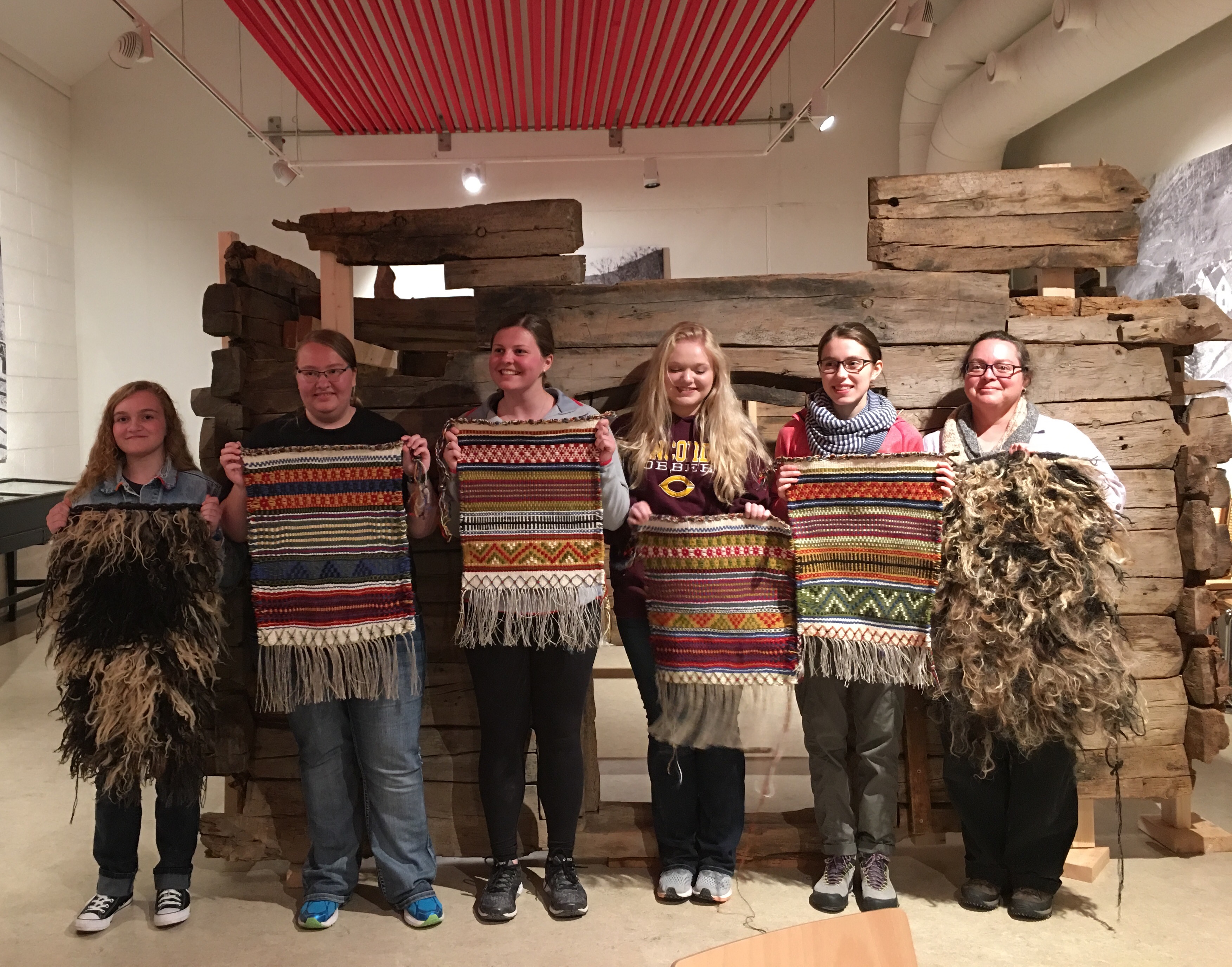
Last summer from May 9th through June 7th, four students from Concordia College in Moorhead Minnesota went on a learning adventure. Alexis Anderson, Kristina Brunson, Rachel Johnson, and Alli Pahl, joined Heidi Goldberg (Associate Professor of Art at Concordia) and her daughter Aubrie (a freshman at Oak Grove Lutheran High School in Fargo) for a month in Norway. Based in art, craft, and the connection of making and identity, the group interwove art practice, art history, and exploration of places and cultures. Visiting sites and artists in Lillehammer, Gjovik, Oslo, Osterøy, and Bergen, the group focused a week at the Hordaland Museum on Osterøy learning warp-weighted weaving techniques from expert weavers Marta Kløve Juuhl and Monika Sunnanå Ravnanger. The works in this exhibition are samples woven during the course representing traditional åkler (bedspread) designs from Western Norway, and varafeldur (Viking cloak).
The Craft and Identity group (left to right); Aubrie Goldberg, Kristina Brunson, Rachel Johnson, Alli Pahl, Alexis Anderson, and Heidi Goldberg
The opening reception will be on Friday the 12th of January, 4-5:30. The show will close on Friday February 16th. Prairie Fiber Arts Center is located at 127 4th Street South, Moorhead, Minnesota.
Concordia students working on back-to-back warp-weighted looms at the Hordaland Museum in Osterøy, Norway
If you can’t make it to the exhibit, you can look forward to a lengthy description of the trip, with many photos, in the next issue of the Norwegian Textile Letter, coming in late February.
For the new issue of The Norwegian Textile Letter, Edi Thorstensson did a wonderful job of gathering the thoughts and images of several lucky Americans who took a Swedish Art Weaves course last summer in Landskrona, Sweden. Like me, you will be sad you were not there too!
In the same issue, don’t miss the article about the enduring image of The Wise and Foolish Virgins in Norwegian billedvev (tapestry) and about Annemor Sundbø’s adventures in processing nettles for fiber. The Norwegian Textile Letter
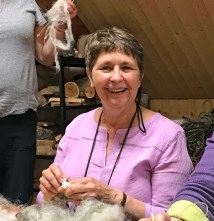
The Winter-Spring classes at the Weavers Guild of Minnesota have been posted. I think you will have to act soon to get a spot in one of Jan Mostrom’s classes: Danskbrogd or Swedish Art Weaves. Jan is a patient and thorough teacher, and of course, a fabulous weaver. See more of Jan’s weaving here. Read much more about danskbrogd here.
Danskbrogd with Jan Mostrom
Danskbrogd is a little known technique originally found in a small area of Norway. It is typical to have bands of geometric patterns in light color spots against a dark background between bands of krokbragd or in larger designs on plain weave. After becoming comfortable weaving danskbrogd with a pick up stick on both plain weave and with krokbragd, we will continue weaving danskbrogd on a multishaft threading without a need to use a pick up stick. Knowing how to weave krokbragd is NOT a prerequisite for the class.
Level and Prerequisites: Intermediate: Requires some experience, the ability to warp on your own, and to start and finish projects.
Tuition: $189 WGM Member / $252 Non-member
Swedish Art Weaves with Jan Mostrom
Swedish art weaves are at their best in the highly decorated weavings of the Skåne area of Sweden. Dukagång, krabbasnår and halvkrabbe are woven in a similar manner using butterflies to inlay designs, but each have a distinctive look. Dukagång is made up of columns. Krabbasnår designs move on a diagonal while halvkrabbe is made up of squares like a checkerboard. Rölakan is a geometric tapestry technique that is also seen in the weavings of Skåne. Students will weave a sampler of these techniques, discuss color choices, finishing techniques and ideas for making a sampler into a pillow or bag.
Level and Prerequisites: Intermediate: Requires some experience in the subject and the ability to start and finish projects. Students must be able to wind a warp, warp a floor loom and read a draft
independently.
Tuition: $216 WGM Member / $288 Non-member
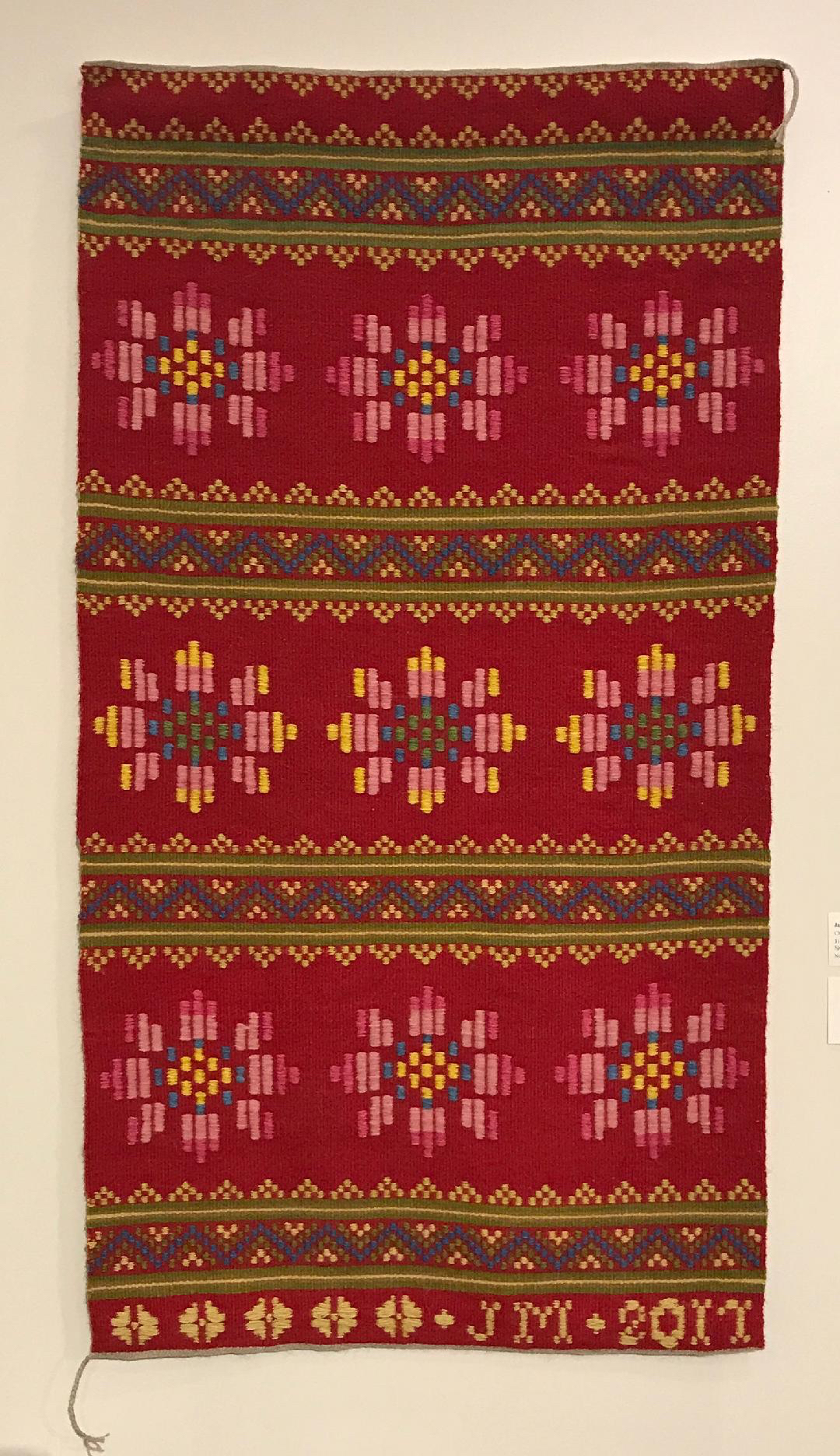
The last weekend of the Weavers Guild of Minnesota and Norway House exhibition, “Traditional Norwegian Textiles: American Reboot,” includes special programming. Afternoon with an Expert, on Saturday, September 9, from 1-3:30 pm, features Laurann Gilbertson, Curator at the Vesterheim Norwegian-American Museum. Her lecture, “Warmth and Color: Traditional Norwegian Coverlets,” will begin at 1 pm. Following the lecture, Gilbertson will conduct an Antique ID clinic. Members of the public are encouraged to bring Nordic textiles to learn more about their age, origin, and function (but no appraisals). Perhaps you have inherited a coverlet or hanging, but know little about it? Maybe you bought a beautiful textile at an antique store or thrift shop and you wonder about its origins?
All those attending the lecture and visiting the exhibit are welcome to stay for the Antique ID portion, a special opportunity to see even more Scandinavian textiles.
Afternoon with an Expert: Laurann Gilbertson at Norway House
Saturday, September 9, 2017
12-3 pm: Visit the exhibition, “Traditional Norwegian Textiles: American Reboot”
1 pm: “Warmth and Color: Traditional Norwegian Coverlets
2 pm: Antique ID clinic
Location: Norway House, 913 E. Franklin Avenue, Minneapolis, MN 55404
Cost: $5; Free for members of Norway House and the Weavers Guild of Minnesota
When? 12-3 on Wednesday, August 30 and Sunday, September 3, 2017 Where? At Norway House, 913 E. Franklin Avenue, Minneapolis, MN 55404
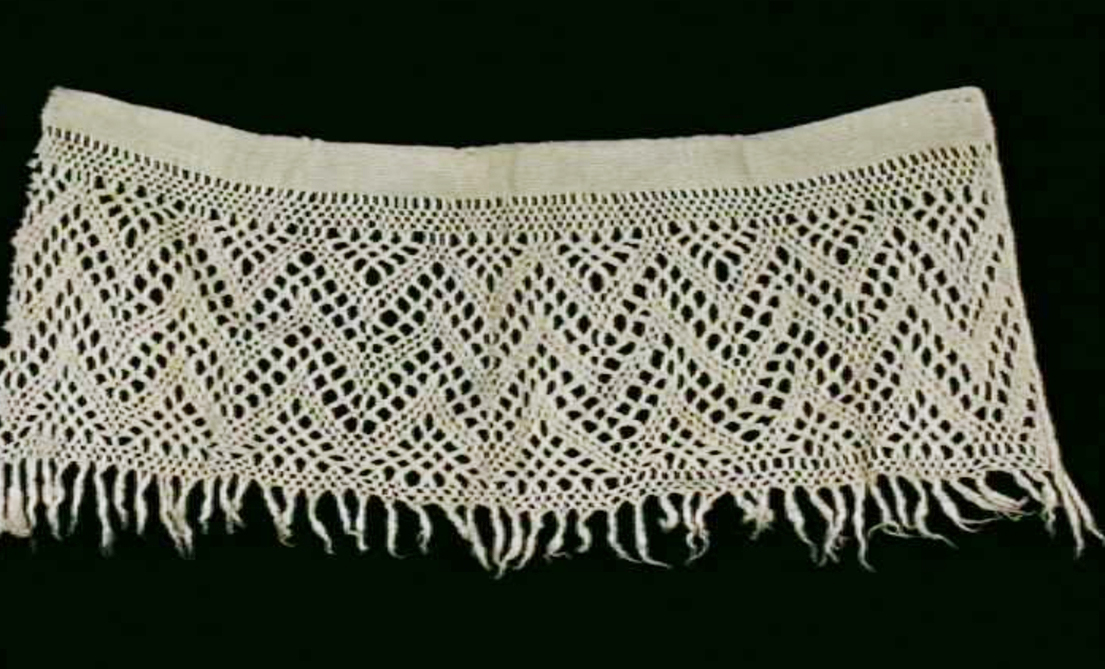
As part of the exhibition, “Traditional Norwegian Weaving: American Reboot,” Lisa Torvik will demonstrate the Norwegian handcraft of firfletting, a four-strand braiding technique traditionally used to make ethereal linen hangings for windows or to hang in front of fine weavings. The braided technique was also typically used for the borders of Christmas towels.
The piece shown below is from the Valdres Folkemuseum (details here). It is appropriate to show a piece from Valdres because that is where demonstrator Lisa Torvik attended husflidsskole (handcraft school) and learned the technique.
Firfletting has been designated a handcraft in danger of disappearing on the Norwegian Husflid (Handcraft Association) Rødliste (the Red List), and a lovely short film about the technique was produced in Bø i Telemark. Moderator Torhild Aavik describes the tradition and demonstrates the technique, which goes back to Viking times. She shows a traditional way firfletting is used in Bø i Telemark, as two panels hung on each side of a window. In the film, she is reproducing a pattern from the area by looking at a photograph of an old piece. Although firfletting was largely practiced by women, that piece was made in the 1800s by Anders Spjote, a man from the area.
To finish, Torhild says, “We will be much poorer of we turn our backs on this handwork and others like it. They can bring a bit of the past into the present.” The film is in Norwegian, but instructive even if you can’t understand the dialogue. The film is here.
Here is another photo of firfletting, a piece from the Norsk Folkemuseum. (Details here)
Don’t miss Lisa’s time at Norway House, which will be in addition to the regularly-scheduled rutevev demonstration on the loom in the exhibition.
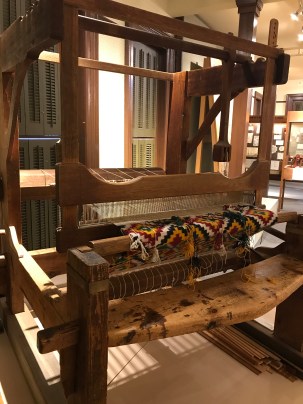
Each Wednesday and Sunday until September 10 (12-3 pm), volunteers from the Weavers Guild of Minnesota Scandinavian Weavers Study Group are demonstrating weaving in the Galleri at Norway House, part of the exhibit “Traditional Norwegian Weaving: American Reboot.” Slowly, the narrow runner in rutevev (square weave) is taking shape. It’s hard to know how long it takes to weave the runner, however, because part of the weaving time is devoted to talking to visitors. We explain the weaving being done or discuss other pieces in the show. That’s the purpose of being there–so please come and distract the weaver!
This Sunday, August 13, Judy Larson will demonstrate weaving and Robbie LaFleur will give a gallery talk at 2 pm. Please join us.
The runner is a variant of a large rutevev in the exhibit, one that was also woven by people demonstrating weaving. In that case, it was the Oneota Weavers Guild in Iowa who wove on a large loom at the Vesterheim Norwegian-American Museum. In the past couple of decades, the guild members have woven four large rutevev coverlets.
Again, it would be hard to calculate how long it took to weave the piece.
Jan Mostrom wove a large rutevev. It’s not in the exhibit; this photo is from her home. The size is roughly 36″ by 55″. Big.
Jan said that it took her about one hour to complete one row of squares. But, keep in mind that she is experienced and fast. We counted the rows and estimated time for weaving the top and bottom bands and came up with an estimate of 120 hours for the whole piece. Of course that doesn’t include the time to warp the loom, get the materials, graph out the pattern, or finish the edges after it came off the loom. It couldn’t have been less that 150 hours.
The weaving time for many of the complex weavings in the American Reboot exhibit was considerable. Come and enjoy the beautiful results.
Four of Robbie’s pieces at Norway House have similarities; they all include bands of color and design and are woven in fairly large scale in Scandinavian wool.
Traditional Norwegian symbols often appear in Robbie’s weaving, sometimes in an unexpected scale or materials. “Scandinavian Star” highlights a single Norwegian star, dense in shade of red rya pile. Read more about the piece in “An Eight-Pointed Star in Rya.” ($900)
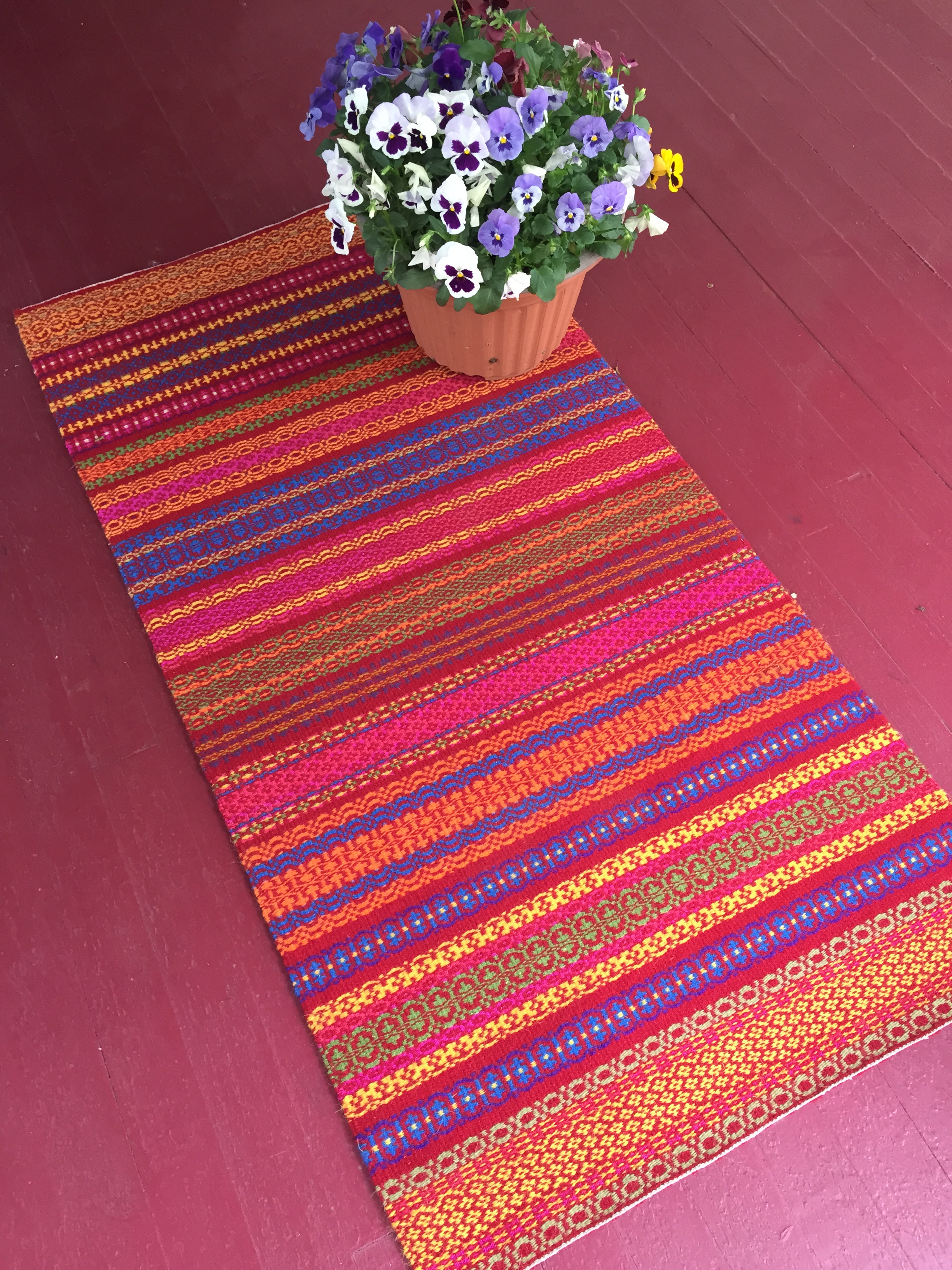
Bright bands of red, orange, and pink compose a wall hanging (or rug) made in Flesberg technique. “Flesberg” is a three-shaft bound weave technique found in that area of Norway. Read more in “A Red Rug for the Vesterheim Exhibit.” ($800)
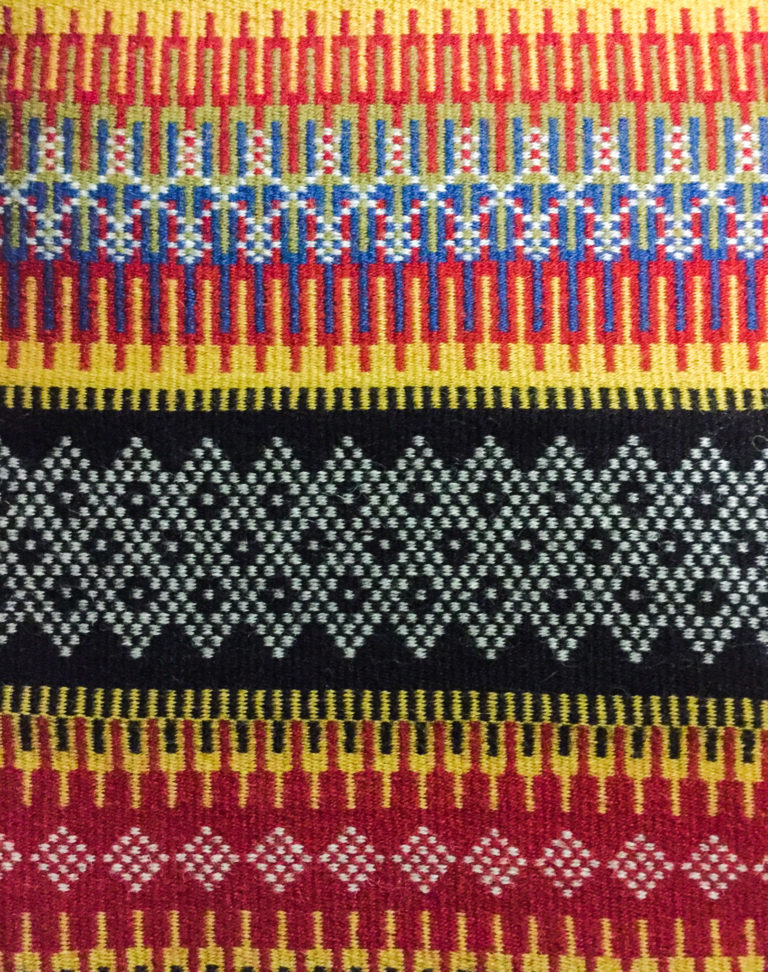
Recently, Robbie has been experimenting with Danskbrogd, a boundweave technique found in the area of Vest Agder, near Kristiansand in Norway. Here is a detail from a piece seen in Norway earlier this summer.
Robbie was steeped in gray during a gray winter month, so the next step was to move to color. The X design became bigger and bolder, on stripes of purple. Read more in “A New Weaving, and Red Bits for the Birds.” ($900)
Biography:
Robbie LaFleur, from Minneapolis, Minnesota, has been following a thread of Scandinavian textiles since she studied weaving at Valdres Husflidsskole in Fagernes, Norway in 1977. She has continued her study with Scandinavian instructors at workshops in Norway and the U.S. Recent projects include interpreting Edvard Munch’s “Scream” painting into a variety of textile techniques and weaving tapestry portraits of her relatives. She was awarded the Gold Medal in Weaving from the Vesterheim Norwegian-American Museum in 2006. Robbie coordinates the Weavers Guild of Minnesota Scandinavian Weavers Study Group and publishes the quarterly online newsletter, The Norwegian Textile Letter.
Artist Statement:
I am a handweaver of contemporary textiles inspired by Scandinavian folk textiles. The language of my looms is based on centuries-old techniques, learned in weaving school in Norway. The core graphic impact of old folk textiles drives each new weaving, in a search for balance, color and boldness. Even when the planning process is computer-assisted, or a technique is done at a new scale or in unusual materials, I honor the fine craftsmanship of the past.
The exhibit will be up at Norway House in Minneapolis through September 10.
There are fabulous weavings in the Norway House Galleri during the run of the “Traditional Norwegian Weaving: American Reboot” exhibit, but there are more in Norway House atrium area, too–a pop-up exhibit of weaving by the co-curators, Jan Mostrom and Robbie LaFleur. This post features Jan’s weavings, and begins with her background.
I started weaving in a January term at Luther College in Decorah, Iowa when I was twenty years old. I was fortunate to have Lila Nelson as my first teacher and to have her continue as a mentor through the Scandinavian Weavers Study Group. I have been an active participant in Scanweavers since its beginning over thirty years ago. Lila provided the thread to connect me to Vesterheim where I took many weaving classes from Norwegian instructors in their Folk Art program. I also have taken six textile tours with Vesterheim led by Laurann Gilbertson.
When I took my first weaving class at Vesterheim, I met Syvilla Bolson who became a lifelong friend and mentor. She encouraged me to teach weaving at Vesterheim where I have taught classes including rutevev, rya, krokbragd, danskbrogd, Vestfold technique and Norwegian west coast coverlet techniques. I have also taught at the Weavers Guild of Minnesota, a Michigan weaving conference and at the first Norwegian Textile Conference in Decorah. I organized the first study group through the Norwegian Textile Letter (NTL) for the exploration of danskbrogd and have participated in two more NTL study groups. I have been a frequent author of articles in the NTL on weaving technique. I have a great passion and love for researching and teaching weaving.
“Folk Dance” by Jan Mostrom (NFS) hangs behind the desk where Galleri guests are greeted. Jan wrote, “I was inspired by a coverlet from Vesterheim that had both single point krokbragd and double point krokbragd. My weaving has single krokbragd borders with a double krokbragd center. The joyful colors reminded me of the spinning colors of Norwegian folk dancers. ”
Nearby is Jan’s “Northland” (NFS), a weaving in wool with rows of surprising rya knots — in reindeer skin. “I purchased a dyed red reindeer skin in north Norway on a Textile Tour to learn about the Sami culture of northern Scandinavia and Russia. This danskbrogd weaving of tree forms against a snowy white background has red leather rya knots. The colors, spare trees and reindeer leather remind me of Norway above the Arctic Circle.”
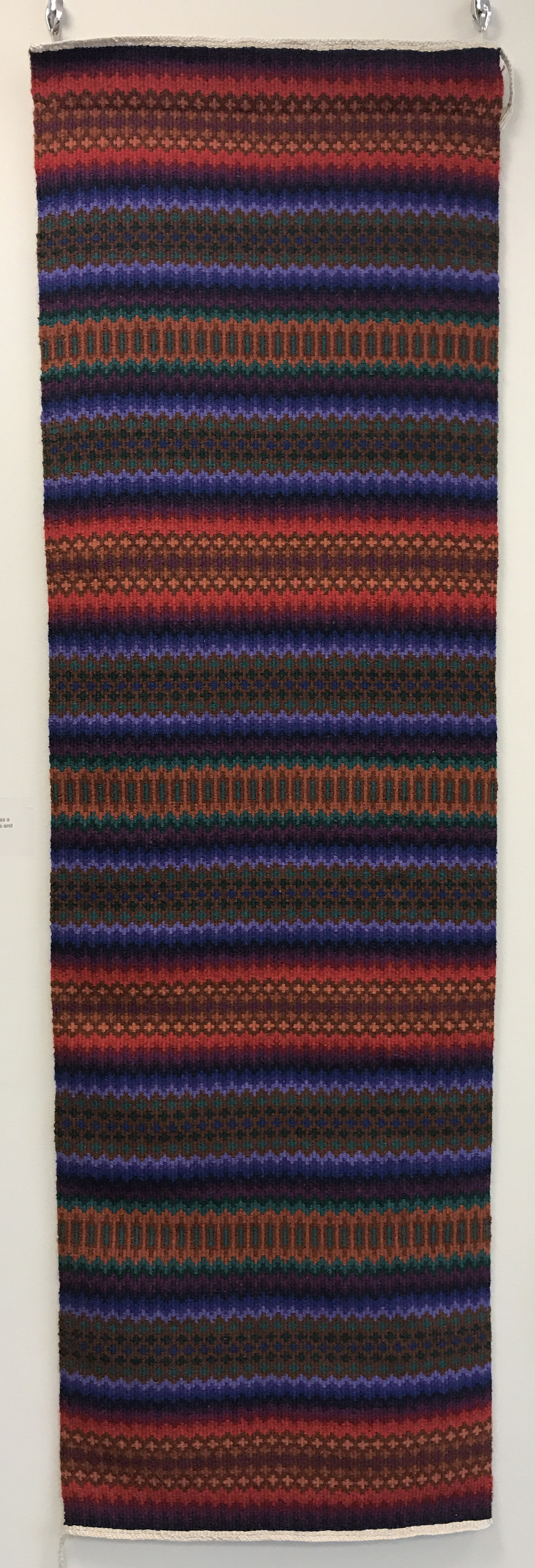
Jan’s long krokbragd weaving (NFS) was undertaken as a color study of brighter colors and values. The red sections have a glowing fire aspect.
Jan Mostrom explains her weaving “Garden Path.” ($1000, 50″ x 27″) “I wanted to create a non-traditional rutevev design that was colorful and whimsical. Garden Path was the result. It is heavy enough to use as a rug and also works on the wall either vertically or horizontally. The tapestry was woven with butterflies made up of a heavy two ply rya yarn and a thinner single ply yarn. The diffference in texture adds texture and the surfaces of the two yarns reflect light differently to create a little twinkle.”
Finally, Jan’s “Forest Echos” (photo coming, NFS) features beautiful browns of nature. Her explanation is perfect for those weaver-viewers who might want to know, “How did she do that?” Jan wrote,
This boundweave piece had an irregular twill threading. I used danskbrogd, a pick up technique, to replace some areas of the pattern with the background color. For instance, if it was woven as threaded, there would be narrow columns of color between the arrow shapes at the top and bottom of the weaving. By using danskbrogd, I could remove those colored bars and cover that area with the background brown and allow the arrow points to dominate that area of the weaving. The irregular threading created a repeated pattern that reminded me of echos, while the colors spoke of the forest to me.
There is still time to register for the second “class in the Galleri” event connected with the Norway House exhibit, “Traditional Norwegian Weaving American Reboot.” Last week, students enjoyed Melba Granlund’s “Viking Knit Bracelet” class in the light and textile filled Norway House Galleri.
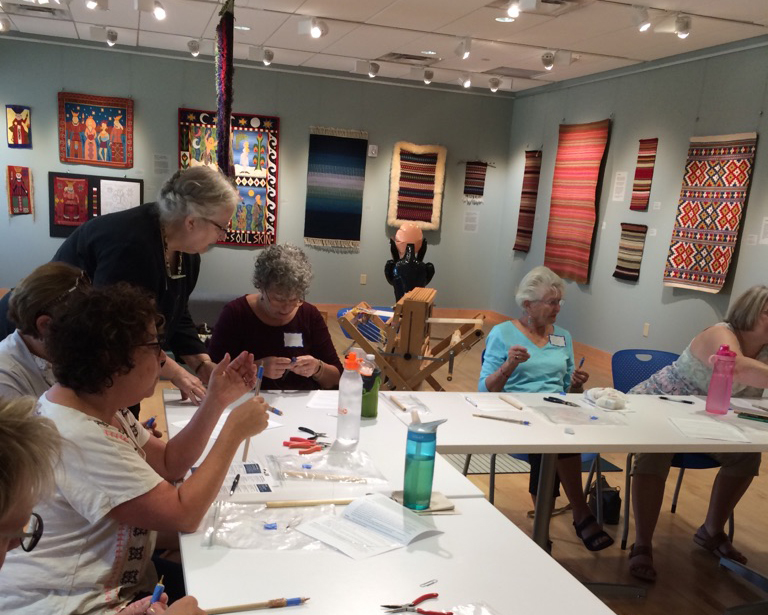
On August 14 and 21 the Galleri will be filled with band weavers. Students will learn to weave intricately patterned and colorful bands found throughout Scandinavia and the Baltic regions, and used by the Sami people as embellishments on their folk costumes.
It’s a rare opportunity to learn while surrounded by beautiful traditional and contemporary weavings. Trade the sun and humidity for inspiration and weaving for a while this month. Sign up with a friend or family member!
Sami-Style Band Weaving, Mondays, August 14 & 21: 12:00pm – 4:00pm. $72 WGM member / $96 Non-Member. Additional details and sign-up here.
And don’t miss instructor Keith Pierce’s collection of beautiful bands on display in the show.
 Jan Mostrom brought two books on Swedish weaving. She purchased the beautiful and huge Swedish Textile Art: The Khalili Collection, by Viveka Hansen, online. What’s the best thing about the book, I asked. The pictures. When she took the Swedish art weaves class in Sweden last summer, that book was in the classroom, and the students used it to pick out design elements for their samplers. If you look for this book online, note that there are English and Swedish editions.







 The Winter-Spring classes at the

 The last weekend of the Weavers Guild of Minnesota and Norway House exhibition, “
 When? 12-3 on Wednesday, August 30 and Sunday, September 3, 2017


 Each Wednesday and Sunday until September 10 (12-3 pm), volunteers from the Weavers Guild of Minnesota Scandinavian Weavers Study Group are demonstrating weaving in the Galleri at
  The runner is a variant of a large rutevev in the exhibit, one that was also woven by people demonstrating weaving. In that case, it was the Oneota Weavers Guild in Iowa who wove on a large loom at the Vesterheim Norwegian-American Museum. In the past couple of decades, the guild members have woven four large rutevev coverlets.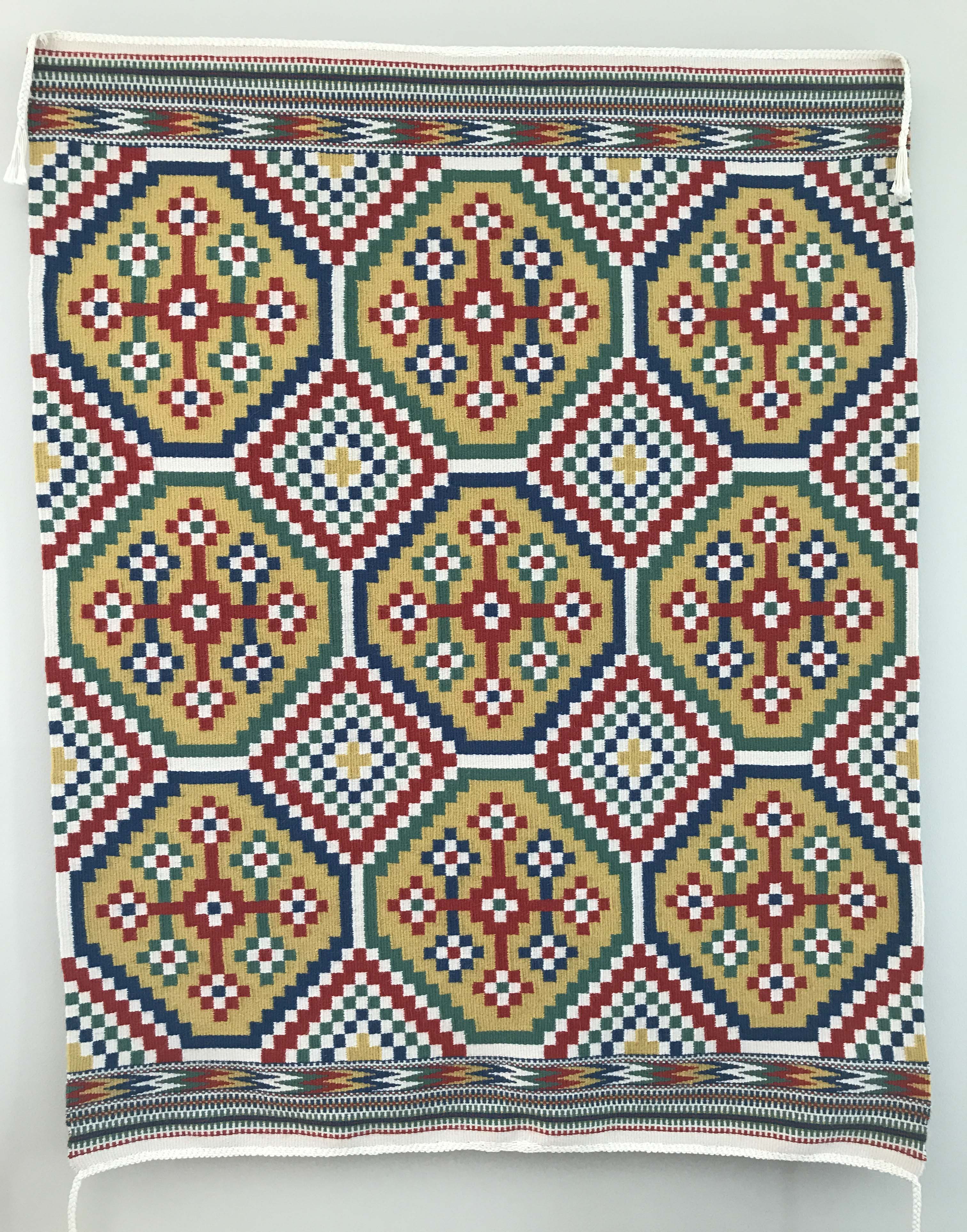

 Traditional Norwegian symbols often appear in Robbie’s weaving, sometimes in an unexpected scale or materials. “Scandinavian Star” highlights a single Norwegian star, dense in shade of red rya pile. Read more about the piece in “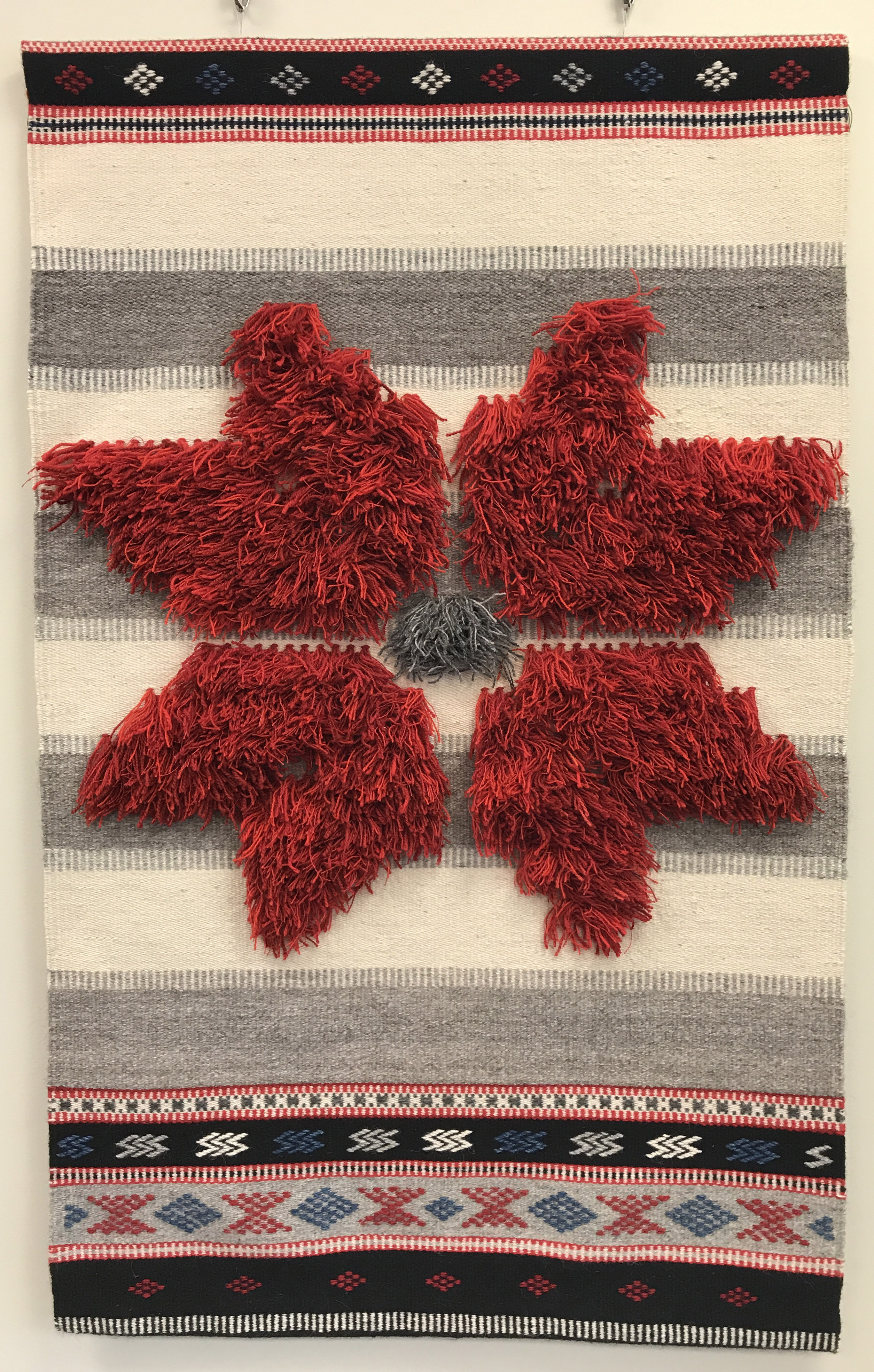
 Recently, Robbie has been experimenting with Danskbrogd, a boundweave technique found in the area of Vest Agder, near Kristiansand in Norway. Here is a detail from a piece seen in Norway earlier this summer.
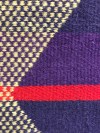 Robbie was steeped in gray during a gray winter month, so the next step was to move to color. The X design became bigger and bolder, on stripes of purple. Read more in “

 “Folk Dance” by Jan Mostrom (NFS) hangs behind the desk where Galleri guests are greeted. Jan wrote, “I was inspired by a coverlet from Vesterheim that had both single point krokbragd and double point krokbragd. My weaving has single krokbragd borders with a double krokbragd center. The joyful colors reminded me of the spinning colors of Norwegian folk dancers. ”
 Nearby is Jan’s “Northland” (NFS), a weaving in wool with rows of surprising rya knots — in reindeer skin. “I purchased a dyed red reindeer skin in north Norway on a Textile Tour to learn about the Sami culture of northern Scandinavia and Russia. This danskbrogd weaving of tree forms against a snowy white background has red leather rya knots. The colors, spare trees and reindeer leather remind me of Norway above the Arctic Circle.”




 Sami-Style Band Weaving, Mondays, August 14 & 21: 12:00pm – 4:00pm. $72 WGM member / $96 Non-Member. Additional details and sign-up

