Blog

  • Meatballs and Snow

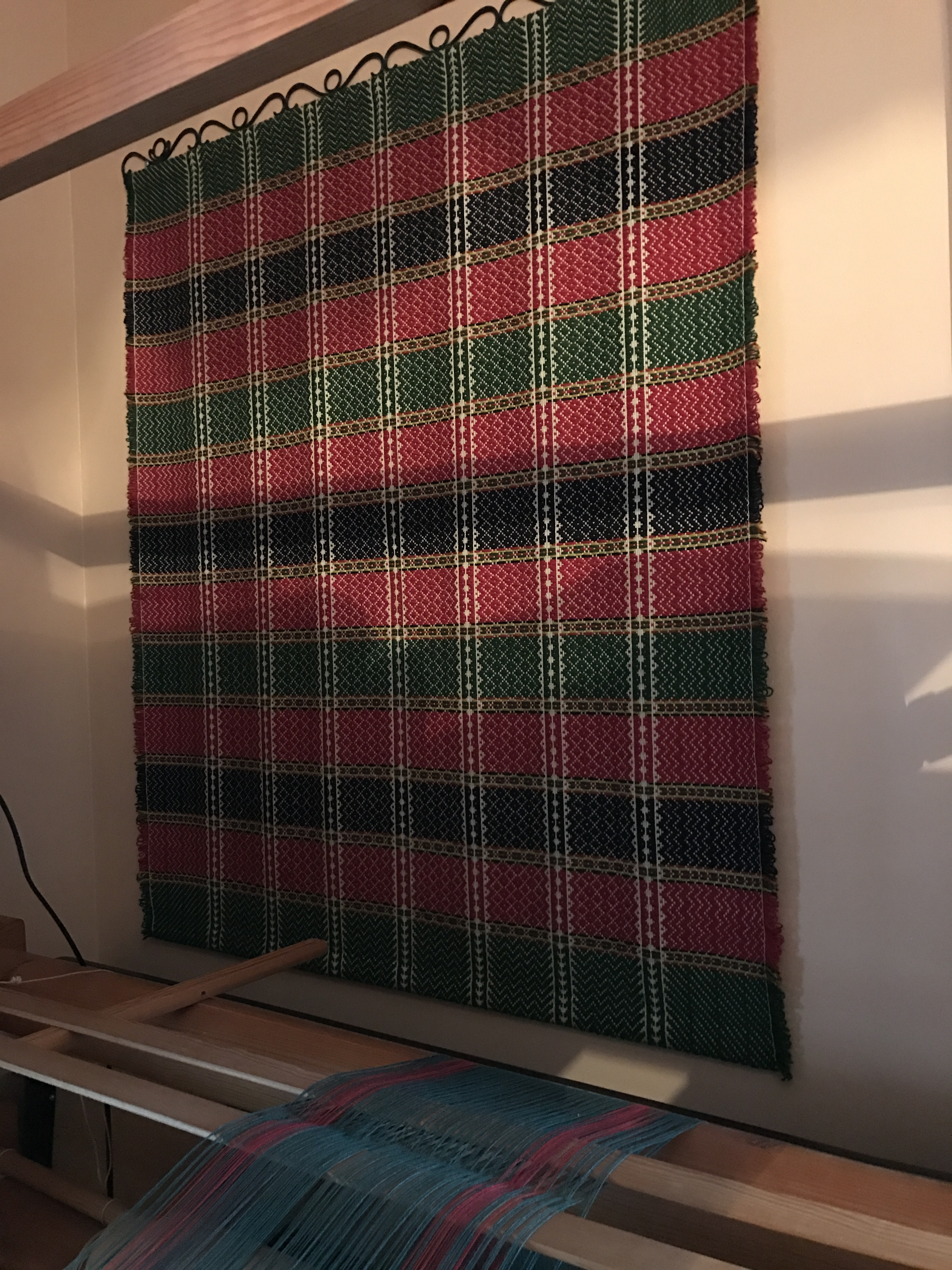
    The holiday gathering of the Scandinavian Weavers took place at Lisa Torvik’s home in St. Paul. Part of the fun of having a meeting in the home of a weaving friend is knowing you will feel at home.  Of course the loom has a prominent place in the dining room!

    img_0577

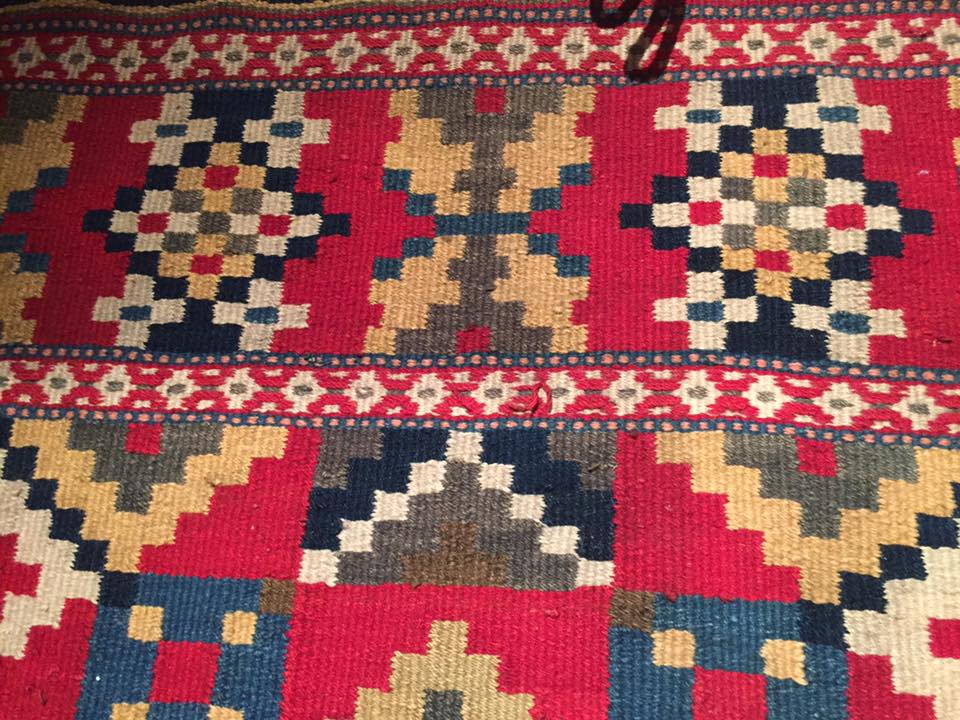
    And behind the loom was a beautiful Valdres kristneteppe (skilbragd) that Lisa made in Husflidsskole many years ago.

    img_0580

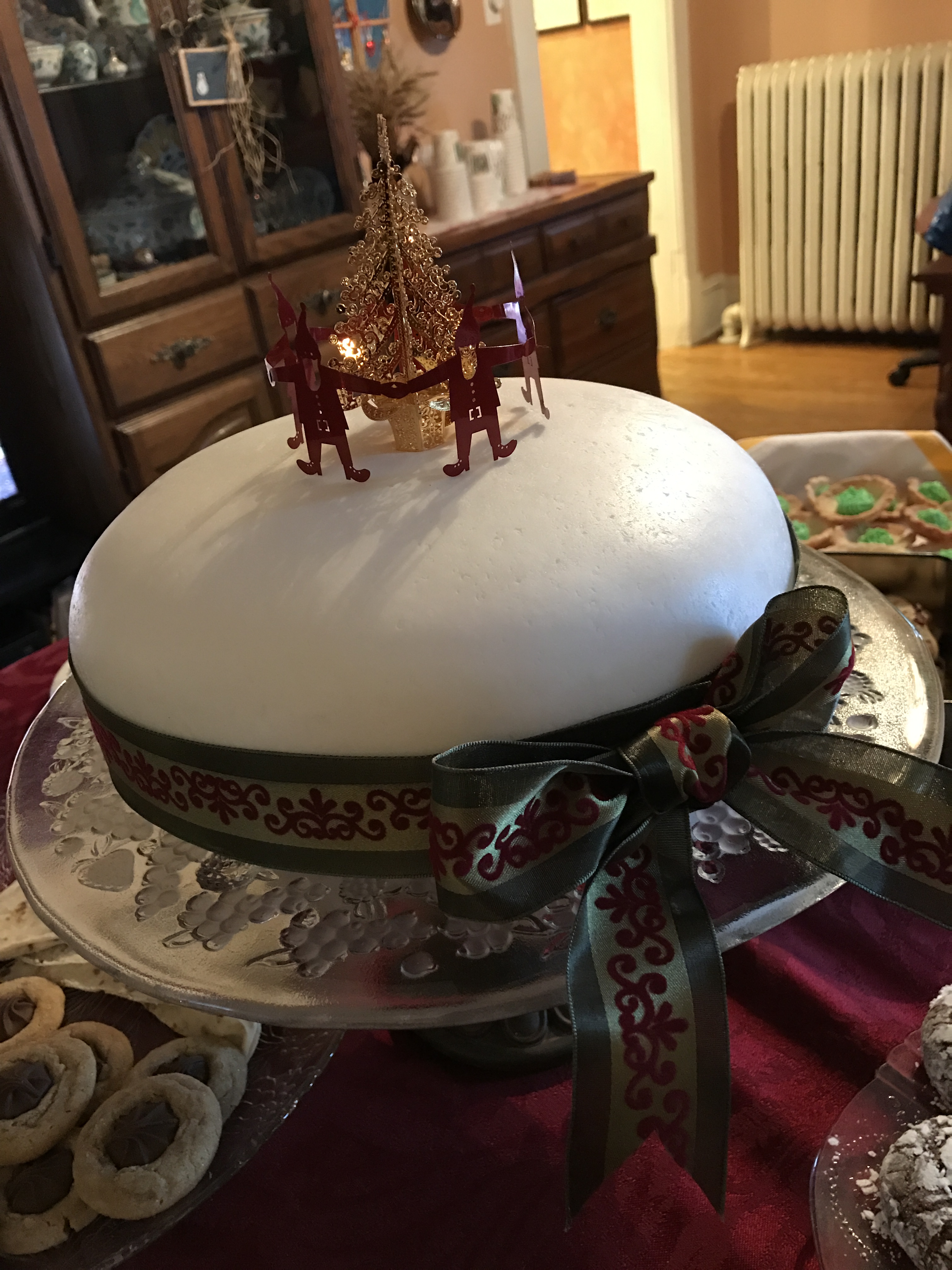
    A big snowstorm threatened that day, so attendance was lower than it would have been – more meatballs for those who came.  And more DELICIOUS princess cake, made by Karin Maahs.

    img_0583

    For those who braved the snow, it was a great afternoon — thanks, Lisa!

    img_0581

  • Woven Pastors in a Row – American and British

    by Robbie LaFleur

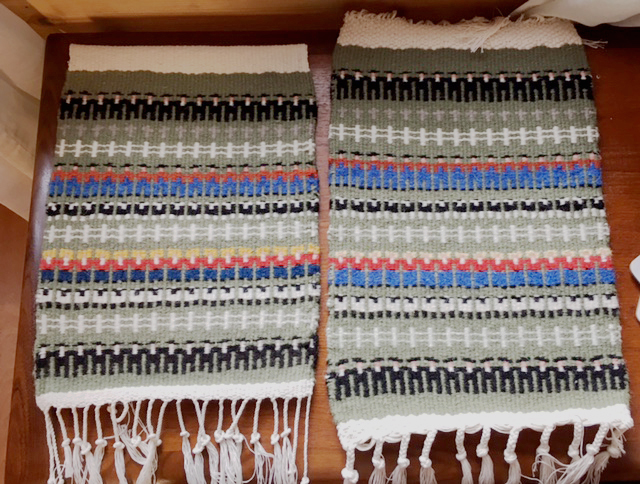
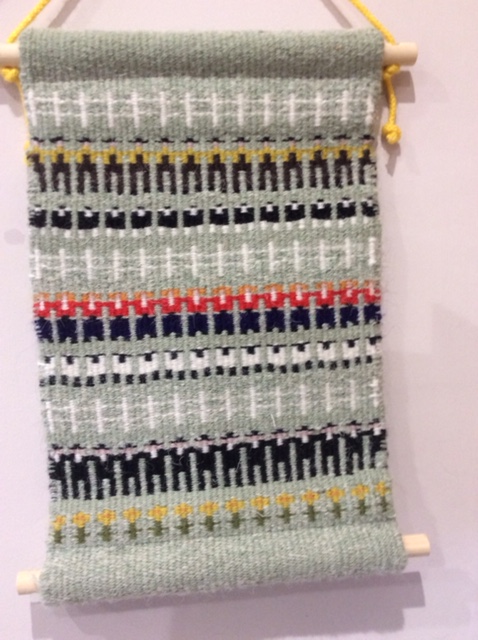
    In my book, weaving connections via the Web are wonderful.  A while back, a weaving instructor from the north of England, Jane Flanagan, asked for permission for her student to weave a pattern similar to one made by Nancy Ellison.  Avril Sweeting had seen Nancy’s piece featured on this blog, posted back in 2010.

    IMG_2546

    Of course Nancy was pleased that others would like to interpret her pattern.  Jane spent time with Avril working out how the motifs had been created. Avril wanted to reproduce the pattern accurately, so much so that she did it twice!

    twopastors

    Another of Jane’s students, Jean Roberts, saw Avril’s piece and tried her hand at boundweave too.

    english-pastors

    A further two students asked for help with similar boundweave pieces, so now Jane is  developing more learning materials, creating many samples, and plans to weave a larger boundweave rosepath rug early in 2017.

    Thank you for sharing, Jane, Jean, and Avril. It’s fun to think about a pasture in Minnesota, with people and sheep, and some matching sheep on the English countryside.

  • Historical Scandinavian Textiles – Catch them at the Weavers Guild of Minnesota

    Don’t miss the exhibit of Scandinavian textile treasures owned by several members of the Scandinavian Weavers Study Group, up on the Weavers Guild gallery walls through the end of 2016. Not only are they beautiful objects; they come with wonderful stories. For full details, and many photos to make you want to visit the exhibit, see the two articles on the exhibit in the newest issue of the Norwegian Textile Letter.

    Historical Scandinavian Textiles: Part One

    img_0213-1

    Historical Scandinavian Textiles: Part Two

    berg-tapestry


  • A Discussion of Hems and Edges

    By Robbie LaFleur

    Note: I recently discovered this post, one that had not been posted after a meeting in 2012.  It’s a bit late!

    At our March Scandinavian Weavers Study Group meeting, an interesting conversation began with a comment by Veronna Capone, whose craftsmanship is impeccable.  She’d struggled with a monksbelt runner; the edges had the slightest waviness, no matter how careful she was.

    veronna

    So she solved that by taking a step that many weavers consider a sacrilege.  She sewed a straight stitch down the selvedge edges, about three threads in from the edge, and then cut the edge, perfectly evenly, next to the stitching.  (I don’t have a photo of that one.) She said that she owns a lovely Irish handwoven scarf with the same edge finish, and that gave her the permission to mimic it on her runner.  My photo of the edge of Veronna’s monksbelt doesn’t show the really successful and interesting total effect of the piece, woven with pearl cotton. One really nice effect was the contrast in sheen between the background plain weave and the monksbelt blocks done in the same color, very textural.

    Veronna is not afraid to break rules.  Her additional ‘confession’ was that sometime when making a runner that was quite thick, she sewed a straight stitch across the end of it, turned it down once, and stitched it.  Uh-oh.  But really, how many people with real textile knowledge would turn over a lovely runner on Veronna’s table and note that a raw edge was visible?  This led to further discussion of hems and right sides/wrong sides and rules.

    It felt like a discussion that could have been held by my husband’s psychoanalytic colleagues.  What do people keep hidden in order to show their best faces to the world?  What everyday parts of life –  the messy parts, the parts you might not be proud of – are best put away when  you worry about being judged?   What do people choose to reveal?  What do they keep secret?  But here we are talking about textiles.

    Patty Kuebker-Johnson talked of her late Swedish mother-in-law, a wonderful weaving mentor.  Hems were important to fine Swedish weavers.  When planning a woven piece with hems, you should have a hem that is turned over twice and sewn by hand.  Ideally, the pattern should be taken into account when planning the blocks of the pattern blocks of the turned-over hem.  Once hemmed, the piece should appear the same on the front and the back.

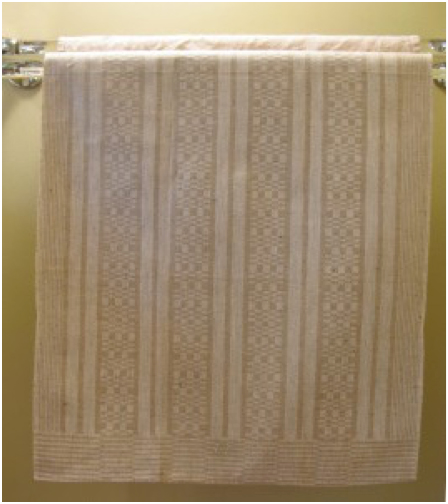
    Displaying pristine textiles for guests was a mark of skill and prestige.  Sometimes a runner was used on a table, or a towel was hung on a rack, hemmed-side-up, for everyday family use.  It could be quickly changed to the best side.

    A double towel rack could be used.  When guests arrived, the lovely towel was put in front.
    towel

    When you are not trying to show a perfect face, then perhaps this stained towel displays the messy craziness of life.

    stained

  • Rutevev Exhibit in Norway

    Rutevev Exhibit in Norway

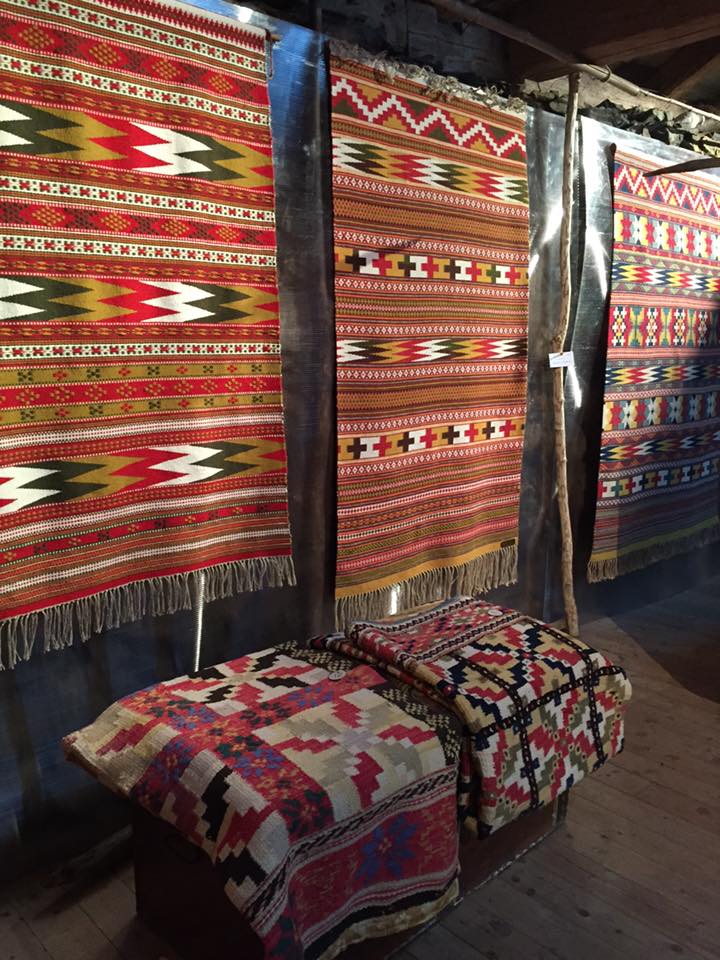
    Recently, Karin Randi Flatøy shared a set of photos on her Facebook site, from an exhibition of Nordhordaland-style coverlets at Galleri RusticaHolmeknappen, a cultural site  outside of Meland, a town situated on an island about 25 minutes north of Bergen.  The exhibit was part of  Ullveka på Vestlandet, or Wool Week in Western Norway, this year. 

    Her post prompted many people to comment about the beauty of the pieces, the too-short duration of the exhibit, and pleas to have it mounted in other venues, too.  Annemor Sundbø visited the exhibit and heard an accompanying talk.  When she shared the photos on her site, someone commented that it was difficult to tell (given the quality of the photos) whether they were woven on warp-weighted looms.  Annemor responded that at least three of them were woven on a warp-weighted loom.

    I wish I could have been there!  Because I know that many of my friends who are interested in Norwegian weaving are not Facebook regulars, I asked Karin Randi Flatøy if I could post her photos on this blog.  She kindly granted permission, saying that it was a fabulous exhibit for people of Norwegian heritage to see!

    14732162_10209829329105812_7197650471664251616_n14721620_10209829329305817_2286697051390148087_n14721596_10209829330105837_1298956356003087678_n14718681_10209829330265841_9162980288254269773_n14572816_10209829330825855_3991794544481925763_n14717131_10209829331185864_2301060457817935255_n

  • Scandinavian Heirloom Textiles

    Over the years, my friends have told me about their fabulous old Scandinavian textiles — inherited from family or friends in “the Old Country;” found in out-of-the-way antique stores, thrift shops, garage sales, or flea markets; or even rescued from barns.  Let’s tell their stories!

    Later this fall we will be mounting a display of historical textiles from the Nordic countries, along with their stories, on the walls of the Weavers Guild.  The items will also be featured in the upcoming (November) issue of the Norwegian Textile Letter.  Pieces will be submitted not only by the members of the Scandinavian Weavers Study Group, but also by other Weavers Guild of Minnesota members.
    At yesterday’s meeting of the Scandinavian Weavers, we saw great examples of old textile finds.  Jane Connett said that she had been a bit laid up recently, so she spent a lot of time on Ebay. Look at this beautiful Norwegian tapestry find.  It was advertised as an “Albanian kelim,” but fans of Norwegian tapestry know perfectly well that it is a replica of a portion of a Norwegian Wise and Foolish Virgins tapestry.  It was faded on one side, but the colors were clear and strong on the other.  And since the weaving followed Norwegian tradition, all the ends were sewn in so that either side is equally beautiful.

    virgin1virgin2

    Jane said she didn’t remember how much she paid, but probably only around $25.

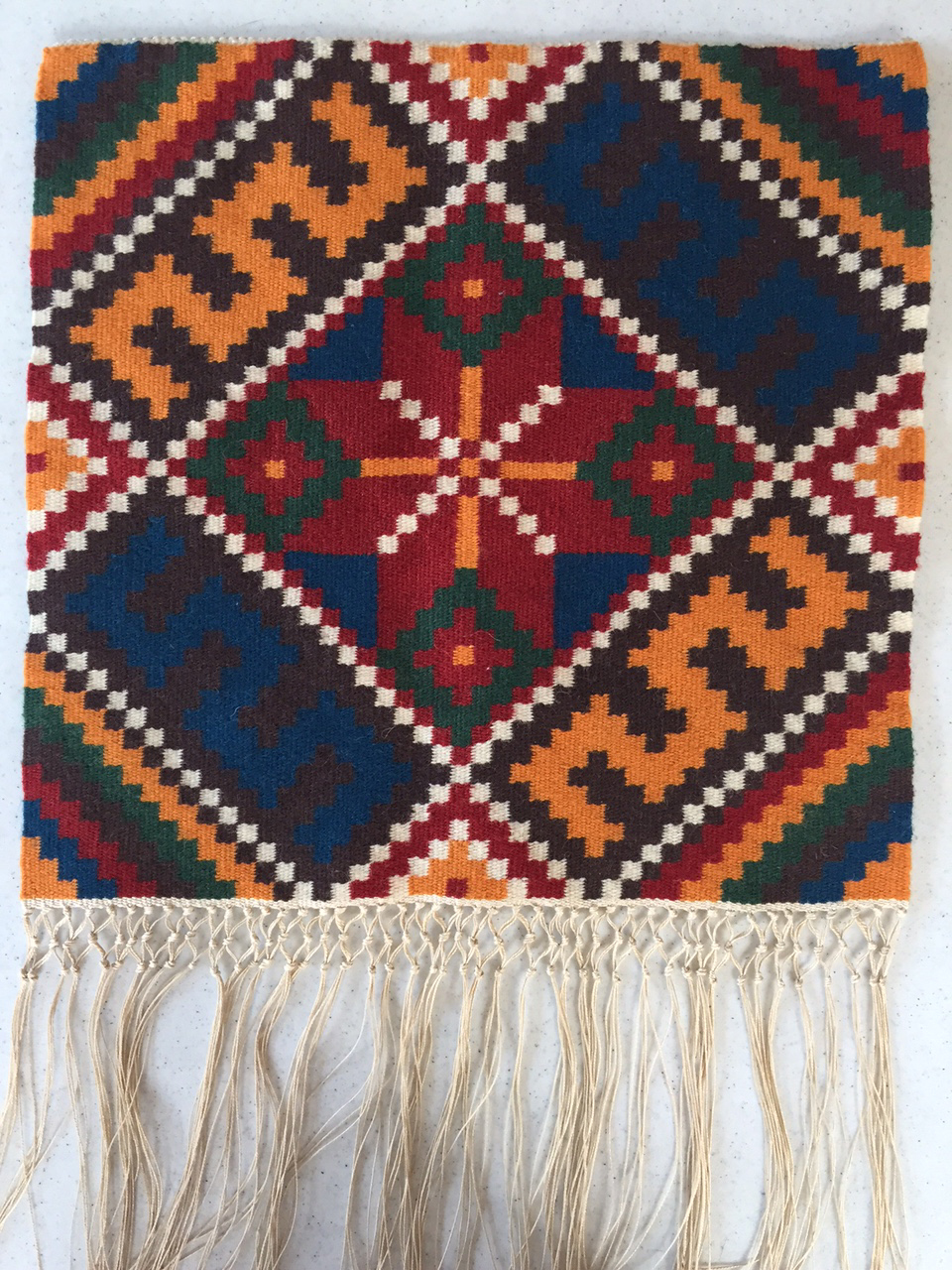
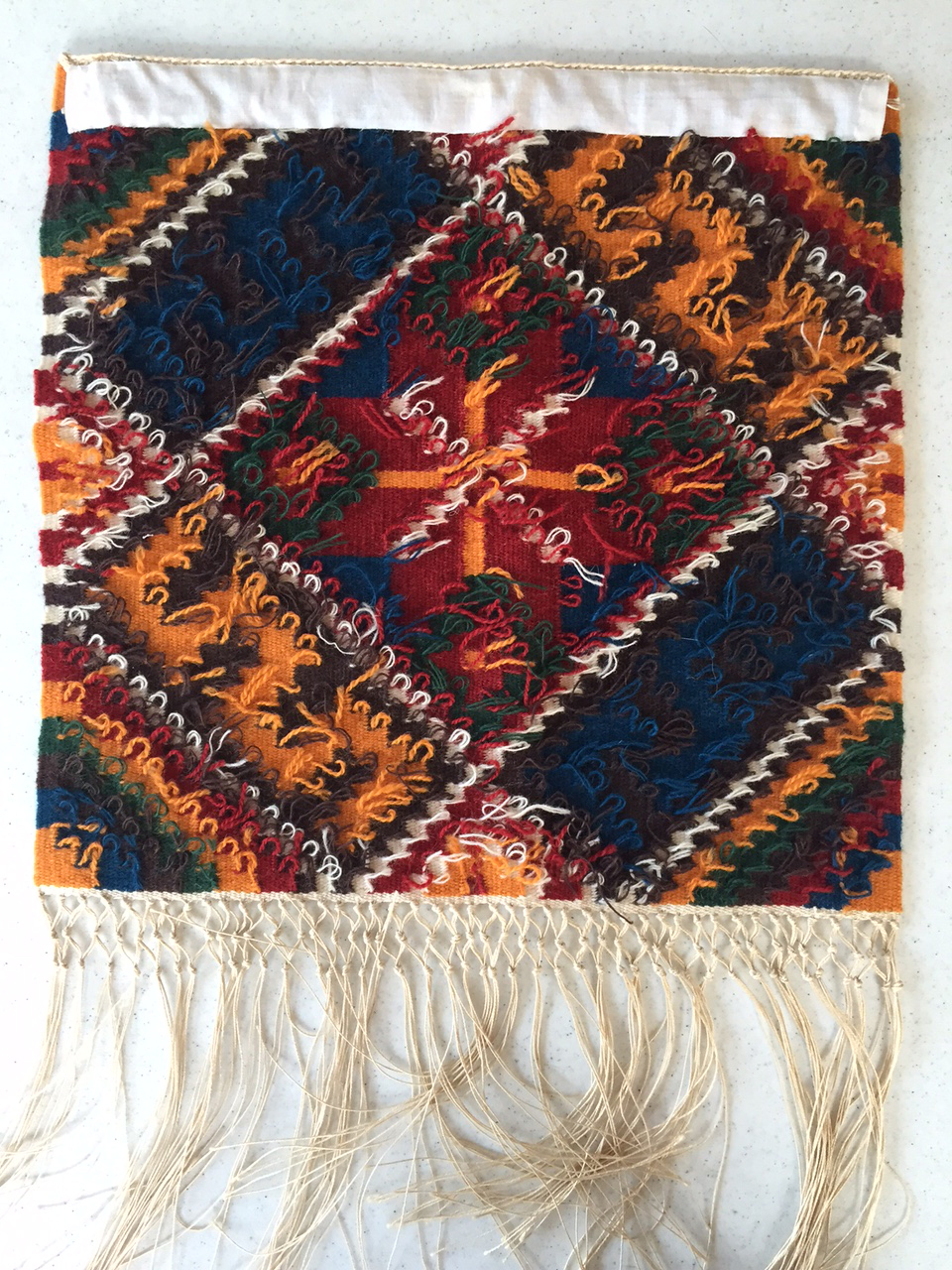
    She also bought a beautiful small rolakan weaving.  Judy Larson noted that the loops on the back side, where the colors jump over a few threads, are typical of Swedish rolakans.

    rite-uprite-back

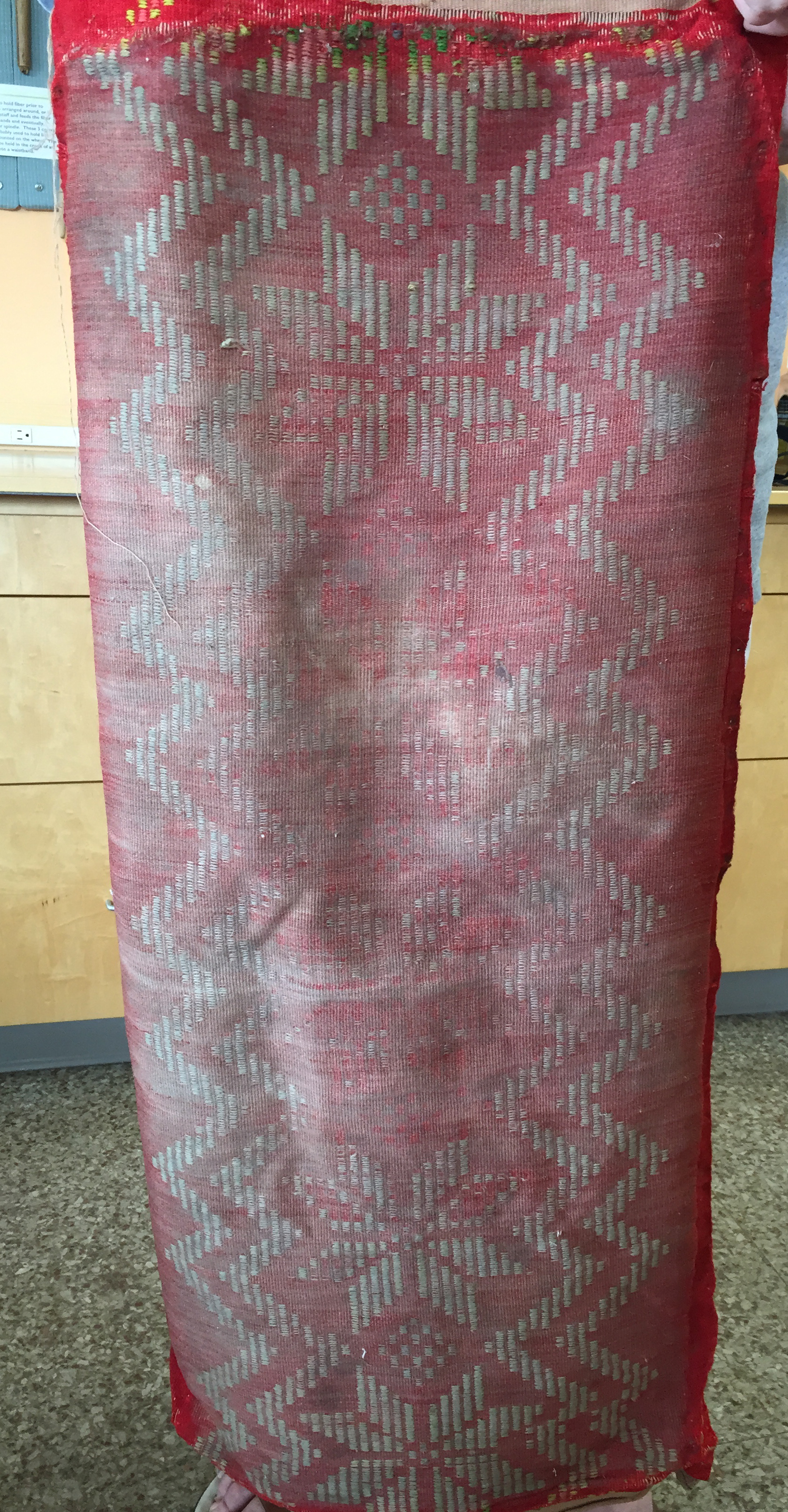
    Lisa Torvik showed a treasure-in-progress.  She rescued it from a friend’s barn, where it had supported feed sacks and whatever else needed a resting place. The bench was badly damaged, but still retained one crudely-carved dragon foot.  The top of the bench cover was so dirty that no color peeked through.  Was it even woven, or just embroidered, Lisa wondered.

    barn-front

    Once it was off the bench, however, you could see that it was a nicely-woven dukagang.

    The mystery remains – will Lisa ever be able to retrieve color on the dirty front side?  She had just taken it off the bench hours earlier.  Perhaps we won’t know for a while, as several members of our group thought that waiting until winter for a thorough snow-washing might be the best route.


  • RED – Phyllis Waggoner

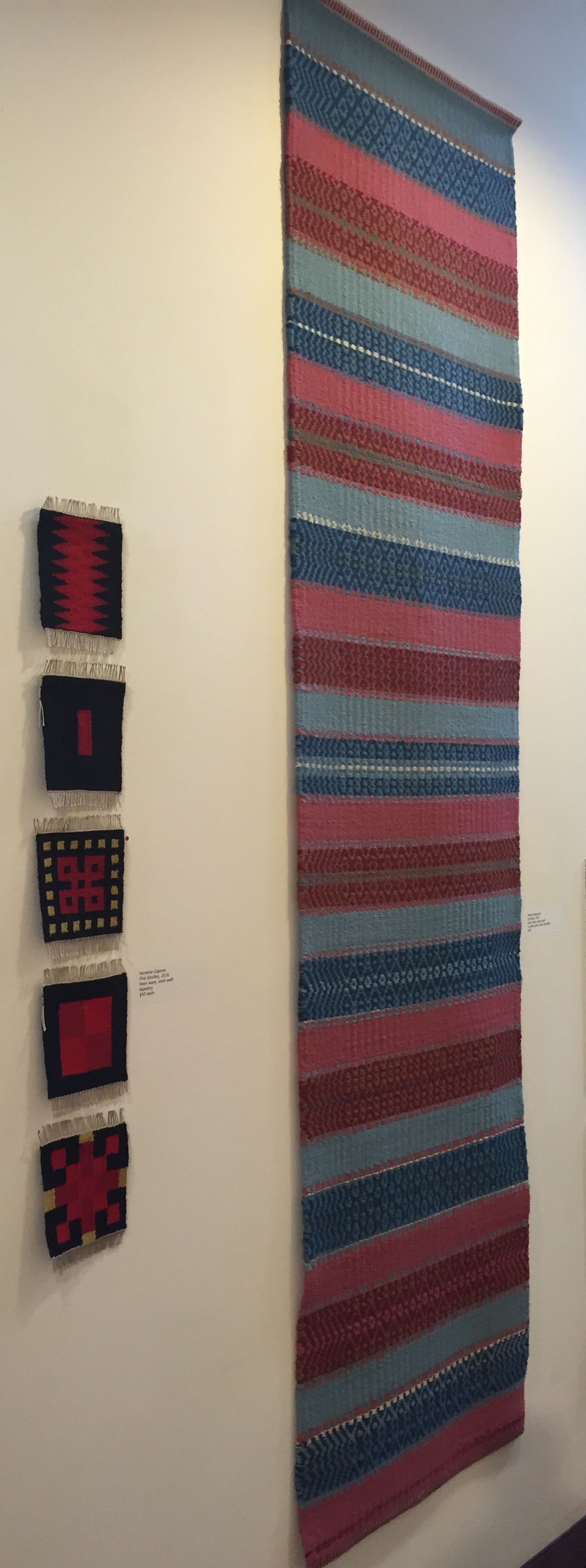
    “Untitled”  8’6” x 27”  Technique: 4 shaft point twill variation, treadles tied for 2/2 twill, “woven on opposites”  Materials:  5/8 linen warp, sett 6 epi, 3 ply rugwool weft.

    In the case of Phyllis’ long, beautiful rug, red was part of a color challenge — could she make the red work with the other colors? She had a great deal of yarn left after completing a commission. Rather than weave a shorter red rug, she chose to use all the colors to weave a long rug.  “Necessity is the mother of invention,” and Phyllis invented a design to make use of her red, and more.

    Unfortunately, the gallery configuration made it impossible to get a great head-on shot of Phyllis’s beautiful rug.  You’ll have to visit it in person, or look at it obliquely here.

    FullSizeRender


  • RED – Veronna Capone

    Five Studies. Each 6″ x 6.”  Linen weft, wool warp.

    Five small tapestries.  The first of these five small tapestries uses traditional Norwegian ‘lynild,’ or lightning weave’; the others are in rutevev, or square weave.

    veronnaFullSizeRender-4FullSizeRender-3FullSizeRender-2FullSizeRender-1

  • RED – Judy Larson

    “Rolokan Reds.” 30″ x 29″ Cotton warp, cotton weft.  Rolokan.

    Judy used a variety of red quilting cotton prints in a rolokan (Swedish tapestry) technique, spacing out the “flames” with tabby stripes.  At a distance, the sharp edges of the flame-like image is graphic and bold.  It’s worth a close look, too, where the patterns in the fabric strips look unusually dizzying.

    IMG_5540

    judy-details

  • RED – Lisa Torvik

    “Transparent Tapestry #2 – Friends” 17″ x 13″ Linen and refleksgarn (reflective yarn).  Transparency Technique

    This is part of a planned series of four transparent tapestries featuring a Scandinavian reflective yarn.

    heart