Five Studies. Each 6″ x 6.” Linen weft, wool warp.
Five small tapestries. The first of these five small tapestries uses traditional Norwegian ‘lynild,’ or lightning weave’; the others are in rutevev, or square weave.


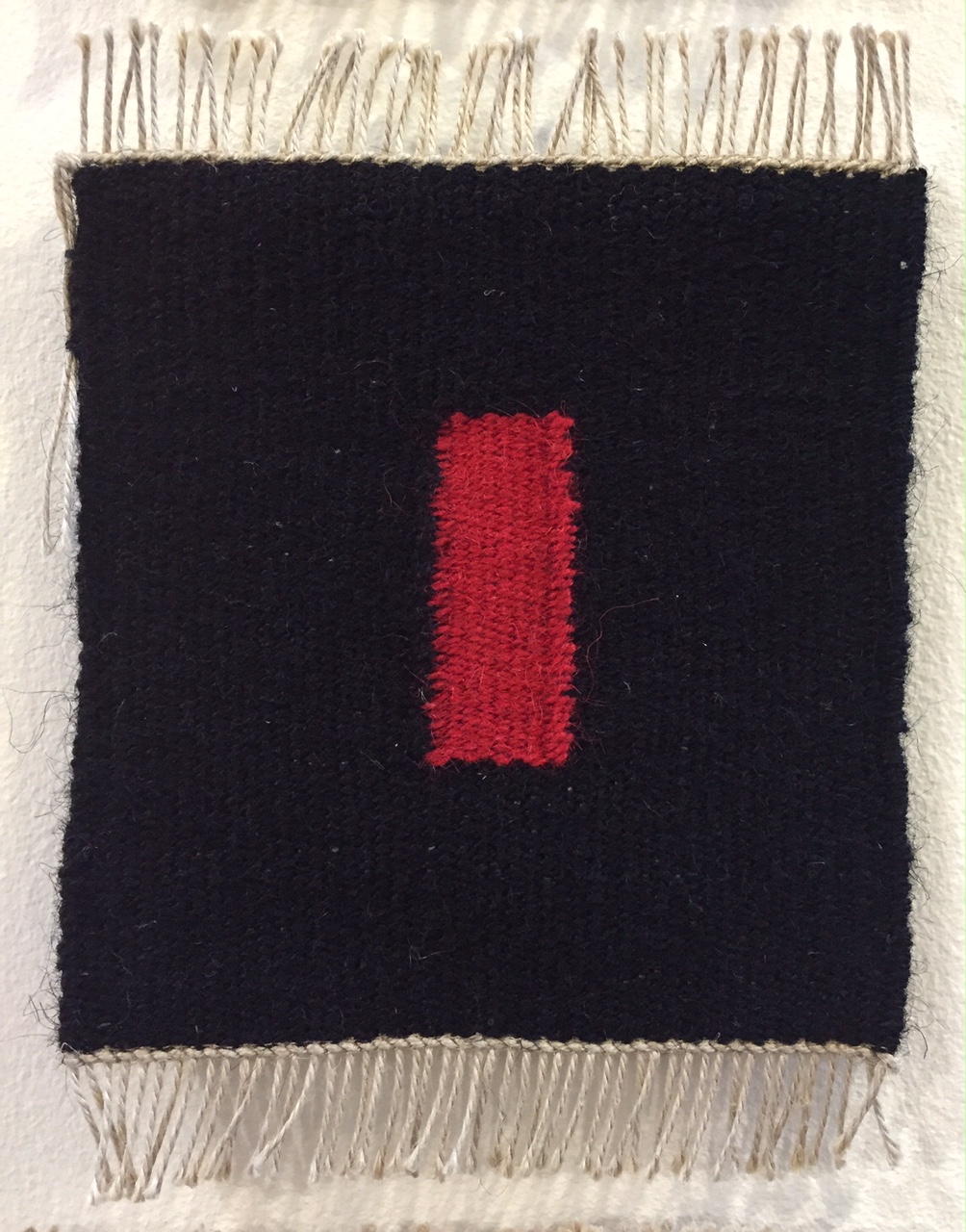
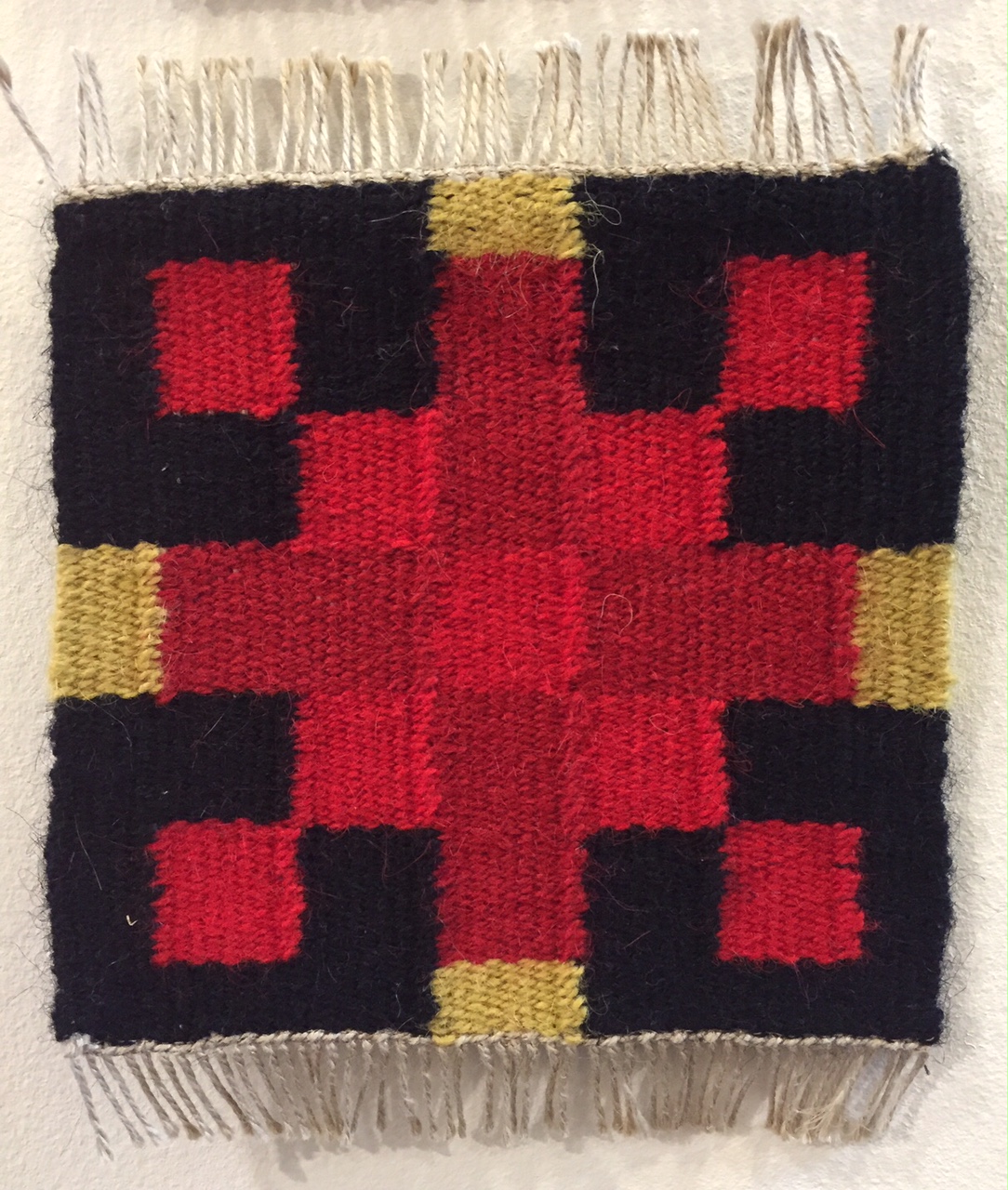
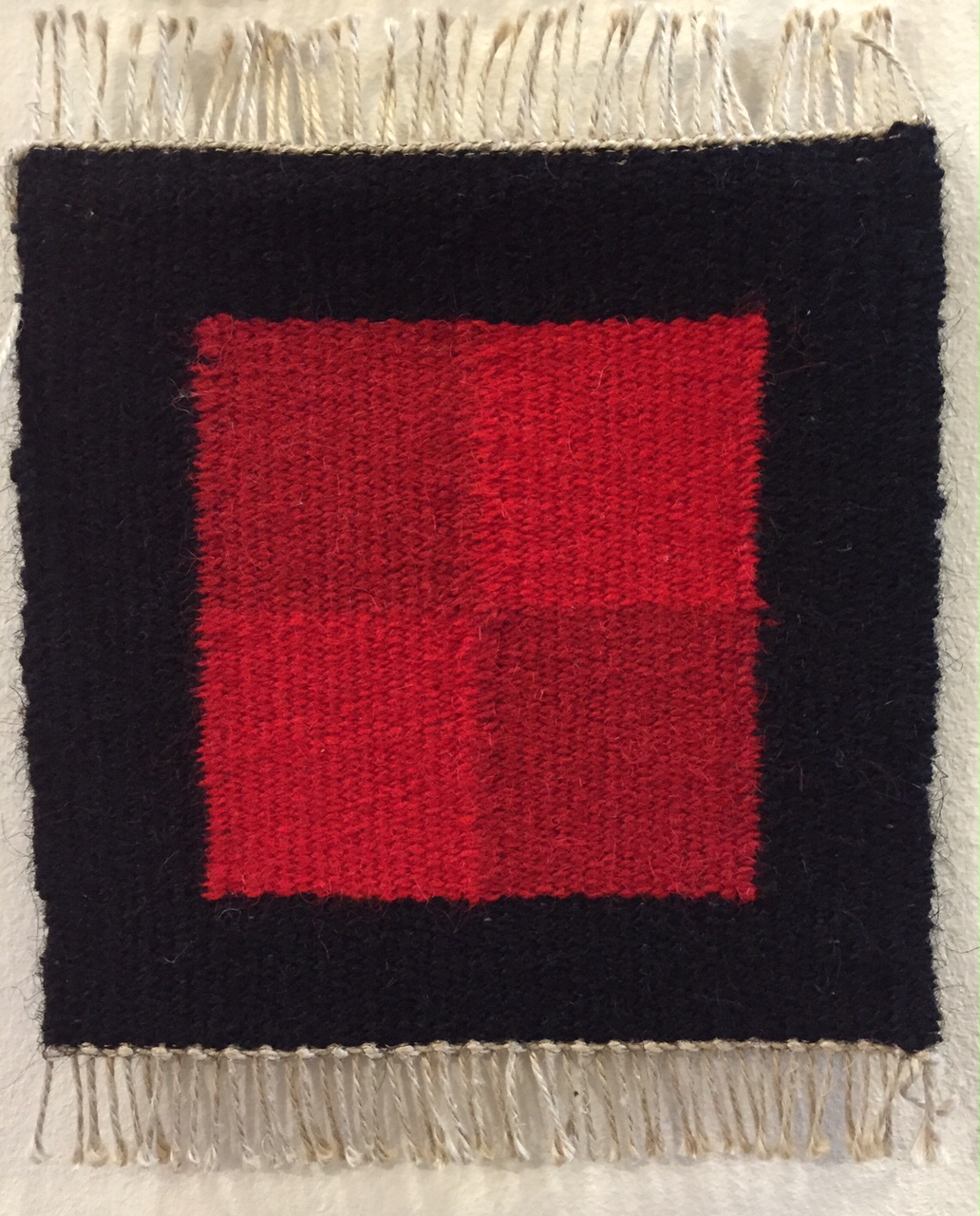
Five Studies. Each 6″ x 6.” Linen weft, wool warp.
Five small tapestries. The first of these five small tapestries uses traditional Norwegian ‘lynild,’ or lightning weave’; the others are in rutevev, or square weave.
“Rolokan Reds.” 30″ x 29″ Cotton warp, cotton weft. Rolokan.
Judy used a variety of red quilting cotton prints in a rolokan (Swedish tapestry) technique, spacing out the “flames” with tabby stripes. At a distance, the sharp edges of the flame-like image is graphic and bold. It’s worth a close look, too, where the patterns in the fabric strips look unusually dizzying.


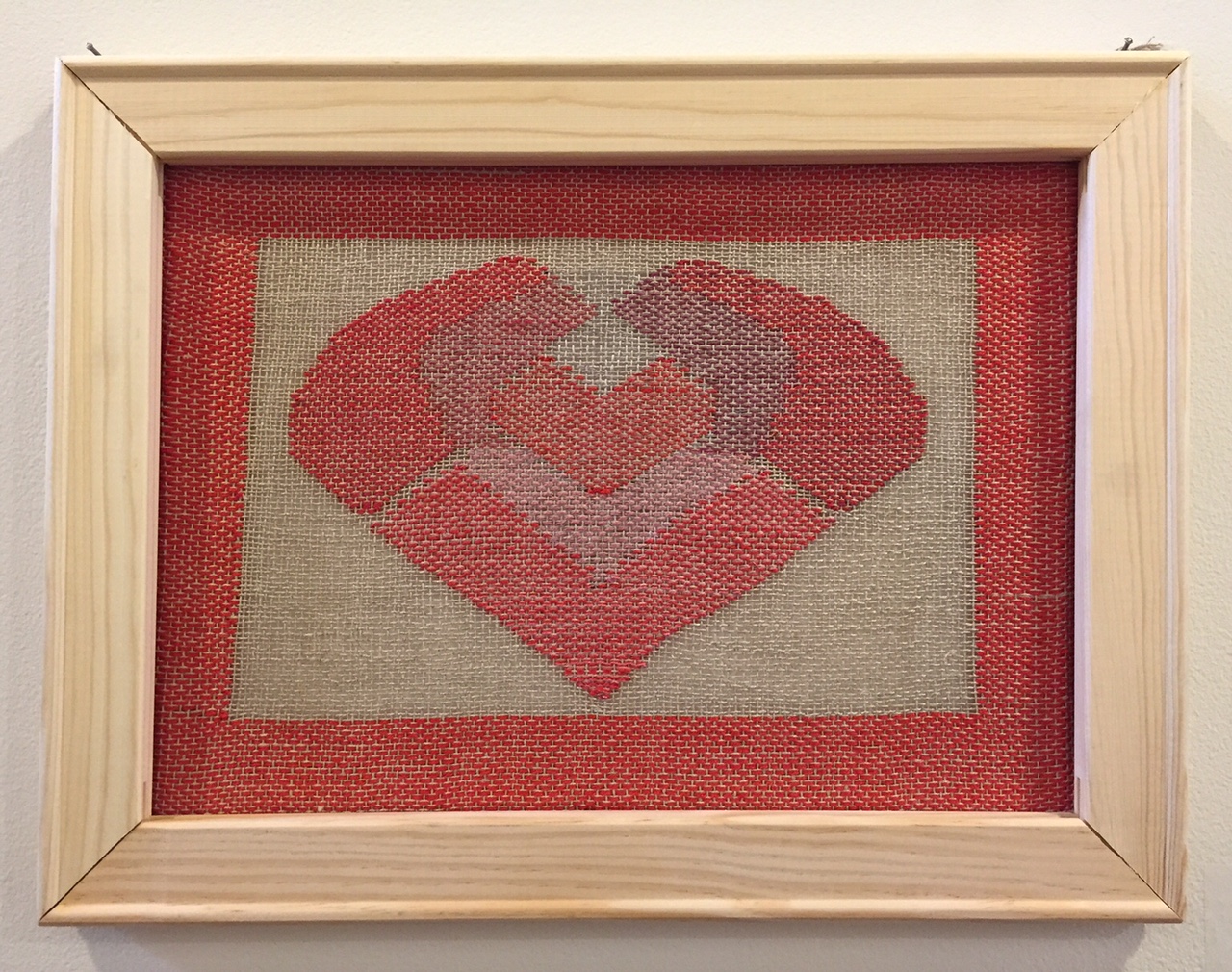
“Transparent Tapestry #2 – Friends” 17″ x 13″ Linen and refleksgarn (reflective yarn). Transparency Technique
This is part of a planned series of four transparent tapestries featuring a Scandinavian reflective yarn.
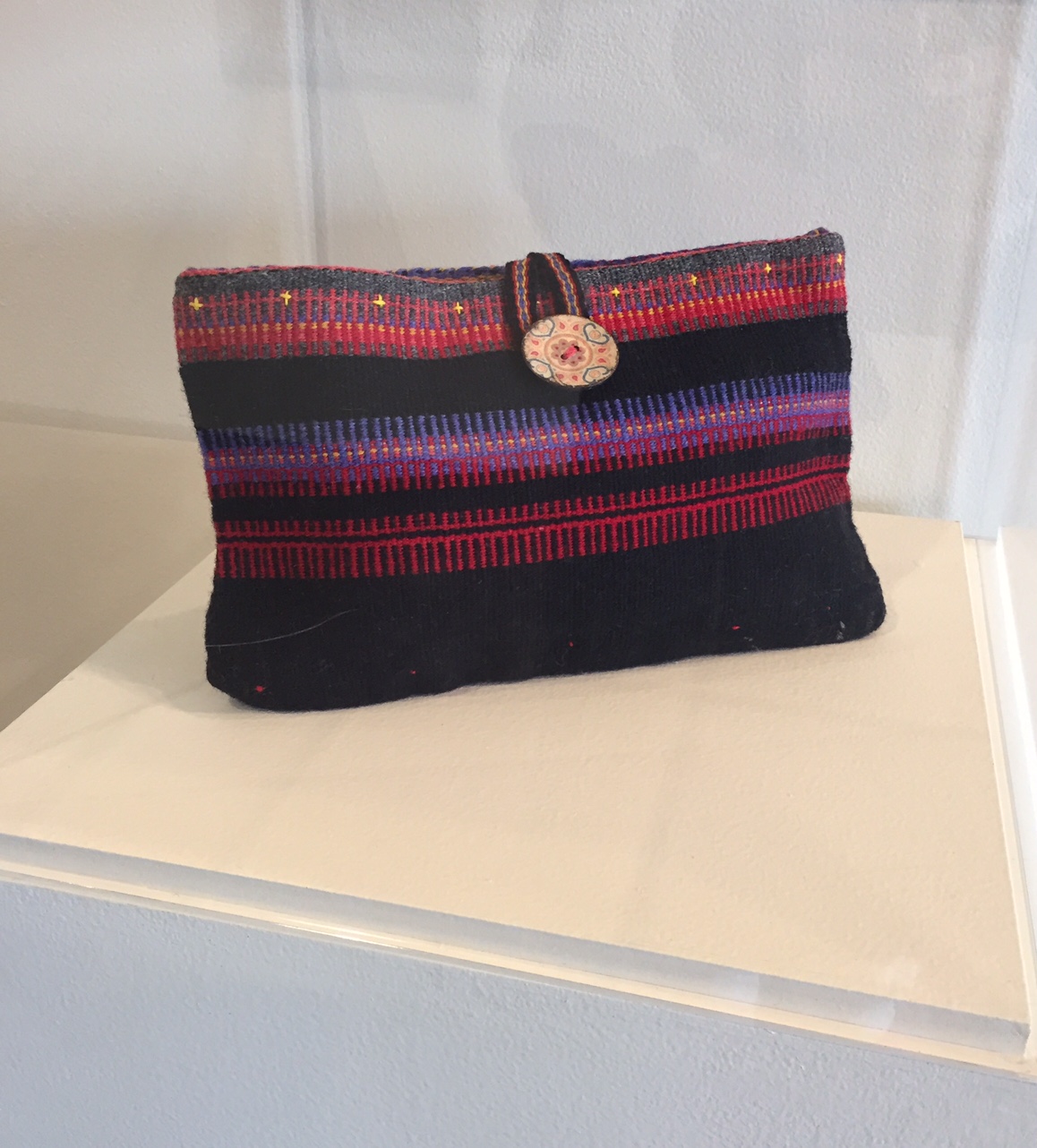
Hraun. (Lava) 11.5″ x 7″ Technique: Boundweave. Materials: Cotton warp, wool weft, wood button.
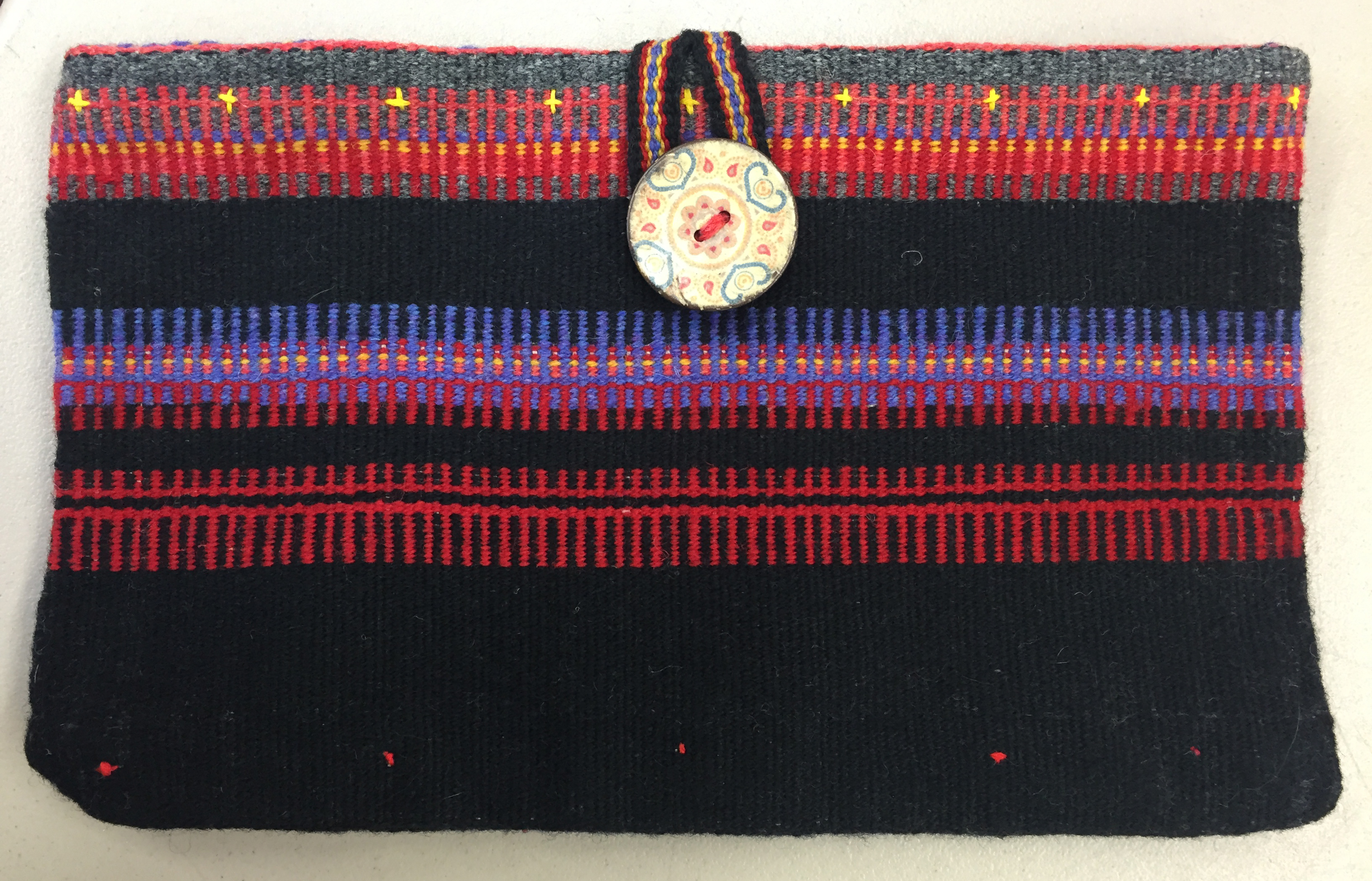
Inspired by lava!

Checkered Pillow. 18″ x 18″ Linen, poppana fabric strips.

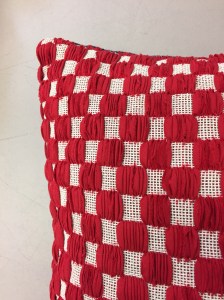 Connie’s checkered pillow is one of a pair woven in a beautiful design from the book Scandinavian Weaving by Tina Ignell. She ordered red and navy popanna, a bias-cut cotton fabric, from WEBS and the seine twine from Vavstuga. The weaving went incredibly fast and looked just like the photograph in the book, but when she took it off the loom, she just didn’t really like it or know what to do with it. It languished in a closet. When the Scandinavian Weavers group began its focus on red, she took it to the fabric store and found the perfect backing to complement both colors. Sometimes a weaving just has to wait for the right moment to be the perfect something. The checkerboard pattern works especially well as a pillow, as the curved edges of the pillowtop give an “op art” effect to the small squares.
Theme and Variation. 27″ x 45″ Double-binding technique. Cotton warp and cotton fabric weft.

Swedish Dishtowels. Cottolin. Plain weave with embroidery. 17″ x 26″
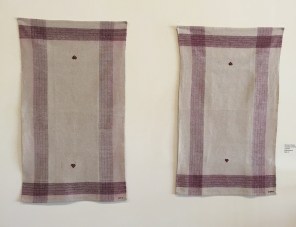 Marilyn used red and natural cottolin for a set of six dishtowels. She wove them in plain weave, with a log cabin effect created by the two colors intersecting in the corners. The Swedish heart was an appropriate addition, as they were given as gifts to friends on Valentines Day.

Julefest. 11.25″ x 25″ Krokbragd. Cotton warp, Rauma wool weft
Melba chose to weave her red krokbragd for a couple of reasons. The colors seemed appropriate to the holiday season when she began. It represents all the colors and joyfulness of the Christmas season — the greens of Christmas trees, the reds and golds of Christmas decorations on the trees, and the pure white snow represented by snow angels against a red background in one of the motifs. In the krokbragd technique, the threads are also treadled repeatedly as 1-2-3, which could represent the Trinity coming to life in the birth of baby Jesus.
But the other reason, “the real reason,” was that she wanted to see if she remember what Jan Mostrom taught her in a krokbragd class five years earlier. (Clearly, it all came back!)

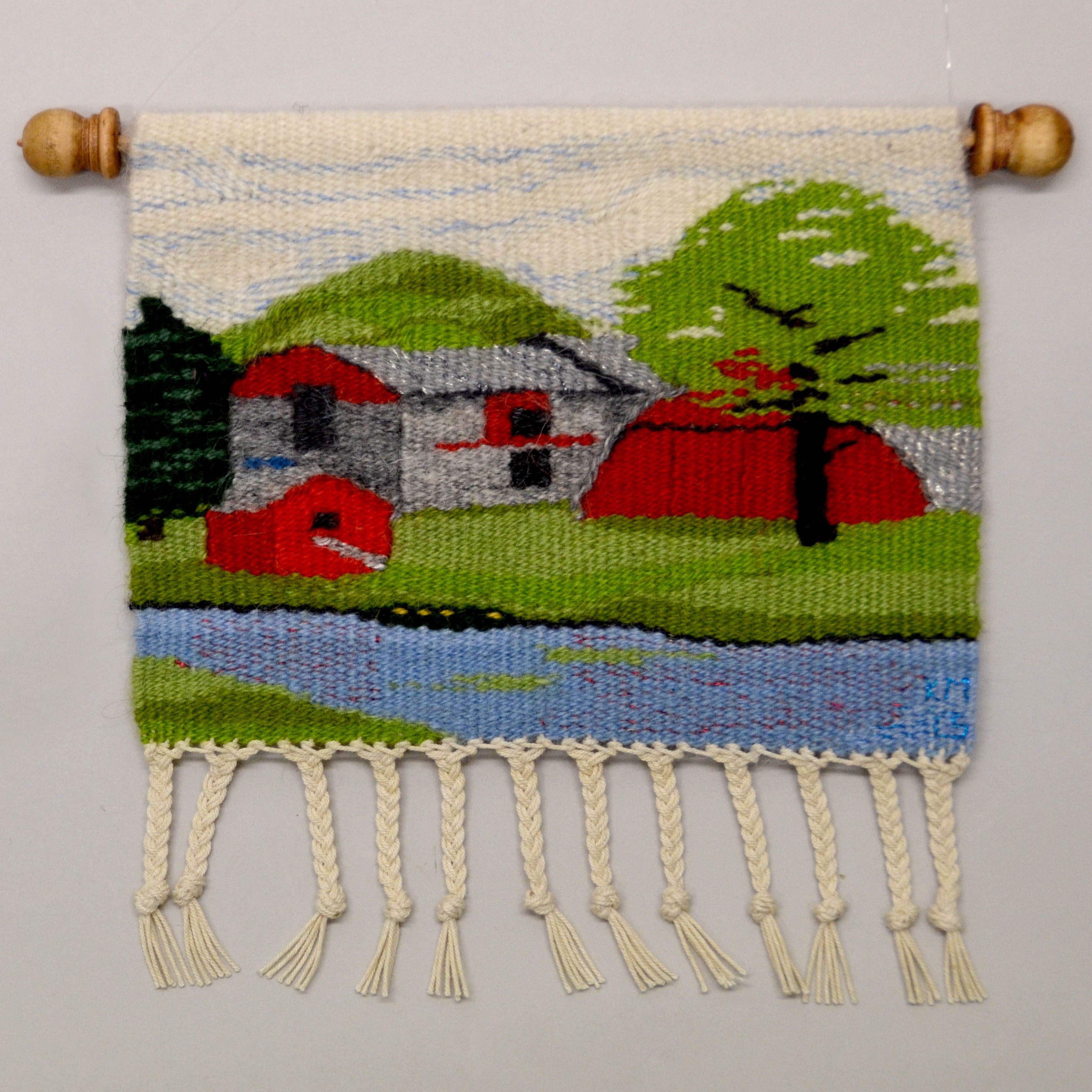
Anderson Berry Farm, Bay City, Wisconsin 6-1/2″ x 7″ Tapestry. Cotton warp, wool weft.
“Experimentation in Red” 41″ x 21.5″ Cotton warp and felted wool fabric strip weft. Plain weave.
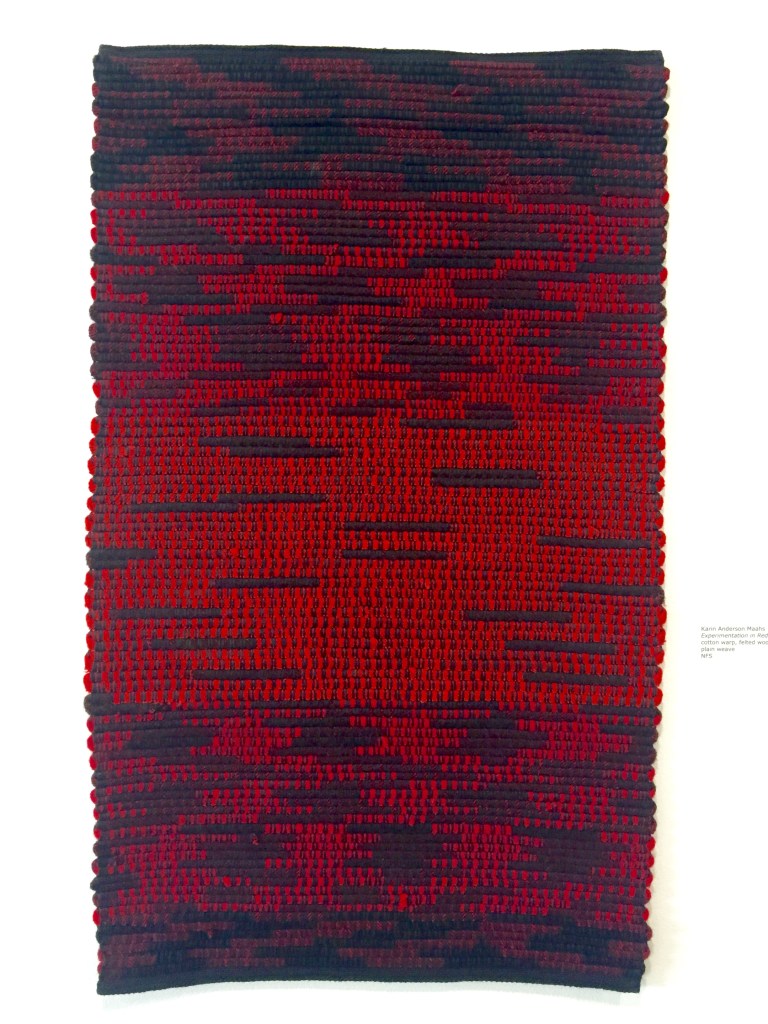
Karin’s red wool strips for this rug were part of a trove of felted wool purchased by her friend.
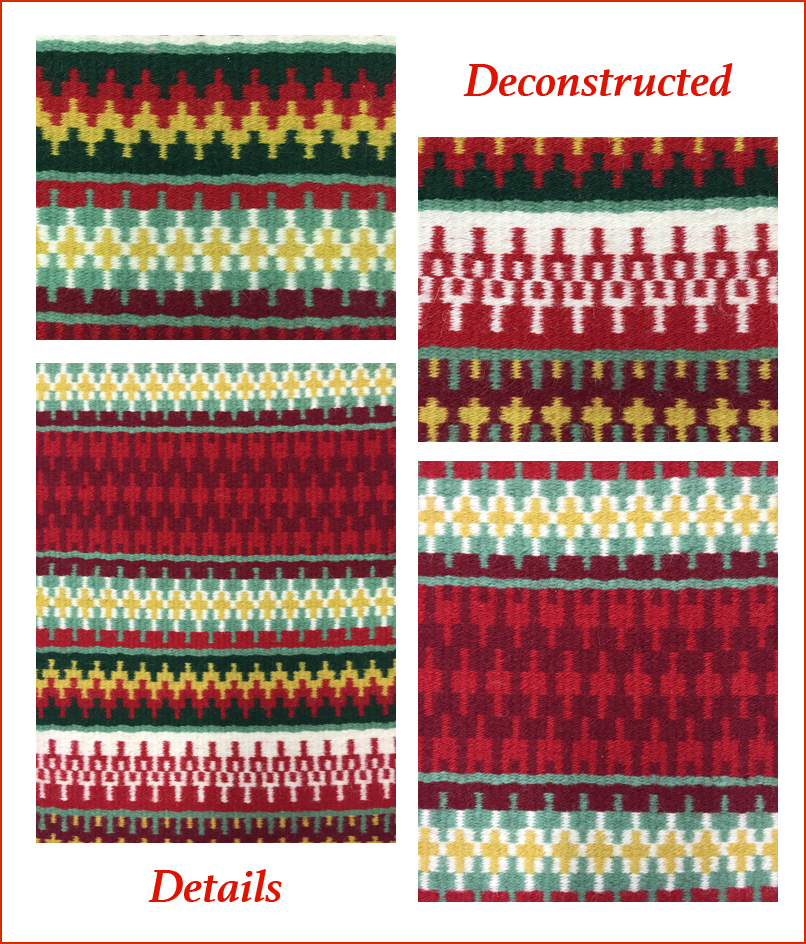
Untitled. 12″ x 36″ Band weaving (various techniques) Pearle and unmercerized cotton.

These bands represent two traditional weaving techniques: card-weaving and backstrap weaving with hand-held rigid heddles.
The card-woven pieces were woven on a backstrap loom with the commonly-used warp-twined-cord structure.
The rest are either backstrap-woven using a pattern heddle (Spaltegrind in Norwegian), or on an inkle loom with manual pick-up. They use supplementary warp patterns on a plain-weave, half-basket-weave background — commonly known as either “Baltic” or “European” structure.
The color red dominates traditional woven bands throughout Scandinavia and Baltic regions. Some are thicker and stronger, and would have been used as straps and belts. Other finer pieces are examples of hairbands, shirt bands, or decorative edging on clothing.
 Scandinavian Weavers Study Group