“So Lucky” (dimensions) Plain weave, rya. Cotton warp, wool weft.
“So Lucky” refers to the Norwegian symbol of luck and happiness. Read more about the weaving at An Eight-Pointed Star in Rya.
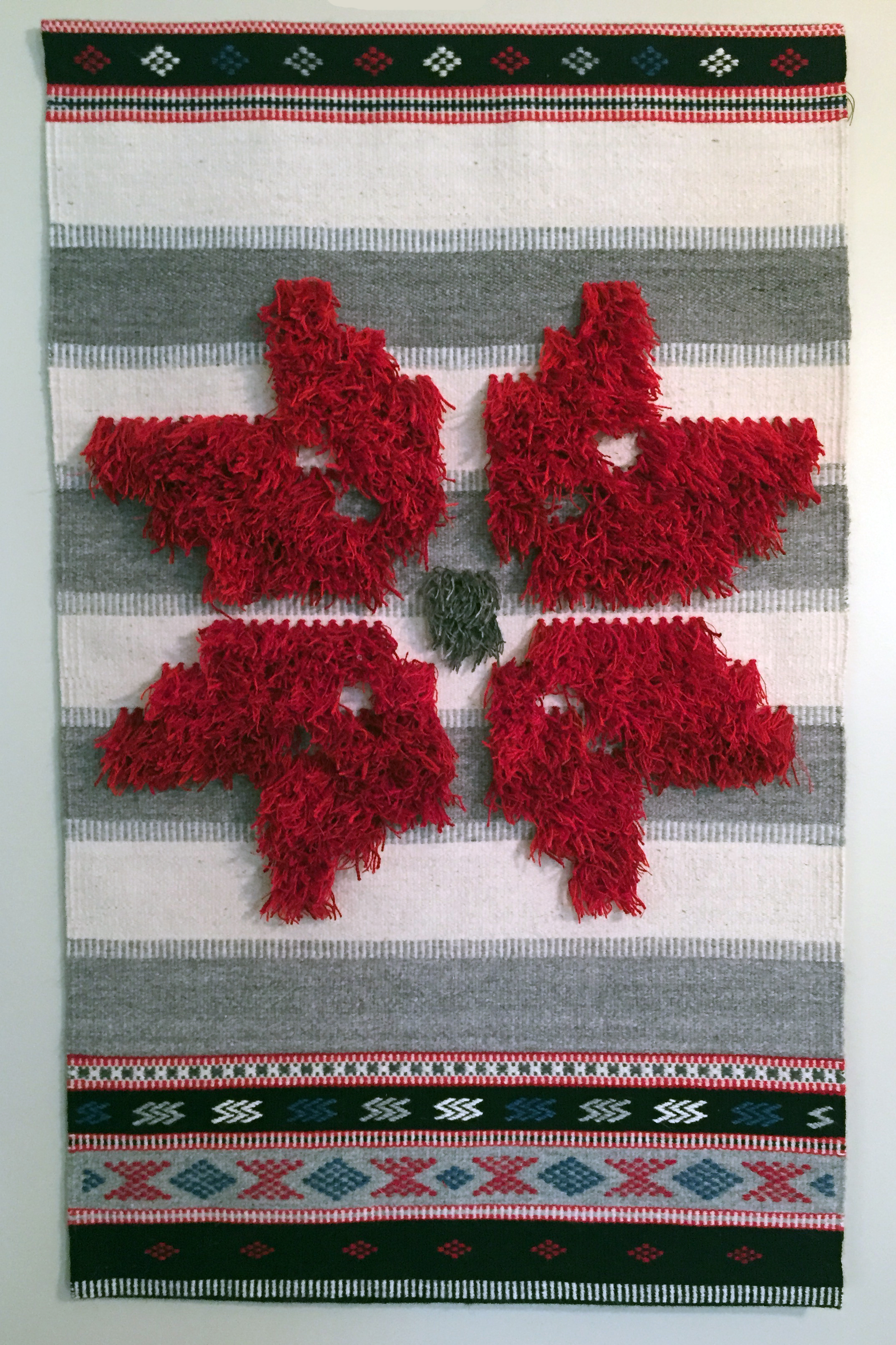
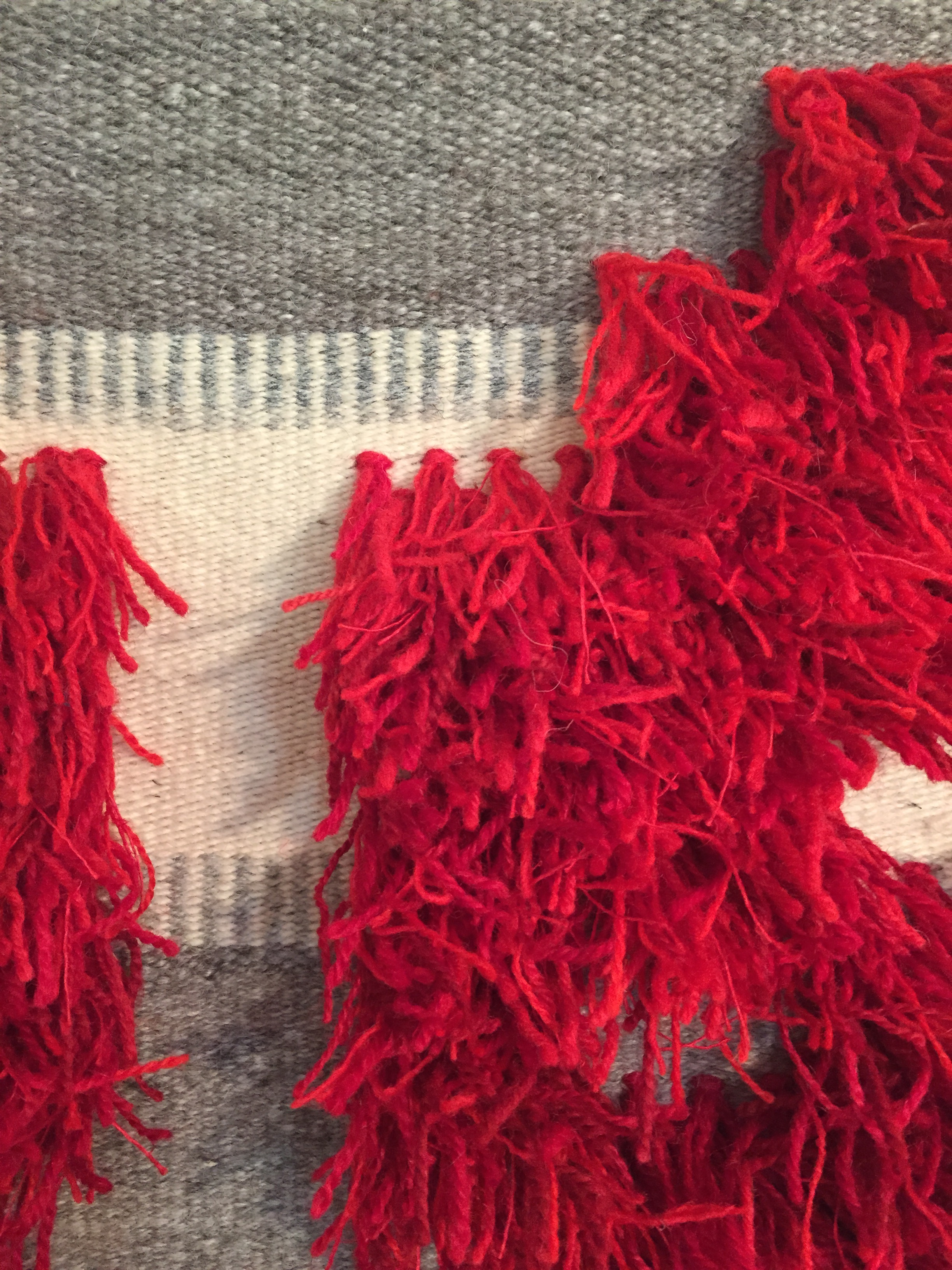
“So Lucky” (dimensions) Plain weave, rya. Cotton warp, wool weft.
“So Lucky” refers to the Norwegian symbol of luck and happiness. Read more about the weaving at An Eight-Pointed Star in Rya.
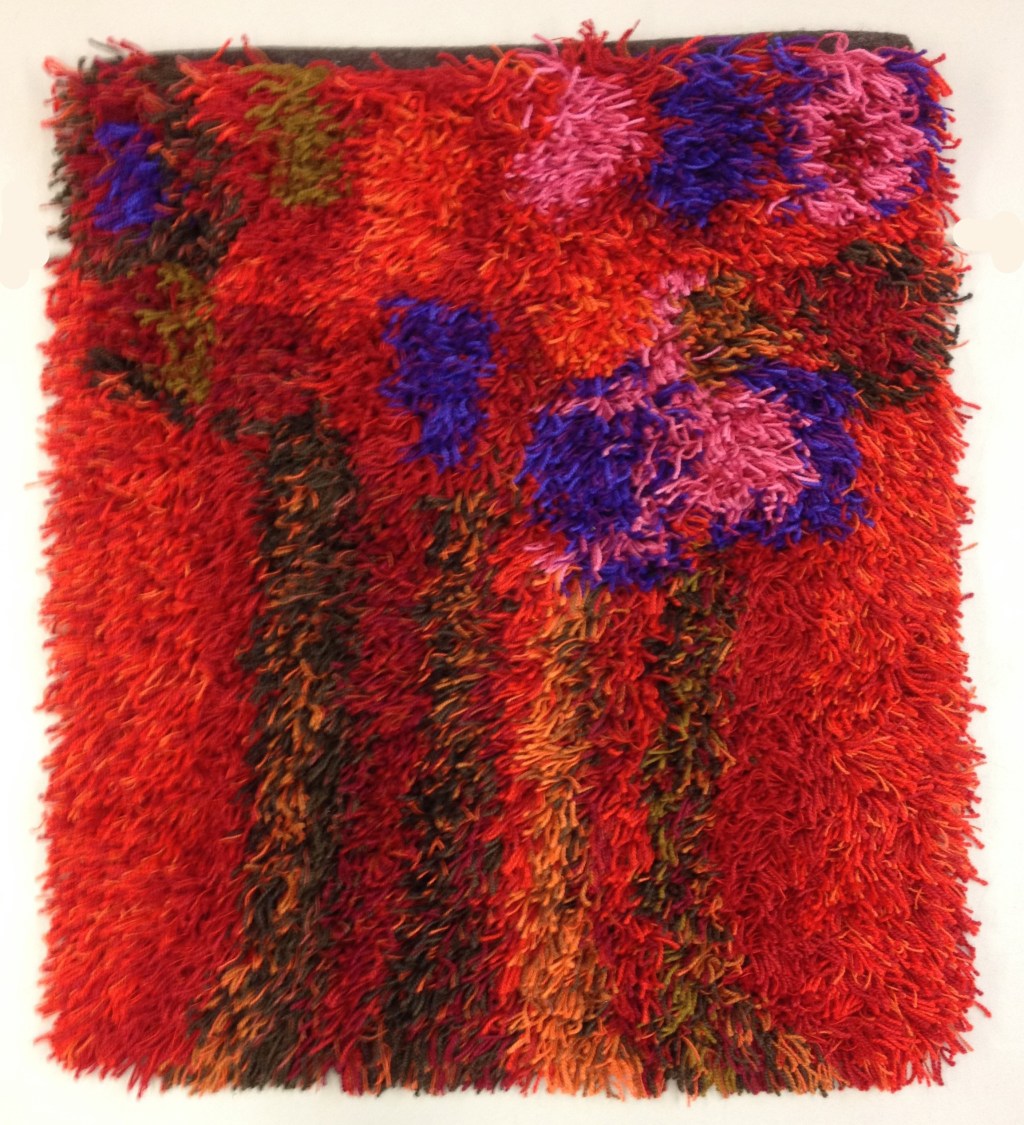
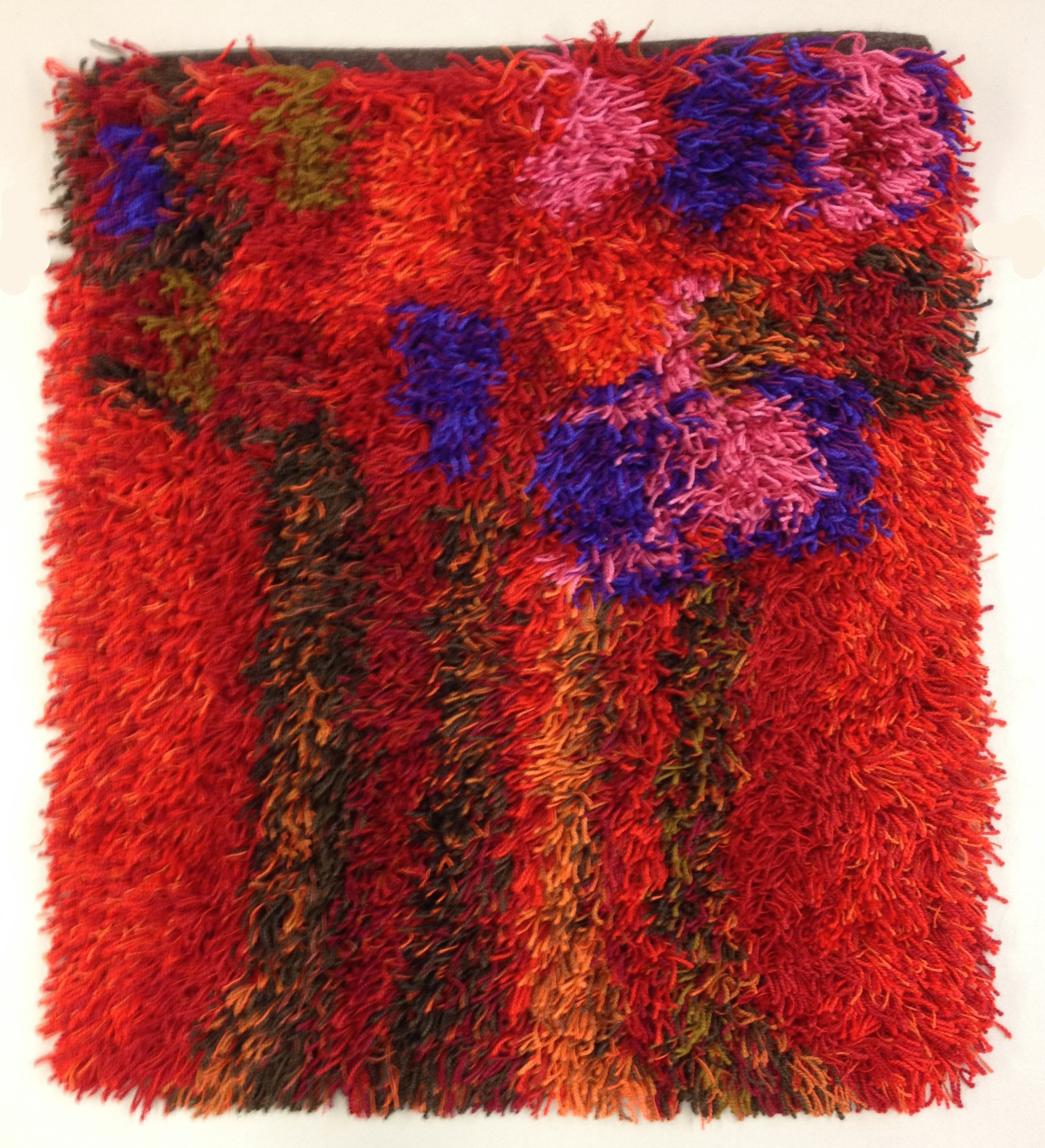
“Norwegian Cherry Tree” 31″ x 33″ Rya. Linen warp and wool weft.
Corky was on a driving trip in Norway, from Aurland to Bodø. Traveling through Hardanger on just the right spring day, he was inspired by hills that were brilliant with the bright pink flowers of cherry trees.
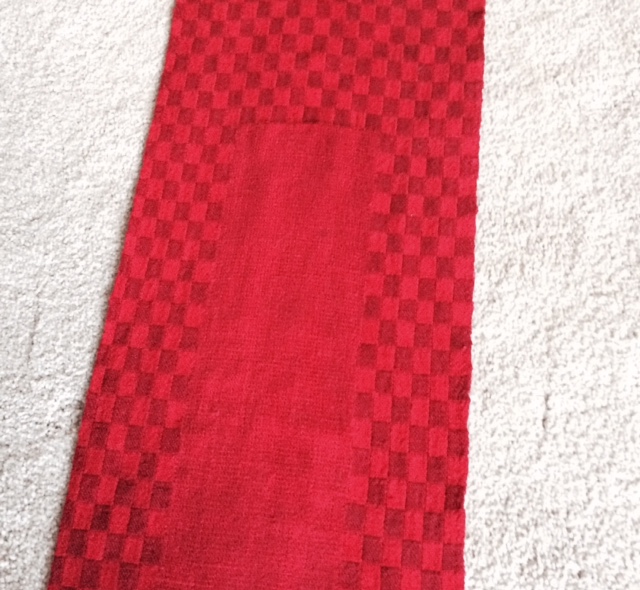
“Christmas Runner” 10″ x 44″ linen of various weights. Double weave
Mary’s goal since she started weaving in the early 70s has been to weave household textiles, to use and display functional and decorative pieces she weaves. Scandinavian textiles are her inspiration: contemporary functional weaving seen in shops, those seen in use in the homes of family in Norway; and historical pieces in museums.
Mary wove this narrow red runner for Christmas holiday use. It just fits on the top of her piano. And it’s RED, her favorite color.

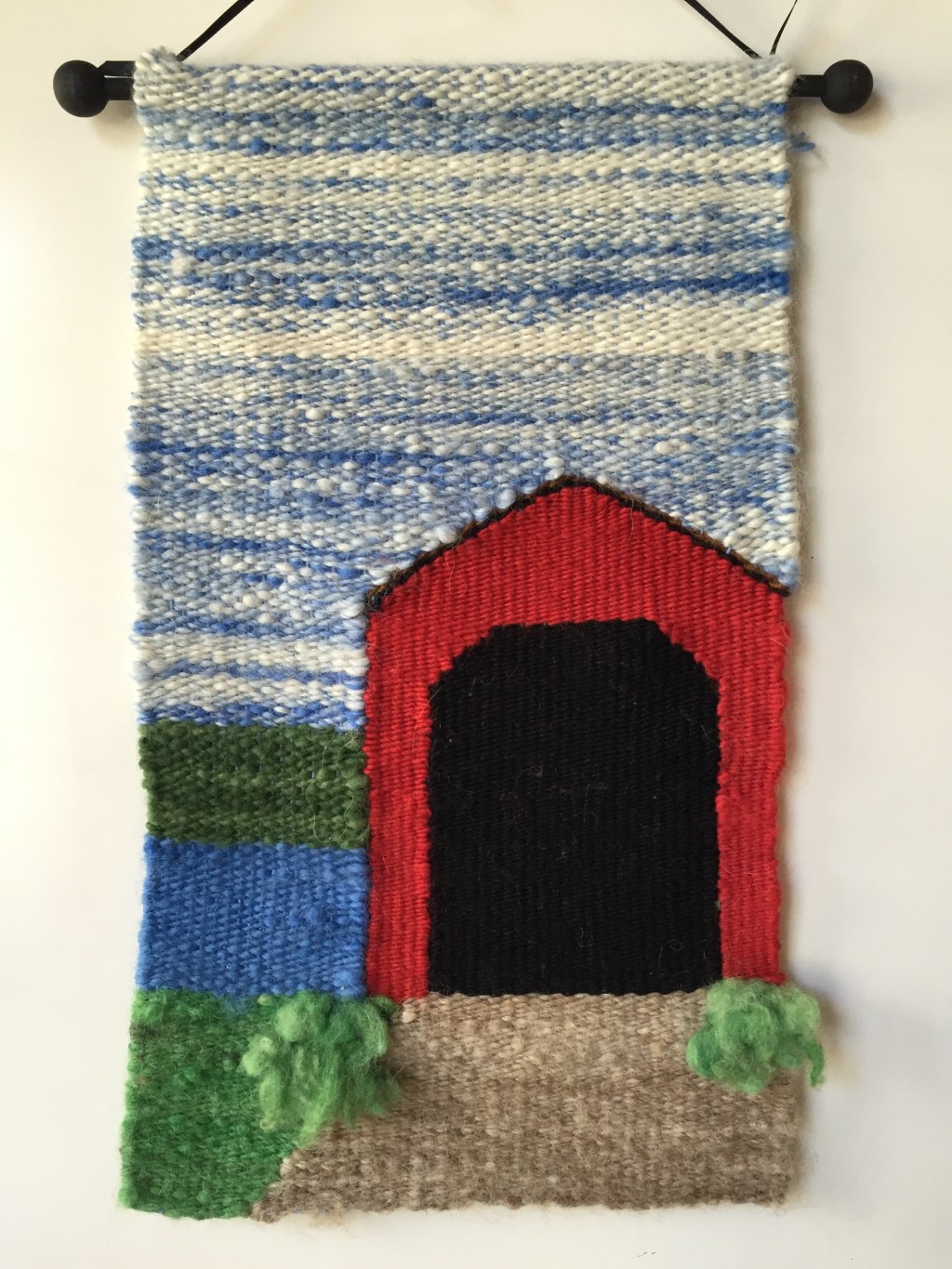
Zumbrota Covered Bridge: Minnesota’s Only Remaining Historic Covered Bridge. 13″ x 22″ Tapestry. Cotton warp, handspan wool weft.
Our Scandinavian Weavers Group includes members who put on a lot of miles to attend meetings, driving from South Dakota, Wisconsin, and central and southern Minnesota. Nancy Ellison runs Ellison Sheep Farm near Zumbrota, Minnesota. The red covered bridge is a famous local landmark.


Three of the pieces in the Scandinavian Weavers’ RED Exhibit at the Textile Center of Minnesota are tapestries. Each one depicts an image close to the heart of the weaver.
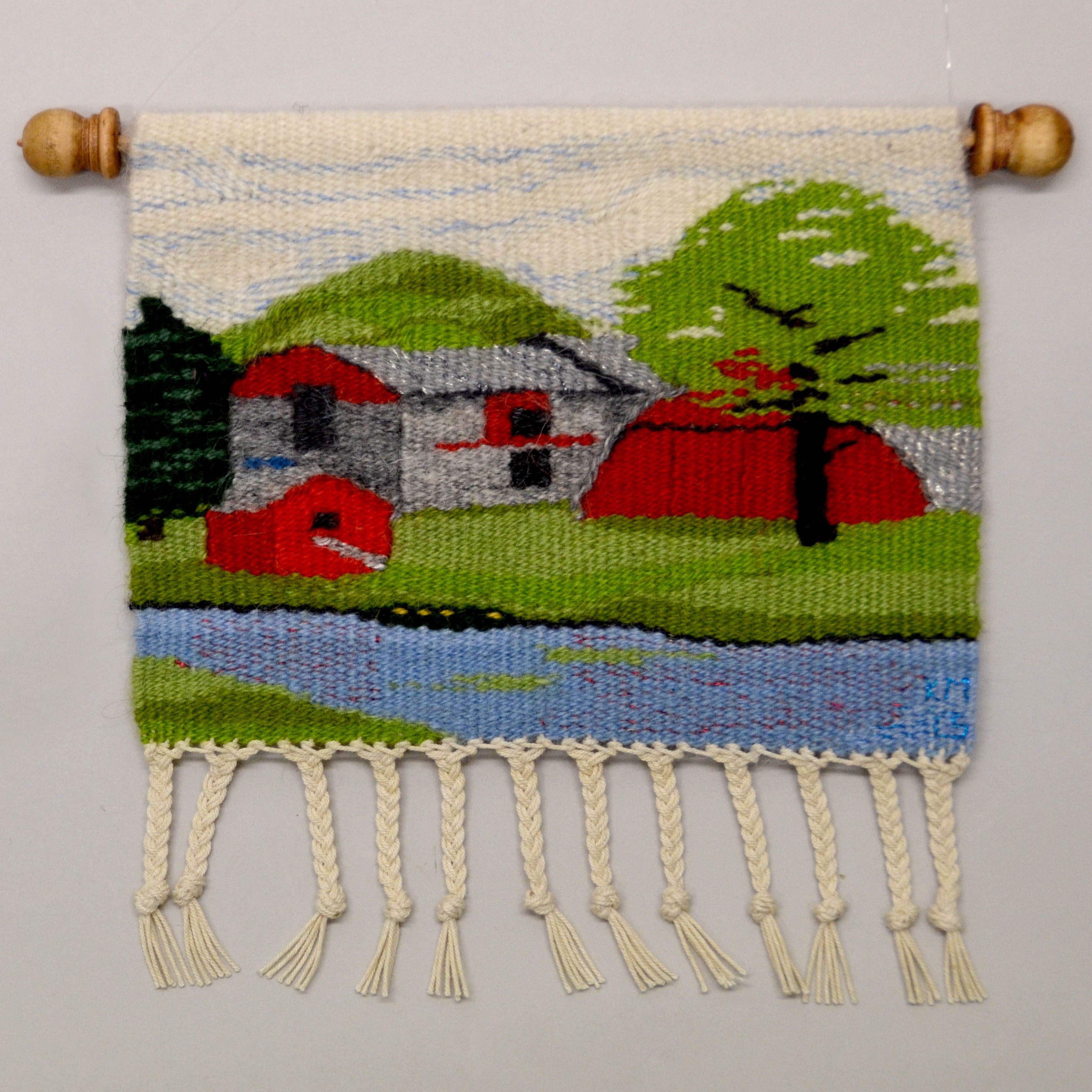
Karin Maahs’ weaving, “Anderson Berry Farm, Bay City, Wisconsin,” features a red barn. Unseen are the mountains of red strawberries Karin picked over the years, while her mother ran a berry farm on the property. Although she based her tapestry on a photograph, she knows each hill, tree, and curve of the stream with her eyes closed.
Nancy Ellison wove a red landmark, too: the covered bridge in Zumbrota, Minnesota, just miles from her farm. It’s the only remaining original covered bridge in Minnesota, so it’s a building in the memories of many Minnesotans. The wool includes handspun yarn from Nancy’s sheep, so both the bridge and its image are grounded in southern Minnesota.
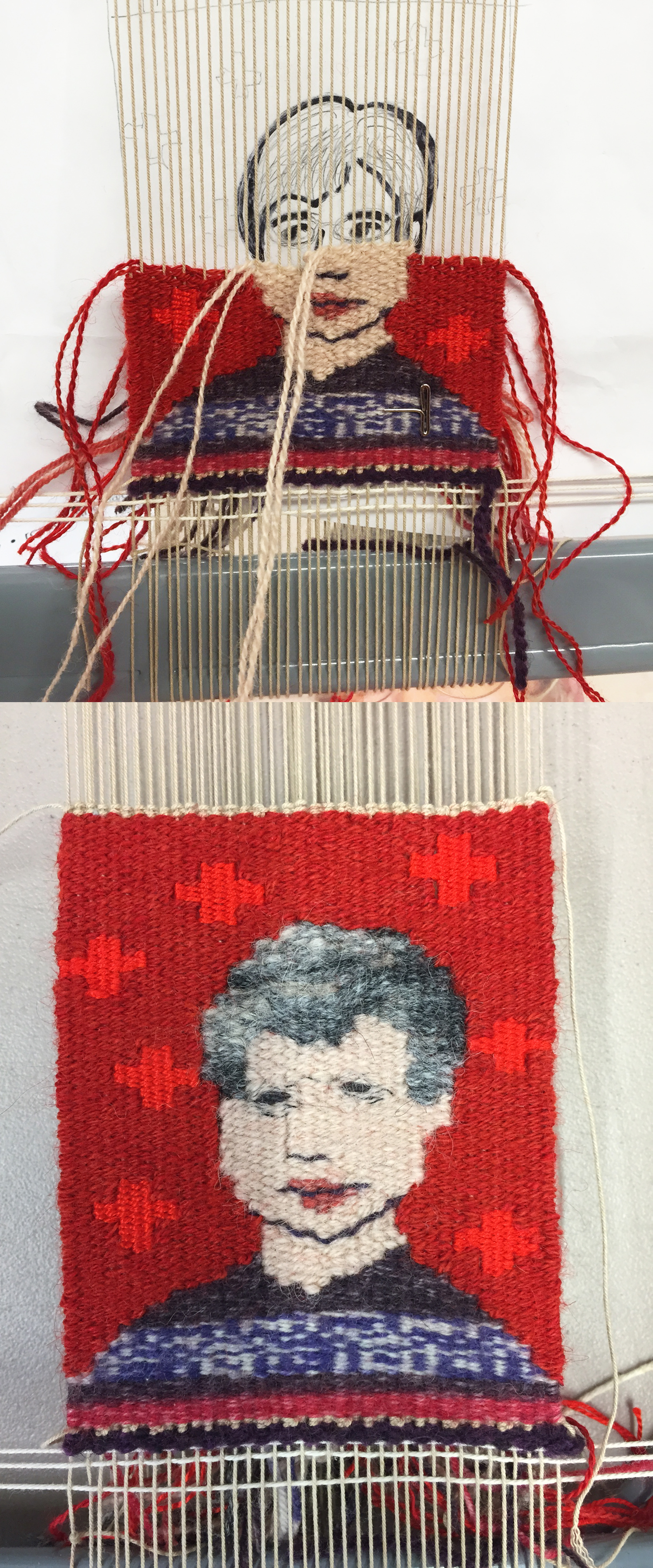
The third tapestry is Jan Mostrom’s homage to a now departed friend: noted weaver and weaving teacher, Syvilla Bolson. Appropriately, Syvilla is even wearing a Norwegian sweater, and the background with crosses is reminiscent of medieval Norwegian tapestries.

Join the Scandinavian Weavers for an opening reception for the show at the Textile Center on Thursday, May 12, from 6-8. It will be a busy night! Three other exhibits are opening that day as well, and the Weavers Guild is sponsoring a meeting and talk by workshop artist Susan Wilson at 7pm.

“Square Play.” 12″ x 21″ Perle cotton: 10/2 for the warp; 5/2 for the weft. Drawloom-woven on a 6-shaft satin background.
This piece was done to explore the possibilities of the drawloom, of design, and of the impact of red in a traditional fine-linen type structure.

Memorial. 4″ x 4.5″ Tapestry. Cotton warp, wool and perle cotton weft.
This tapestry is a memorial to Syvilla Bolson, a friend, fabulous weaver, and long-time supporter of the Scandinavian Weavers Study Group.

Most years our Scandinavian Weavers Interest Group chooses a technique to study, but two years ago we chose to set our weaving goals to focus on a color at the heart of so many Scandinavian folk textiles — red.
Please come to see this warm and lively show at the Textile Center of Minnesota Community Gallery, May 12-June 25, 2016.
For our 2016 exhibit, members chose many paths in technique and materials. We didn’t exclude the rest of the color wheel completely; our only criteria was that red needs to be a significant element of the piece. Some pieces are mostly red, and others are grand experiments in fitting red into a pleasing combination.

Lisa-Anne Bauch
Veronna Capone
Nancy Ellison
Melba Granlund
Patty Johnson
Corwyn Knutson
Judy Larson
Robbie LaFleur
Connie LaTendresse
Karin Maahs
Marilyn Moore
Jan Mostrom
Keith Pierce
Lisa Torvik
Phyllis Waggoner
This festive evening will celebrate new shows in all the galleries at the Textile Center of Minnesota. You won’t want to miss the other exhibits, either: On Borrowed Time: Postponing the Inevitable, Maggie Thompson (with an artist talk at 7pm); Hiaku Two Ways, Sandra Brick; and Joys & Tears in the Apron Strings, Yvonne Cory.
One of the great benefits of Weavers Guild membership is the opportunity to and learn from other members in the Guild’s interest groups. I am constantly reminded about how much knowledge is held by members and constantly amazed at the generosity of time and talent by those members. Our Scandinavian Weavers Interest Group has a long history of providing support to one another, and several new weavers have been nurtured.
We had a great learning opportunity at our January meeting, held on a frigid, cars-not-starting day. Even so, many members met for a special viewing of Swedish art weave textiles at the American Swedish Institute (ASI), assembled by group member and super-volunteer at the ASI, Phyllis Waggoner. She brought out treasures for examination and inspiration.

One amazing textile was a set of two curtains owned by Swan Turnblad, the turn-of-the-last-century owner of the Swedish American newspaper, the Posten, whose mansion is now the main building of the American Swedish Institute. The brown wool curtains, over 8 feet long, are embellished with Swedish brocading techniques, dukagång and krabbesnår. 


Here is the reverse of the bottom of the curtain.
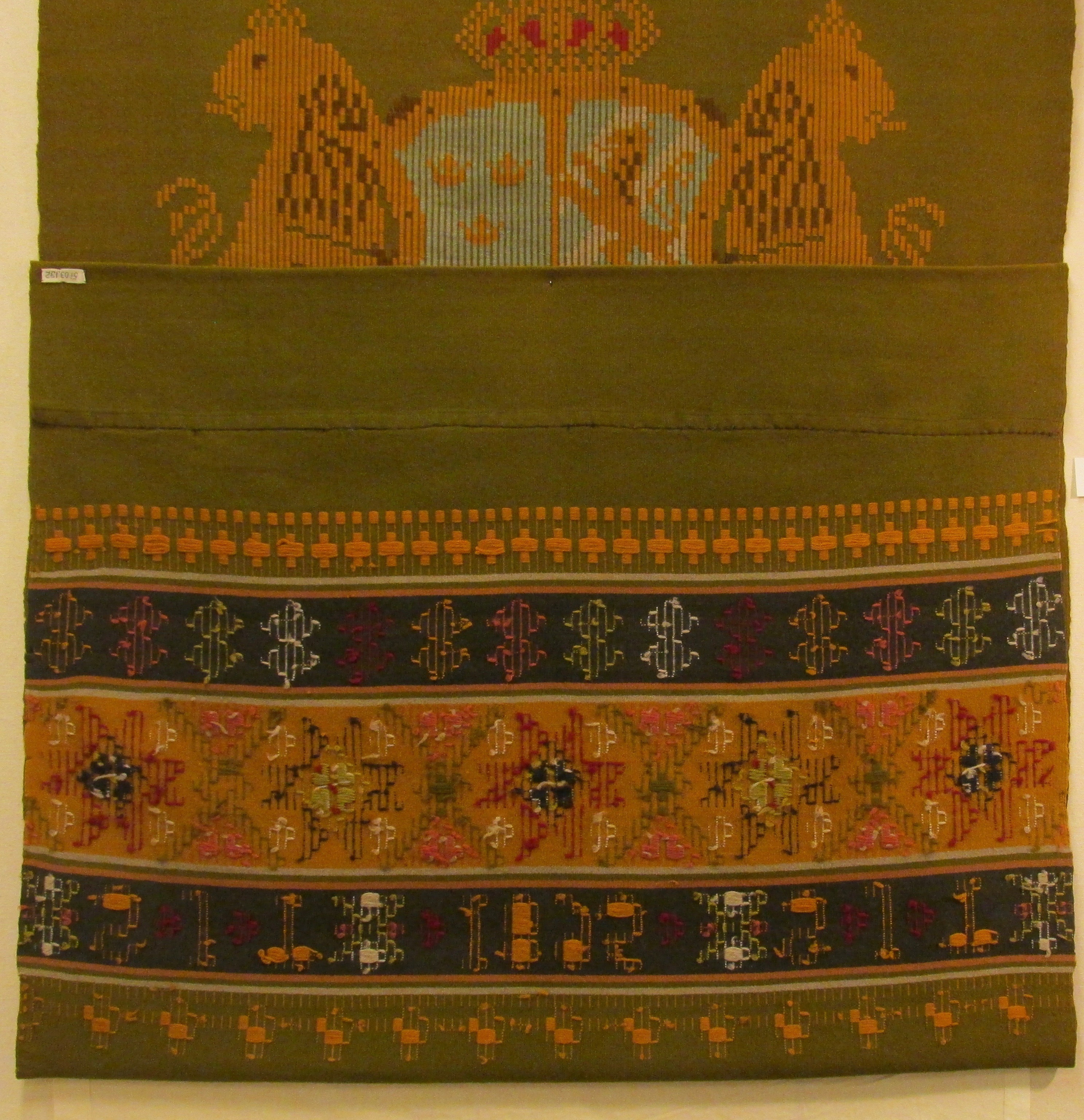
Since that meeting, we learned more about the curtains. Lisa Bauch wrote, “FYI, I was curious about the date on the curtains from the Turnblad mansion, so I had my mom do some research. (She’s a retired reference librarian.) The Turnblads travelled to Europe in 1895 (including Sweden) and bought furnishings for the home they lived in before they built the house on Park Avenue. I think it’s safe to assume that the curtains were commissioned and woven in Sweden that year, hence the date and SJT initials.”

Here’s a detail from the top of the curtain.

Watch for more photos of beautiful Swedish textiles from the American Swedish Institute… posted soon.
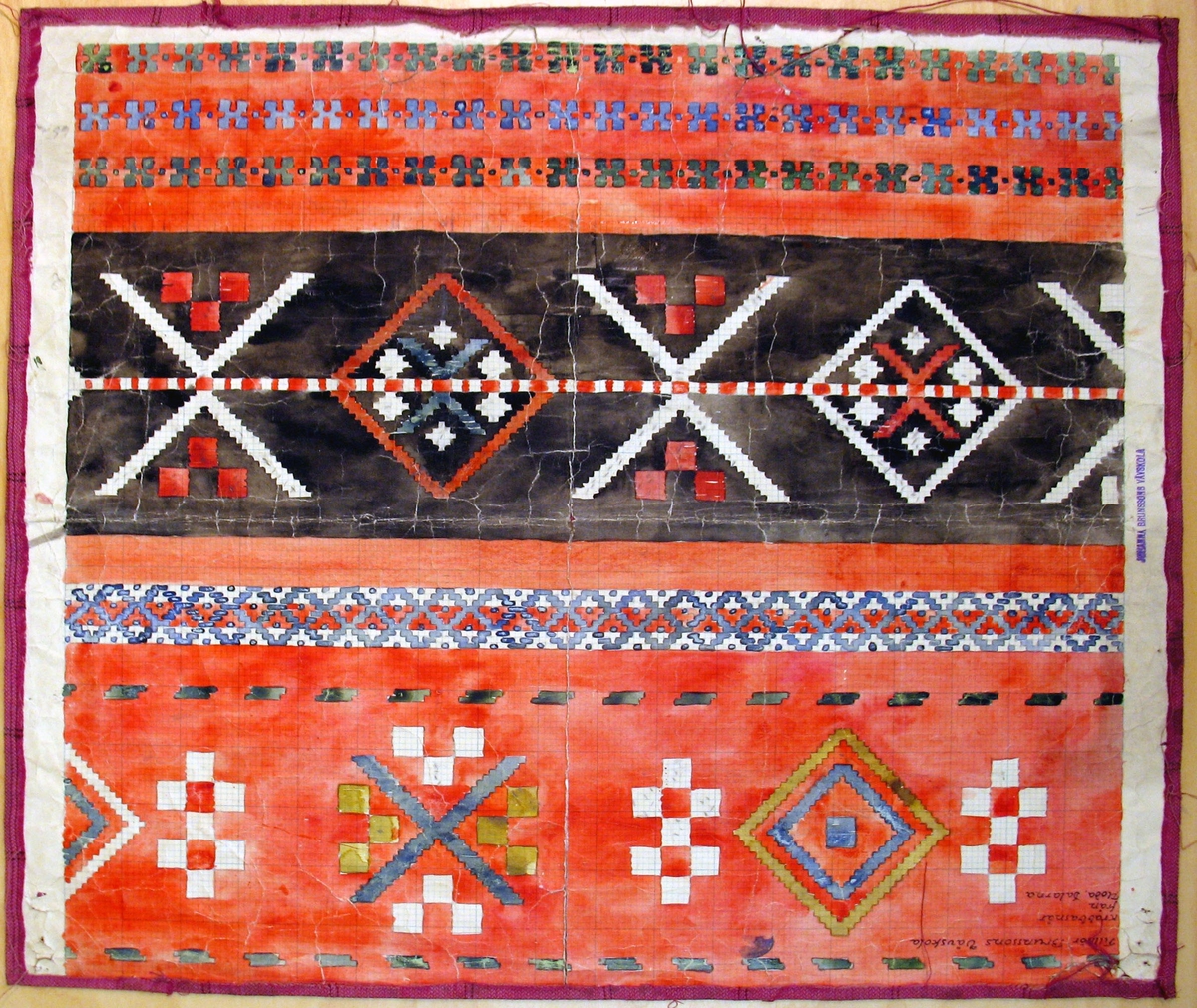
Looking at old textiles can be a wonderful inspiration for designing new textiles. In our current Scandinavian Weavers Study Group focus on Swedish art weaves, I found digital images from Swedish museums that could help with ideas for patterns and bands. You could look at the old pieces for color combinations, or to see how they were balanced into sections. Just soak it in.
In the Swedish DigitaltMuseum, try these terms: Konstvävnad, halvkrabba, krabbasnår, dukagång. I know there is overlap, as many pieces may include more than one of the techniques.
There are images not only of woven items, but of patterns, too. You could use them to chart your own, combining elements you like. For example, here is a krabbasnår pattern.
 Scandinavian Weavers Study Group