Blog

  • “The Sheep Farm” by Nancy Ellison

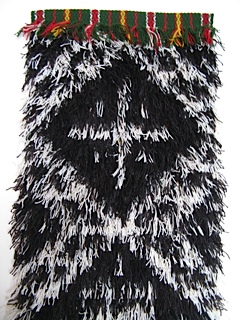
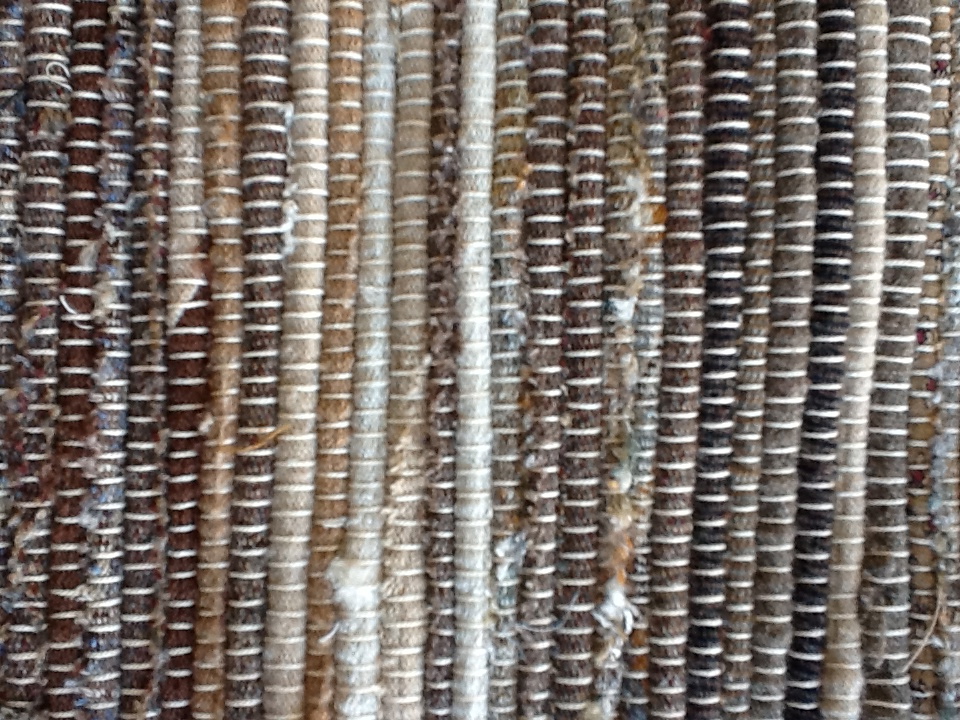
    nancy-krokbragd-sheepNancy Ellison’s  weaving has a soft surface and the natural brown, black, and gray shades of the xxx sheep on her southern Minnesota farm.  “The Sheep Farm” was woven on three harnesses with a krokbragd threading.  It was woven with handspun yarn on a Louet David loom with a sinking shed which Nancy prefers for weaving krokbragd. The wooly sheep emerge with unspun fleece tied with traditional rya knots.  The piece received honorable mention at the Vesterheim National Folk Art exhibit in 2012.

    nancy-floor-loom

    “Side by Side,” a band with sheep images, was woven with Ashford Tepako wool yarn.  For a band of this type, Nancy sometimes uses a Schacht inkle loom and other times a Glimakra band loom. She wove it as a krokbragd turned draft by adding a set of string heddles to get a third shed.

    nancy-spinning
    It’s a wonder that Nancy has time to weave and spin, with the responsibility of her farm and animals – sheep, ducks, chickens, goats, and a remarkable goose who looks like he is wearing a cap.

    She teaches spinning and weaving classes in an old barn on the farm.  The studio area has heavy timber walls, a magical space for a spinner or weaver, as you examine the new and antique looms and wheels lining the perimeter.  (And surprise! There are two long-haired rabbits tucked in a cage, too.)  The whitewashed round silo has been transformed into a gallery. Nancy is a dealer for a variety of spinning wheels and looms. You can – and should – visit “The Ellison Sheep Farm” open by appointment.

    Nancy is a former home economics teacher, and studied weaving during the summer of 1968. She has been a member of the Scandinavian Weavers Study group for many years.

    (More on a visit to Nancy’s farm here.)

  • Everything Under the (Midnight) Sun: Scandinavian Weavings

    Nils-Aslak_Valkeapää_Beaivi,_Áhcázan_The_Sun,_My_FatherThe Scandinavian Weaving Study Group of the Minnesota Weavers Guild is mounting a new exhibition, Everything Under the (Midnight) Sun: Scandinavian Weavings, to be displayed in the Community Gallery of the Textile Center of Minnesota, from March 15 – May 4.  Information about the pieces and the weavers will be posted in the coming weeks.

    Typically, the Study Group concentrates on a particular Scandinavian weaving technique for one or two years, culminating in an exhibit. Other times the group chose a theme on which to base a show, as in “Symbols, Myths, and Fairy Tales.” The 2013 display breaks from tradition. It gathers recent work by the weavers in a panorama of Scandinavian weaving techniques.

    The  weavers represented have varying degrees of experience; some are new to the craft, others have woven for decades.  The looms used range from simple heddles with a backstrap to complex floor looms. The common theme is enthusiasm for traditional Scandinavian weaving techniques as a way to create contemporary textiles.

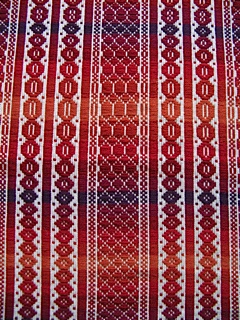
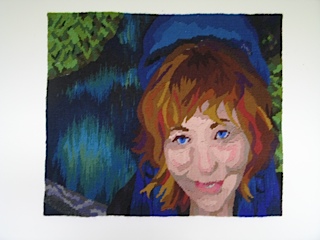
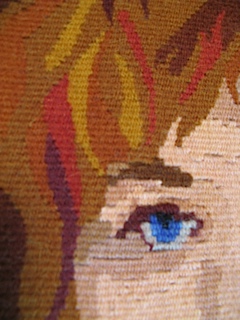
    The show includes two tapestry pieces. One is based on a medieval Norwegian theme; the other uses similar techniques to depict a modern girl with a backpack, woven in hand-dyed yarns. Those familiar with Norwegian weaving will find pieces in familiar techniques; krokbragd, rutevev, skillbragd, and monk’s belt. Pieces are woven in cotton, fine linen, and wool, including hand-spun wool.  Sometimes traditional weave structures are used with unconventional materials, like fabric strips or pineapple bast.

    All visitors will find inspiring weavings with “Everything Under the Midnight Sun” represented in the latest Scandinavian Weavers exhibit.

    Contributors include Jane Connett, Keith Pierce, Patty Johnson, Judy Larson, Sharon Marquardt, Melba Granlund, Jan Mostrom, Nancy Ellison, Veronna Capone, Robyn Meadows, and Robbie LaFleur.

  • Scandinavian Weavers Meeting, May 2012 (Part one)

    Field trip!  We had a great trip to Nancy Ellison’s farm near Zumbrota – DESPITE the cold and drizzly day, an anomaly following several perfect spring weeks in Minnesota.  All of Nancy’s beautiful long-haired sheep were shorn on Good Friday, leaving them a bit patchy-looking.  Normally they would have been in a distant pasture eating fresh greens, so we appreciated the fact Nancy kept them in the barn for viewing.

    ImageFrom an earlier trip, here’s how they look in full long-fibered glory.

    We met in a room at the edge of the barn with thick, white-painted timbers and spinning wheels and looms flanking the walls (plus long-haired rabbits in cages!). The wind was howling outside, yet it was quiet inside.
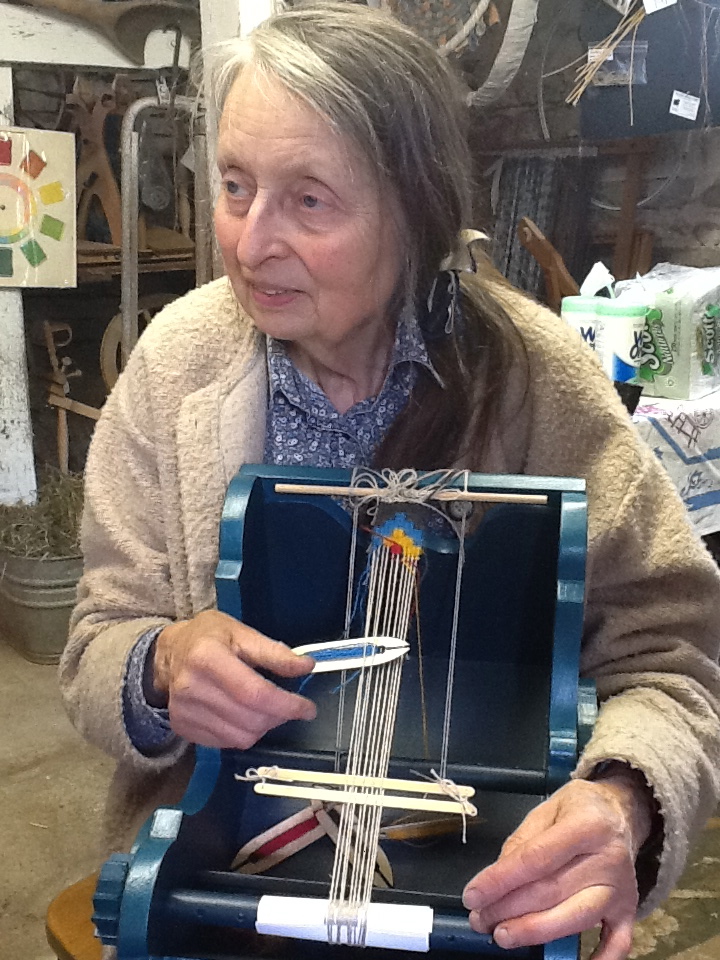
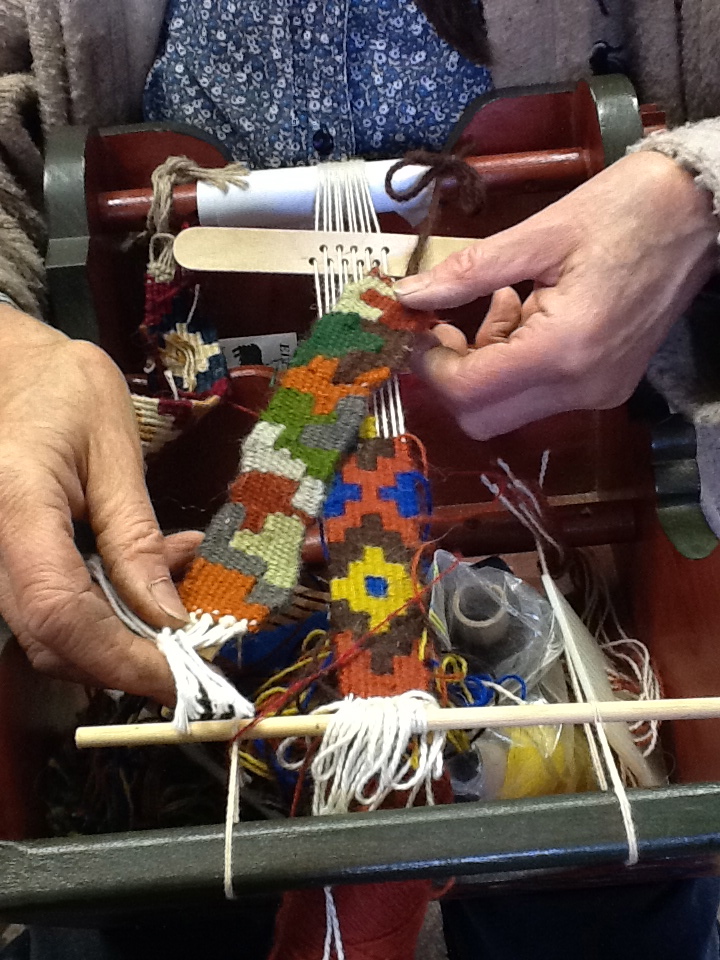
    Nancy will be teaching a cradle loom class this summer.  She showed us cradle looms with a completed slit tapestry and one in progress.  Inspired by observing her warping method and by her completed pieces, Jan Mostrom, Mary Skoy and I are all meeting to warp our cradle looms later this month.  We all have lovely rosemaled cradle looms which we have NEVER USED.  For Pete’s sake, we only have to warp 10 threads!  How long could it take?  We’ll report later on our progress.
    A remark about Decorah and the Norwegian-American Museum sparked  a great story from Lila Nelson about manners and creative problem-solving.  Years ago, King Olav gave money to Vesterheim that was used to install a state-of-the-art textile washing station.  Old textiles could be submerged flat and gently into the large shallow basin.  During a Royal Visit to Vesterheim, the new equipment was on display in demonstration mode.  Lila and others needed to show how it was done, complete with wearing heavy rubber gloves to protect their hands and the textile.  But how would that work with the king’s well-known desire to shake hands with the people he met?  In the end they decided to sort of fake the actual washing step.  They pulled their right-hand gloves almost completely off their hands, so that when the King came close – whoosh, off came the glove.  Awkward  rubber glove pulling, struggling and snapping would put a dent in trying to appear poised, wouldn’t it?
  • Scandinavian Weavers Meeting, March 2012

    Veronna started off a really interesting discussion of hems and edges of textiles when she described a recent project, monksbelt runners in pearl cotton.  “Oh,” she noted when she took them off the loom, “It looks like I was drunk at one point and here at another.”  Hardly.  There’s more on that discussion on my “Bound to Weave” blog, “Showing Your Good Side.” She shared two interesting lessons from that piece.  She made color windings of the yarns, around a card, to test out combinations.  Then she made both a black-and-white photocopy and a color photocopy of the combinations.  The black-and-white helped show relative contrast of dark and light.  Also, when you weave monksbelt with the same color for the base and pattern weft, it is really two colors, because of the reflective properties of the yarn.

    Veronna suggested we look at the swatch photos for patterns in Mary E. Black’s New Key to Weaving found in a new digital collection sponsored by the government of Novia Scotia.

    Judy brought rouched scarves made with lace-weight yarn, silk  120 inches long, 72 inches, and Jaeger zephyr wool silk.

    She made a rug in monksbelt pattern using fabric strips. She sleyed poly-cotton carpet warp at 12 epi.

    Patty Kuebker Johnson talked about the color and weave study group sponsored at Color Crossing.  It’s especially useful for those who don’t do a lot of fine thread weaving.  “Unless you have a weft-faced or warp faced weave, you are always dealing with the interaction of the thread colors,” she explained.   Once it’s on the loom the study group members sign up for time slots to weave off samples.

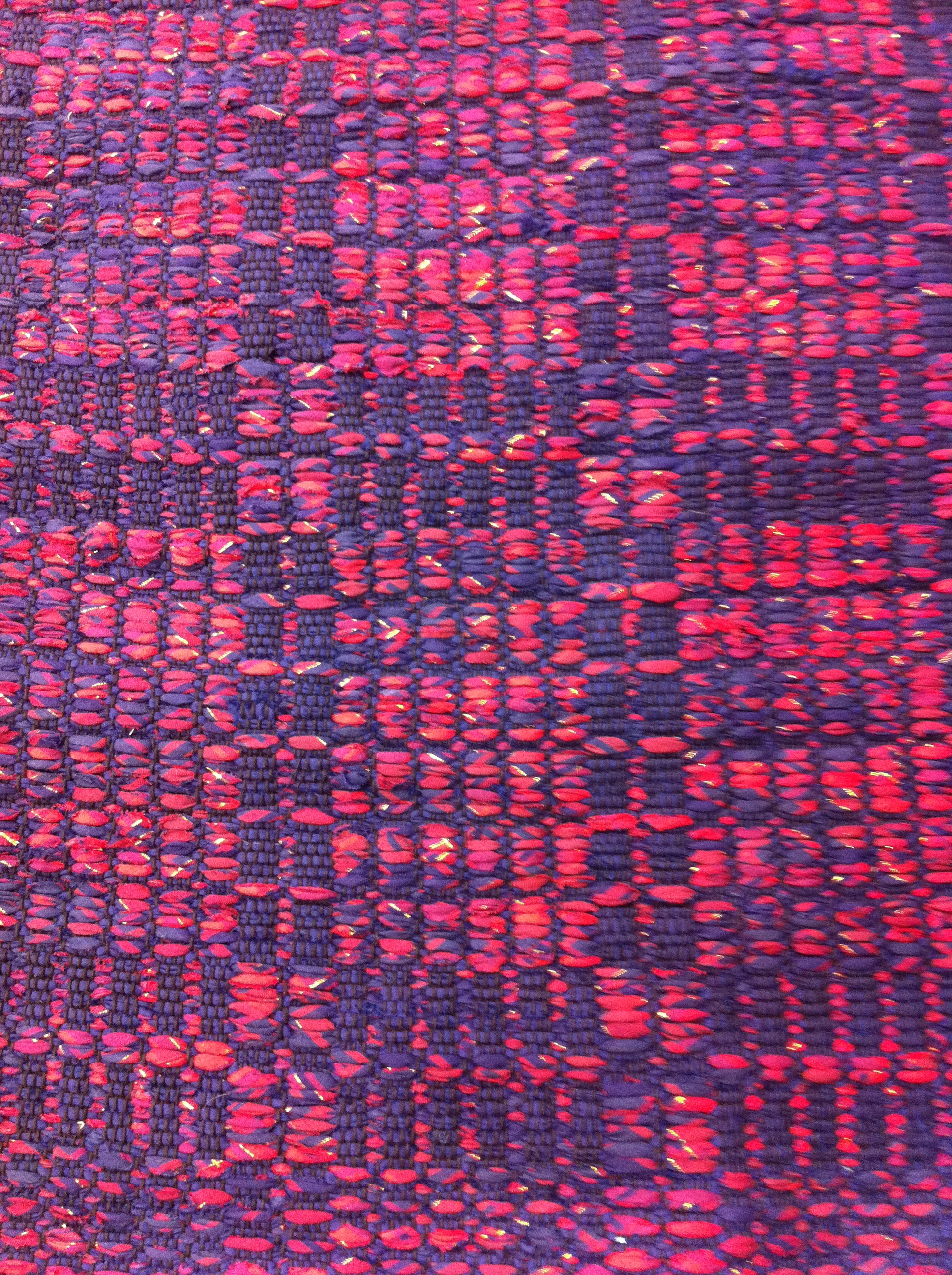
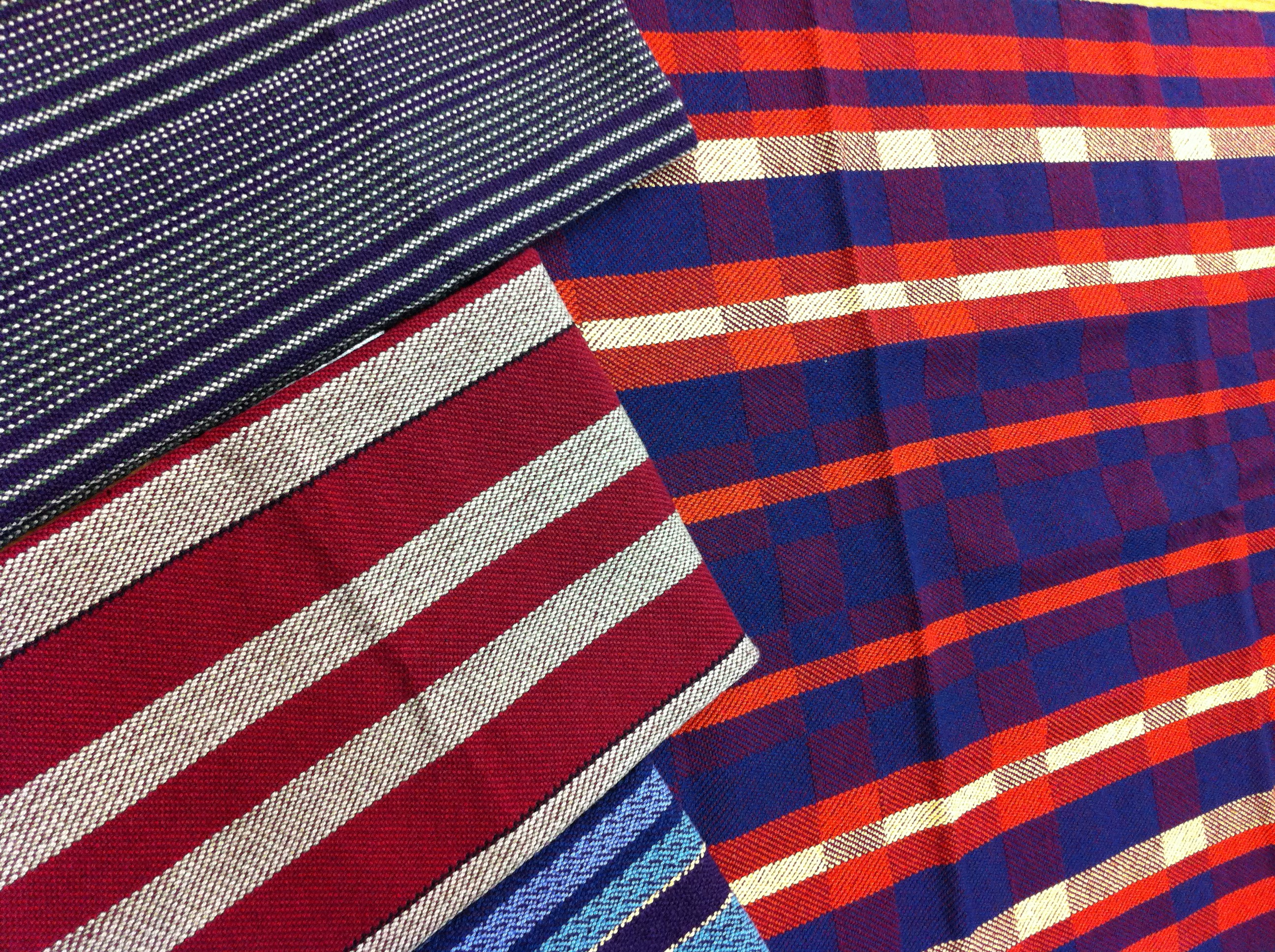
    Robin Meadow noted that a new session of the color exploration class, Stripes and Structures to Create Tantalizing Towels, was starting soon.  She’s taken it twice, and as a new weaver, found it enormously helpful each time. You work in different structures, different color palettes,  and it requires diligent production weaving.  Why take it twice? You deal with different color ways, different loom personalities, and even different weave structures from one class to the next. Patty said that she uses the towels she makes as runners until they become dishtowels.  Below is a jumble of the towels Robin wove in her last class, a bad photo of lovely items.

    Melba Granlund spent a fantastic week taking the basic Swedish weaving course at Becky’s Vavstuga. “You weave like you’re crazy,” Melba said.  There were eight people in the class, two of whom had never woven before.  Her completed pieces were beautiful.

    A perennial weaving problem is time, never enough time for weaving. At one point the issue was raised about weaving just a bit each day on a project. Isn’t  there a problem with a difference  in beating? Are some portions more tightly woven than others?  Patty noted that she encounters this more with with knitting than weaving.  She advised, “Warping is the hard part!  Reward yourself for each step of the way.  Today I wind the warp – that’s the assignment.  The next day, put it on the back beam.  Break it into segments and reward yourself for the completion of each.”  Meeting with our group is good for encouragement – the encouragement of example, and the encouragement of tips.

  • Lila Nelson Wrote About the Group in 2000

    Lila Nelson wrote about the Scandinavian Weavers Study Group in the November, 2001 issue, “Norwegian Textile Folk Arts Today.”

  • Scandinavian Weavers Study Group February Meeting

    The Scandinavian Weavers Study Group met on February 19, 2012.

    Linda Simpson was a first-time attendee, with a charming story of her desire to weave.  Her grandmother, who lived with Linda’s family when Linda was a child, was a weaver.  She died when Linda was four, and the loom was packed up and stored in various locations for years.

    When Linda moved to Roberts, Wisconsin, a few years ago, she met Patty Kuebker-Johnson and her dream of setting up the old loom was revived. She rented space at Color Crossing, ensuring a lot of expert help during the process of bringing the old loom back to life.The loom pieces were very dirty, and charring indicated they may have narrowly escaped going up in flames at some point during storage. Repairs were needed. The ratchet system was a bit warped, and the pieces where the beater bar hung were worn through.  Linda has completed her first weaving, a runner woven from old rags from her grandmother.  She is moving on to a new project, paraments made in huck lace technique with Harrisville wool.

    Even though she was only four when her grandmother died, Linda still remembers sitting under the loom. It seemed magical.  Judy Larson, who along with Patty helped set up the old loom, noted, “Now we’ve all sat under the loom, but sometimes with a beer.”

    Mary Litsheim’s PhD dissertation has been published on the University of Minnesota website. She has submitted some portions of the thesis to Vesterheim for possible publication in the magazine; others may be published in the Textile Newsletter or the rosemaler’s newsletter.  She presented a paper based on her thesis at the SASS (Society for the Advancement of Scandinavian Study) conference in Chicago in 2011.  She said the attendees were amazingly interested in the smallest nuances of information about Scandinavia.  They asked many questions.

    At home on her Hagen loom Mary has been struggling with a tapestry, finally realizing, “I don’t like tapestry!”  Instead she will continue on that warp with Vestfold technique in a small, fine format.

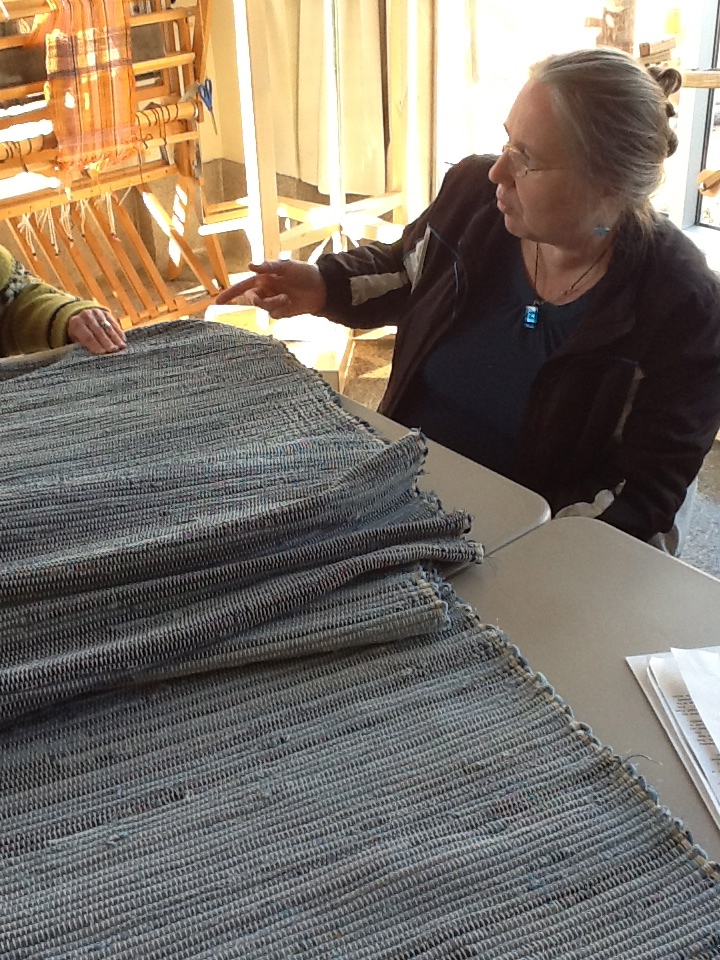
    Judy Larson weaves rugs on 8 foot cranbrook loom.  The rug she brought, made from fabric strip from jeans, wasn’t so wide but it was ten feet long! At 12epi with seine twine warp, it should be a long-lasting rug.

    She made a smaller rug of men’s ties in a three-shuttle technique, part of the Color Crossing Tie Challenge.

    We discussed upcoming issues of the Norwegian Textile Letter and solicited articles.  For anyone who does not subscribe to this fabulous publication that is SO REASONABLY PRICED, send $15.00 for a one-year subscription to Mary Lonning Skoy, Editor, 7200 York Ave. S #120, Edina, MN   55435.  Email: maryskoy@hotmail.com

    Nancy Ellison bought a book, Old Swedish Weavings from North to South from the Vesterheim bookshop.  Here’s a fun YouTube preview of that book.

    Melba Granlund is traveling to Becky’s Väv Stuga for a beginning Swedish weaving course; Patty Kuebker-Johnson is taking Becky’s drawloom class in May.  Becky’s Vavstuga website has a section with many fun and instructive videos; see her mini movies page. http://www.vavstuga.com/minimovies/

    Nancy Eillison is continuing her exploration of the cradle loom, and in particular, making slit tapestry on the cradle loom.  If anyone finds information on similar looms in Norway, she would be very interested to hear about it.

    Patty Kuebker-Johnson is very enthusiastic about using the half-heddle system for accomplishing patterning that does not run all the way across the warp.  She is working on a project for a study group show at the Phipps Center for the Arts.  As she put it, she is making slow weaving even slower. She used her half-heddle set-up to make the pieces with dots shown here.  The new pieces will be the same dots, but dots falling apart, complete and incomplete dots. Here are the first full-dot experiment pieces.

  • A New Year and New Weaving Goals

    The Scandinavian Weavers met on January 15.  2012 is still new and shiny so in addition to discussing recent accomplishments and current projects, we talked of hopes for our weaving work this year.

    Robin is in search of the perfect loom.  Melba is taking her first tapestry class, and hopes to weave a virgin – an image from the traditional “Wise and Foolish Virgins” tapestry traditions.  (Will she weave a wise one or a foolish one?)  Melba asked for advice on which yarn to use; a few people suggested Rauma prydvevgarn and aklaegarn.  Jan has also used single-ply ullspiss yarn to good effect. Harrisville yarn isn’t a great choice; it is more for clothing and blankets.

    Jane wished for something that many of us could use – more time for weaving and a more organized approach.   She would like to do more tapestry, krokbragd, and card weaving.  She may try a Vestfold piece on a home-built copper tapestry loom.  The laid-in pattern Vestfold technique could also be done on a frame room, but it’s difficult to keep a tight tension.  She has been creating Viking chain jewelry and experimenting with chain mail technique.

    Claire brought a beautiful slit-tapestry piece, impeccably woven.  She talked about the difficulty of making the slit areas meet without gaps or overlap.  Jan said some people throw an occasional shot of sewing thread across the whole width of a piece in areas with long slits.  The sewing thread remains invisible, but helps the slit areas stay together without excessive pulling-in.  Claire managed perfection without that tip!

    Mary has three projects on deck; Christmas towels, pillow-tops in huck technique, and a rya to hang above their fireplace.  The rya image will be geometric, in blacks, whites, greys, and a dash of red?, it will include her initials and those of her husband.  She also has a monksbelt pattern in mind.  Her final resolution?  To purchase NO more yarn for sweaters the rest of the year.

    Jan noted that our group resolution should be to enter at least one piece in the 2010 National Exhibition of Weaving in the Norwegian Tradition at Vesterheim Norwegian-American Museum. Personally, she is going to finish a commissioned krokbragd piece, weave at least one piece of monks belt, and make a large skinnfell.

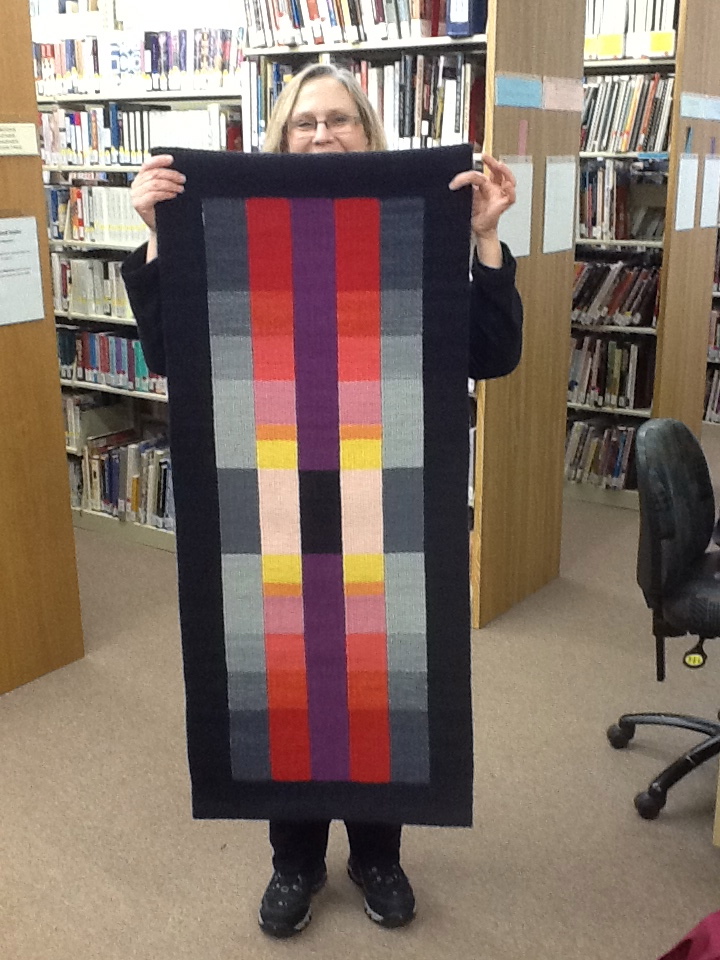
    Robbie’s plans are modest.  She will complete at least one, or hopefully more, small tapestries in her series of family portraits.  She will continue with monksbelt pattern experiments, with more runners/hangings with an “op art” effect.  A big rya is planned too, one that will be displayed with the back folded over for display.

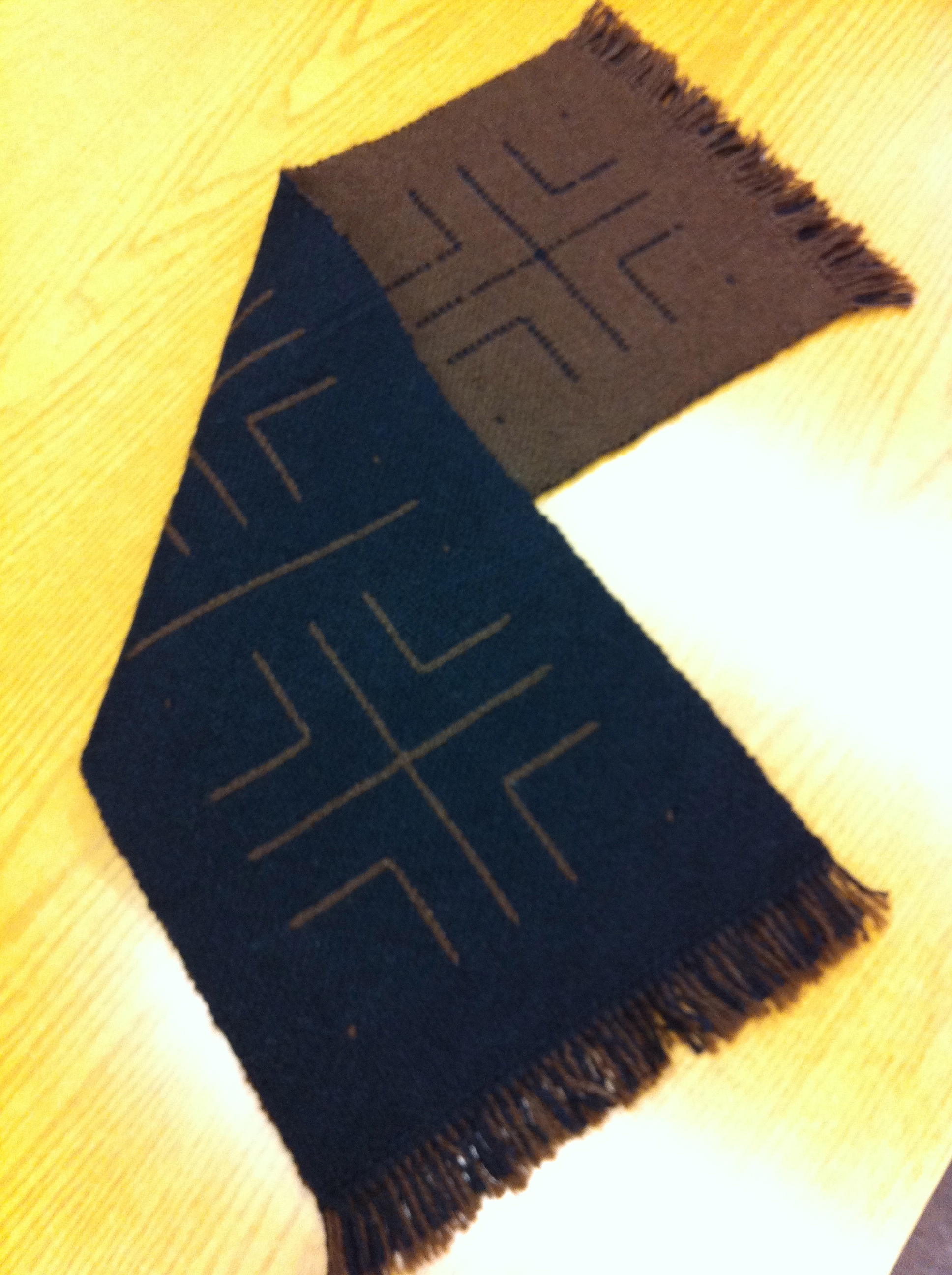
    Veronna brought two recently-completed doubleweave pieces.  In one, the cross with ‘L’ shapes and dots in the corners is the seed pattern for making a seven path labyrinth according to the source she used, ‘Labyrinths, Ancient Myths and Modern Uses’ by Sig Lonegren, Sterling Publishing Co., Inc., New York.

    The other piece, with horizontal and vertical lines, graphed out on paper in a perfect square but something happened in the weaving as the horizontal lines didn’t take up as much space as the vertical lines. She described the technical problems with making exactly balanced geometric designs.  She apologized for mistakes, but of course the resulting runners were beautiful.

  • Show and Tell – and Irresistibly FEEL

    Nancy Ellison brought some handspun yarn to our September Scandinavian Weavers meeting.  “Oh!” was the feeling as she opened the bag. Everyone resisted the impulse to reach out.  We waited our turns nicely as the soft threads were passed.  The brown-to-gray strands of wool beautifully displayed the changing coat color of the sheep over the seasons.

    Nancy and her sheep were recently featured on a southern MN public television program called “Off 90.”

    I think we would all agree with this statement from that segment.  “You can weave your whole life and never scratch the surface in the types of weaving you can do, so it’s something you will never be bored with.”

  • November Scandinavian Weavers Meeting

    Our Scanweavers group on Sunday, November 20, was small.  For those of you who weren’t able to meet our guest, Elizabeth Kolb, look what you missed!

    Elizabeth weaves beautiful bands in her remote cabin in the Yukon Territory.  She wrote, “I use a back-strap rigid heddle, with a short slot modification, for pick-up patterns.  I make these heddles and the shuttles I use.  I have been weaving and selling some bands for parka and mukluk trim in the Northwest Territories and The Yukon Territory, and I am also teaching at The Braid Society conference in Manchester, England next summer.  There I am excited to meet people who have been tracking down patterns in various Scandinavian and Baltic museums, and weaving these warp- faced, patterned bands with other, related, techniques.”

    The heddles for her backstrap loom are beautifully crafted objects with twig edges and reindeer horn heddles.  She weaves bands in pearl cotton and sells them to Inuit women, who love bright colors.  Many women gravitated to a zig-zag pattern that resembles commonly-used rick rack.

    How long does it take you to weave the bands, one of our group asked.  “I could conceivably weave a meter in an hour,” she said, “but I wouldn’t be able to do anything for the rest of the day.”

    She weaves narrow silk bands for bracelets, trimmed with reindeer leather and musk ox horn closures.  The narrow bands also work as a way to display a variety of patterns, so that her Inuit customers can custom order a favorite style.

    Elizabeth began her textile work with nålbinding.  She loved studying the structures.  It’s an early Scandinavian technique, but practiced in other areas of the world.  She’s eager to study further.  “It’s practiced in the Middle East, too.  There could be some neat nålbinding in remote parts of Iran and Oman.”  She reconstructed horsehair boots in nålbinding.  The boots were used with wool felt shoes inside and grass for insulation.  The coarse nålbinding exterior was durable, and could also have added traction in the snow.

    Elizabeth is moving fast on her path to textile mastery; her next step is floor loom weaving.  Her mother, who lives in Marine on St. Croix, bought her a used Leclerc.  It’s probably a ploy to keep her daughter for longer visits, and we hope it’s long enough for her to visit our group again.

  • Danskbragd Done More Cleverly Than I Knew

    Danskbragd on six shafts

    Veronna Capone gave me more information about her beautiful danskbragd piece.  I assumed she used a pick-up technique for portions of the diamond design, but she set me straight. “The red and black Danskbrogd piece I did for Jan’s class wasn’t done with pick up but with a 6 harness threading which splits each of the three when a spot of Danskbrogd is desired.  I used one of her designs and none of it made sense until I got going on the weave.  Those looms take a strong stomp when you’re lifting several shafts.”