Category: Uncategorized

  • A Discussion of Hems and Edges

    By Robbie LaFleur

    Note: I recently discovered this post, one that had not been posted after a meeting in 2012.  It’s a bit late!

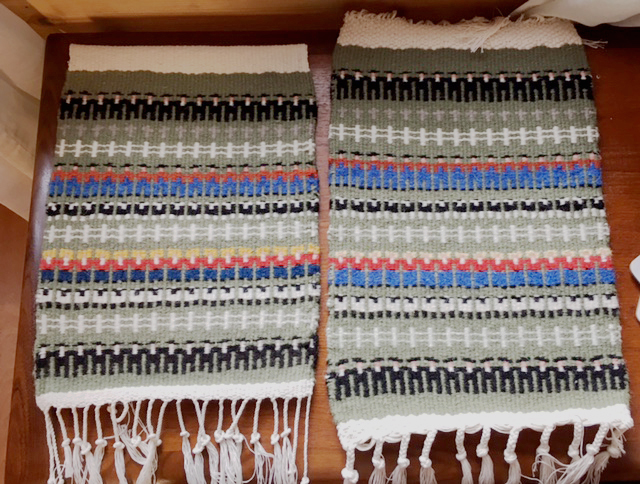
    At our March Scandinavian Weavers Study Group meeting, an interesting conversation began with a comment by Veronna Capone, whose craftsmanship is impeccable.  She’d struggled with a monksbelt runner; the edges had the slightest waviness, no matter how careful she was.

    veronna

    So she solved that by taking a step that many weavers consider a sacrilege.  She sewed a straight stitch down the selvedge edges, about three threads in from the edge, and then cut the edge, perfectly evenly, next to the stitching.  (I don’t have a photo of that one.) She said that she owns a lovely Irish handwoven scarf with the same edge finish, and that gave her the permission to mimic it on her runner.  My photo of the edge of Veronna’s monksbelt doesn’t show the really successful and interesting total effect of the piece, woven with pearl cotton. One really nice effect was the contrast in sheen between the background plain weave and the monksbelt blocks done in the same color, very textural.

    Veronna is not afraid to break rules.  Her additional ‘confession’ was that sometime when making a runner that was quite thick, she sewed a straight stitch across the end of it, turned it down once, and stitched it.  Uh-oh.  But really, how many people with real textile knowledge would turn over a lovely runner on Veronna’s table and note that a raw edge was visible?  This led to further discussion of hems and right sides/wrong sides and rules.

    It felt like a discussion that could have been held by my husband’s psychoanalytic colleagues.  What do people keep hidden in order to show their best faces to the world?  What everyday parts of life –  the messy parts, the parts you might not be proud of – are best put away when  you worry about being judged?   What do people choose to reveal?  What do they keep secret?  But here we are talking about textiles.

    Patty Kuebker-Johnson talked of her late Swedish mother-in-law, a wonderful weaving mentor.  Hems were important to fine Swedish weavers.  When planning a woven piece with hems, you should have a hem that is turned over twice and sewn by hand.  Ideally, the pattern should be taken into account when planning the blocks of the pattern blocks of the turned-over hem.  Once hemmed, the piece should appear the same on the front and the back.

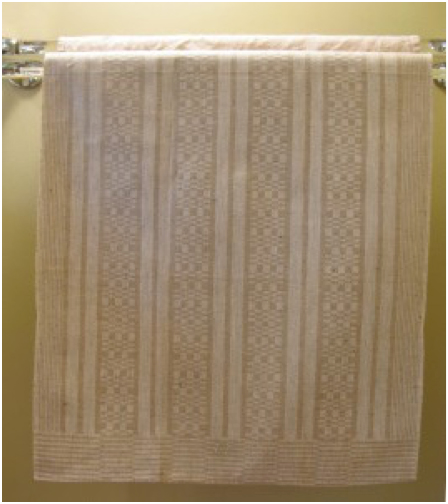
    Displaying pristine textiles for guests was a mark of skill and prestige.  Sometimes a runner was used on a table, or a towel was hung on a rack, hemmed-side-up, for everyday family use.  It could be quickly changed to the best side.

    A double towel rack could be used.  When guests arrived, the lovely towel was put in front.
    towel

    When you are not trying to show a perfect face, then perhaps this stained towel displays the messy craziness of life.

    stained

  • Rutevev Exhibit in Norway

    Rutevev Exhibit in Norway

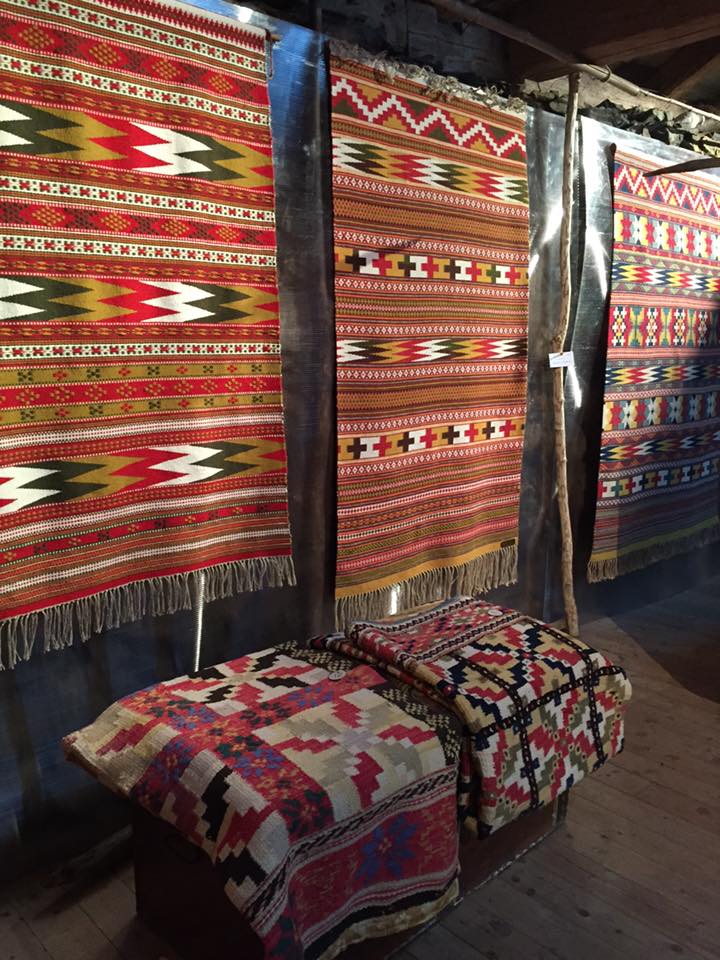
    Recently, Karin Randi Flatøy shared a set of photos on her Facebook site, from an exhibition of Nordhordaland-style coverlets at Galleri RusticaHolmeknappen, a cultural site  outside of Meland, a town situated on an island about 25 minutes north of Bergen.  The exhibit was part of  Ullveka på Vestlandet, or Wool Week in Western Norway, this year. 

    Her post prompted many people to comment about the beauty of the pieces, the too-short duration of the exhibit, and pleas to have it mounted in other venues, too.  Annemor Sundbø visited the exhibit and heard an accompanying talk.  When she shared the photos on her site, someone commented that it was difficult to tell (given the quality of the photos) whether they were woven on warp-weighted looms.  Annemor responded that at least three of them were woven on a warp-weighted loom.

    I wish I could have been there!  Because I know that many of my friends who are interested in Norwegian weaving are not Facebook regulars, I asked Karin Randi Flatøy if I could post her photos on this blog.  She kindly granted permission, saying that it was a fabulous exhibit for people of Norwegian heritage to see!

    14732162_10209829329105812_7197650471664251616_n14721620_10209829329305817_2286697051390148087_n14721596_10209829330105837_1298956356003087678_n14718681_10209829330265841_9162980288254269773_n14572816_10209829330825855_3991794544481925763_n14717131_10209829331185864_2301060457817935255_n

  • RED – Phyllis Waggoner

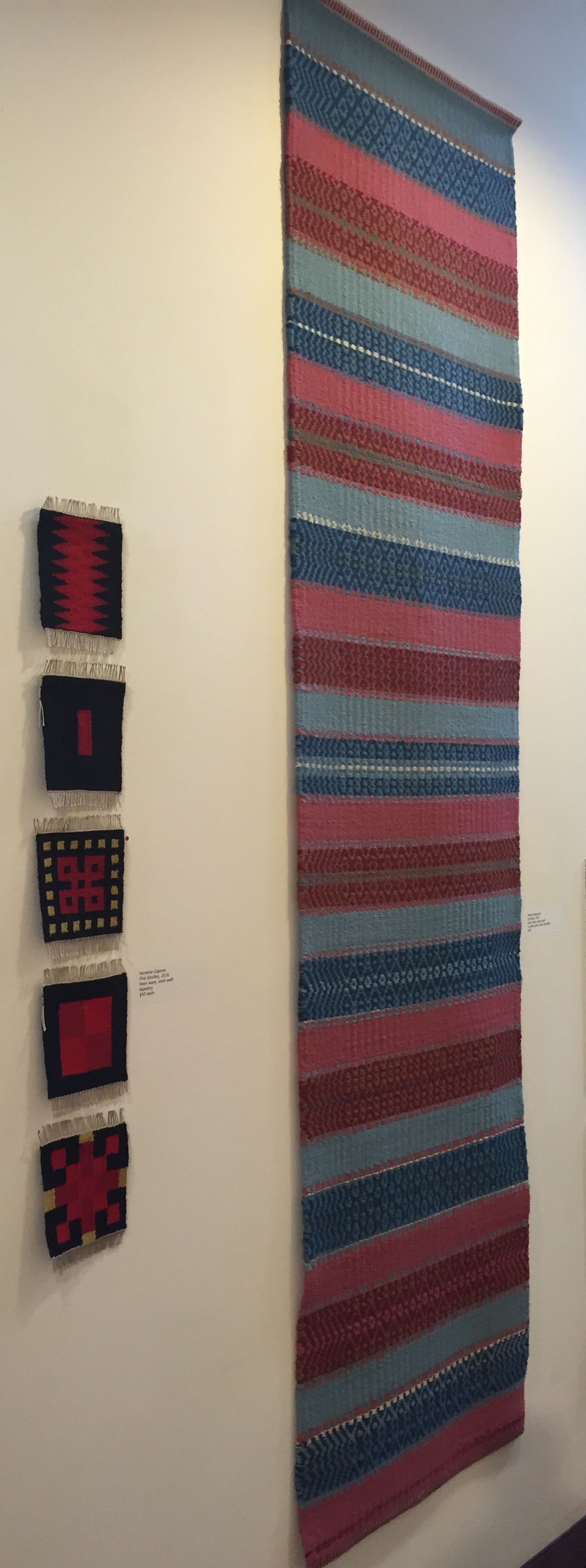
    “Untitled”  8’6” x 27”  Technique: 4 shaft point twill variation, treadles tied for 2/2 twill, “woven on opposites”  Materials:  5/8 linen warp, sett 6 epi, 3 ply rugwool weft.

    In the case of Phyllis’ long, beautiful rug, red was part of a color challenge — could she make the red work with the other colors? She had a great deal of yarn left after completing a commission. Rather than weave a shorter red rug, she chose to use all the colors to weave a long rug.  “Necessity is the mother of invention,” and Phyllis invented a design to make use of her red, and more.

    Unfortunately, the gallery configuration made it impossible to get a great head-on shot of Phyllis’s beautiful rug.  You’ll have to visit it in person, or look at it obliquely here.

    FullSizeRender


  • RED – Veronna Capone

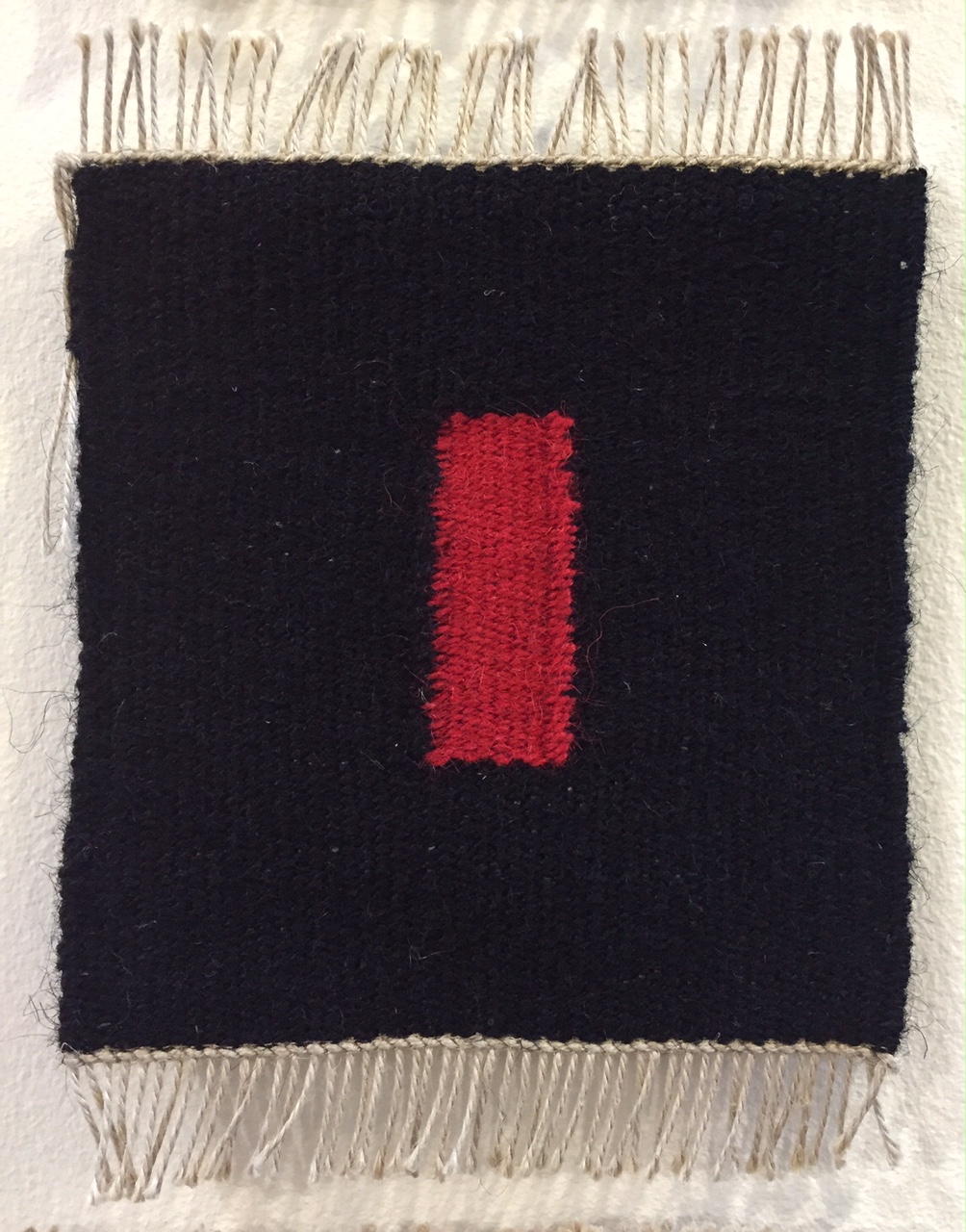
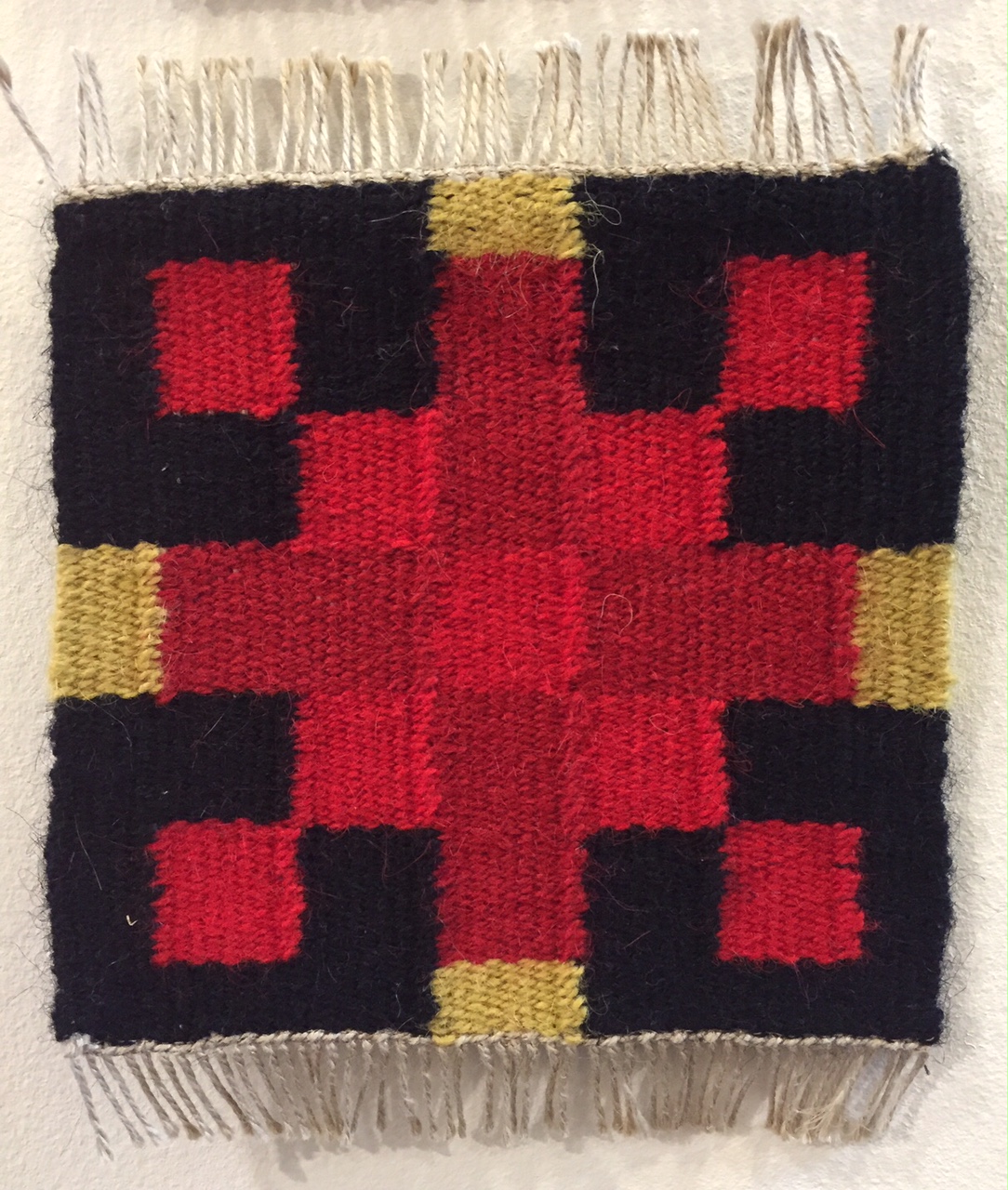
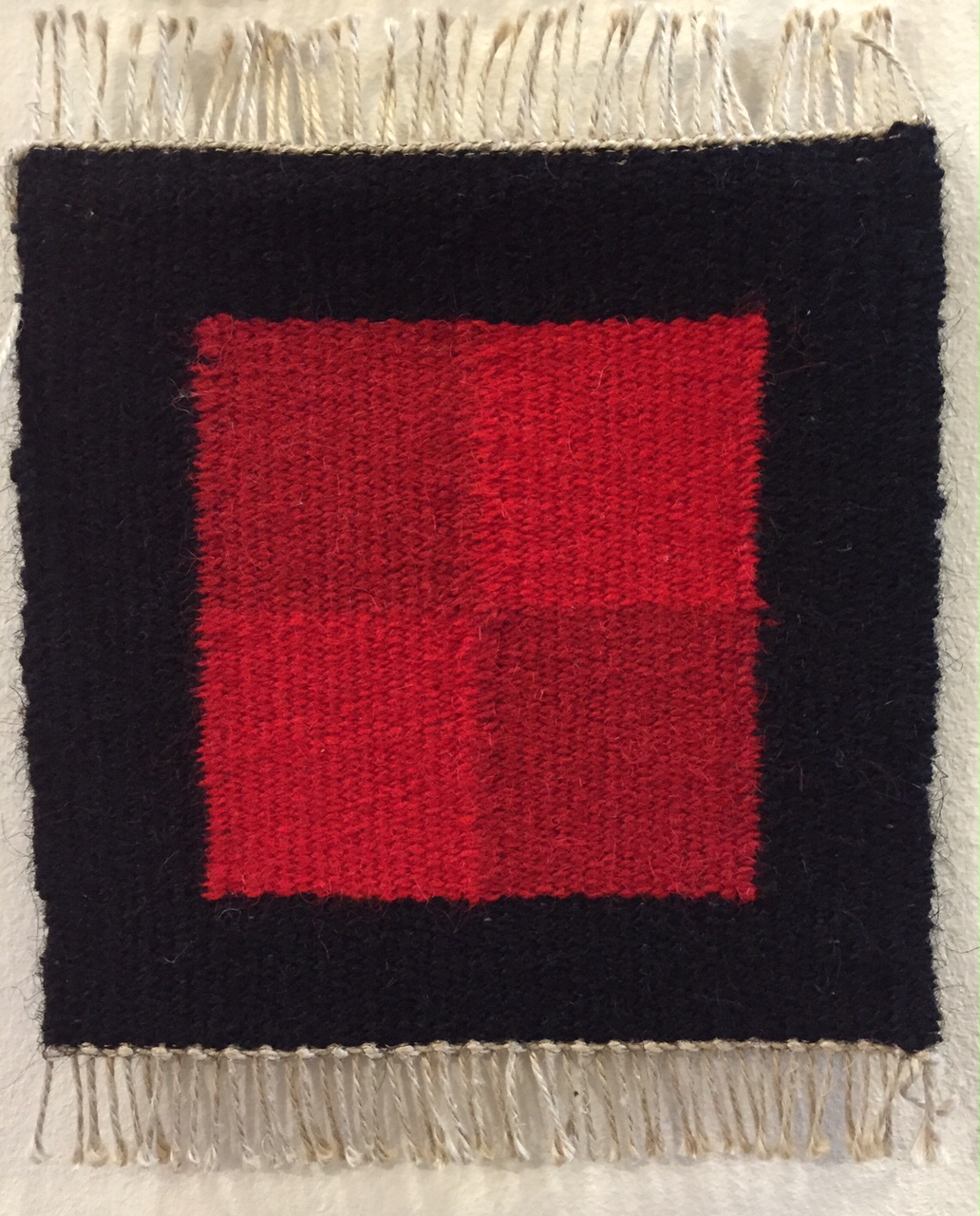
    Five Studies. Each 6″ x 6.”  Linen weft, wool warp.

    Five small tapestries.  The first of these five small tapestries uses traditional Norwegian ‘lynild,’ or lightning weave’; the others are in rutevev, or square weave.

    veronnaFullSizeRender-4FullSizeRender-3FullSizeRender-2FullSizeRender-1

  • RED – Connie LaTendresse

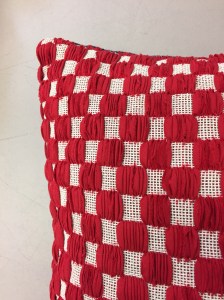
    Checkered Pillow.  18″ x 18″  Linen, poppana fabric strips.

    pillows

    IMG_4777Connie’s checkered pillow is one of a pair woven in a beautiful design from the book Scandinavian Weaving by Tina Ignell.  She ordered red and navy popanna, a bias-cut cotton fabric, from WEBS and the seine twine from Vavstuga. The weaving went incredibly fast and looked just like the photograph in the book, but when she took it off the loom, she just didn’t really like it or know what to do with it. It languished in a closet.  When the Scandinavian Weavers group began its focus on red, she took it to the fabric store and found the perfect backing to complement both colors.  Sometimes a weaving just has to wait for the right moment to be the perfect something.  The checkerboard pattern works especially well  as a pillow, as the curved edges of the pillowtop give an “op art” effect to the small squares.
  • Red – Nancy Ellison

    Red – Nancy Ellison

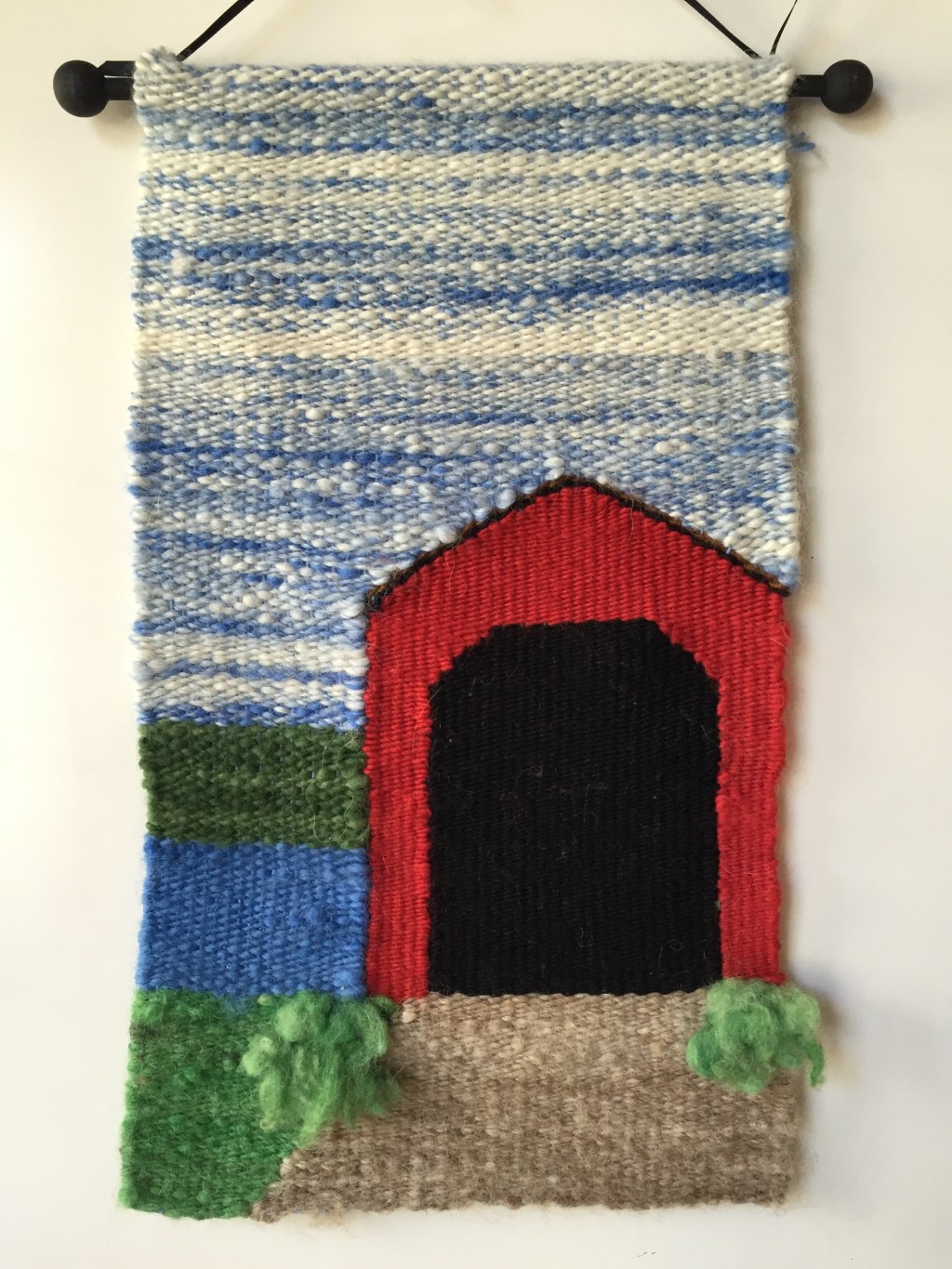
    Zumbrota Covered Bridge: Minnesota’s Only Remaining Historic Covered Bridge.  13″ x 22″ Tapestry.  Cotton warp, handspan wool weft.

    Our Scandinavian Weavers Group includes members who put on a lot of miles to attend meetings, driving from South Dakota, Wisconsin, and central and southern Minnesota.  Nancy Ellison runs Ellison Sheep Farm near Zumbrota, Minnesota.  The red covered bridge is a famous local landmark.

    IMG_5044

  • RED – Patty Johnson

    RED – Patty Johnson

    “Square Play.”  12″ x 21″ Perle cotton: 10/2 for the warp; 5/2 for the weft. Drawloom-woven on a 6-shaft satin background.

    This piece was done to explore the possibilities of the drawloom, of design, and of the impact of red in a traditional fine-linen type structure.

    IMG_5047

  • RED – Jan Mostrom

    Memorial.  4″ x 4.5″ Tapestry.  Cotton warp, wool and perle cotton weft.

    This tapestry is a memorial to Syvilla Bolson, a friend, fabulous weaver, and long-time supporter of the Scandinavian Weavers Study Group.

    jan-full

    memorial-underway
    Note that Syvilla is even wearing a Norwegian sweater in the tapestry.
  • Old Weavings, New Knowledge

    One of the great benefits of Weavers Guild membership is the opportunity to and learn from other members in the Guild’s interest groups.  I am constantly reminded about how much knowledge is held by members and constantly amazed at the generosity of time and talent by those members.  Our Scandinavian Weavers Interest Group has a long history of providing support to one another, and several new weavers have been nurtured.

    We had a great learning opportunity at our January meeting, held on a frigid, cars-not-starting day.  Even so, many members met for a special viewing of Swedish art weave textiles at the American Swedish Institute (ASI), assembled by group member and super-volunteer at the ASI, Phyllis Waggoner.  She brought out treasures for examination and inspiration.

    Counting Threads
    Counting ends per inch

    One amazing textile was a set of two curtains owned by Swan Turnblad, the turn-of-the-last-century owner of the Swedish American newspaper, the Posten, whose mansion is now the main building of the American Swedish Institute. The brown wool curtains, over 8 feet long, are embellished with Swedish brocading techniques, dukagång and krabbesnår. 51.03.132

    lionc

    IMG_3921
    The reverse side (this is the side that would face up while it was woven)

    Here is the reverse of the bottom of the curtain.

    IMG_0278-1

    Since that meeting, we learned more about the curtains.  Lisa Bauch wrote, “FYI,  I was curious about the date on the curtains from the Turnblad mansion, so I had my mom do some research. (She’s a retired reference librarian.) The Turnblads travelled to Europe in 1895 (including Sweden) and bought furnishings for the home they lived in before they built the house on Park Avenue. I think it’s safe to assume that the curtains were commissioned and woven in Sweden that year, hence the date and SJT initials.”


    date

    Here’s a detail from the top of the curtain.

    FullSizeRender-1

    Watch for more photos of beautiful Swedish textiles from the American Swedish Institute… posted soon.


  • So Many Sources for Inspiration

    Looking at old textiles can be a wonderful inspiration for designing new textiles.  In our current Scandinavian Weavers Study Group focus on Swedish art weaves, I found digital images from Swedish museums that could help with ideas for patterns and bands.  You could look at the old pieces for color combinations, or to see how they were balanced into sections.  Just soak it in.

    In the Swedish DigitaltMuseum, try these terms: Konstvävnad, halvkrabba, krabbasnår, dukagång. I know there is overlap, as many pieces may include more than one of the techniques.

    There are images not only of woven items, but of patterns, too.  You could use them to chart your own, combining elements you like.  For example, here is a krabbasnår pattern.

    VM12697_243