Category: Uncategorized

  • The Skillbragd Warp Will Soon be Finished…

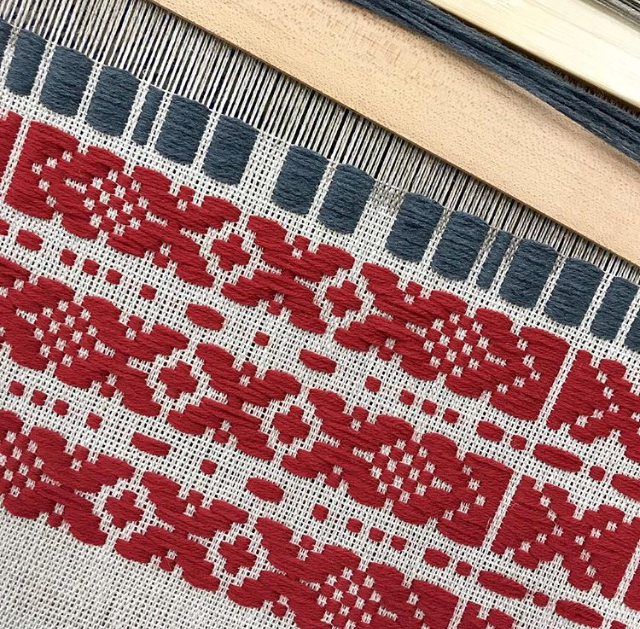
    The members of our Scandinavian Weavers Study Group are looking forward to a really super cutting-apart party once the skillbragd comes off the loom on July 12.  Here are some recent tempting snippets.

    Karin Maahs wove in sweet, sharp acid green crosses.

    IMG_6191

    Sarah Okern (andasmer.com) wove separated bands.

    IMG_6337

    I didn’t catch images of all the samples before they disappeared around the front beam of the loom, but not to worry–we’ll publish shots of all of the grand experiments later this summer.

  • Scandinavian-related Classes at the Weavers Guild of Minnesota

    The fall class catalog for the Weavers Guild of Minnesota has just been released.  Here are the classes related to Scandinavian techniques.  Sign up soon! See the rich slate of all classes offered by the Guild here.

    Swedish Art Weaves with Jan Mostrom

    SwedishRed-591x1024Swedish art weaves are at their best in the highly decorated weavings of the Skåne area of Sweden. Dukagång, krabbasnår and halvkrabbe are woven in a similar manner using butterflies to inlay designs, but each have a distinctive look. Dukagång is made up of columns. Krabbasnår designs move on a diagonal while halvkrabbe is made up of squares like a checkerboard. Rölakan is a geometric tapestry technique that is also seen in the weavings of Skåne. Students will weave a sampler of these techniques, discuss color choices, finishing techniques and ideas for making a sampler into a pillow or bag.
    Monday, Tuesday, Wednesday & Friday, September 10, 11, 12 & 14: 10:00am – 4:00pm | REGISTER

    *Note: This class requires some independent weaving time on Thursday, September 13 as well.

    Level and Prerequisites: Intermediate: Requires some experience in the subject and the ability to start and finish projects. Students must be able to wind a warp, warp a floor loom and read a draft independently.
    Tuition: $240 WGM Member / $312 Non-member

    Warp-Weighted Loom Weaving: Sami-Inspired Grene Blanket or Rug with Melba Granlund

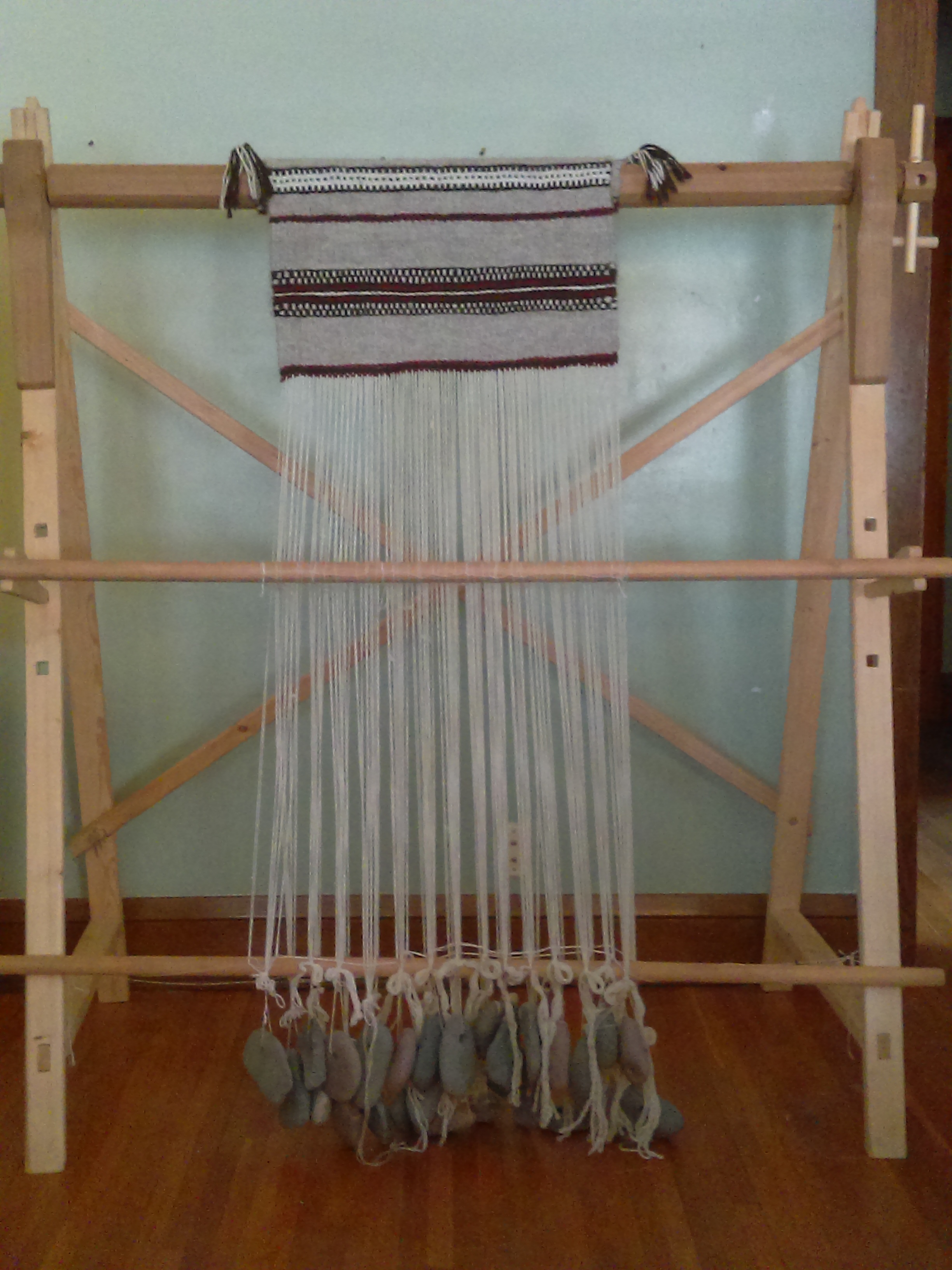
    IMAG1010Learn to weave on the historic warp-weighted loom. Used for millennia in many parts of the world, the warp-weighted loom is easy to use and is the traditional loom of the Norwegian sea Sami today. In this class, you will learn how to use the warp-weighted loom and weave a small Sami-inspired rug or blanket (grene). This project is suitable for beginning weavers and for those who want to expand their knowledge of weaving traditions. Warp yarn will be provided by the instructor and is included in the materials fee. Students may use handspun yarns or purchase commercial yarn for weft. Options for weft yarn will be viewed and discussed prior to class beginning allowing students time to obtain yarn of their choice.

    Saturday, November 3: 1:15pm – 2:15pm; Monday – Wednesday, December 3 – 5: 10:00am – 4:00pm; Saturday, December 8: 10:00am – 4:00pm | REGISTER

    Level: Beginning – no experience necessary!
    Tuition: $250 WGM Member / $325 Non-member Student


    Nålbinding I: Winter Cap with Melba Granlund 

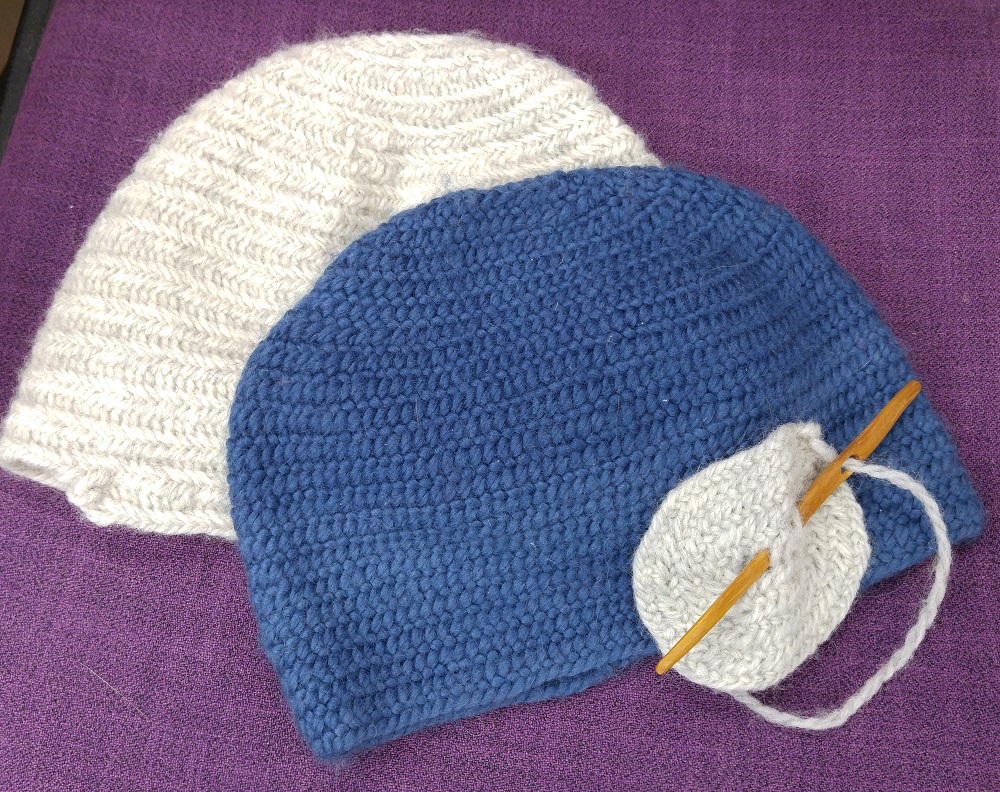
    Nalbinding-Melba-3small-768x608Learn the folk art tradition of nålbinding using a handcrafted wooden needle and continuous strand of wool yarn. While this looping technique was used by the Vikings to make warm garments such as socks and mittens, artifacts dating back 3,000 years show that articles made in nålbinding have been found around the world. In this class, you will learn basic nålbinding stitches to make a hat. Current samples, as well as pictures of historical pieces from Norway, Sweden and Finland, will be shown as inspiration. Discussion of yarns suitable for nålbinding will be covered during the first class. Instructor will provide students with practice yarn to begin. Students can bring their own needle or purchase a handcrafted wooden needle from the instructor

    Saturday & Sunday, September 22 & 23: 1:00pm – 5:00pm | REGISTER

    Level: Beginning – no experience necessary!
    Tuition: $88 WGM Member / $112 Non-member

    Try It! Sami-Inspired Bracelet with Katherine Buenger

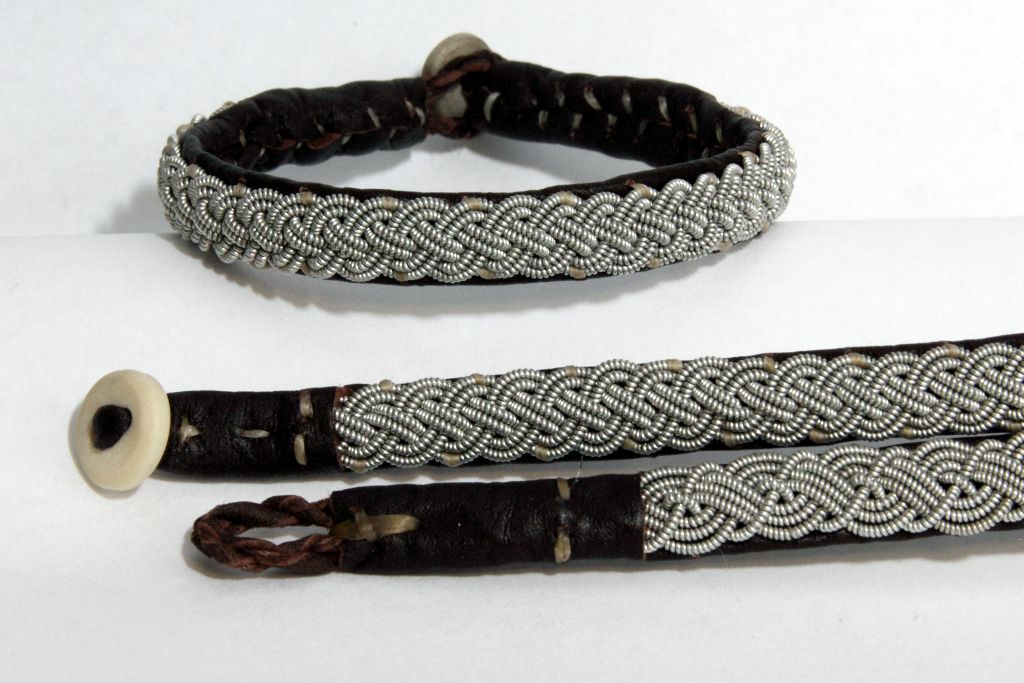
    bracelet-all-tinThese bracelets are based on the designs of the Sami people, who are the native people from the far northern parts of Norway, Sweden, Finland, and Russia. The bracelets are constructed with traditional materials including reindeer leather, tin thread (4% silver), and reindeer antler buttons. Students will learn to make a four strand braid using tin thread, and then they will hand sew their piece to reindeer leather to finish an elegant bracelet.

    Saturday, October 6: 1:00pm – 5:00pm | REGISTER

    Level: Beginning – no experience necessary!
    Tuition: $48 WGM Member / $60 Non-member

    Swedish Kavelfrans – Minnesota Style with Robbie LaFleur

    IMG_3044Inspired by historical mitten trim, contemporary Swedish knitters, weavers, and embroiderers love to add kavelfrans—fuzzy, wooly worms to grace mitten cuffs, pillows, bags, or other handwoven or commercial items. In this three-hour class you will learn a two-pronged fork method to wind the base fringes, securing them by hand or sewing machine. After sewing down layers of the prepared loops, we’ll learn to steam and clip to make the irresistible thick edging. Students can bring a pair of hand-knit or purchased mittens or gloves to embellish (the instructor will have a limited number of gloves to purchase), or add kavelfrans to a Swedish-inspired wool pincushion (materials can be purchased from the instructor). With discussion of the best materials to use, and many examples of items made with kavelfrans, the class is a combination of design inspiration and technique. Richly-illustrated instruction booklets and kavelfrans forks will be available for purchase. (For links to more photos and information, type kavelfrans in the search box on Robbie’s blog, robbielafleur.com.)

    Sunday, October 14: 1:00pm – 4:00pm | REGISTER

    Level: Beginning – no experience necessary!
    Tuition: $36 WGM Member / $45 Non-member

  • Skillbragd Inspiration

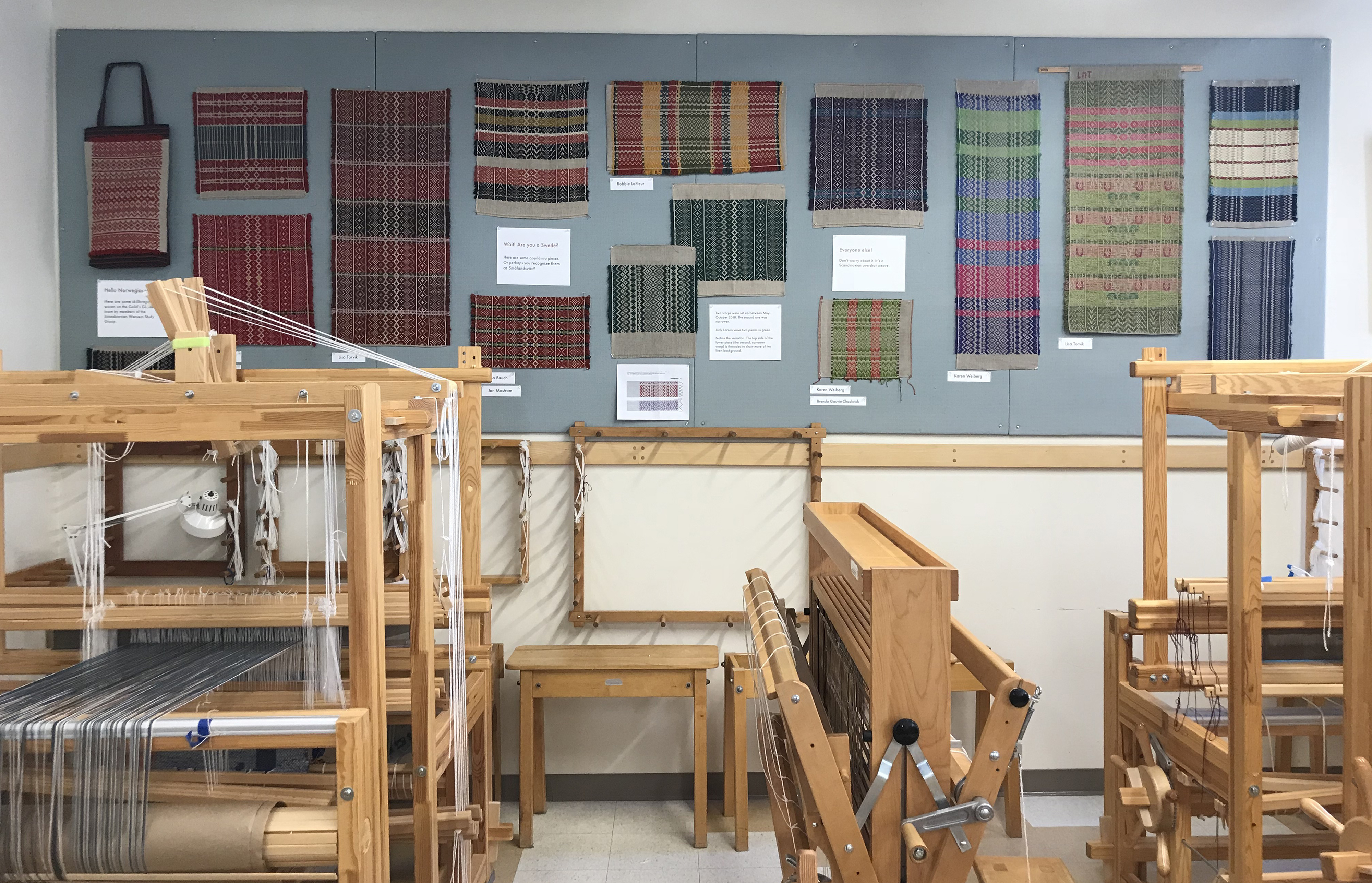
    Just as the students in Jan Mostrom’s Swedish Art Weaves class could view lovely pieces in that technique as part of the exhibit, “A Passionate Pursuit: Scandinavian Weavings from the Collection of Carol Johnson,” the members of our Scandinavian Weavers Study Group can view skillbragd weavings to inspire and inform us as we participate in our group project.  Here are the skillbragd/opphampta pieces on display right now.


    For more wonderful weaving photos and information about the current exhibit of Scandinavian weavings and the tapestry collection of Carol Johnson, too, see the new issue of the Norwegian Textile Letter, which includes these articles:

    A Passionate Pursuit: Scandinavian Weavings from the Collection of Carol Johnson

    Dipping Into Carol Johnson’s Tapestry Collection

    The Swedish Art Weave Tradition Continues in Minnesota


  • More Skillbragd, and Loop Discussion

    More Skillbragd, and Loop Discussion

    Jayne Flanagan wrote in response to a previous post, “So the selvedge loops are not a technique exclusive to Telemarksteppe? What will happen to all the loops on this piece?”

    Definitely loops are common on skillbragd weavings, too. It is my understanding that sometimes the loops are left uncut (my favorite look), and sometimes they are cut. Look at this piece with cut loops that is available on eBay right now.  The starting bid is $25,000–buy it now for $50,000!  (Thanks, Carol Johnson, for sending this link.  She commented, “I won’t be buying this one.”)

    ebay

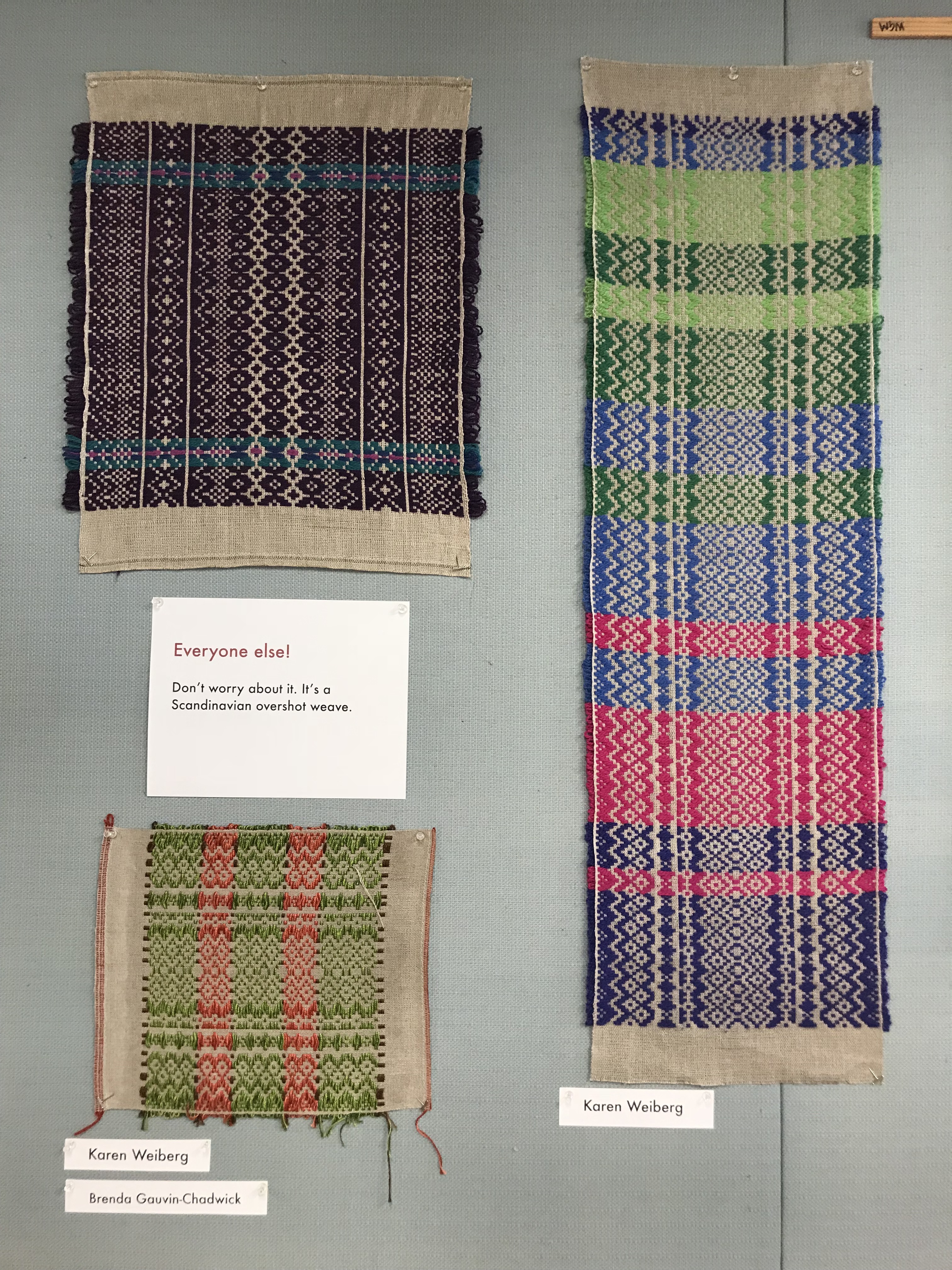
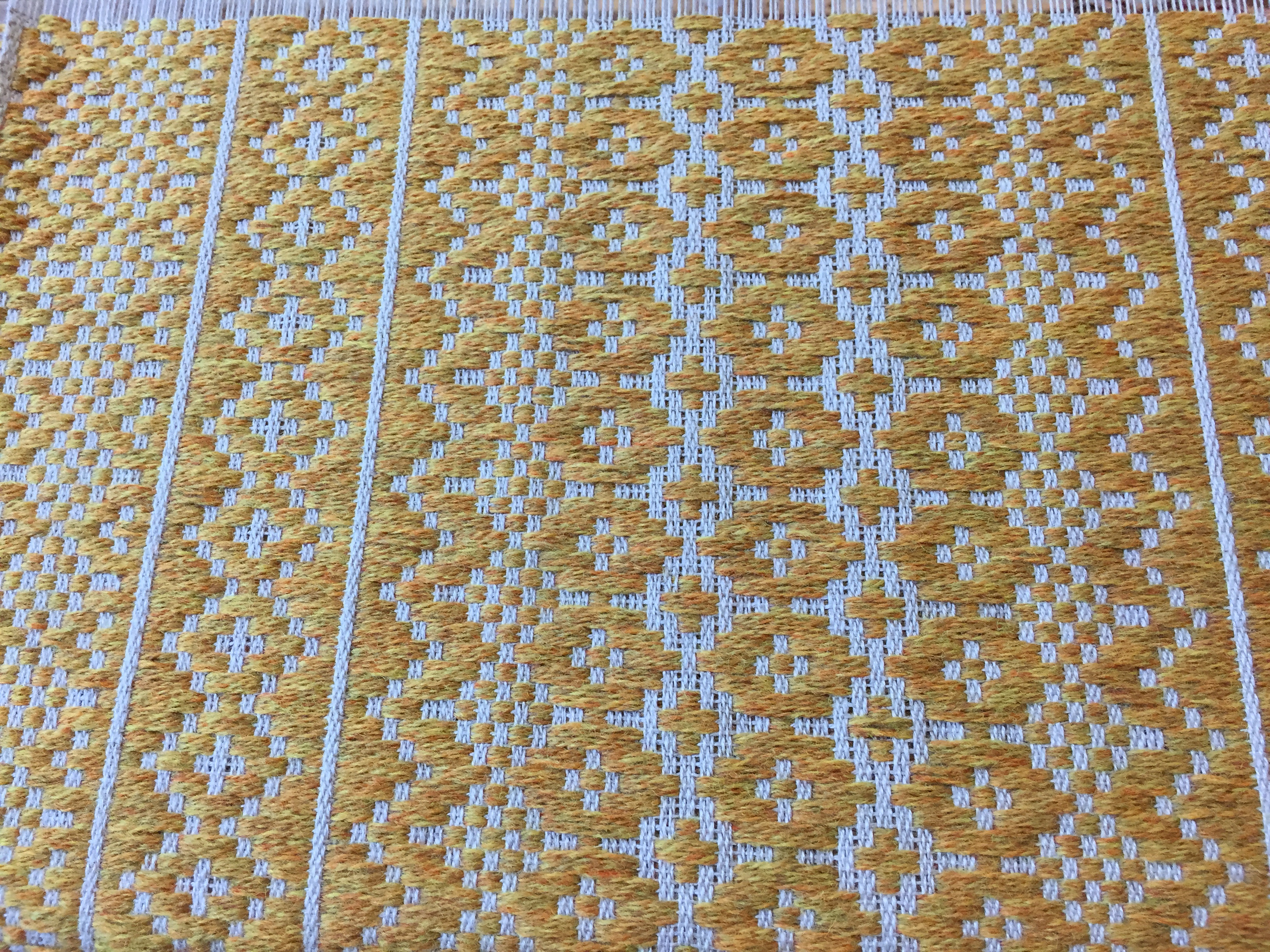
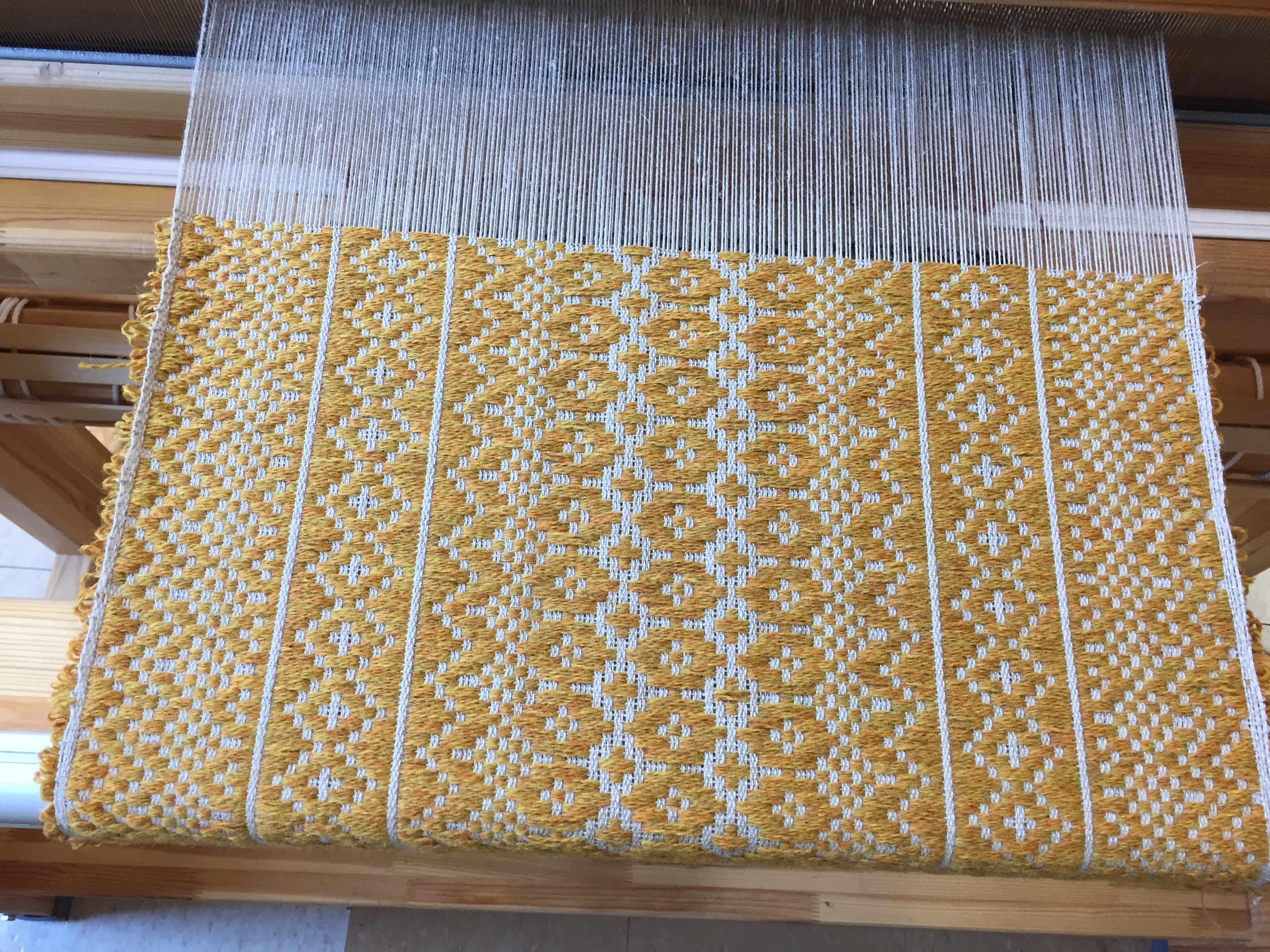
    Weaving continues on our group project. This weekend Brenda Gauvin-Chadwick wove a lovely piece in a soft gold.

    BrendaG-C1BrendaG-C2

  • Skillbragd Weaving Continues…

    The members of the Scandinavian Weavers Study Group are continuing their skillbragd samples, but many have been wound around before photos could be taken.  The cutting-off ceremony for this warp will be significant.

    Karen Weiberg snapped a photo during her turn at the loom. Good work!

    IMG_5747

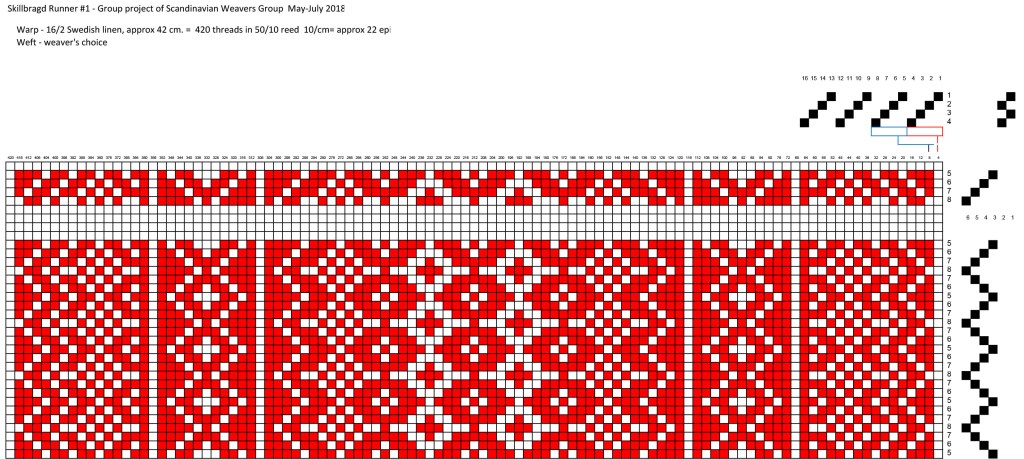
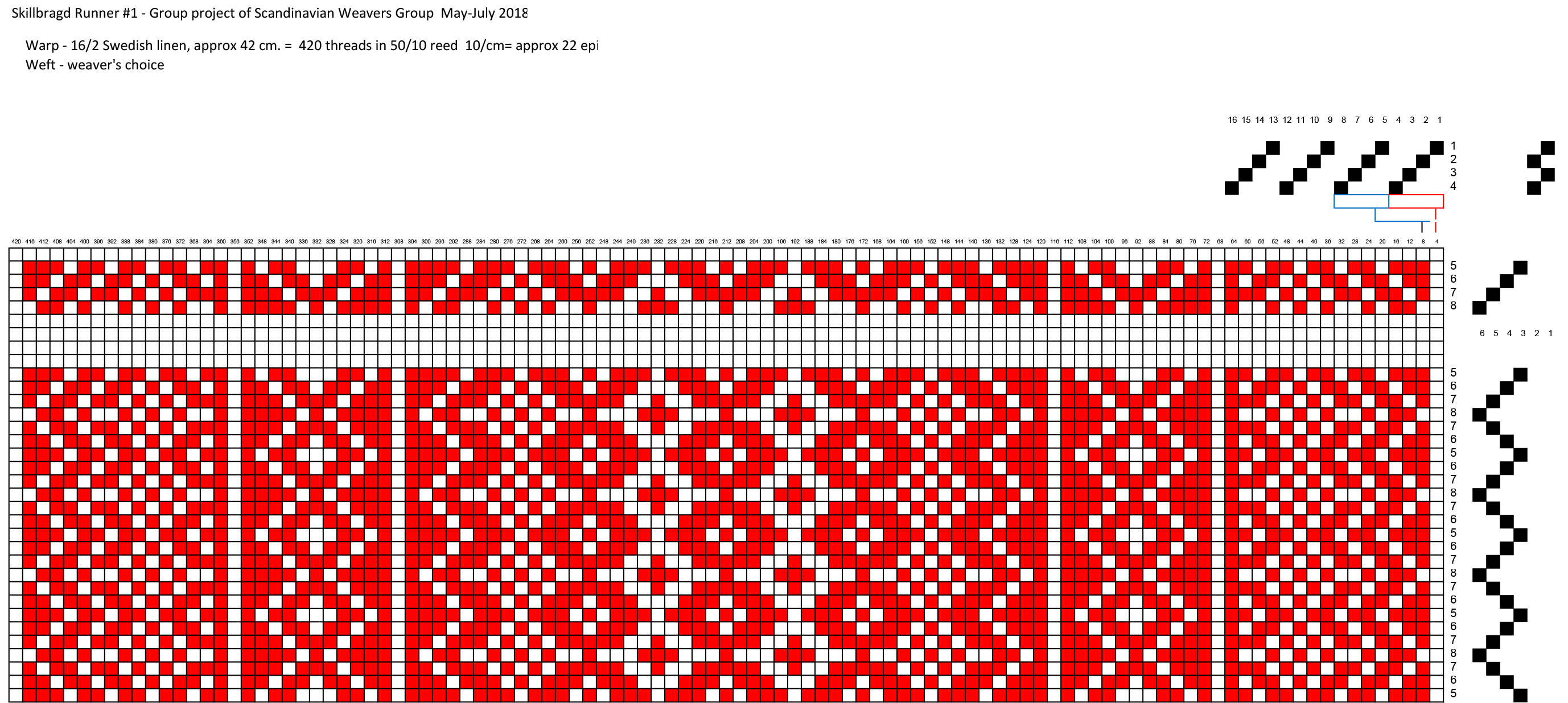
    Here is the draft and treadling, thanks to Lisa Torvik. Here it is in a nice pdf document.

    Revised Skillbragd Treadling #1


  • What’s the Front? What’s the Back?

    Next up?  Judy Larson chose green for her piece. More success!  This warp is working.

    green


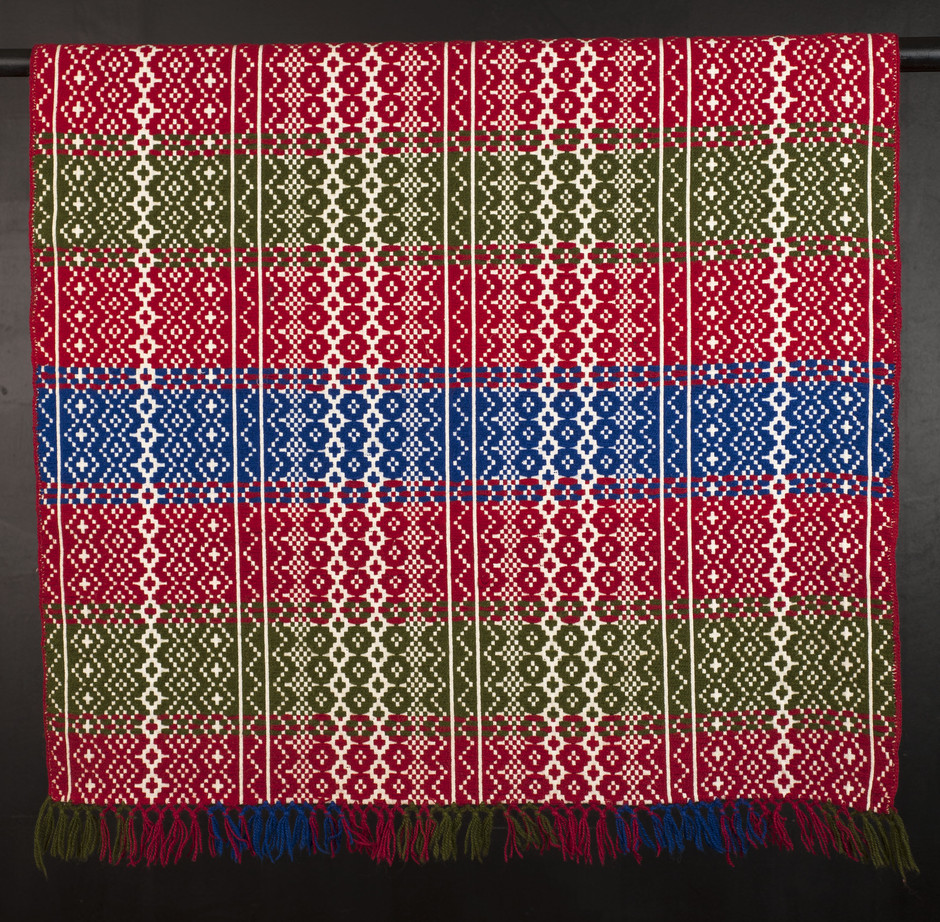
    Skillbragd weavings can look equally beguiling from either side.  On our Scandinavian Weavers Study Group project, the deep red and green of skillbragd floats on the two pieces are wonderful, and I would definitely use the side I saw while weaving as the “front.”

    I took a new look at a small piece I own that was woven by Lila Nelson.  Interesting!  She used the side that shows the most of the ground tabby as the right side, and that is very clear by looking at how she hemmed it. The other interesting thing is that she made fringe on either edge as wove the piece, hemmed it, and then added fringe to the other two sides. That looks nice.

    Good ideas for future pieces!

    IMG_5603IMG_5602


  • Skillbragd #2

    Skillbragd #2

    I finished the last post on our group skillbragd project on the Glimakra loom at the Weavers Guild with “many tricky warping steps remain.” Man, was that accurate. Before all was said and done, we tested the tabby shafts on counterbalance, then countermarch.  The pattern wefts hung from elastic to start, and then were switched to countermarch, and then back to the elastics (with final, wise advice from Shawn Cassiman). Lamm and treadle adjustments were made for hours. Lisa Torvik and Phyllis Waggoner were the real loom-wrangling brains; I struggled to keep up. BUT. Finally. By suppertime yesterday we managed to get a good shed for the background linen tabby and hopefully serviceable sheds for the pattern shafts. Today was the big test, and I offered to weave the first sample.  Slowly I wound my weft, arranged my shuttles, and pulled out the pin holding the shafts in place, and began to weave.  I’m not sure I was even breathing as I wove the first pattern shots.  It worked!

    IMG_5593

    Of course I made a pattern mistake after the first four squares, but not to worry, I did the same thing at the other end–design element. Once I got started the weaving went relatively quickly and was very fun to watch unfold.  On this 18″ wide warp I wove 11″ of pattern and hems in four hours–and that was with several talking breaks. Since this was mostly a test to see if the loom and warp were in working order, I just wove the pattern in one color.  There are so many ways to weave wonderful skillbragd pieces by elongating portions of the pattern, for example, or adding stripes. But just the plain piece was beautiful.

    IMG_5598

    It will be fun to see the variations that will be woven by our group members in the next six weeks.

  • Starting on the group Skilbragd Project

    Starting on the group Skilbragd Project

    Our Scandinavian Weavers Study Group is working on Norwegian skilbragd; we began warping a loom at the Weavers Guild of Minnesota yesterday.

    Lisa Torvik, our leader in this project, was inspired by a pattern for a group project undertaken by the Gol Husflidsslag in Norway.  See the Skillbragdåkle fra Gol here.

    skillbragdaakle_fra_gol_fullwidth
    Inspiration coverlet from Gol, Norway

    She took elements of the wider piece and narrowed the pattern to runner-width. Lisa didn’t use weaving software to make her draft; she’s a whiz with spreadsheets and used Excel to make the draft and treading variants.

    Skillbragd1.xlsx

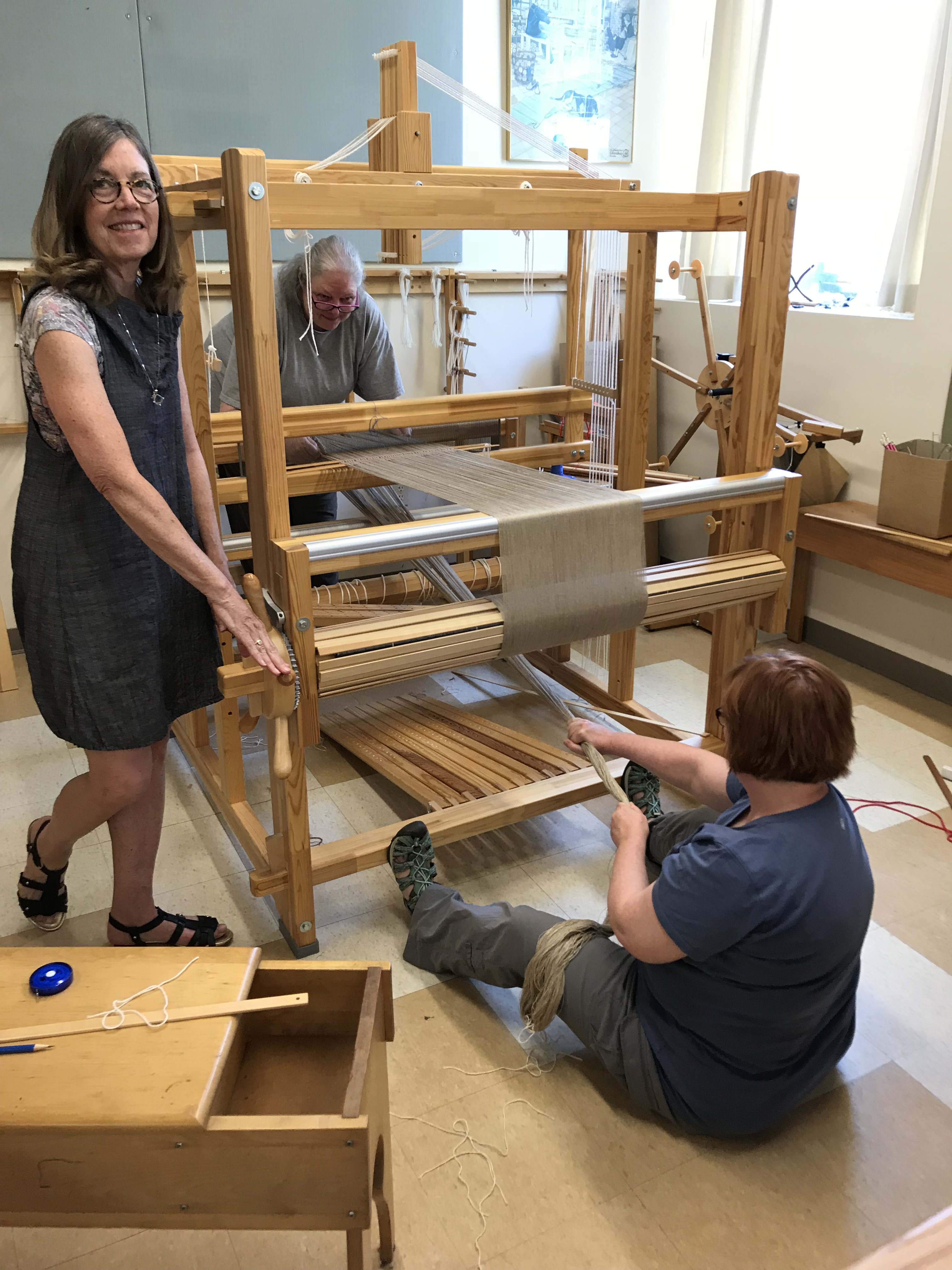
    Lisa Torvik, Lisa Bauch, Phyllis Wagonner, and Robbie LaFleur met to warp the loom; Lisa Torvik had already wound the ten-yard warp of 16/2 linen.  Using a variety of print resources, including Lillemor Johansson’s book Damask and Opphämta, we figured out how to sett up the tabby heddles for the ground weave and the pattern heddles.  Beaming was a four person job! Lisa Torvik oversaw and “drove” the process from the front. As we worked, the linen had a wonderful hay-like scent.

    lisa-driving

    Robbie turned the wheel, Lisa Bauch braced her legs against the back of the loom and held the warp tight as it was rolled on, and Phyllis inserted sticks to pad the warp on the back as it was beamed on.

    warpgroup

    Lisa had the tough job, as she had to keep hanging on to the the warp for dear life even as it was approaching the front beam, pulling her through the loom.

    endofwarp

    Many tricky warping steps remain.


  • Swedish Art Weav….ing from the Back

    Swedish Art Weav….ing from the Back

    At the Weavers Guild of Minnesota, there was DEAD QUIET in Jan Mostrom’s “Swedish Art Weaves” classroom of eight students today. They were all concentrating on the tricky (and messy-looking) aspects of weaving patterns from the back. Still, it was fun to see the various color combinations chosen by each student. Read more about Jan’s class in the new issue of the Norwegian Textile Letter, coming out at the end of May.

    colors

  • The Carriage Cushion Mystery

    The Carriage Cushion Mystery

    Carol Johnson, whose collection of Scandinavian weavings is currently highlighted in an exhibit at the Weavers Guild of Minnesota, once bought a Swedish opphampta weaving because of its beautiful red and green star pattern. (Note: the colors are more true in the second photo.) See this piece and 27 others in the exhibit “A Passionate Pursuit: Scandinavian Weavings from the Collection of Carol Johnson,” up through the end of June, 2018. 

    carriage-darker

    When she received it, she found that it was sewn to a more simply woven fabric. 

    IMG_5374

    book-johaheirlo_232x300Carol wondered, why would someone put these two together?  She started to undo the stitching, but stopped when she received the recently translated book, Heirlooms of Skåne: Weaving Techniques by Gunvor Johansson (translated by Birgitta Esselius Peterson, published by Vävstuga Press), because the mystery of the two sides was solved. She realized she shouldn’t take them apart.  The weaving is a carriage cushion, and the backs of cushions were often woven in a simpler three-shaft technique.  They also tended to be woven in the less expensive yarns: brown, yellow, green, and white. Carol’s example has other colors, too, and the patterning is fairly elaborate.  

    It all made sense to Carol then.  She could see where tassels were sewn in each corner, traditionally done to protect the valuable textile during hard wear.  Johansson wrote in her book about the use of wheat flour and water rubbed into the fabric to prevent the stuffing from leaking through the fabric. Check! Carol noticed a good bit of dust on the interior of the cushion fabric. Oh, and she found a feather, too.

    I first learned about carriage cushion backs when examining one at the American Swedish Institute with Phyllis Waggoner.  In this case, the front was a beautiful rölakan, and the back was woven simply in a two-shaft weft-faced technique, in exactly the inexpensive yarn colors noted in Heirlooms of Skåne.

    thumb_IMG_3958_1024.jpg