Blog

  • Show and Tell – and Irresistibly FEEL

    Nancy Ellison brought some handspun yarn to our September Scandinavian Weavers meeting.  “Oh!” was the feeling as she opened the bag. Everyone resisted the impulse to reach out.  We waited our turns nicely as the soft threads were passed.  The brown-to-gray strands of wool beautifully displayed the changing coat color of the sheep over the seasons.

    Nancy and her sheep were recently featured on a southern MN public television program called “Off 90.”

    I think we would all agree with this statement from that segment.  “You can weave your whole life and never scratch the surface in the types of weaving you can do, so it’s something you will never be bored with.”

  • November Scandinavian Weavers Meeting

    Our Scanweavers group on Sunday, November 20, was small.  For those of you who weren’t able to meet our guest, Elizabeth Kolb, look what you missed!
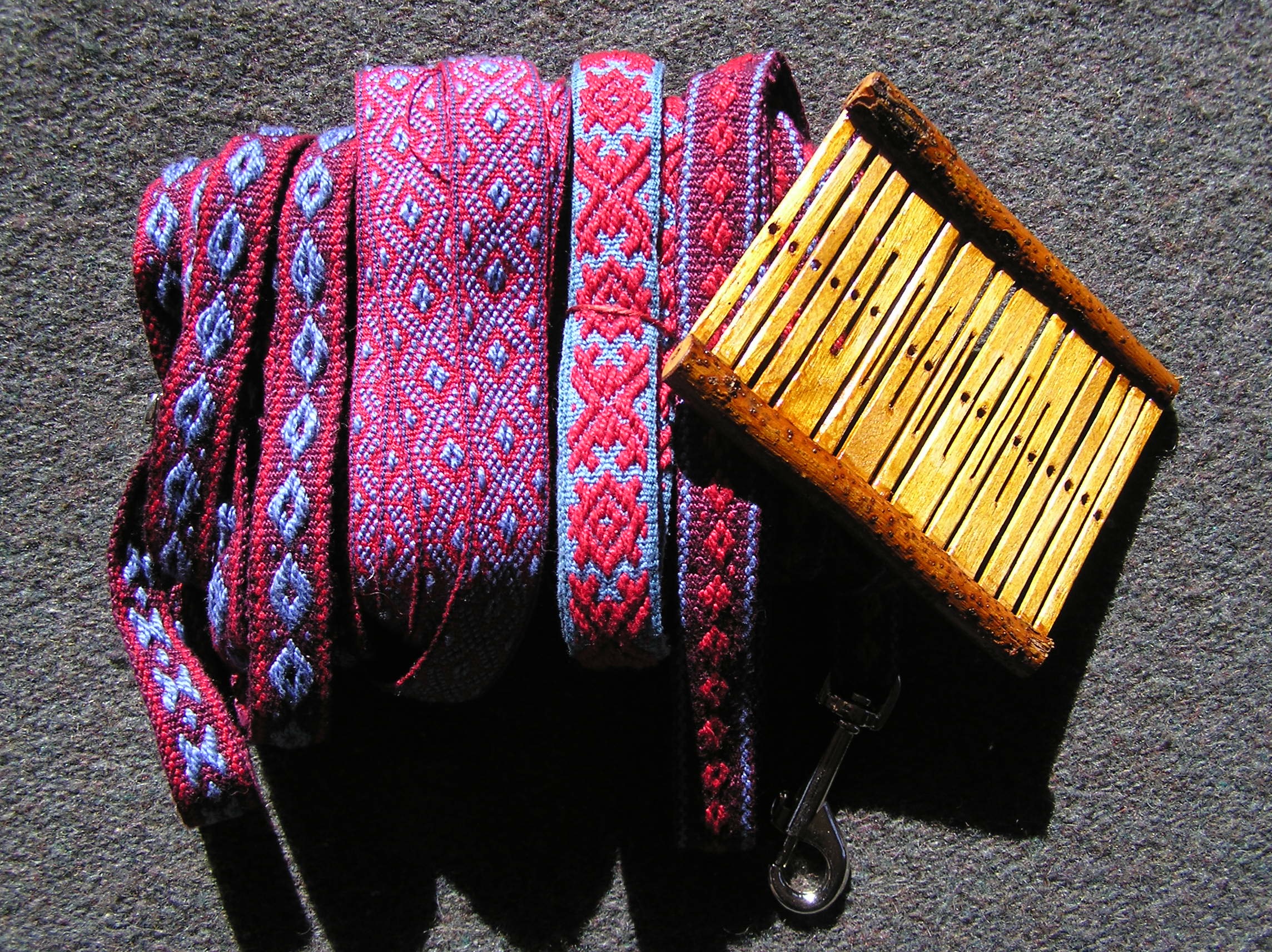
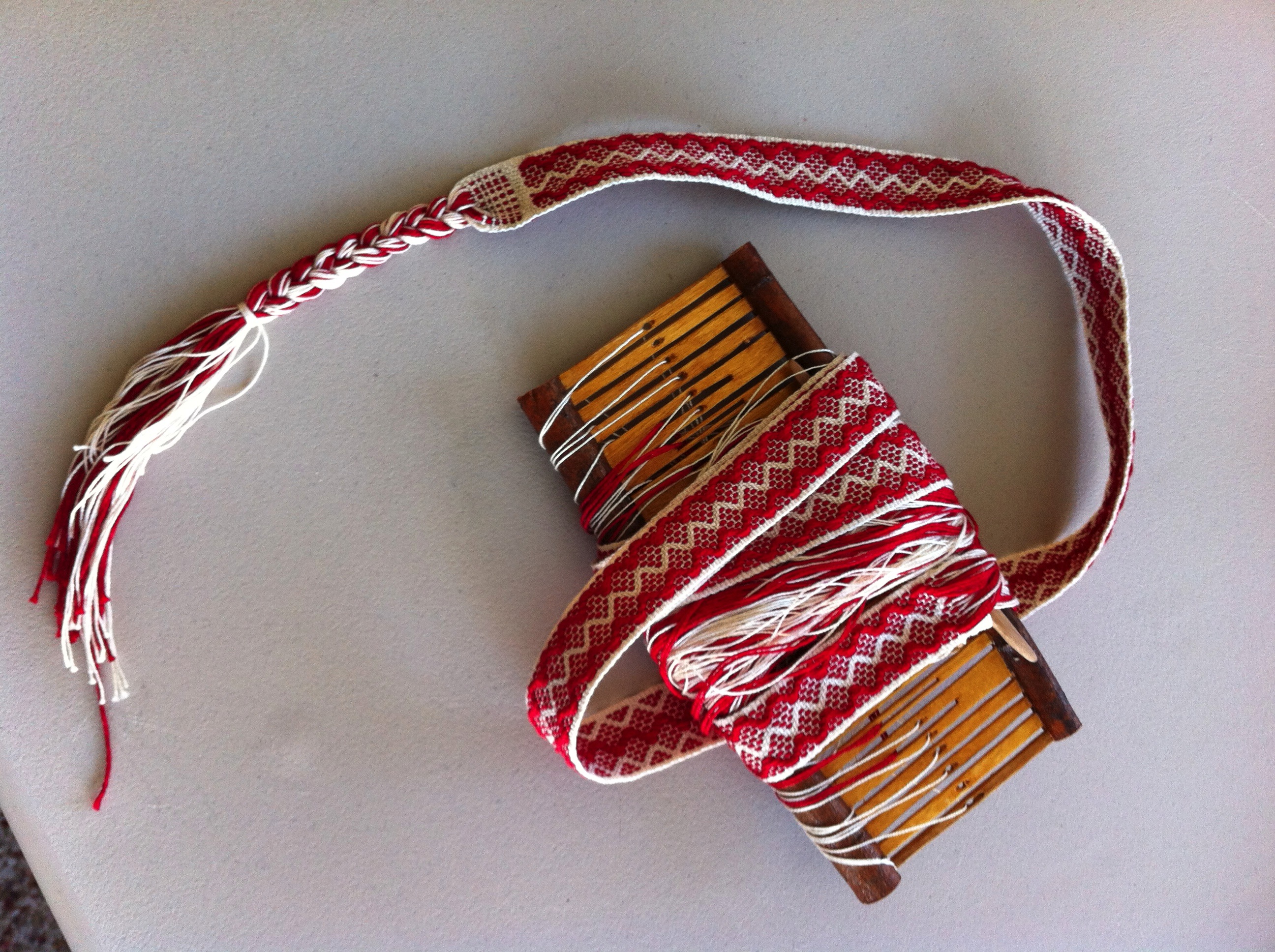
    Elizabeth weaves beautiful bands in her remote cabin in the Yukon Territory.  She wrote, “I use a back-strap rigid heddle, with a short slot modification, for pick-up patterns.  I make these heddles and the shuttles I use.  I have been weaving and selling some bands for parka and mukluk trim in the Northwest Territories and The Yukon Territory, and I am also teaching at The Braid Society conference in Manchester, England next summer.  There I am excited to meet people who have been tracking down patterns in various Scandinavian and Baltic museums, and weaving these warp- faced, patterned bands with other, related, techniques.”

    The heddles for her backstrap loom are beautifully crafted objects with twig edges and reindeer horn heddles.  She weaves bands in pearl cotton and sells them to Inuit women, who love bright colors.  Many women gravitated to a zig-zag pattern that resembles commonly-used rick rack.
    How long does it take you to weave the bands, one of our group asked.  “I could conceivably weave a meter in an hour,” she said, “but I wouldn’t be able to do anything for the rest of the day.”

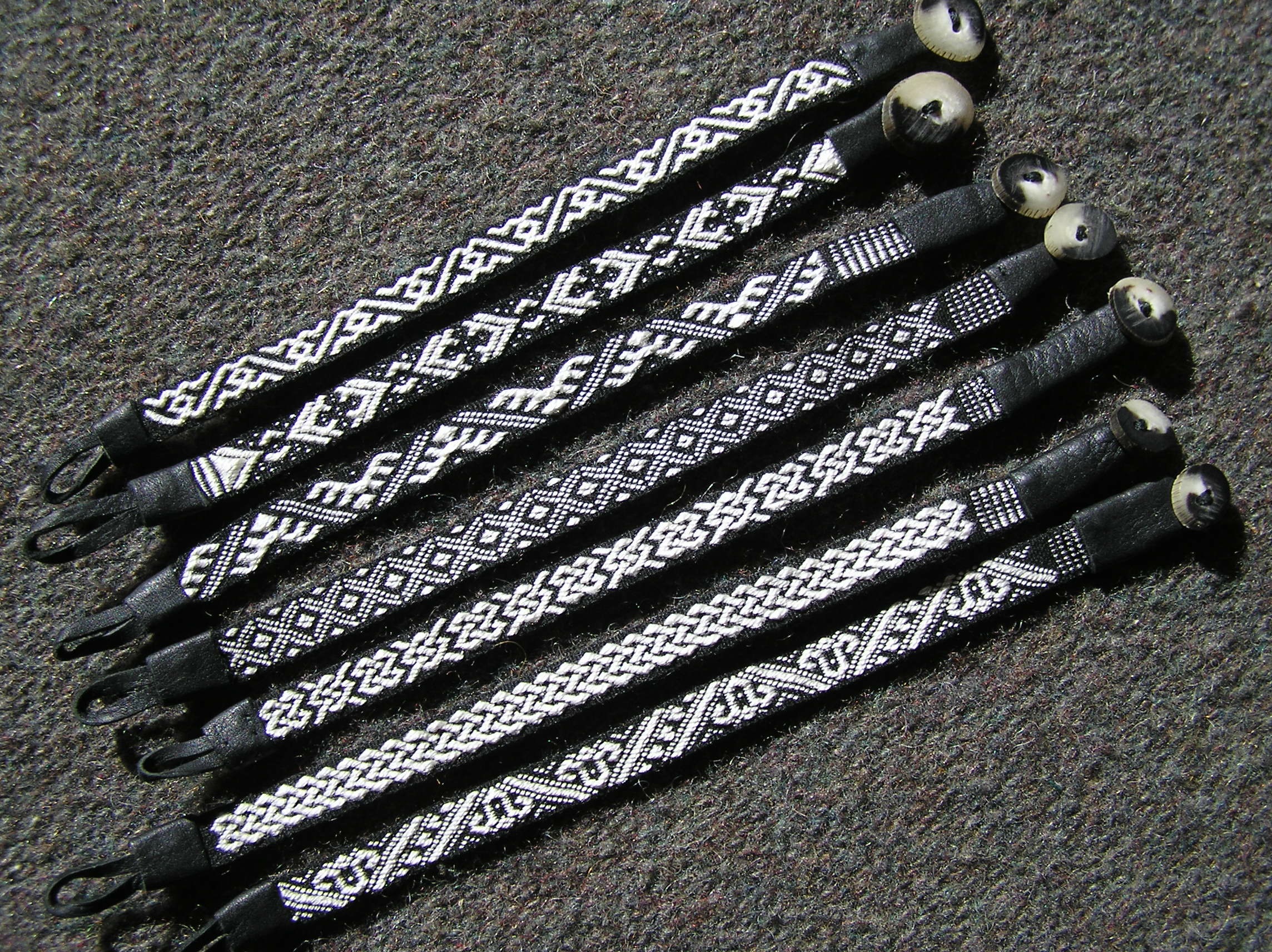
    She weaves narrow silk bands for bracelets, trimmed with reindeer leather and musk ox horn closures.  The narrow bands also work as a way to display a variety of patterns, so that her Inuit customers can custom order a favorite style.

    Elizabeth began her textile work with nålbinding.  She loved studying the structures.  It’s an early Scandinavian technique, but practiced in other areas of the world.  She’s eager to study further.  “It’s practiced in the Middle East, too.  There could be some neat nålbinding in remote parts of Iran and Oman.”  She reconstructed horsehair boots in nålbinding.  The boots were used with wool felt shoes inside and grass for insulation.  The coarse nålbinding exterior was durable, and could also have added traction in the snow.

    Elizabeth is moving fast on her path to textile mastery; her next step is floor loom weaving.  Her mother, who lives in Marine on St. Croix, bought her a used Leclerc.  It’s probably a ploy to keep her daughter for longer visits, and we hope it’s long enough for her to visit our group again.

  • Danskbragd Done More Cleverly Than I Knew

    Danskbragd on six shafts

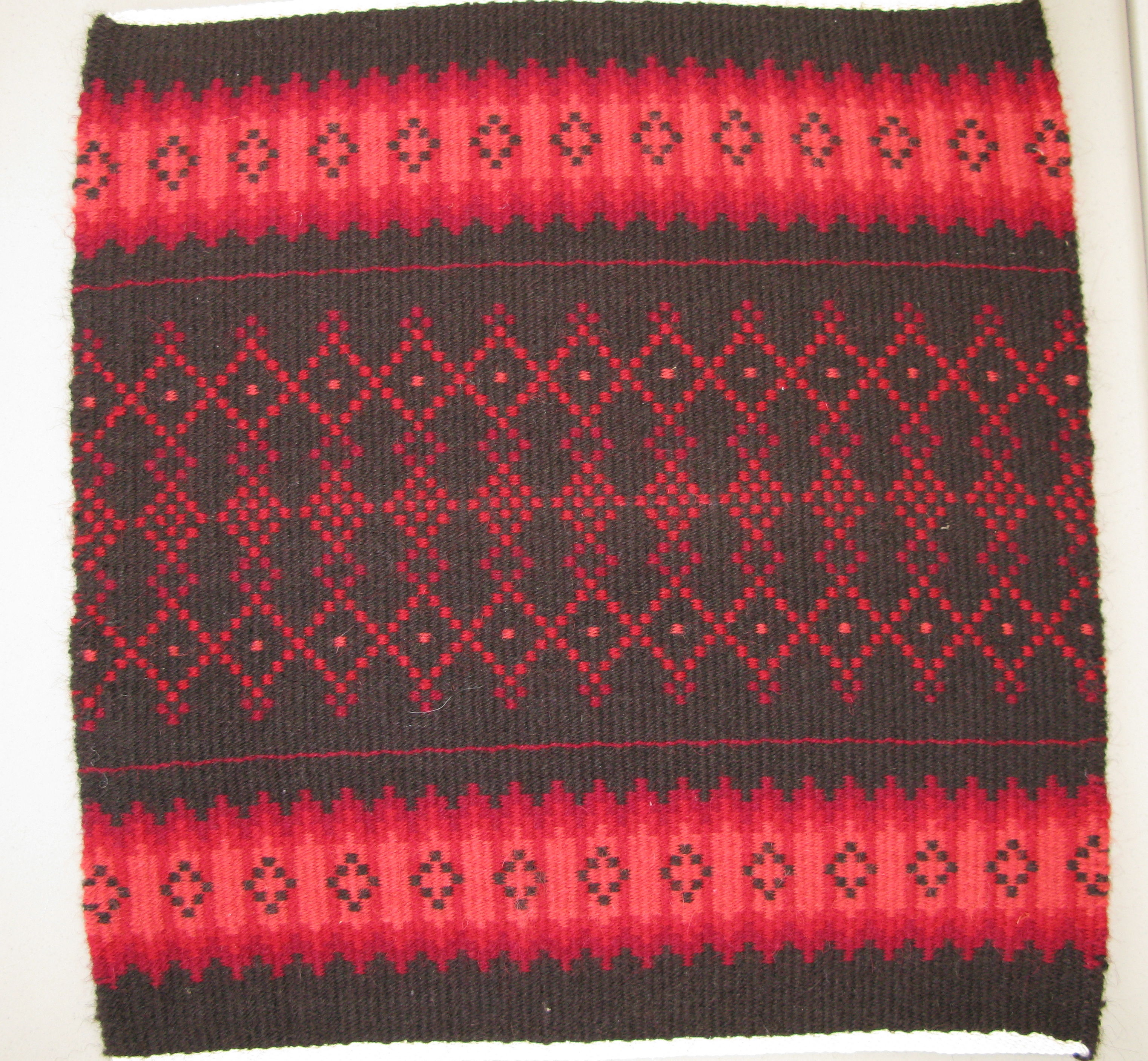
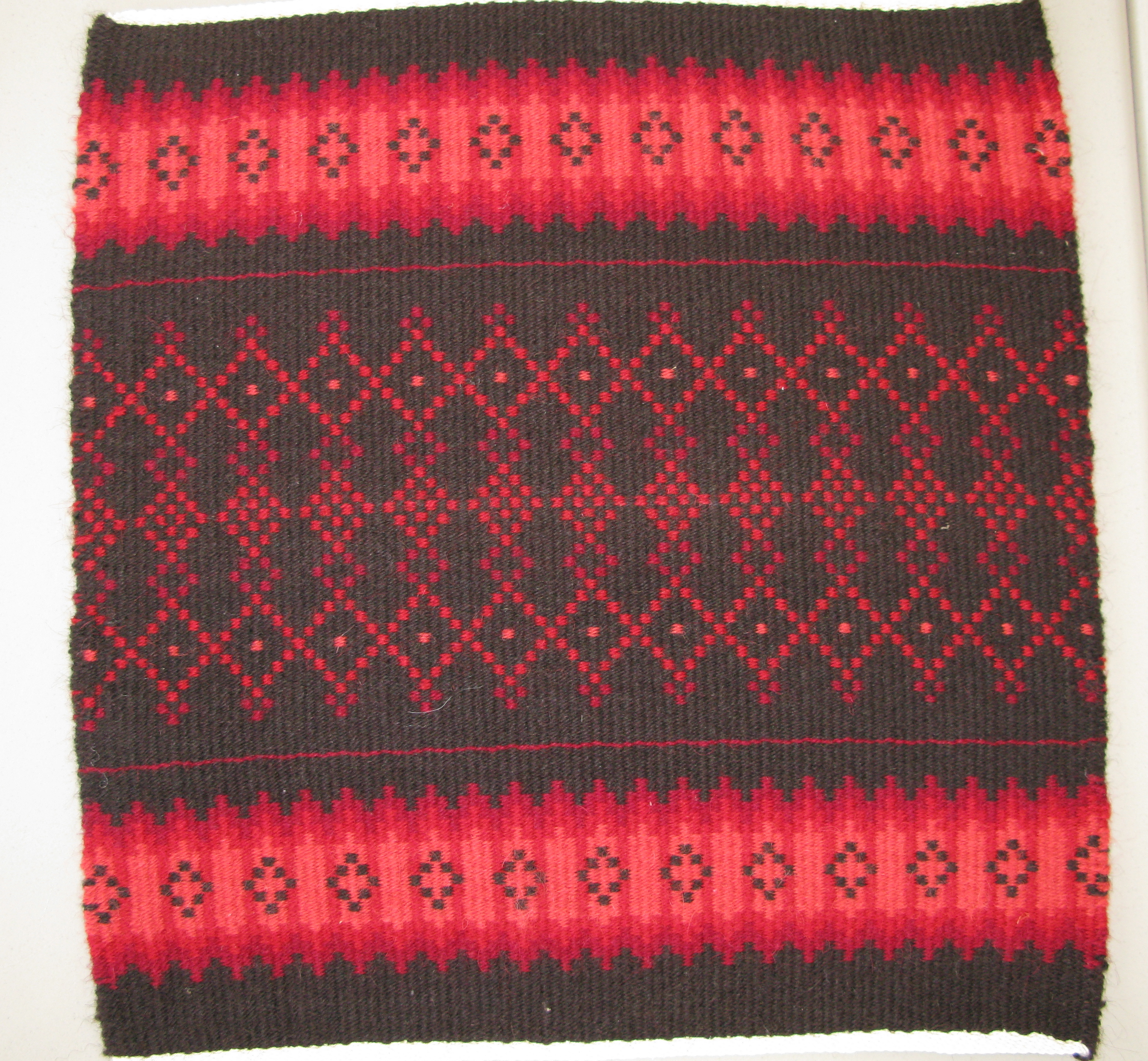
    Veronna Capone gave me more information about her beautiful danskbragd piece.  I assumed she used a pick-up technique for portions of the diamond design, but she set me straight. “The red and black Danskbrogd piece I did for Jan’s class wasn’t done with pick up but with a 6 harness threading which splits each of the three when a spot of Danskbrogd is desired.  I used one of her designs and none of it made sense until I got going on the weave.  Those looms take a strong stomp when you’re lifting several shafts.”

  • Scandinavian Weavers Show and Tell – 1/16/2011

    Veronna Capone’s Danskbragd
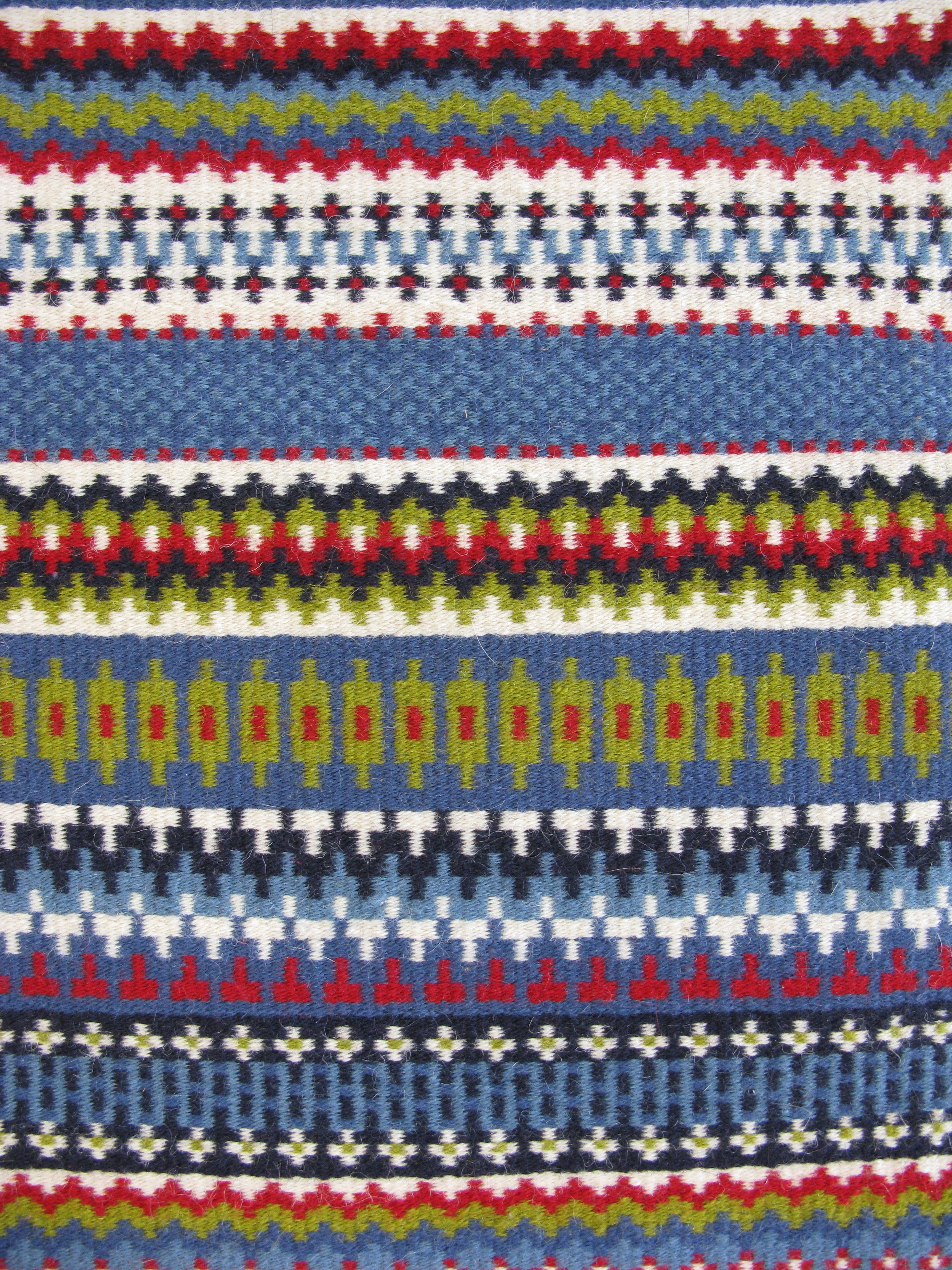
    Melba Granlund’s Krokbragd
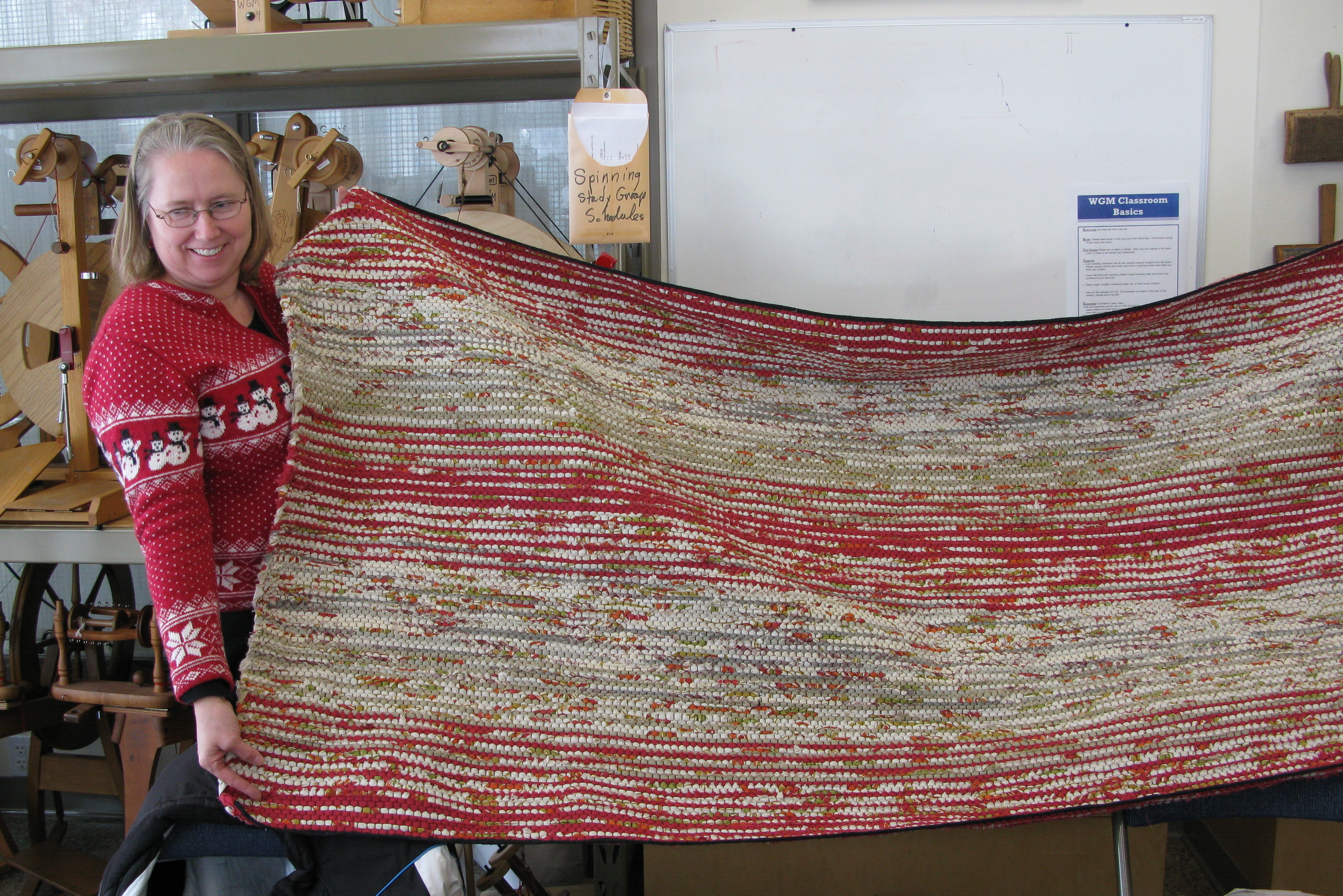
    Judy Larson

    Our January monthly meeting was an ideal time to share recent weavings and talk about weaving resolutions and hopes for 2011.  Both Melba Granlund and Veronna Capone took Jan Mostrom’s krokbragd class in the fall.  Their pieces were great examples of how each weaver brings her own interests, color sense, and creativity to a class that gave each student latitude for exploration.  Veronna was interested in mastering danskbragd, and her red piece was beautifully woven, with tiny, bright squares in diamond patterns and subtle color changes.  Danskbragd is time-consuming with the pick-up work – and consumes a lot of yarn too, Veronna noted.  Melba’s krokbragd piece was longer, in traditional-looking saturated medium red, green, and blue.  She said she learned why people are enamored by Norwegian yarn, with its hard, lustrous surface.  It’s a beautiful sampler of many krokbragd borders, tied together with color.

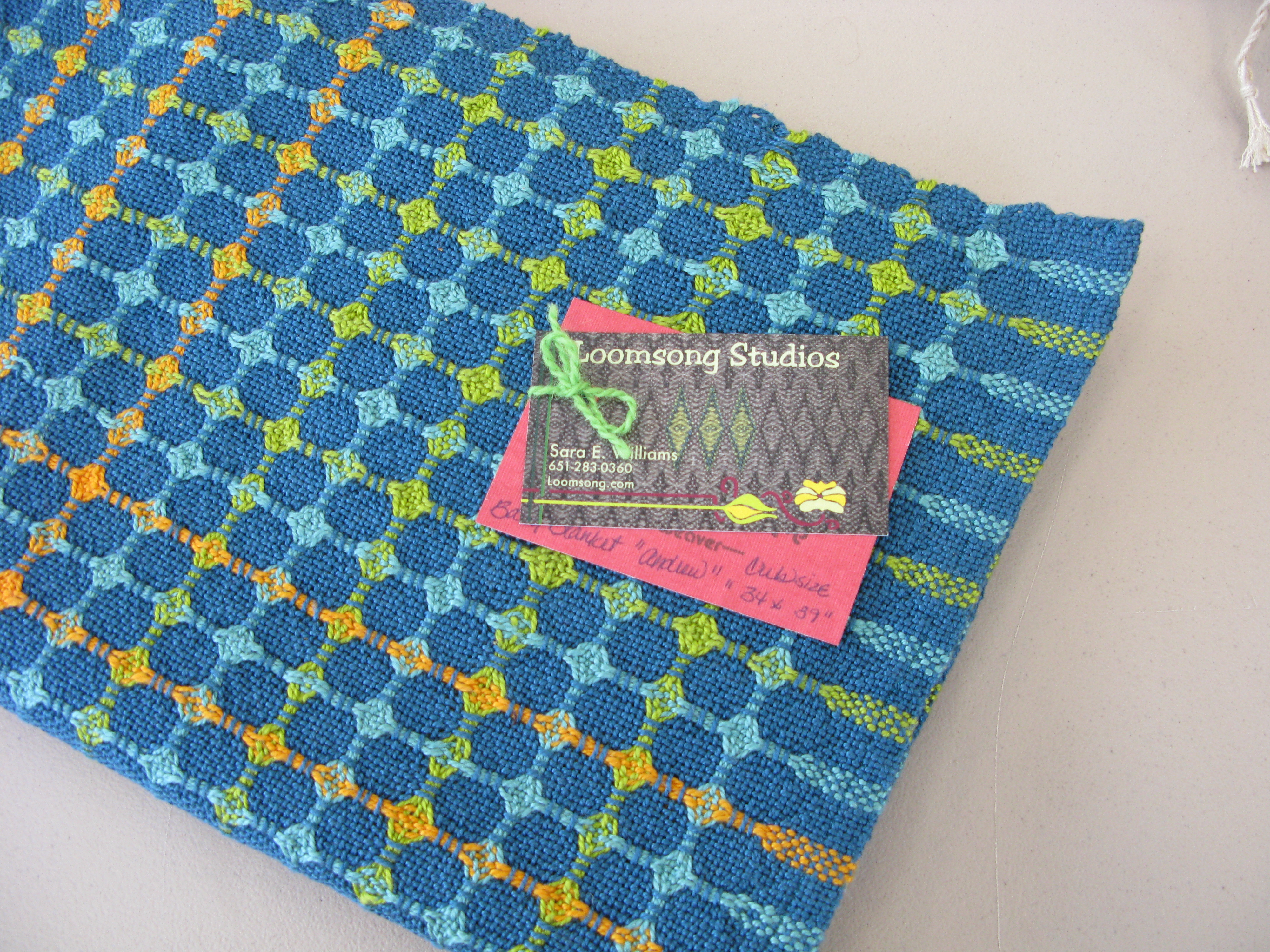
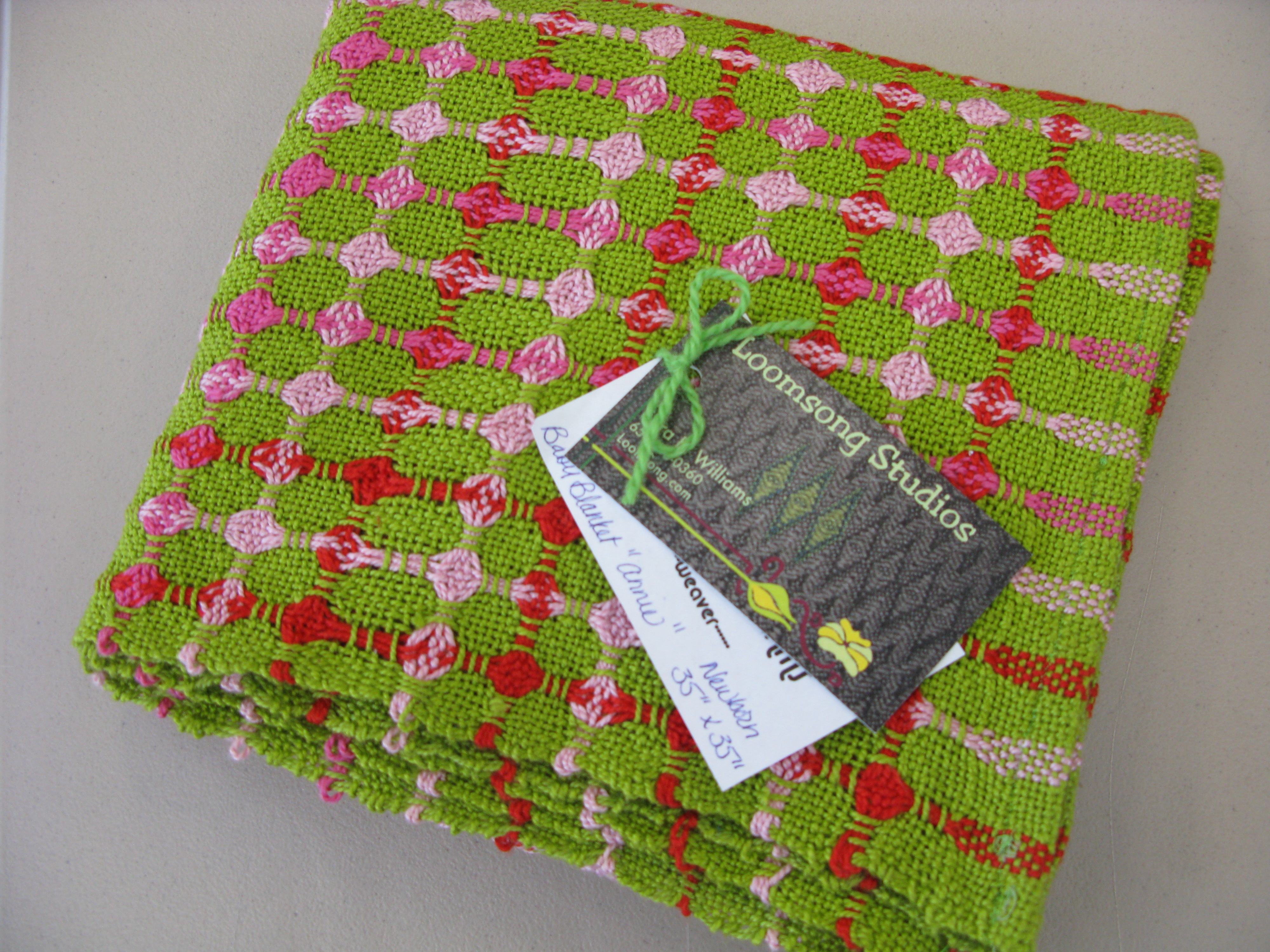
    Judy Larson brought a wide rag rug, all from donated fabrics, in reds and beige, woven on a ten-foot Cranbrook loom.  “How do you even throw the shuttle?” one person asked.  She walks from side to side.  Sarah Williams brought some cotton baby blankets she has recently woven for sale.  The colors are great – bold and saturated.

    Sarah Larson, Baby Blanket 2
    Sarah Williams, Baby Blanket 1
  • A Traditional Gathering

    For the third year in a row, Lila Nelson hosted our Scandinavian Weavers Study Group December meeting in her home, our annual holiday gathering.  It would be hard to find a more festive setting.  As Lila’s friends, I know we look at her beautiful collections of objects and textiles and know just what they mean.  They are indicators of a passionate interest and involvement in textiles and art and they are gifts from well-loved friends.

    We talked and ate.  (Thanks, Jan, for the kringle!)  And even though Lila would never say, “Come and see what I am weaving now,” the group managed to find its way back to the studio to admire the latest tapestry on the loom, one with flowers.  Perhaps Lila needed to concentrate on a more pastoral image after finishing a recent tapestry listing the names of American-run prisons around the world.  “Guantanamo isn’t the only one,” Lila said.  It’s a powerful image.

    Carol Colburn came from Iowa, tempting us all to sign up for her course in Norway this summer, “Refashioning Vadmel: A Weaving and Design Workshop in Telemark, Norway.”  We admired two garments made in previous workshops, the lovely drape of the fulled wool, and the construction of the garments with individually silk-lined pieces.

  • Summery Images in Boundweave

    Spring will come.  As a reminder, two weavings in the show use a boundweave pattern to create summertime images.  In “Pastures by the Cemetery,”  Nancy Ellison formed rows of pastors, farmers, the farmer’s wife, sheep, fences, and crosses from the cemetery.   Jan Mostrom wove the flowers in “Garden Path.”

  • Sarah Williams’ Rosepath Rug

    The worship area of the Unitarian Society has huge windows opening onto a snowy city landscape.  Sarah Williams beautiful rosepath rag rug is the first piece you see when you walk through the rear doors into the narthex area.   The impressive scale and warm autumn colors of the rug create a wonderful first impression of the show.

  • Timeless Tradition

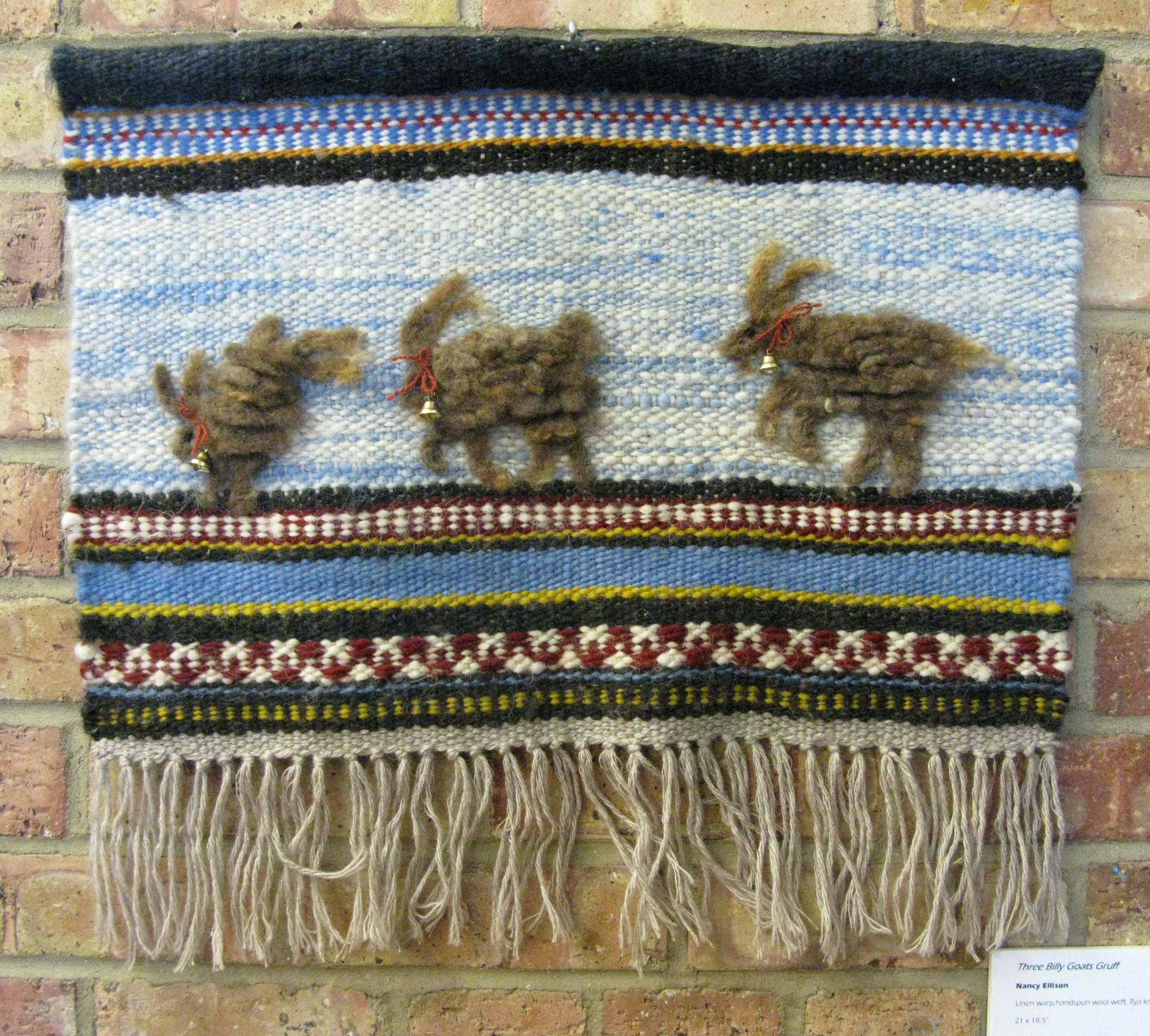
    The Timeless Tradition show up at the Unitarian Society looks great.  The textiles look wonderful against the brick walls.  I stopped in to take photos on the first Sunday after the show was hung; several people were around following the morning service.  They were so appreciative!  A man said to me, “I suppose you’re going to try to do that now!” – a friendly comment meant to convey how it would be amazing  that anyone could create such pieces.  “Oh, I have,”  I replied, “A couple of my pieces are here.”  Other people came up to me and thanked me.  Most pieces line two brick walls of the narthex area.  Nancy Ellingson’s “Three Billy Goats Gruff” is at the far end, hanging over the guest book on a podium.  Much of the wool in the piece is from Nancy’s own sheep, including the unspun wool of the charming sheep’s bodies.  (More photos of Nancy’s farm and sheep can be found here.)

  • A Great Place to See Scandinavian Woven Pieces

    If you can’t get to Norway to view or purchase beautiful woven textiles, you have an equal opportunity this month in Minneapolis.   The Scandinavian Weavers Study Group, part of the Weavers Guild of Minnesota, is displaying a selection of woven textiles through Christmas in the gallery of the Unitarian Society of Minneapolis.

    The Scandinavian Weavers Study Group has been meeting for more than twenty years, providing a consistent forum for the study of traditional Scandinavian weaving techniques.  The members weave traditional patterns and also use the weaving techniques and pattern elements for modern expression.  The group studies a particular technique each year, most recently concentrating on boundweave techniques, in which the warp threads are covered, or bound, by the weft.  Many of the pieces in this show are woven in krokbragd, a three-shaft technique that yields pieces with an immense range of points, squares, and linear elements.

    Most pieces in the current show are woven with wool, primarily Norwegian yarns. They hold the connotations of  traditional textiles – warmth, the multi-generational appeal of folk patterns, and ethnic identity.  On the other hand, the weavers’ personal design and color choices, and high craftsmanship, result in abstract art pieces.

    Maybe you can’t get away to a “hytte,” a Norwegian cabin, this Christmas.  But you can admire many weavings that would be perfectly at home in that setting, as well as in our contemporary Minnesota homes.

    Timeless Tradition: Selected Weavings

    November 28-December 26, 2010
    First Unitarian Society of Minneapolis
    900 Mount Curve Ave
    Minneapolis, MN 55403

    Hours:  9am – 3pm, M-F
    (The office entrance is to the right of
    the main entrance doors.)
    Sunday: 9 am – 1:30 pm
    For other times, call: 612-377-6608

    Download a flyer for the exhibit.

  • Gradation in Color in the Stripe

    Jan Mostrom brought in a piece that had lovely color gradations in long stripes.  From a distance, the color shifts look like a painterly progression.  Close up, you can see the alternating yarn colors.